Lex Libertas | Media Statement
Lex Libertas meets with White House to discuss solutions for South Africa’s political crisis
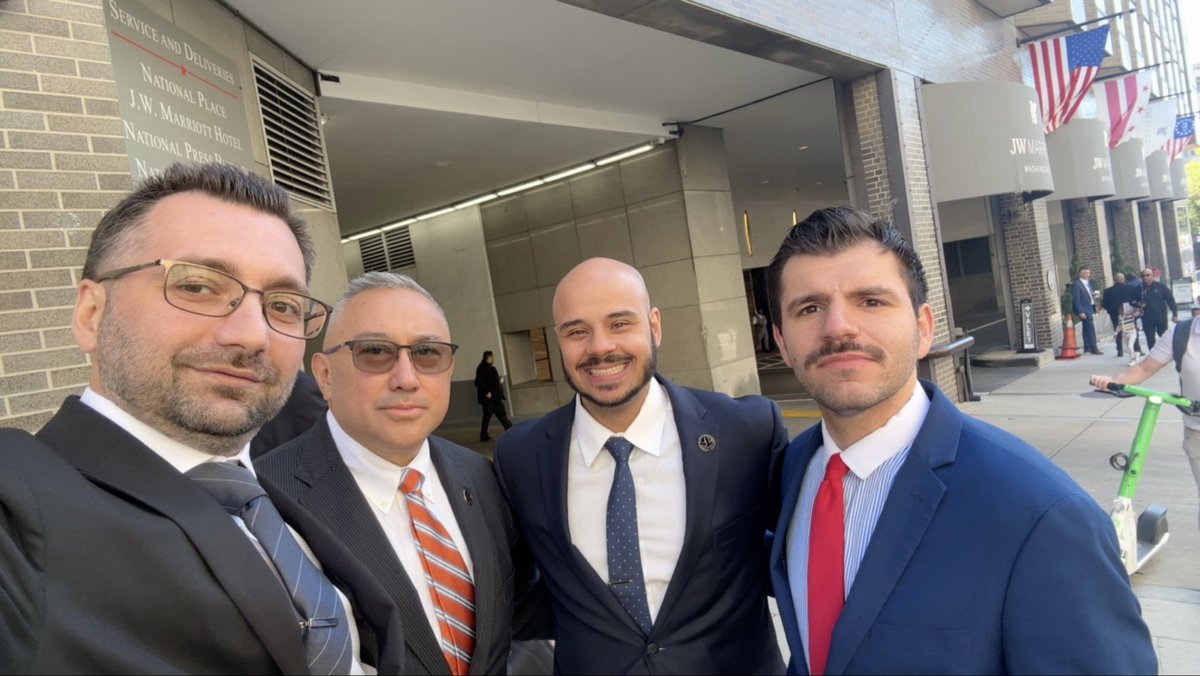
WASHINGTON, D.C. – Lex Libertas met with senior representatives of the White House on Monday to discuss practical and long-term solutions to the political crisis in South Africa, following the conclusion of the institution’s White Cross Project’s programme in Washington, D.C.
The discussion centred on the proposals contained in the White Cross Project Campaign Report, including why developments in South Africa are relevant to American strategic interests, what the South African government could do immediately to address the current crises, and what constructive steps the United States could take to support reform and a more sustainable political settlement.
‘The meeting went very well and, importantly, the discussion focused not merely on what went wrong in South Africa, but on what can actually be done about it,’ said Dr Ernst Roets, Executive Director of Lex Libertas. ‘It included a discussion of Crossed Out, the Campaign Report, and future activities by Lex Libertas.’
Lex Libertas argued that the United States has a legitimate interest in a stable and prosperous South Africa for three broad reasons: to counter increasingly anti-American and anti-Western actions by the South African government; to support pro-American and pro-Western partners in the region; and to prevent the wider consequences that would follow from serious instability in South Africa. These consequences could include regional destabilisation, increased migration pressures and expanded opportunities for geopolitical rivals of the United States.
The meeting also addressed practical steps that the South African government could take immediately. These include consistent enforcement against incitement to violence, meaningful action on rural safety and farm attacks, reform or repeal of race-based legislation, and stronger protection of property rights. Lex Libertas emphasised that these interventions could alleviate the immediate symptoms of the crisis, even though deeper structural reform would still be required.
‘At the same time, we made the point that these problems are not isolated,’ Roets said. ‘They arise within a political system that has become excessively centralised and detached from the realities of South Africa’s different peoples and communities. That is why our long-term argument remains that South Africa requires meaningful decentralisation and self-governance.’
The report also proposes several steps the United States could consider. These include recognising the peaceful pursuit of self-governance as legitimate, applying targeted measures against individuals responsible for serious abuses, using economic engagement to encourage reform, protecting American companies from discriminatory race-based requirements, supporting reformers and self-governing initiatives, continuing to demand an end to incitement of violence and the prioritisation of rural safety not just through declaration, but in practice, appointing a Special Envoy to Afrikaners and other cultural minorities, and encouraging negotiations towards more sustainable political arrangements.
‘Our message is not that Washington can solve South Africa’s problems for us,’ Roets said. ‘The future of South Africa must ultimately be built by the peoples and communities who live there. But the United States can play a constructive role by supporting reform, encouraging accountability and helping to create political space for peaceful and sustainable alternatives.’
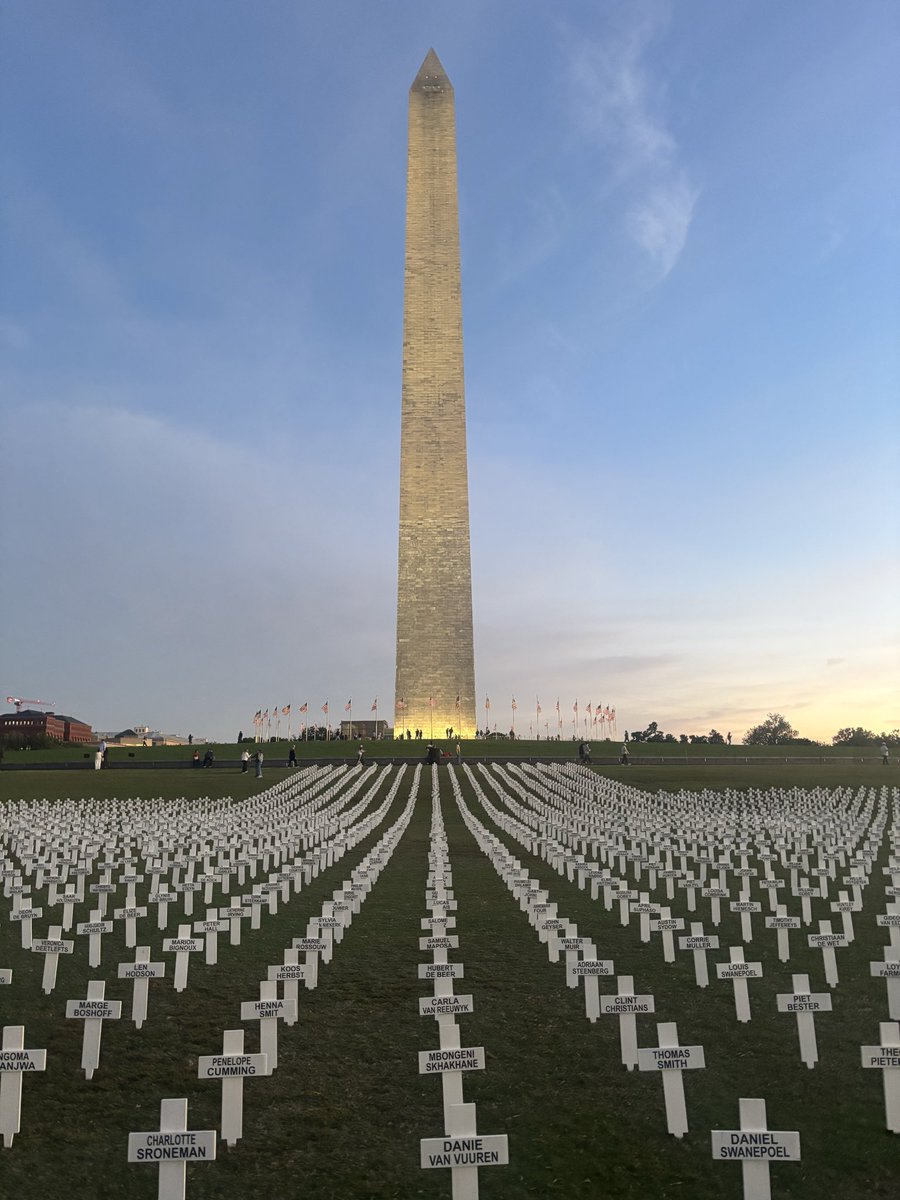
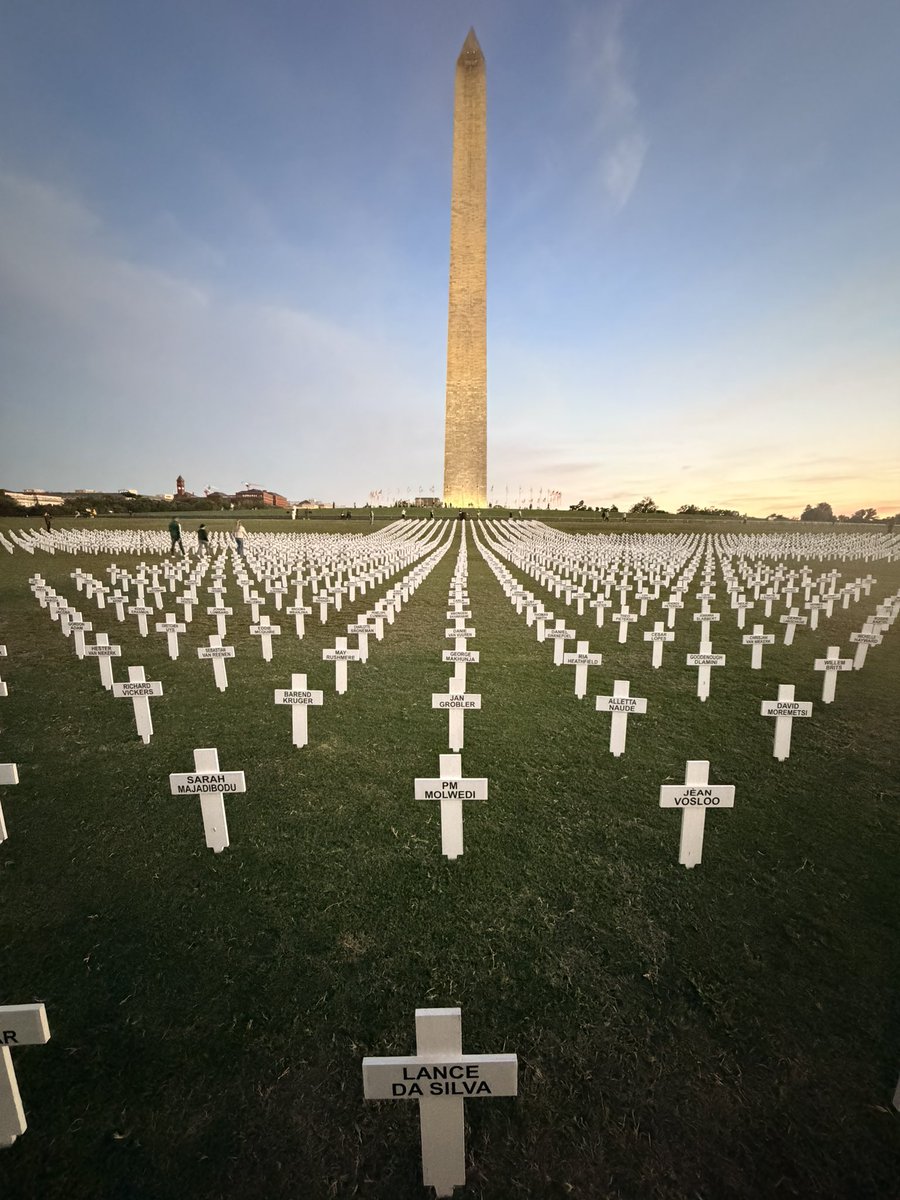
The White House meeting followed a week of White Cross Project activities in Washington, including the White Cross Project Conference at the National Press Club, the release of the documentary film Crossed Out: Confronting Persecution in South Africa, and the display of 3,000 white crosses commemorating victims of farm murders in front of the Washington Monument.
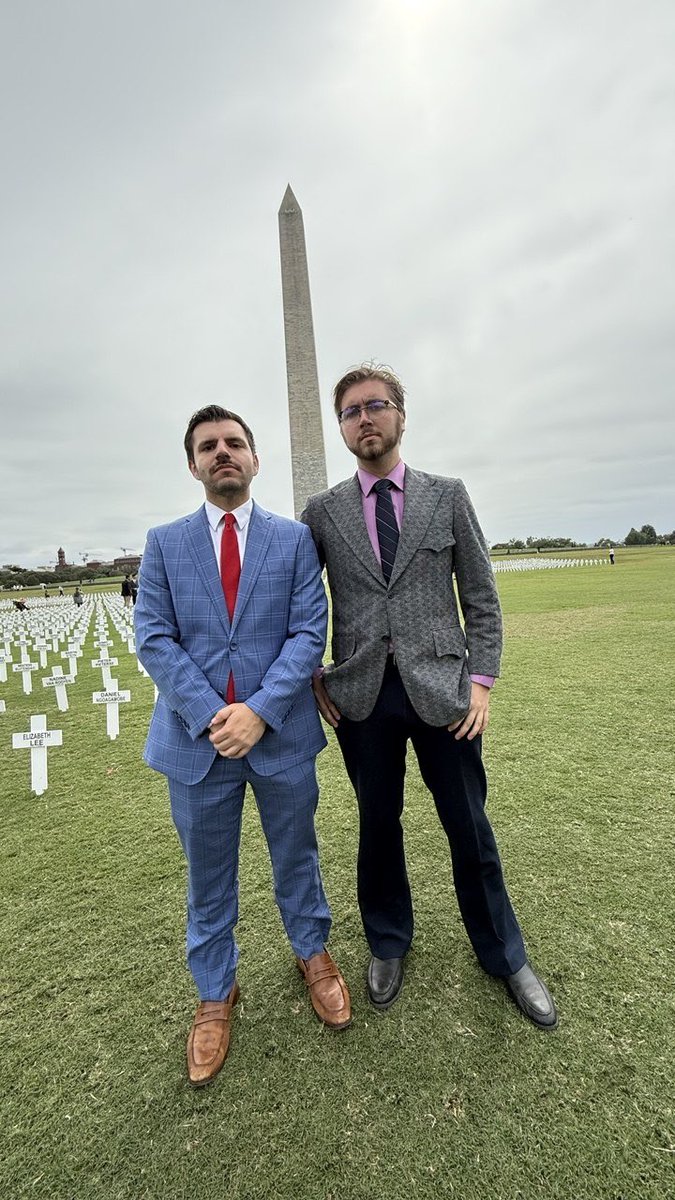
"Here, there was joy, and I think the reason for that joy, is because these deaths, these murders, are no longer in vain," said Stefano Forte, President of the New York Young Republican Club at the White Cross Project Memorial on the National Mall, Washington DC. The American people now know the story of the farm murders.
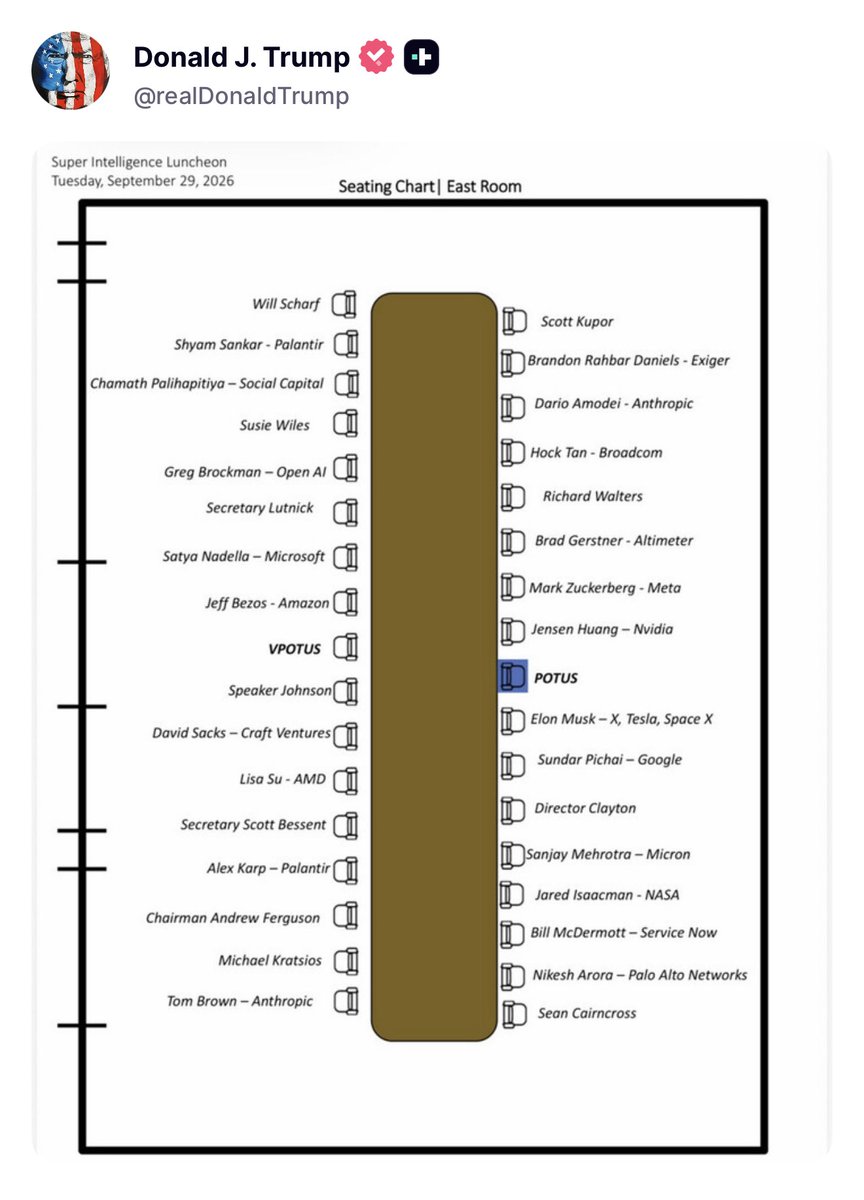
POTUS: "We're going to be signing a document today at about 5PM renaming Artificial Intelligence because it's not artificial. We all agree on that. We're going to be renaming it Super Intelligence — officially renaming it."
SUPER INTELLIGENCE LUNCHEON AT WHITE HOUSE TODAY:
President Donald Trump will host leaders in Al at the White House to discuss balancing innovation and oversight. Meta's Mark Zuckerberg, Anthropic's Dario Amodei, OpenAl's Greg Brockman and Nvidia's Jensen Huang will attend.
House Speaker Mike Johnson said on Monday that the U.S. does "not need a moratorium" on AI.
Republicans in Congress are pushing the Ratepayer Protection Act, which would protect Americans from rising energy costs if data centers build in their communities.
Democratic Senators say affordability is top of mind, but
are resisting the Act as to not give the GOP a win ahead of the Midterm Elections.
"We are not here today because we want special treatment for farmers in South Africa... we want equal treatment," says Dr. Ernst Roets of Lex Libertas at the White Cross Project memorial at the National Mall in Washington DC.
Americans should be "very concerned" that far-left politicians like NYC Mayor Zohran Mamdani tout South Africa's government as a model. Dominic Tuffin of Family Action South Africa, came as a volunteer to help build the White Cross Project memorial.
South Africa needs a decentralized government. "Our argument is not to return to the past, it is the opposite," says Dr. Ernst Roets of Lex Libertas, "it is to move beyond that which defined the political system in the past and continues to define it today."
Yet again, lamestream media lied.
@LexLibertasOnX, @NYYRC, and many others came to Washington to raise awareness about the brutal attacks on the Afrikaner people.
I was happy to join them in that fight.
South Africa is "the tip of the spear of this much larger global leftist push and it reveals the end state of this fake false utopian ideology," says Samuel Samson, Deputy Assistant Secretary of State in the bureau of Democracy, Human Rights, and Labor to Dr. Ernst Roets, Founder of Lex Libertas, at the White Cross Project Conference in Washington DC.
The Trump Administration has made it a foreign policy priority to pressure the ANC government in South Africa to more to stop farm murders targeting the Afrikaner minority.
RETRIBUTION NATION: The White Cross Project.
The crisis that only one world leader is talking about. 3,000 crosses planted across from the White House represent the broken dreams of South Africa.
🎞️ @IanMcMathUSA
TODAY 12PM: 3000 White Crosses on the National Mall in memory of slain Afrikaner farmers in South Africa. Each cross represents a farm murder. @LexLibertasOnX and the @NYYRC organized the event in step with President Trump’s pressure campaign on the ANC to stop the killings.
Photo: @IanMcMathUSA
3,000 crosses at the National Mall, each in memory of a slain Afrikaner farmer. The @NYYRC is proud to partner with @LexLibertasOnX to make this happen. We align with President Trump on the need to pressure South Africa’s ANC government to act.
"To succeed at life we have to go to the elite colleges and we have to move away from our hometowns."
No!
This sentiment is undoing America's social fabric. You must plant our flag in the soil and steward your birthright.
Watch YRN's the Frank Forum with Frank Filocomo and Troy Olson.
@FilocomoFrank@TroyMOlson
Hostility on campus towards University of Utah College Republicans reaches comically absurd heights as their Democratic Party counterpart makes comically absurd demands. UofU GOP President Daylan Alzamora tells all, watch the full episode on the YRepNetwork.
@DaylanAlzamora