How to improve the performance of biocathode? Do we have to enhance the 4-electron ORR? Probably wrong!
We reported a H2O2 medicated extracellular electron transfer pathway of electrotrophs on the biocathode. Please see our new paper on ES&T:
https://t.co/c1l4IG4gZn
Newly online paper in Microbiome: Various microbial taxa couple arsenic transformation to nitrogen and carbon cycling in paddy soils
Lead by Si-Yu Zhang.
https://t.co/OwXPS2KPnS
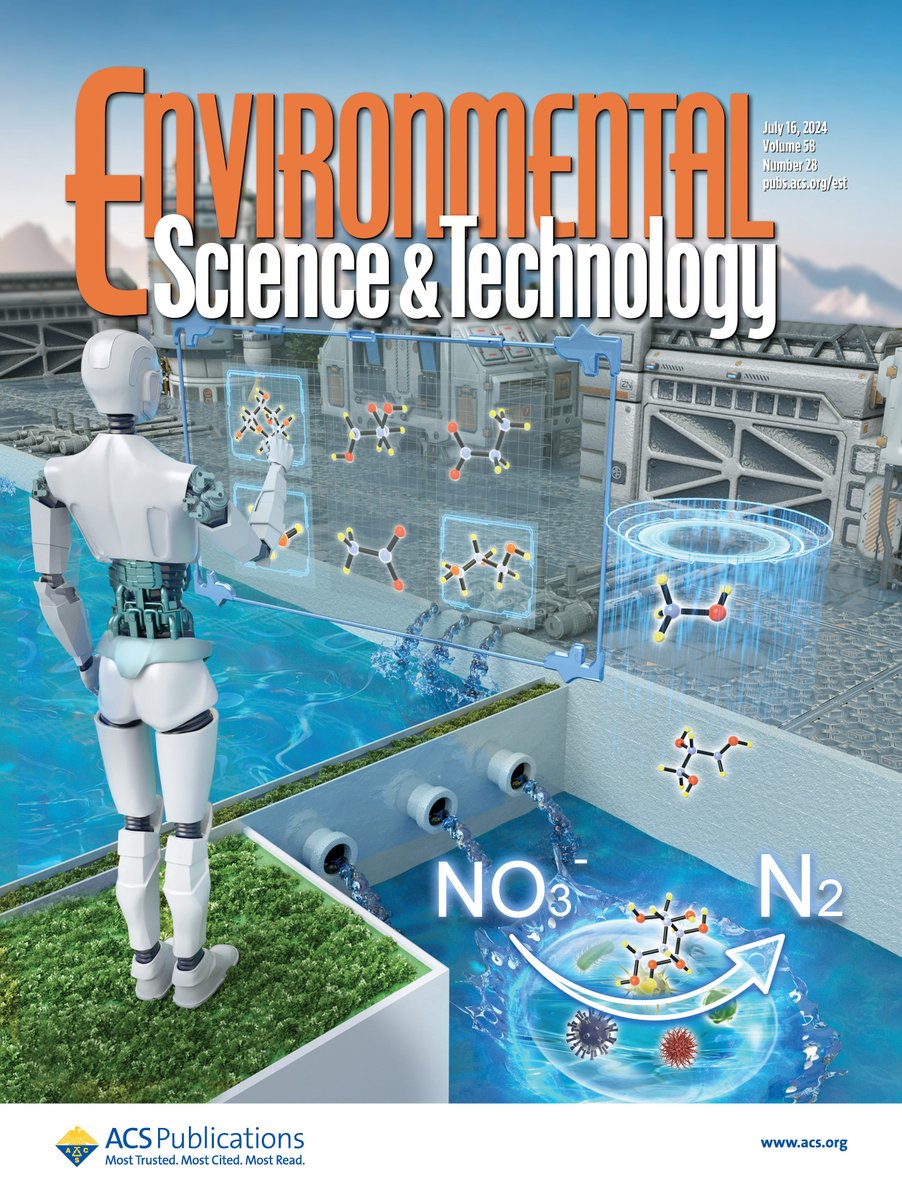
From the cover of ES&T: A #MachineLearning-assisted high-throughput method was developed by @StudyatUSTC to enable #WWTPs to rapidly identify and optimize mixed carbon sources.
Read this article here 👉 https://t.co/xU4TOdYHDz
Happy to share our recent work where we developed a machine learning method to screen mixed carbon sources for denitrification. We believe this work could bring fresh insights into enhancing biological denitrification efficiency.
Read more in ES&T: https://t.co/x4G9lMGbfd
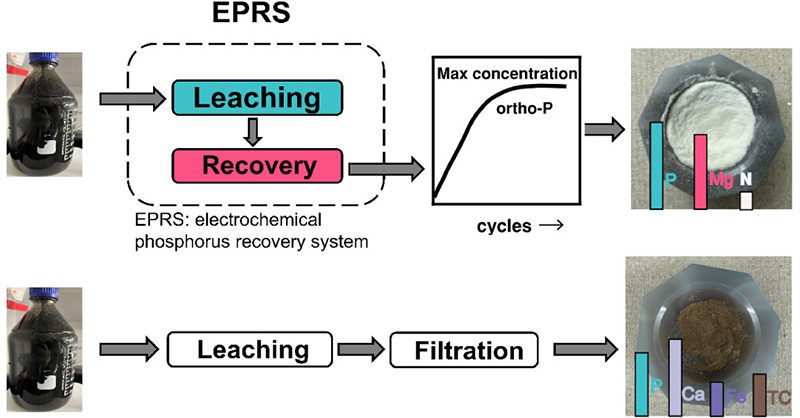
A team led by @Zhen_Jason_He of @WashU_EECE @WUSTL developed an electrochemical phosphorus recovery system to treat #anaerobically digested sludge, featuring a #leaching unit for P leaching and a recovery unit for P separation.
ACS ES&T Engineering: https://t.co/3mRcjhLJk0
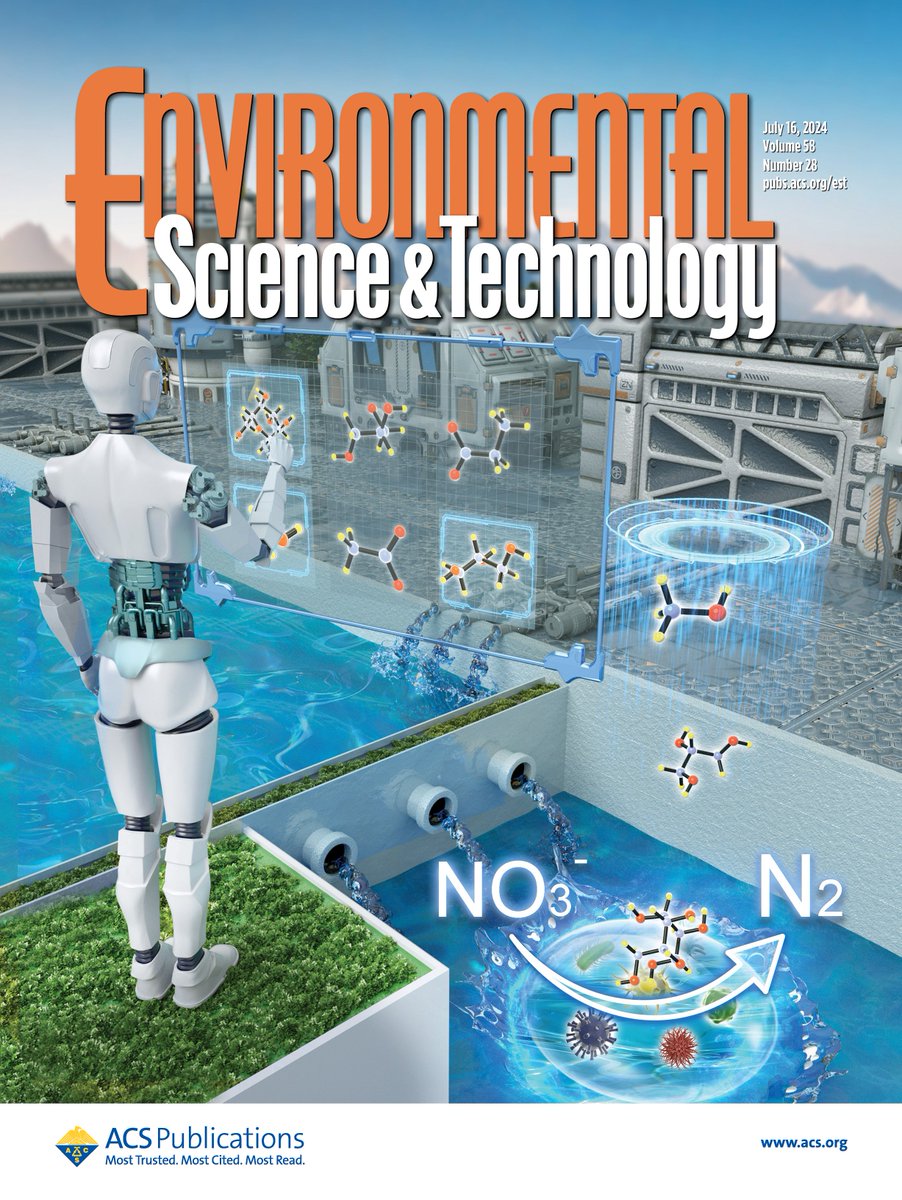
A #MachineLearning-assisted high-throughput method was developed by @StudyatUSTC to enable #WWTPs to rapidly identify and optimize mixed carbon sources.
Read this article in ES&T: https://t.co/2uZd3POPWy
Happy to share our recent work where we developed a machine learning method to screen mixed carbon sources for denitrification. We believe this work could bring fresh insights into enhancing biological denitrification efficiency.
Read more in ES&T: https://t.co/x4G9lMGbfd
The economics of a hypothetical system that combines adsorbent-based #directaircapture (DAC) with electromicrobial production (EMP) to produce n-butanol, a potential replacement for #fossilfuels. @UofCalifornia
Read this #OpenAccess article in ES&T: https://t.co/cih8VXXVEP
😬Just published in @EnvSciTech Letters: We highlighted the urgent need to recognize transition metal species as potential contributors to spin-trapping signals in EPR studies.
https://t.co/koLwEOekQL
Our latest publication introduces a modified DHA method that is both cost-effective and precise, providing a viable solution for wastewater treatment facilities.
Our recent publication examines how different carbon sources affect denitrifiers' performance, ecology, and metabolism. This study deepens the understanding of how microbial ecology influences system performance in the denitrification system.@WaterRes_J https://t.co/esGSJxMkDc
Just published in @PNASNews: We bring a novel approach to tracking singlet oxygen in catalytic oxidation processes. This could redefine how we use EPR analysis in complex systems. Check out our findings: https://t.co/Zdi2K9aZsB #Catalysis#SingletOxygen
Approaching to simultaneous nitrogen and phosphorus removal process, Fe(II) is a good candidate for electron donors in microbial mixotrophic denitrification systems. https://t.co/cjsnDIEYHs
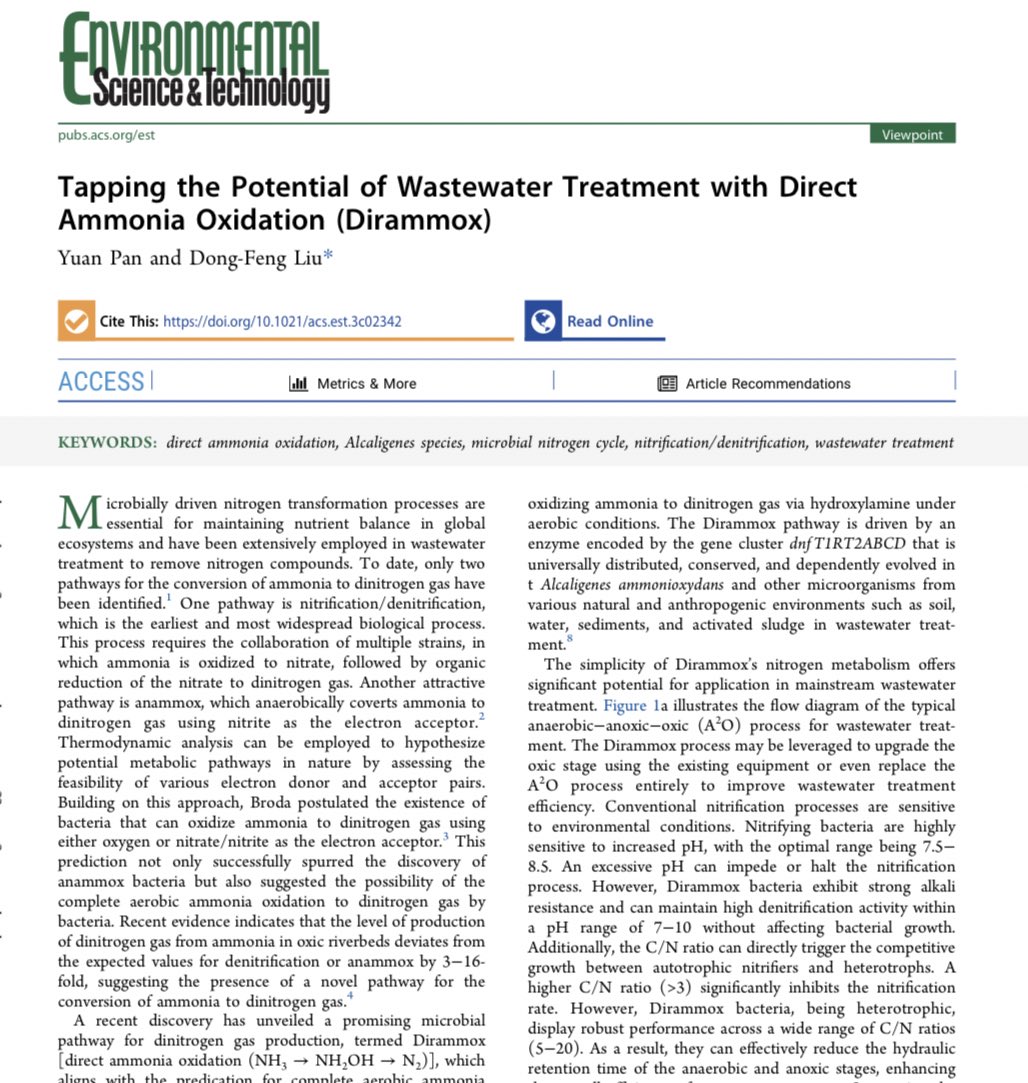
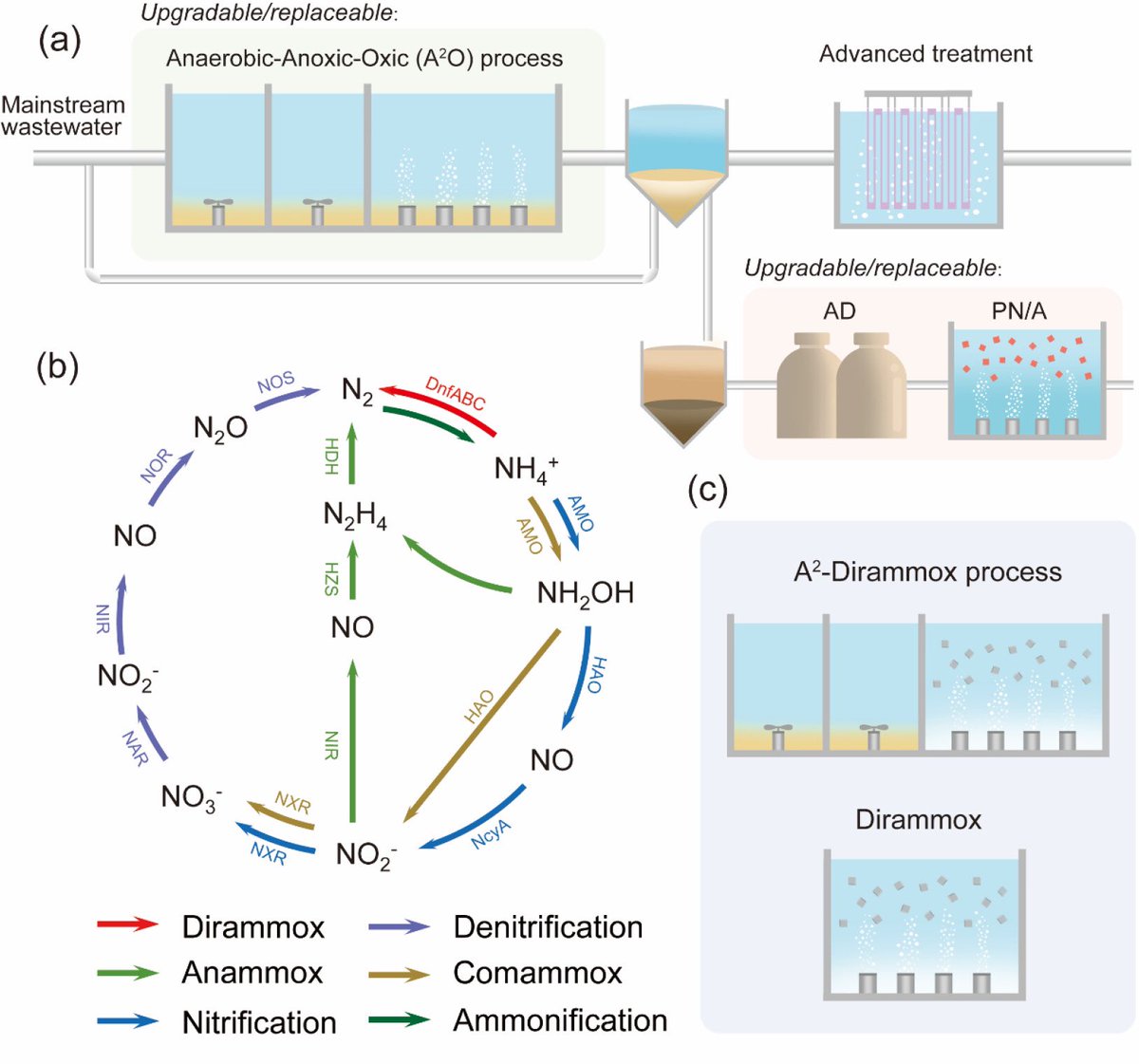
Direct ammonia oxidation enables the aerobic conversion of ammonia into nitrogen gas. Our newly published viepoint explores this exciting finding and analyzes its potential environmental applications. https://t.co/GVJ5fhn9xr