A simple idea turned into an AI-powered trading scanner. 🤯
No predictions. Just finding market mispricing with Claude.
Could AI change the future of trading? 📈
Claude is more than just an AI chatbot. It represents a significant step toward redefining how we learn, create, and build with artificial intelligence. 🤖🔥
From Claude Learn to Claude Build, the future of AI is moving beyond simple conversations.
We’re entering a new era where AI is not just about answering questions. It’s about helping people develop new skills, explore creative ideas, solve complex problems, and turn their vision into reality.
In the past, AI was primarily used to find information, generate text, and answer everyday questions. Today, its potential is expanding far beyond those basic capabilities.
The goal is no longer simply to interact with AI. It’s to use AI to solve real-world problems, create something meaningful, and unlock new levels of productivity.
AI tools like Claude are becoming an important part of this transformation.
Developers can use AI to assist with coding and software development. Content creators can explore new ideas and produce better content. Entrepreneurs can develop business strategies, while students can use AI to understand complex topics and acquire valuable skills.
More importantly, AI is creating new opportunities for people to expand their creativity, improve their workflows, and accomplish things that once required significantly more time and resources.
However, simply using AI will not be enough to stay ahead.
The real advantage will come from understanding how to use these tools effectively, evaluating their outputs critically, and combining their capabilities with human creativity, knowledge, and problem-solving skills.
Because the true power of AI is not just what it can answer, but what it can help you create.
We are still in the early stages of this transformation. It will be fascinating to see how AI continues to reshape the way we learn, work, develop software, and turn ambitious ideas into practical solutions.
The future may offer the greatest opportunities to those who do more than simply observe new technology.
Those who learn, experiment, adapt, and build with AI will be better positioned to take advantage of what comes next.
🚀 The future belongs to those who know how to build with AI.
So, here’s the real question:
Are you using AI just to find answers, or are you ready to use it to bring your next big idea to life? 🔥
He gave 10 AI agents $52 each and told them to make money or shut down. 🤯
13 hours later, they reportedly made $11,345.95 trading meme coins — without human intervention.
AI is getting crazy! 👀🔥
Follow for more AI experiments and tools.
5 AI agents. 1 task. 60 seconds.
Only ONE managed to finish the job.
Agents from OpenAI, Anthropic, and two fictional competitors.
(This is a skit, not a benchmark. But the debate is worth having.)
I gave all five agents the same challenge: build a complete website within 60 seconds.
Here’s how it played out.
→ JEV finished in 4 seconds.
Impressive speed, right?
Not really. The entire website had just one button: “YES.”
Fast execution, almost zero value.
→ DOTS never made it past the starting line.
It was still watching, analyzing, and waiting while the clock kept ticking.
→ ASTRA took the lead.
Everything looked promising until it reached 82%.
Then it clicked “Delete Project.”
One mistake, and all that progress was gone.
→ SONNET reached 97%.
It was almost there. The finish line was right in front of it.
But instead of completing the task, it was still adding dark mode.
→ OPUS looked like it was doing nothing.
For 50 seconds, there was no visible progress.
I thought it had lost.
Then, in the final 10 seconds, it built the entire website.
And just like that, OPUS won.
Here’s what makes this interesting:
JEV optimized for speed.
DOTS never got moving.
ASTRA made a critical mistake.
SONNET focused on the finishing touches before completing the core task.
OPUS took its time, then delivered the result.
The fastest agent wasn’t the most useful.
The busiest agent wasn’t the most successful.
The agent that appeared to be doing the least ended up finishing the job.
Of course, this is a fictional scenario, not evidence that one AI model is better than another.
But it raises a real question about how we evaluate AI agents.
Should we measure them by how quickly they respond?
How much progress they make?
How efficiently they use resources?
Or whether they can reliably complete the entire task?
Because in real-world workflows, a fast answer means very little if the result is incomplete, broken, or unusable.
The goal isn’t simply to make AI think faster.
It’s to make AI think effectively, act intelligently, recover from mistakes, and deliver reliable results.
Speed gets attention. Execution earns trust. Results create value.
So, if you had to choose one AI agent for your next project, which would you trust?
The agent that responds in 4 seconds, or the agent that spends 50 seconds thinking and delivers a complete result?
And more importantly:
Would you rather have an AI that thinks less and responds faster, or one that takes longer but gets the job done?
AI might change humanity forever.
But most people are still focused on the wrong question.
They’re asking what AI can do today.
They should be asking what happens when machines start changing how we think, learn, and understand the world.
A book published in 2021 explored this future before today’s AI boom.
It’s called The Age of AI.
Here are 7 ideas that hit differently in 2026. 🧵👇
📈 Trading is more than just buying and selling — it’s about strategy, patience, and discipline. ��🔥
Learn the market, manage your risks, and never stop improving. 🚀
19 year old Japanese student built a trading bot with Claude Code in 2 days.
Used his iPad as a second monitor.
First night: $6,732 profit.
Starting capital: $68.
Total profit so far: $750,000.
[ 𝐍𝐨𝐭𝐞: 𝐅𝐨𝐥𝐥𝐨𝐰 𝐌𝐞 @naiem_bn 𝐅𝐨𝐫 𝐢𝐧𝐬𝐭𝐚𝐧𝐭𝐥𝐲 𝐚𝐮𝐭𝐨 𝐃𝐌]
Here's how it works👇
The bot scans over 50 markets simultaneously.
Syncs live BTC data from Binance every second.
Spots price errors before humans even notice.
The edge is pure speed + pattern recognition.
While traders stare at charts trying to predict the next move, his bot is already executing on mispricing across dozens of markets.
No guessing.
No emotions.
No hesitation.
Just Claude Code logic finding gaps that close in seconds.
He built the entire system in 48 hours:
→ Claude Code handles the trading logic
→ Binance API feeds real-time BTC data
→ iPad displays multi-market monitoring
→ Executes trades when arbitrage windows open
The system runs 24/7.
Every price dislocation = profit opportunity.
Most people are still trading manually, refreshing charts, second-guessing entries.
Meanwhile this 19 year old engineering student turned $68 into $750K by letting Claude Code do what humans can't: process 50 markets instantly and execute without fear.
Why are people still trading manually?
I'm giving away the exact Claude Code setup for free.
24 hours only.
To get it 👇
1️⃣ Comment " Claude "
2️⃣ Like and Repost
3️⃣ Follow @naiem_bn (so I can send it via DM)
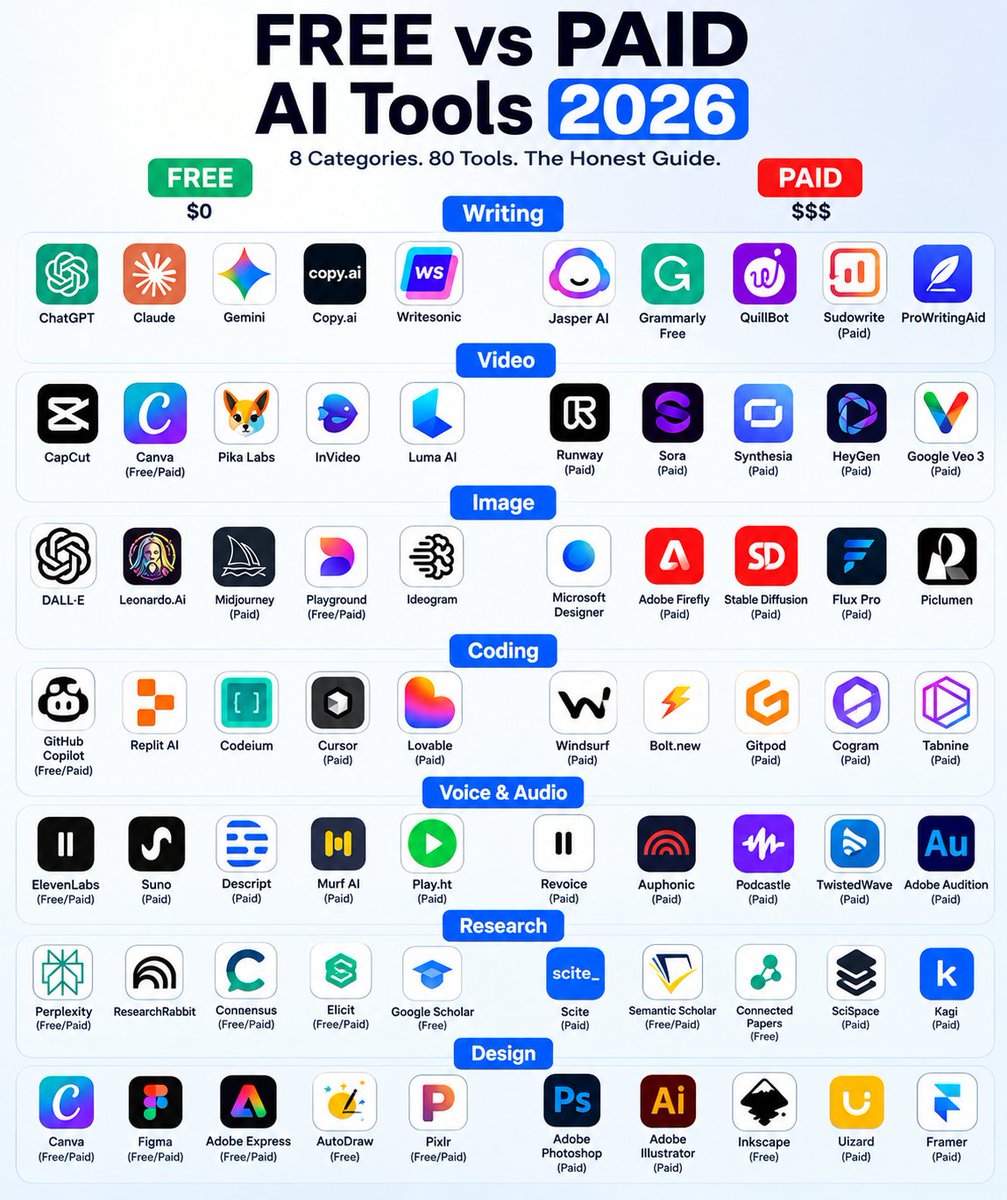
🚀 10 AI Tools You Need in 2026:
ChatGPT • Claude • Perplexity • Midjourney • Canva AI • Cursor • Runway • ElevenLabs • Gamma • NotebookLM
Work smarter. Create faster. Stay ahead..
I've been getting more into AI lately, so I'll be sharing more of what I discover on here.
Useful tools, simple tips, tutorials and interesting AI finds.
Figured I'd share the journey along the way.
I make $504 a day with my AI side hustle, working 60 minutes a day.
You must have:
1. Internet
2. Mobile
3. 1 hour everyday
I am sharing my guide to help you. For today only, it's free (regularly $129).
Like, comment "send" and repost for absolutely FREE.
(Must follow)