Please @elonmusk we are all BEGGING for regional blocking features. These African/Indian engagement slop accounts are dramatically reducing the quality of the user experience here on the platform.
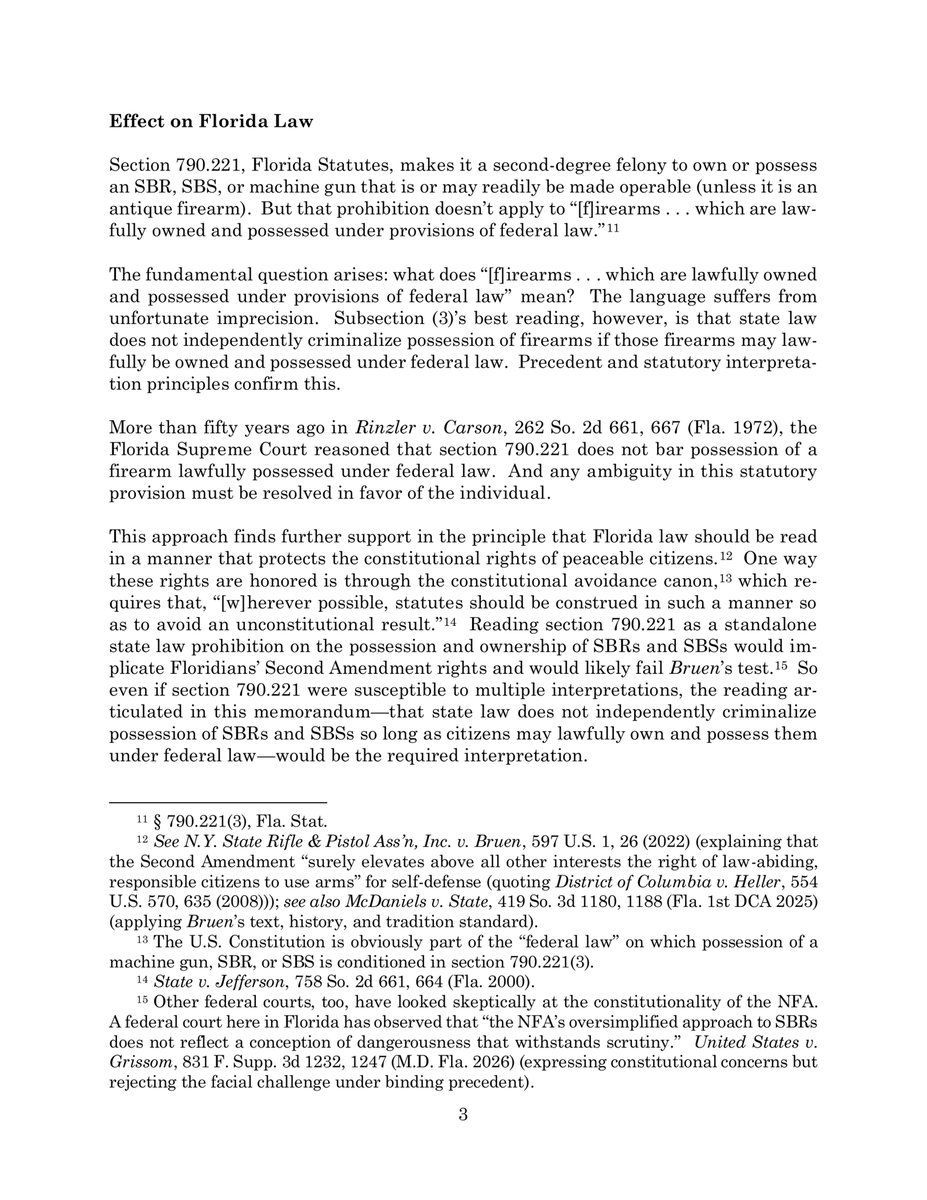
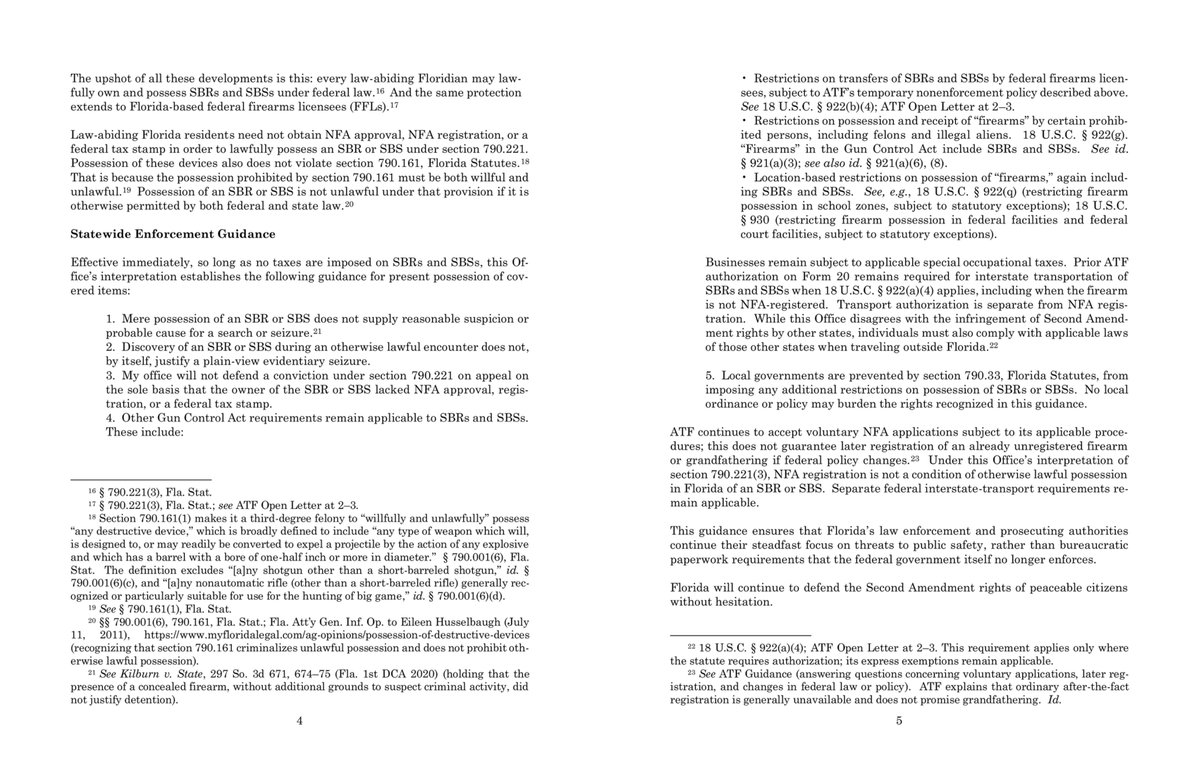
Law-abiding Floridians may possess SBRs and SBSs without NFA registration, a tax stamp, or fear of prosecution under Florida law.
We are issuing guidance and will not defend a conviction on appeal. This office will always defend the Second Amendment rights of peaceable citizens.
The moment the set alight Limoges town hall in France collapsed after being set alight by rioters the same town hall survived the whole WW2 and Nazi occupation.
Please Share
Isaias made landfall and our DM’s are open.
If any of our SMC family or people you may know that are in need please reach out in this thread or via DM.
Talking to folks in the area and they are going to let me know if anything can be done to help at this point.
Will be roasting and shipping all day while we gather info and may do a drive later if we start getting short on funds we already have saved up.
-E
PS : If you’re having trouble reaching family we may be able to help. Have a few SMC family members I overnighted satellite phones to on Wed that are in area and will be doing wellness checks in coastal Alabama and Fl
Please Share.
GM Family.
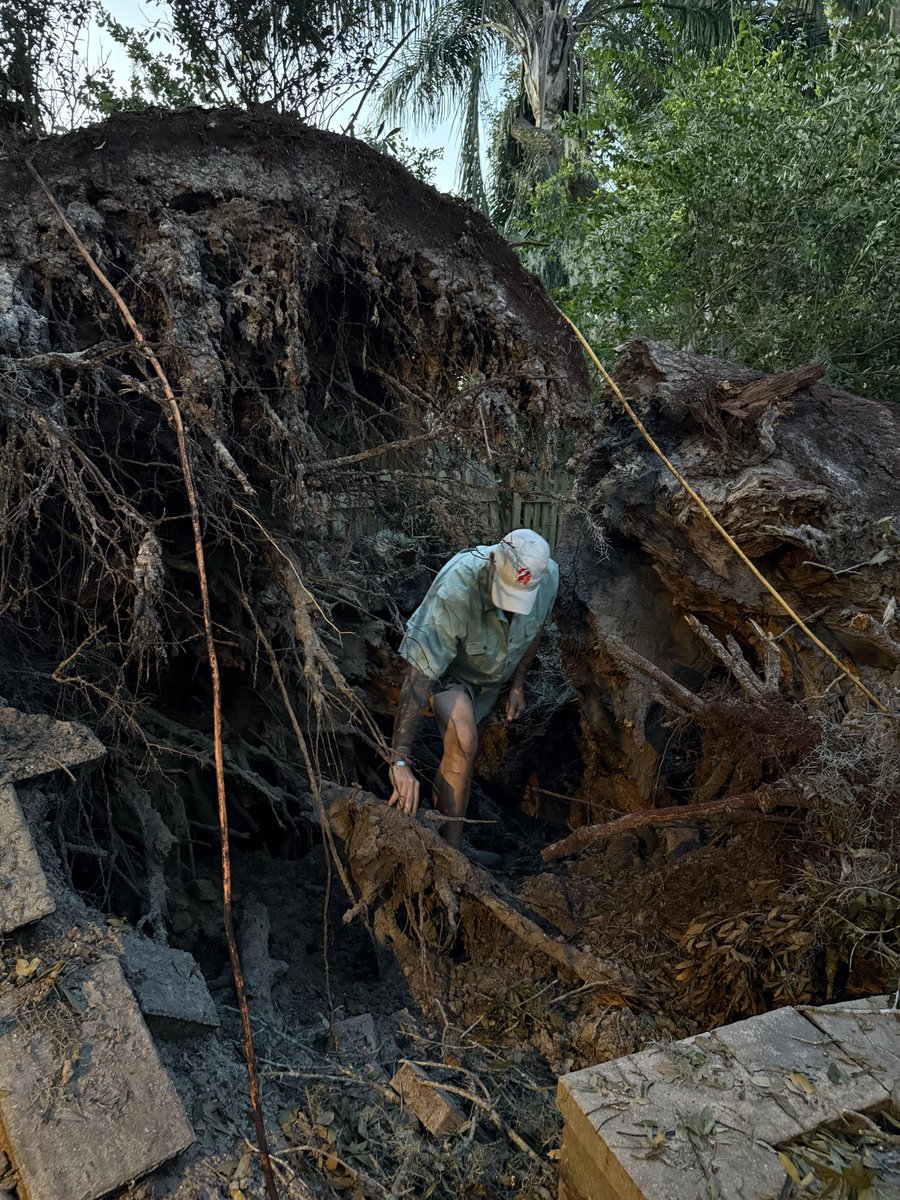
Hurricane Isaias is on the way to the panhandle. For those that have followed us for a long time, y’all know we always go help out clearing debris, trees, hand out food, cash, etc.
Just a few notes before it hits.
If you have a place to go out of the hurricane’s path….do it. You can’t beat Mother Nature.
If you plan on helping in aftermath. Some helpful tips to be more useful.
Don’t go to help clean up with a vehicle in questionable shape. More people break down going to help than you can imagine….
Overloaded trailers, shitty vehicles….and although intentions are good, you are now causing more traffic in a place that doesn’t need it.
Don’t take up hotel rooms when you’re helping….local people without homes or shelter will need those.
Cleanup wise if you wait 3 days after a hurricane and drive a neighborhood….we notice the people that haven’t started cleaning up are usually elderly or disabled…knock on the door and they probably can use your help.
Lastly be vigilant and be armed. @DirtyHand77 and I have spent nights sleeping in our trucks while cleaning up neighborhoods after a hurricane….when it gets dark, thieves come out. And it’s not just a thing that rarely happens….we saw gangs of motorcycles running around the Tampa area at night checking houses.
If any of you guys need any help before or after it lands please give us a shout.
God Bless
-E
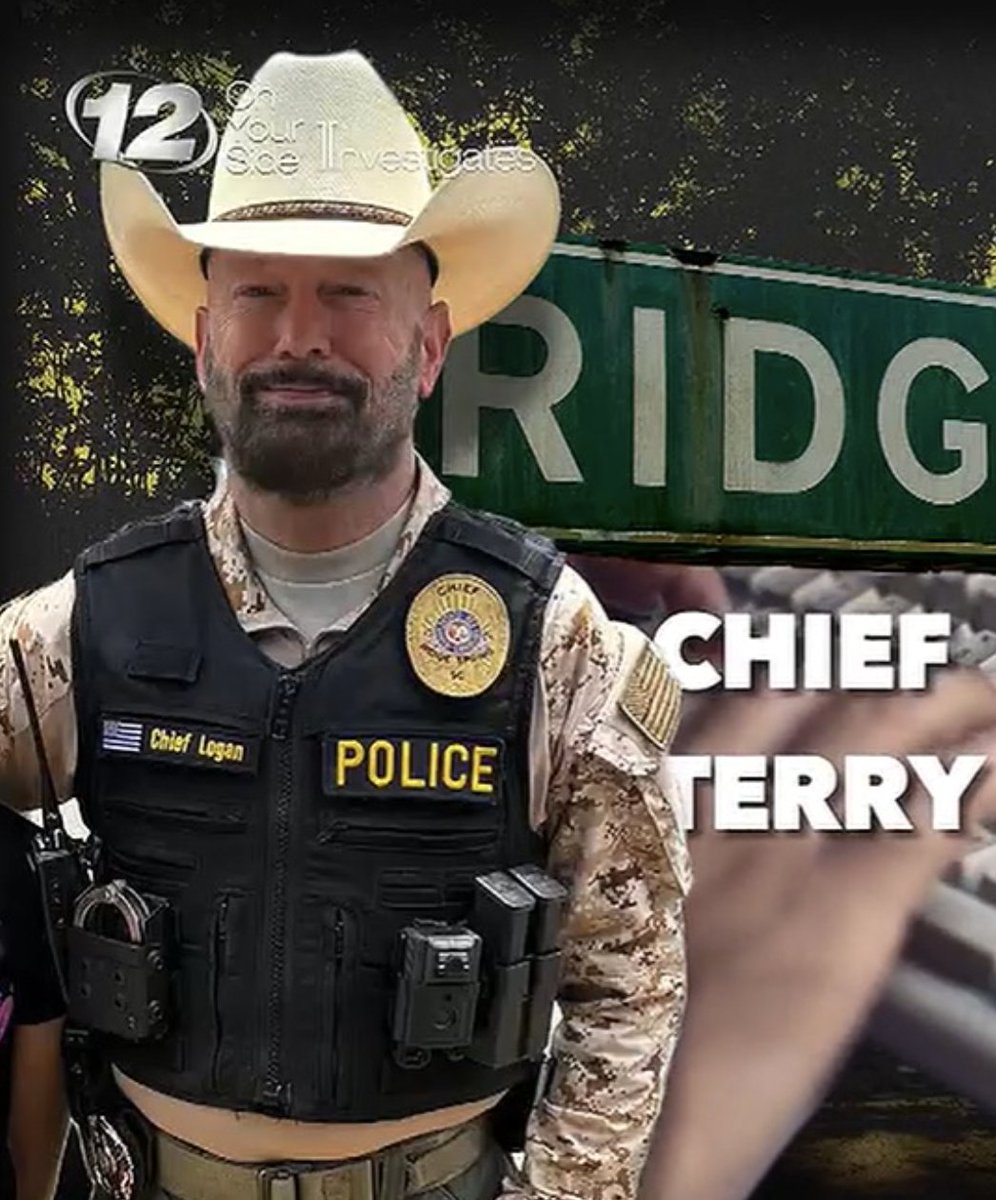
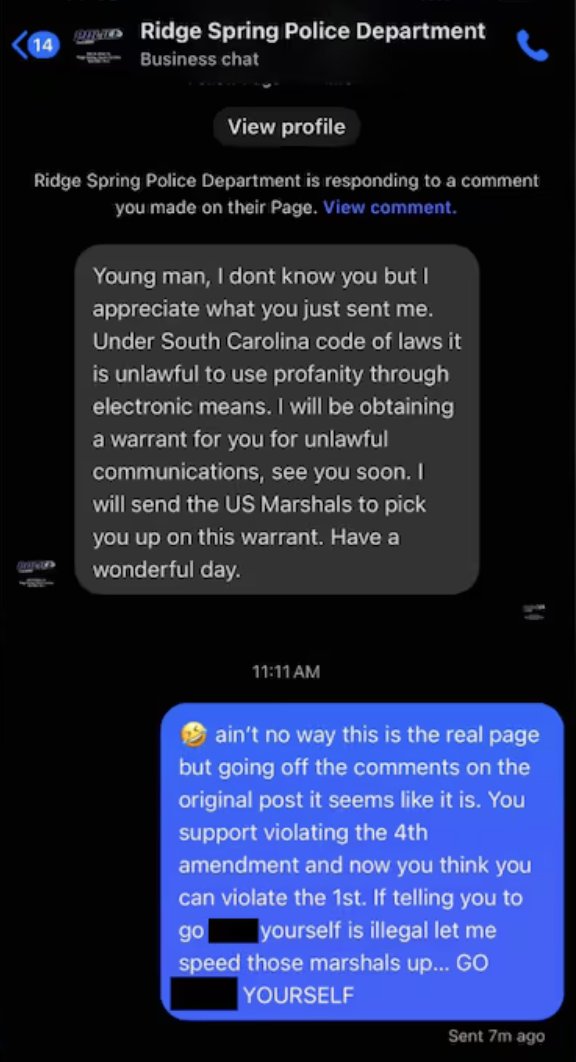
🚨 #BREAKING: Police Chief Terry Logan of Ridge Spring Police Department threatens to send the US Marshals to arrest a citizen for saying "f*ck you and your Flock cameras"
@Stromgardes This is not true
I also called for capital punishment against the NGO's and charities that help the invaders
Personally I think flooding Western countries with 3rd world migrant rapists is bad and anyone who facilitates it should be publically executed
On September 11, a 24-year-old ran back up seventeen flights of stairs into a burning skyscraper.
Three times.
His mother did not know she was raising a man who would do that.
She would not know for eight months. And when she found out, she dropped to her knees on her kitchen floor.
His name was Welles Crowther. He worked on the 104th floor of the South Tower.
At 9:03 a.m. the second plane cut through his building at 590 miles an hour, between the 78th and 84th floors. His floor was above the fire. There was no way down through that.
Nine minutes later, at 9:12, he picked up the phone and called his mother in Nyack.
She was not home.
She would replay the message he left, over and over, for the rest of her life.
"Mom."
A pause.
"This is Welles."
A pause.
"I want you to know that I'm okay."
Then he hung up. And he lied.
He was not going to be okay. He knew it. And he was calling his mother to soften it.
That is what that voicemail is. A twenty-four-year-old boy trying to protect his mother from what he was about to do next.
What he did next was walk down toward the fire.
The 78th floor sky lobby of the South Tower was where roughly 200 people had been waiting for express elevators when the plane hit. Most of them had died in the impact. The ones still alive were burning, or bleeding, or trapped under debris. Where the wall had been, there was open sky. Wind was coming through. Papers were on fire in the air.
Ling Young came to on the floor.
There was blood on her glasses. The people around her were on fire.
She lay there and made a decision. She would breathe the smoke. She would go quickly. Because if she stood up, she was going to feel her own body burn, and she could not face that.
Judy Wein could barely move. Her arm was broken. Three ribs cracked. Her lung was punctured. She could not draw enough air to shout.
They were dying. They knew it. They had accepted it.
And then, through the smoke, a voice.
A young man stepped into that lobby. He was stripped to a t-shirt. He had a red bandana tied over his nose and mouth. He was carrying a fire extinguisher he had found somewhere.
And he was calm.
Not brave. Calm.
That is the detail Ling Young, twenty-five years later, still cannot get over. There were dead people on the floor. There was fire on the walls. And this boy was calm.
He set the extinguisher down. He looked at the people who could still move.
Seven words.
"Everyone who can stand, stand now."
Judy Wein stood.
"If you can help others, do so."
He told them he had found the stairs. Follow me, he said. Only help the ones you can help.
Then he picked up a woman who could not walk. He got her onto his back. And he started down.
Seventeen flights. From the 78th floor to the 61st. In the smoke. Carrying her the entire way.
He handed her, and the group, to firefighters coming up.
And then he turned around.
Stop here for a second. Picture him.
His t-shirt is soaked through. His lungs are burning from the smoke. He has just carried a full-grown human being on his back down seventeen flights of stairs. He is 24 years old.
And he turns around and starts back up. Toward the impact zone. Toward the fire.
Not because anyone told him to. Not because anyone knew he was up there. Not because any part of his job description required it.
Because there were still people up there.
He climbed seventeen floors. Back to the 78th.
He found another group. He led them down.
Then he did it again. A third time.
He went back up.
Nobody knows if he made a fourth trip. Nobody knows the exact hour of his death.
All we know is that when they finally recovered his body, on March 19, 2002, they did not find him upstairs.
They found him on the ground floor. Next to the firefighters at their command post.
He had made it all the way down. He had made it out.
And on the ground, after everything, he had turned around one more time to help.
For eight months, his parents did not know any of this.
They only knew their son was gone. His father Jefferson kept a mostly finished application to the FDNY that they had found in Welles' bedroom.
They knew he had wanted to be a firefighter. He had told his mother once, "Mom, I want to help people." He had been talking about leaving Wall Street.
They did not know he had already been the firefighter he wanted to be.
Then, in May 2002, his mother Alison sat down with the newspaper.
The New York Times had published an oral history from survivors of the 78th floor. Judy Wein had described the man who had appeared through the smoke.
A man in a red kerchief.
Alison read that line.
She stopped.
Welles had carried a red bandana in his back pocket since he was six years old. His father had given him two handkerchiefs one Sunday morning before church. A white one for the pocket square. A red one for his back pocket.
His father had said, "One to show. And one to blow."
Welles never took it out. Not through prep school. Not through Boston College. Not through the years of running as a volunteer firefighter alongside his father in the small town where they lived.
The red bandana was in his back pocket every single day for eighteen years.
Alison put the paper down.
And she went to her knees on the kitchen floor.
Her husband later described what she said, out loud, to the empty room.
"Dear God. Take me now. Leave him here."
She was asking to trade places with her dead son. Retroactively. She was offering God her life for his.
That is what a mother does.
She got up eventually. She wrote down two phone numbers. Judy Wein. Ling Young.
She mailed each of them a photograph of Welles.
Ling Young opened her envelope some days later.
She looked at the photograph.
She stared at it for a long time.
The face she had last seen through smoke. The face that had walked past her, again, going back up.
She said one word.
"Yes."
Judy Wein said the same word.
The Crowthers finally knew what their son had done in the last hour of his life.
They knew he had saved between twelve and eighteen people who would otherwise be dead. They knew he had reached safety, and turned around, and gone back up. Three times. They knew he had made it to the ground. And they knew he had chosen, on the ground, not to leave.
They knew who he had been.
The FDNY made him an honorary firefighter in 2006.
Boston College plays a football game every September now called the Red Bandanna Game. His teammate at Boston College competed as a snowboarder in the 2006 Winter Olympics wearing a red bandana tied around his head.
Four days ago, twenty-five years and one week after that September morning, the President of the United States placed the Presidential Medal of Freedom, the highest civilian honor this country can bestow, on Welles Crowther's name.
His mother Alison walked up on the stage of the White House to accept it.
She has told the story a thousand times since 2002.
She still cannot get through the voicemail without her voice breaking.
"Mom."
A pause.
"This is Welles."
A pause.
"I want you to know that I'm okay."
He was not okay. He knew he was not okay.
He was calling his mother because he was about to walk into the fire, and he did not want the woman who had raised him to spend the rest of her life imagining he had been afraid.
He carried a red handkerchief in his back pocket for eighteen years because his father had put it there when he was six years old.
The last thing he did with it was tie it over his nose and mouth, and walk into a room full of dying strangers, and calmly tell them to stand up.
He was 24.
He never came home.
One to show.
One to wipe.
His father gave him two handkerchiefs.
His son used the red one to wipe the tears off the faces of strangers in a burning room, and to hide the last words that would ever leave his mouth from his mother. 🇺🇸
On the 27th floor of the North Tower, a paralyzed man could not use the stairs.
So his best friend pulled up a chair and sat down next to the wheelchair.
Then a fire captain came, and sent his own men down, and sat down too.
None of the three came out.
Ed Beyea was 42. A diving accident twenty years earlier had left him paralyzed from the neck down. He was a computer programmer at Empire Blue Cross Blue Shield. He typed with a stick held in his teeth. He weighed 280 pounds, and his motorized wheelchair weighed more. He took public transit to work every day, with an aide named Irma who set him up each morning with his stick and his jacket.
Abe Zelmanowitz was 55. He worked beside Ed for more than ten years. He was an Orthodox Jew, thin, soft-spoken. Ed was Catholic, big, loud, and laughed at everything. They ate dinner together most nights after work.
When Ed picked the restaurant, he made sure it was kosher.
When Abe picked the restaurant, he made sure a wheelchair could get through the door.
That is the whole friendship, in two sentences.
At 8:46 a.m. on September 11, the plane hit the North Tower fifteen floors above them. The elevators died instantly.
The stairs were the only way out. And there was no way to carry a 280-pound man and his chair down 27 flights without a team of strong men and equipment nobody had.
The floor emptied. Hundreds of people streamed past the two of them toward the stairwell.
Irma, the aide, came down from the cafeteria. Abe told her to go. Go down, get out, tell the rescuers where we are. She did not want to leave. Abe insisted.
As she went, he called after her. Irma, we are on 27C.
She made it out. She told them.
Abe stayed.
At 9:30, he picked up a phone and called his sister-in-law. He told her, calmly, that he was going to stay with Ed until help came. He told her not to worry.
Help came. Captain Billy Burke of Engine Company 21 climbed to the 27th floor and found them.
Burke was a Long Island guy, a lifeguard, the kind of captain his men called Cap and followed anywhere. He took one look at Ed and the chair and the stairs and understood the problem.
At 9:59, the South Tower fell. The North Tower shuddered. Every firefighter in the building understood what it meant. Their tower was next, and they had minutes.
Burke turned to his lieutenant and his men and gave an order. Take Stairwell C. Get out. Now.
The men of Engine 21 went down.
Burke stayed on 27.
When Engine 21 came out onto the street and looked back, their captain was not behind them.
He was still up there with Abe and Ed. Somehow, the three of them got down six floors together, to the 21st.
At 10:28 a.m., the North Tower collapsed.
Abe Zelmanowitz, Ed Beyea, and Captain William Burke Jr. all died on the 21st floor.
Burke was the only member of his firehouse killed that day. He had sent all the others home.
Three days later, at the National Cathedral in Washington, the President of the United States stood before the country at the memorial service and told the story of a man named Abe who would not leave his friend.
Here is what happened on that floor.
Abe could walk. He chose not to, because Ed could not.
Burke could leave. He ordered his men to, and did not, because Abe and Ed could not.
Each man looked at the person next to him and decided that person's life was worth more than his own.
A Catholic in a wheelchair. An Orthodox Jew who would not leave him. An Irish fire captain who would not leave them both.
Twenty-seven floors up, with the building coming down, three men chose each other.
Abe would not leave Ed.
Burke would not leave either of them.
They are together now. 🇺🇸