IM SCARED OF THE FUTURE OF OUR POLITICAL PARTY
Some people remain loyal to the President, @edmnangagwa ,the Government, and the party through difficult and good times alike. They defend the leadership, uphold party values, and work tirelessly without expecting rewards or recognition.
It is therefore disappointing to see individuals who have built their reputation on insulting the President, attacking Government officials, and undermining the leadership being rewarded with gifts and public recognition. Such actions send the wrong message to loyal supporters and risk creating the impression that disrespect and insults are more valuable than discipline, loyalty, and patriotism.
Constructive criticism is part of democracy, but there must be a clear distinction between genuine criticism and persistent attacks on the country’s leadership and institutions. Rewarding those who continuously insult the President does not strengthen unity; it weakens morale among committed people who have remained faithful to the cause.
My concern is not personal. It is about safeguarding the dignity of the Office of the President, protecting our gvt , and ensuring that loyalty, respect, and dedication remain values that are recognized and upheld. As people’s part Youth , we must be careful not to celebrate conduct that diminishes the very leadership we claim to support.
Two days ago, I was scammed.
A WhatsApp account belonging to a Newzroom television journalist was hacked, and I received a message from what appeared to be her number asking to borrow R1,500, with a promise that it would be repaid the following afternoon. Thinking I was helping a colleague, I did not hesitate.
The person first asked me to do a cash send, but I explained that my account does not have that facility because it is a non-resident account with certain restrictions. I was then given a Capitec bank account number and transferred the R1,500.
Today, I called the journalist to check whether she had received the money, only to discover that her WhatsApp account had been compromised and that she had never sent the message. The money had gone straight to criminals.
I am sharing this as a warning to others. If someone contacts you asking for money, no matter how well you know them, pick up the phone and speak to them directly before sending anything. That is the mistake I made. I assumed I was communicating with a colleague and did not think to verify it.
The scammers are clever. They ask for relatively small amounts that do not immediately raise suspicion. In this case it was R1,500, an amount many people would send without thinking twice if they believed they were helping a friend or colleague.
What also concerns me is that the journalist’s number is on MTN. I do not understand how the criminals were able to gain control of the account. Mobile operators normally have security measures in place when a number is moved to another device or when a SIM swap occurs.
Whether this was a hacked WhatsApp account, a SIM swap, or some other form of compromise, it is a reminder that none of us should assume that a message is genuine simply because it comes from a familiar number.
Please be careful out there. Before sending money, verify that you are actually speaking to the person you think you are speaking to. A quick phone call could save you from becoming the next victim.
I have advised the journalist to report the matter to the police and to provide them with the bank account details into which the money was deposited. The money was transferred into a Capitec account, and the bank should have records identifying the account holder. Hopefully, that information can assist law enforcement with their investigations.
Unlike some of the other people who were contacted, I had the foresight to keep screenshots of the conversation. That may prove useful because the scammers had activated WhatsApp’s disappearing messages feature, which automatically deletes messages after a set period of time. In this case, the messages were configured to disappear after 24 hours, making it more difficult for victims to retain evidence of what was said.
This is another tactic criminals are increasingly using. They know that once messages disappear, victims have less evidence to provide to the police, mobile operators and banks. Fortunately, I had taken screenshots before the messages vanished.
So, once again, if someone asks you for money, no matter how familiar the number may be, call them directly and verify that you are actually speaking to that person. It only takes a few seconds, and it could save you from losing your money to criminals. It could have been a huge amount of money.
SMALL SCALE GOLD MINING IS RESERVED FOR ZIMBABWEANS
Reservation of the Small and Medium Scale Gold Mining Sector forIndigenous Zimbabweans
With immediate effect, the small-scale gold mining sector in Zimbabwe is reserved exclusively for Zimbabwean citizens and Zimbabwean citizen wholly owned entities.
For purposes of this policy, no foreign individual, foreign-controlled company, or foreign beneficial owner shall be permitted to:
a) Acquire, hold, or control any mining title classified under the small-scale
gold mining category;
b) Participate directly or indirectly in the operation or management of
small-scale gold mining activities; or
c) Enter into any arrangement (tribute, joint ventures, syndicates,
partnerships) intended to confer economic or operational control over
small-scale gold mining activities reserved for Zimbabwean citizens.
Any nominee arrangements, proxy ownership structures, undisclosed
beneficial ownership arrangements, or other mechanisms intended to
circumvent this policy shall be unlawful and subject to cancellation and
enforcement action”
Today I just want to take time to thank every Zimbabwean who has helped me over the past 11 years as I built the Boer goat breeding business that was inspired by the late Professor Sam Moyo.
One day, while sitting with him on his veranda at his Borrowdale home, he told me something I have never forgotten. He said, “You will never become wealthy by earning a salary. You can live comfortably, but real wealth often comes from building something of your own.”
When he discovered that my parents had left me a rural home, he and his partner, Beatrice Mtetwa, who is my lawyer, encouraged me to do something productive with that piece of land.
That conversation inspired me to start Hopewell’s Boer Goats, which by the time I left Zimbabwe in 2024 had become the third biggest Boer goat breeding business in the country.
Prof Sam Moyo then sent me to speak to Professor Lindela Ndlovu, a renowned Zimbabwean animal scientist and former Vice-Chancellor of the National University of Science and Technology. He specialised in animal science and livestock production, including goats. He is the one who truly opened my eyes to the business potential of Boer goats.
Initially, I thought I was simply going to do ordinary goat farming. But Prof Ndlovu advised me to focus on high-value breeds such as Boer goats, Kalahari Reds and Savannas. However, because I was coming from Murewa, he specifically recommended Boer goats, explaining that they would adapt well and perform strongly in that environment.
What struck me most was how he explained the business model. He told me that my target market should not be people buying goats for meat because pure Boer goats are expensive. Instead, my market should be farmers looking to breed and improve the quality of their own herds.
He explained that a mature male Boer goat can weigh between 100 and 120 kilograms live weight, while the average indigenous Mashona goat weighs around 20 kilograms. When you crossbreed the two, the offspring can weigh between 60 and 70 kilograms. That is where the commercial value comes in. Farmers buy a quality Boer buck (male), breed it with their indigenous goats, and then sell the heavier crossbreeds for meat production.
That conversation completely changed how I viewed livestock farming. It stopped being just farming and became genetics, business, strategy and long-term value creation. I remain forever indebted to Profe Lindela Ndlovu for his guidance, wisdom and generosity with knowledge. May his soul rest in peace.
So, I want to thank everyone who assisted me on that journey, especially during difficult periods when the business was moved from the village after ZANUPF thugs targeted my operation and tried to steal the goats, a story so embarrassing that it was broadcast internationally. But this post is not about that pain. It is about gratitude.
When I started in 2015, we were selling six-month-old Boer goats for US$450 each, and sometimes we would have 40 goats born in a single cycle inside one week. Forty multiplied by US$450 is US$18,000. Instead of spending the money, I reinvested it back into the business so it could grow.
That money helped me build world-class goat pens not only at my ancestral home, but also on two other pieces of land that I rented from people who had acquired farms through land reform but were not using them productively. Today, those properties remain with the owners, and I am genuinely happy because they are now successfully running their own goat businesses.
By the time I left Zimbabwe, I had developed such a strong genetic pool that I was now selling one-year-old Boer goats, commonly known in livestock breeding circles as “four-tooth” goats because of the stage of their permanent teeth development, for between US$2,000 and US$3,000 each.
What made these goats valuable was not just their size or appearance, but the quality and traceability of their genetics. Their bloodlines had been documented and officially recorded in South Africa, with lineage records that could be traced back nearly 30 years. Buyers were not simply purchasing a goat, they were investing in proven genetics, breeding quality and future herd improvement.
That is how the business evolved from ordinary goat farming into a serious livestock breeding operation built on genetics, record-keeping and long-term value.
Over time, I transitioned from breeding into trading and mobilisation after I left Zimbabwe. The business has evolved into sourcing quality goats from South Africa and supplying them to people in Zimbabwe who want to improve their own herds.
I also want to pay special tribute to Dr Gerald Manyatelo, a state veterinarian in Gauteng, originally from Zimbabwe, who helped me immensely when I imported my first batch of goats in 2015. Without his assistance at that crucial stage, things could easily have gone wrong and I might have given up altogether.
I hope my story inspires others. You can be a professional in one field and still build real wealth from something completely different. Too often, when people see someone succeed, they ask, “Where did he get the money from?” instead of asking, “How can we also learn and build something ourselves?” Zimbabweans are talented, hardworking and capable of building businesses if we support and encourage one another.
I was saddened recently when a UK-based lawyer wrote on Twitter saying, “Hopewell has a house in Zimbabwe, another in South Africa and now one in England. Where does he get the money from?” And yet I am 55 years old.
A decent house in areas like Chisipite, Borrowdale or similar middle to upper-income suburbs in Zimbabwe can cost between US$400,000 and US$500,000. By the time the Boer goat business had matured, one breeding cycle could generate around US$40,000 or more.
Ten good cycles and you can buy a house. For half that amount, you can buy property in South Africa. With proper planning, discipline and financing structures, the same business can help you acquire property elsewhere too.
The problem with many of us as black people is that we have been conditioned to question success instead of studying it. Instead of asking, “How did he build it and what can we learn from it?”, people ask, “Where did he get the money from?” We have normalised suspicion instead of inspiration.
I have worked for decades as a journalist, documentary filmmaker, consultant and businessman. I built businesses, invested money back into them and took risks when many people were sleeping. There were years when I was waking up before dawn to go and check on goats before doing journalism work. Wealth does not always come from salaries. Sometimes it comes from building something patiently over time.
At 55, I am now at a stage where I should be slowing down from some of the hard labour and beginning to enjoy the fruits of years of sacrifice, hard work and persistence. So for someone to act shocked that a man of my age has managed to build a comfortable life says more about what our country has become than it says about me. A society where success is treated as suspicious is a society that has been psychologically damaged by poverty and political failure.
So today, I simply want to say thank you to everyone who helped me along the way. I will never forget your support.
And to the man who inspired me to start this business, Professor Sam Moyo, rest in peace my dear brother. You were a great source of inspiration and wisdom. One conversation with you changed the direction of my life and taught me that true wealth is built through vision, hard work and creating something meaningful of your own. Your advice planted a seed that grew into something far bigger than I ever imagined. I will always remain grateful for your guidance and belief in me.
One day I will tell the story of how, when my journalism licence was revoked, I turned to selling mobile phones and supplying networks like NetOne and Econet, and how that became a dream business that made a lot of money.
While others were busy chasing useless things, a few of us, whom I shall name in my book, were flying to London three or four times a month to procure phones. That is the level of the journey some of us have walked quietly, without making noise about it.
People only want to see the success, but they ignore or deliberately turn a blind eye to the hard work, sacrifice and risks that were invested behind the scenes.
So once again, thank you to everyone who has walked with me on this journey in the Boer goat business, and thank you for supporting my work. You are simply too many for me to mention by name, but you know who you are.
You trusted me when I was still a little-known breeder, and together we built a business that became one of the dominant names in the industry. Your support gave me the confidence and credibility to evolve beyond breeding into trading, sourcing quality Boer goats from South Africa and supplying them to farmers in Zimbabwe. That transition was only possible because so many farmers developed trust and confidence in my work and knowledge of Boer goats.
For that, I will always remain grateful. I salute you all.
And I want to encourage people not to support only me. There are many other small Boer goat breeders in Zimbabwe trying to build something meaningful for themselves and their families. Support them as well. Help them grow the same way many of you supported me. When we support each other, we create industries, opportunities and wealth within our own communities instead of constantly waiting for governments to change our lives.
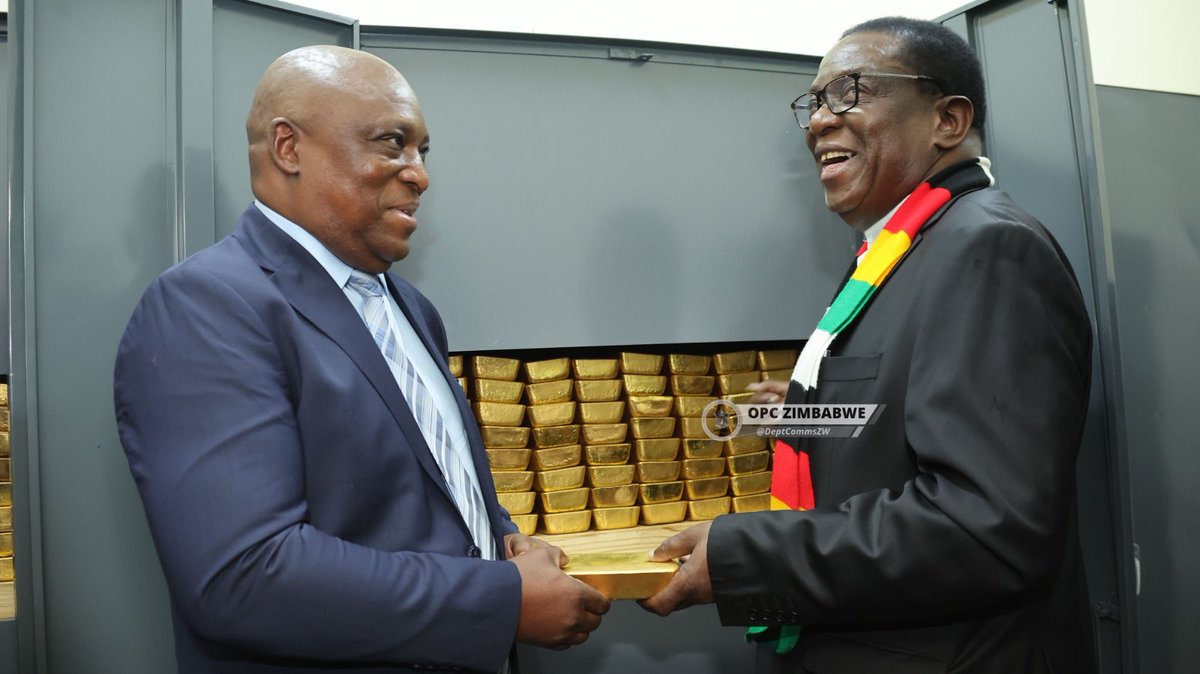
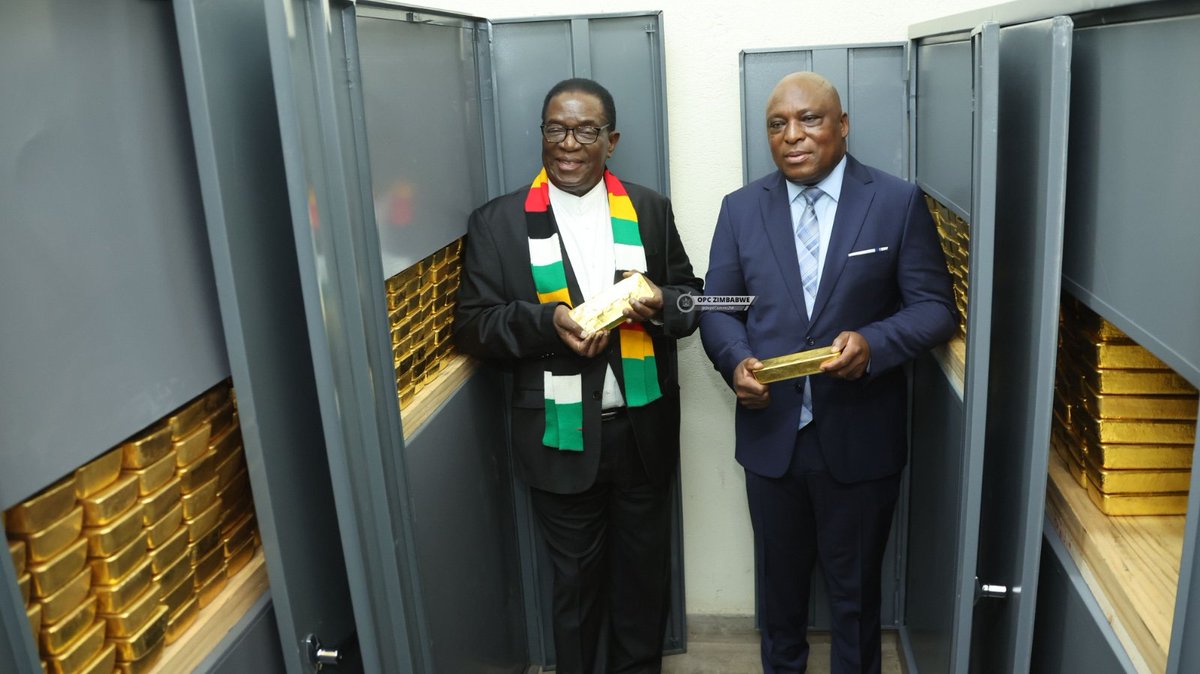
This morning, I inspected the vaults of the Reserve Bank of Zimbabwe (RBZ) to personally verify our national gold and ZiG reserves.
I am delighted to report that our strategic initiatives to establish a gold-backed foundation for our economy are producing substantial outcomes. Following my directive two years ago to accumulate mineral royalties in physical form, our gold reserves have increased considerably. Presently, Zimbabwe proudly ranks 11th in Africa and 3rd in the SADC region for official gold reserves.
These reserves are tangible assets that underpin our monetary sovereignty, rather than mere numbers. With over 4 metric tonnes of gold and foreign currency reserves, our ZiG currency remains fully backed and resilient to global economic shocks.
As we progress toward our goal of 5 metric tonnes by year-end, we remain committed to fostering a stable, transparent, and prosperous economy for all Zimbabweans. Collectively, we are laying the groundwork for a robust future.
This morning, I had the privilege of officially opening the new Varun Beverages Zimbabwe Cheetos snacks manufacturing plant in Ardbennie, Harare, and laying the foundation stone for their forthcoming Juice and Dairy Blend Facility.
This significant milestone underscores Varun Beverages' deepening investment in Zimbabwe's manufacturing sector, marking a notable shift from importing these popular snacks to local production. Consequently, this facility will enhance domestic maize sourcing, empower Zimbabwean farmers, and generate employment opportunities.
Our assertion that Zimbabwe is open for business is exemplified by such developments. From a single production line in 2018, Varun Beverages has expanded exponentially, supporting over 15,000 jobs nationwide. By aligning corporate excellence with our National Vision 2030, we are effectively substituting imports, driving industrialization, and transforming Zimbabwe into a regional manufacturing and export hub. The nation is built by its people. #ZimbabweIsOpenForBusiness
@MthuliNcube01 Implementation and enforcement are weak. City of Harare still charges $1 for parking. Your reforms said parking should be charged at half the charge per hour.
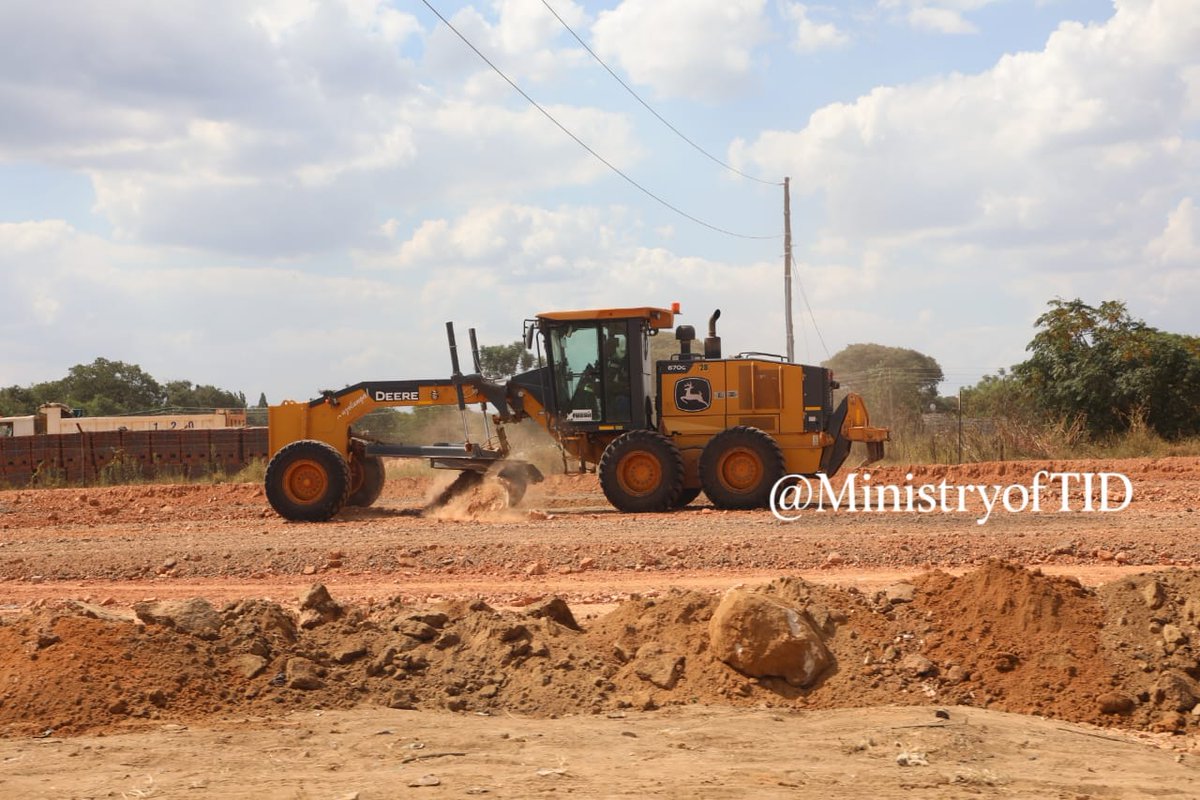
Work in Progress on the Chitungwiza Road Construction Project (Irvines Area)
Progress continues on one of the Ministry's key infrastructure projects, as construction advances on this vital road artery in the Irvines area of Chitungwiza.
Once complete, this road will significantly ease congestion for thousands of daily commuters, improve connectivity, and provide a much-needed boost to local economic activity.
Together, we are building a Zimbabwe that moves forward. 🇿🇼
#ZimbabweInfrastructure #KilometerbyKilometer #RoadConstruction #InfrastructureDevelopment #BuildingZimbabwe