Football in Zimbabwe is more than 90 minutes. It is culture, community and national pride - one of the few institutions capable of bringing millions together behind one flag.
That is why Sen. Dr Kudakwashe Tagwirei’s contribution to Zimbabwean football matters.
Through Sakunda Holdings, approximately US$12.5 million was committed to the National Sports Stadium refurbishment, including 55,000 bucket seats and rehabilitation of the playing surface. The completed works helped the NSS secure CAF Category 3 approval in August, bringing international football back home after years of exile.
Now the investment moves from infrastructure to technology.
Following an agreement with ZIFA, Sakunda is funding VAR technology, beginning at the National Sports Stadium by year-end, before planned expansion to Rufaro and Barbourfields. The initiative also creates opportunities to train Zimbabwean referees locally on technology increasingly central to international football.
This is home-grown capital serving a national institution.
The stadium is back. International football is back. Now Zimbabwean football takes another step towards modernisation.
@dereckgoto I think this is a healthy sign that the economy as a whole is growing because infrastructure is the backbone that links that links all sectors of the economy
Zimbabwe's infrastructure story is bigger than the national budget.
Government is directly building and rehabilitating major roads, expanding energy infrastructure and pursuing strategic projects such as the Beira-Feruka pipeline. At the same time, new financing mechanisms are bringing banks, PPP investors, pension funds, developers, businesses and ordinary citizens into the development equation.
A highway financed against future road revenues, a major public infrastructure project, a developer adding housing stock and a household investing in solar are different forms of capital - but ultimately they contribute to the same economy.
The emerging model is not about replacing Government with private capital. Government remains the anchor - building strategic infrastructure while creating the conditions for other capital to multiply its impact.
The bigger question is no longer simply how much Government can spend.
It is how much capital Zimbabwe can mobilise to build itself.
The Goto Brief - Episode 11
South Africa should study Zimbabwe's history very carefully.
Marco Rubio's visa restrictions, announced on 15 September 2026 and targeting certain foreign nationals over policies and conduct in South Africa, are not yet a Zimbabwe-style economic sanctions regime. But Pretoria should understand the significance of what has begun. Washington is explicitly linking punitive measures to South Africa's land and race policies.
Zimbabwe knows this terrain intimately.
The confrontation between Zimbabwe and the West intensified dramatically around Fast Track Land Reform. Washington's own congressional record shows that land reform, compulsory acquisition and private-property rights were central issues in the debate surrounding ZDERA, alongside false American allegations about elections, human rights and the rule of law. Indeed, congressional debate at the time explicitly described land reform as a major issue.
Then came years of pressure and isolation.
The lesson is that sanctions are not merely punishments. They are instruments of statecraft - using access to markets, finance, institutions and international legitimacy to increase the cost of policies Washington opposes.
There is now an extraordinary historical irony. During Zimbabwe's darkest period of confrontation with the West, influential voices in South Africa often treated Zimbabwe as the regional cautionary tale - a country whose predicament could simply be dismissed as self-inflicted.
It would, however, be remiss of me not to acknowledge President Thabo Mbeki. At a crucial moment in Zimbabwe's history, Mbeki resisted enormous external pressure to turn South Africa against its neighbour. He later wrote that his government opposed attempts by the UK and US to impose regime change on Zimbabwe, including proposals involving military means. Mbeki also stated that Tony Blair wanted South African cooperation with a military invasion to remove President Robert Mugabe.
Whatever one's interpretation of that period, Mbeki's insistence that Zimbabweans should determine Zimbabwe's political future deserves recognition. In that respect, he occupies an important place in Zimbabwe's modern political history.
Two decades later, the strategic question Mbeki confronted over Zimbabwe has acquired new relevance for Pretoria itself. South Africa must now consider how far external powers should be permitted to use diplomatic and economic leverage to influence domestic policies dealing with land, race and historical inequality.
South Africa is not yet where Zimbabwe was. But it is encountering something Zimbabweans recognise: domestic policies concerning historical land and racial inequalities becoming matters of direct American foreign-policy pressure.
Pretoria would therefore be wise to quietly consult Zimbabwe's Government and ZANUPF in particular. Whatever one's politics, they possess more than two decades of institutional experience dealing with American sanctions, diplomatic isolation and attempts to mitigate their effects. South Africa can study what worked, what failed and what it should never repeat.
Yesterday, Zimbabwe walked that road largely alone. Today, South Africa can see the entrance.
Those who once looked north with amusement may discover that sanctions look very different when Washington's letter carries your name.
The return of direct Air Zimbabwe flights to London is about far more than aviation. It's about reconnecting Zimbabwe to global markets, investment, tourism, trade and our diaspora.
The debate shouldn't begin and end with who owns the aircraft. In global aviation, leasing is a standard commercial strategy. The real asset is the route - and what it unlocks for the country.
Today it's London. Tomorrow it could be Beijing, Dubai or Guangzhou.
Watch the latest episode of The Goto Brief as I explain why this flight matters for Zimbabwe's future.
The Tungwarara-Matinyarare and Mliswa-Chivhayo controversies over the weekend were loud, emotional, and messy. They were also, beneath all of that, among the most useful intelligence exercises the Zimbabwean social media space has produced in years - entirely by accident.
What has emerged from the wreckage is a clear categorisation map.
The episodes stripped away the usual ambiguities and forced every actor to reveal themselves. We can now identify the Information Mercenaries with precision - their synchronised messaging, their payroll footprints, the external interests they mask as conviction. We can see clearly those who hold their ground on principle, who remain disciplined and unambiguous in their alignment with the President and ZANUPF. We can trace the real opposition actors who have been celebrating every moment of the friction and discord. And we can now read, in high resolution, the deeper layer - who hates whom, and why - grievances and allegiances older than these particular episodes.
What unfolded was an inadvertent surfacing of information that subjects would not ordinarily disclose and in some cases actively conceal. The blunt mechanics of human nature under emotive pressure revealed it all.
The terrain is now well-mapped.
Interestingly, there are the politically confident and astute who chose to ignore the drama entirely, relegating it to a mere sideshow. Those are probably the true movers and shakers in the grand scheme of Zimbabwe's politics.
First Lady of Angola Her Excellency Ana Dias Lourenço and ZANUPF National Political Commissar Comrade Munyaradzi Machacha leading the procession at the burial of Manuel Domingos Augusto, former Minister of Foreign Affairs of Angola (2017–2020), Secretary of the Bureau Político of the MPLA for International Relations, Vice President of the Socialist International, and former Angolan Ambassador to Nigeria, Zambia, Ethiopia and the African Union, in Luanda on June 11, 2026. Augusto also served as a member of the National Assembly at the time of his passing.
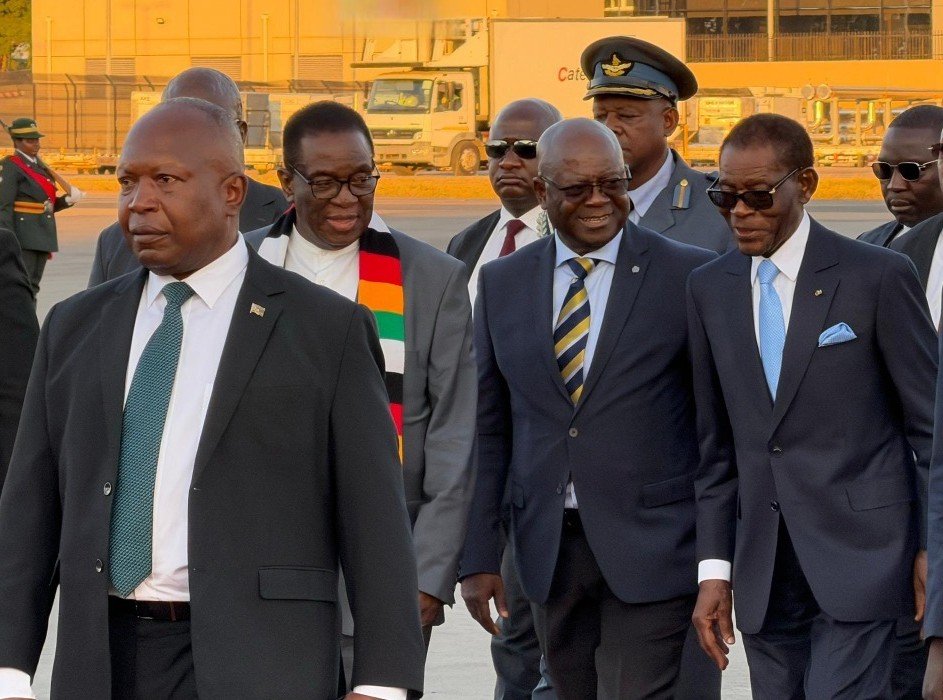
President Mnangagwa led a high-level reception at the Robert Gabriel Mugabe International Airport State Pavilion, welcoming His Excellency Teodoro Obiang Nguema Mbasogo of Equatorial Guinea with full state honours. Flanking the President were Vice President Gen. (Rtd) Dr. C.D.G.N Chiwenga, Minister of Defense Hon. O.C.Z Muchinguri-Kashiri, Minister of State for Harare Metropolitan Province Hon. Sen. C.Z Tawengwa, Minister of Higher and Tertiary Education Hon. F. Shava, Minister of Information and Publicity Hon. S. Zhemu, Services Chiefs and senior government officials.
The occasion spoke to the depth of ties binding Zimbabwe and Equatorial Guinea - ties rooted in solidarity, friendship and a mutual commitment to advancing Africa's unity, prosperity, stability and sustainable development.
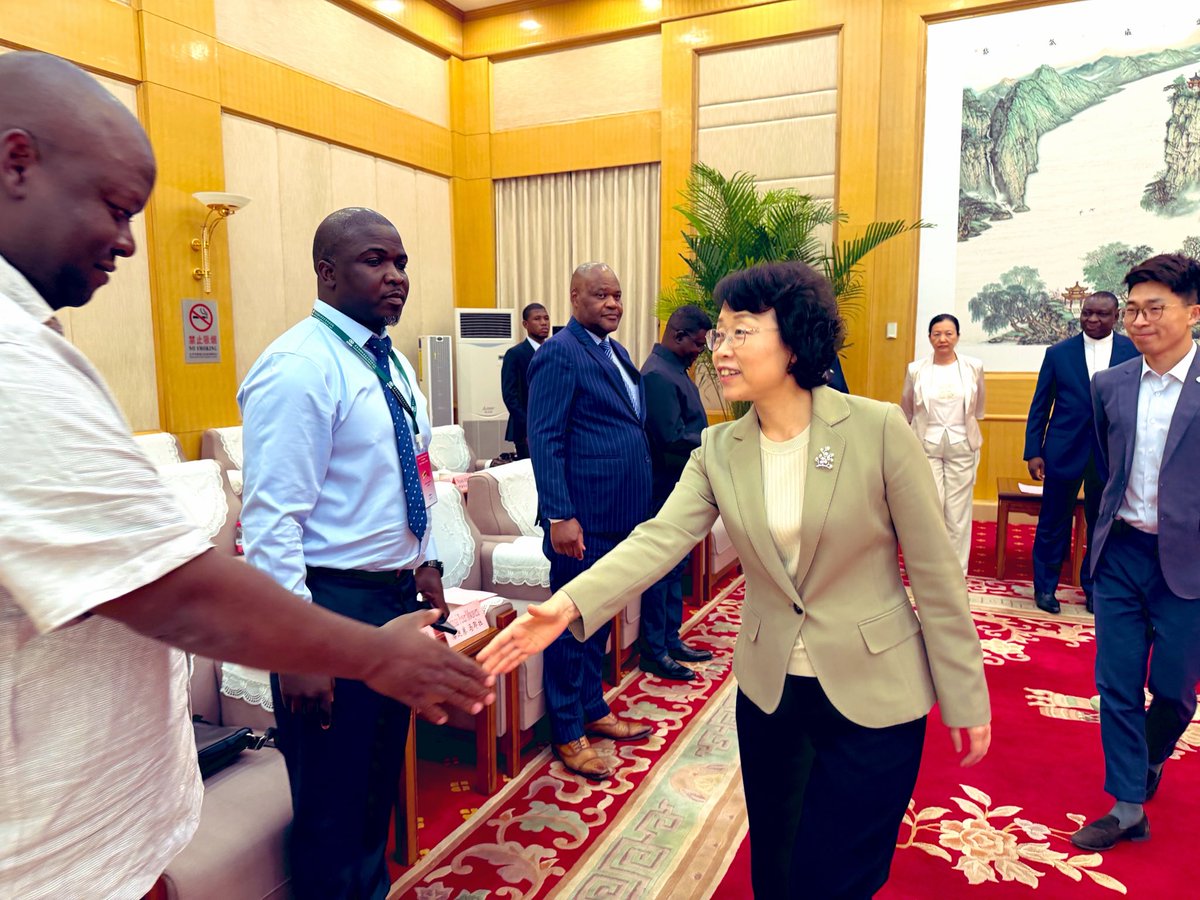
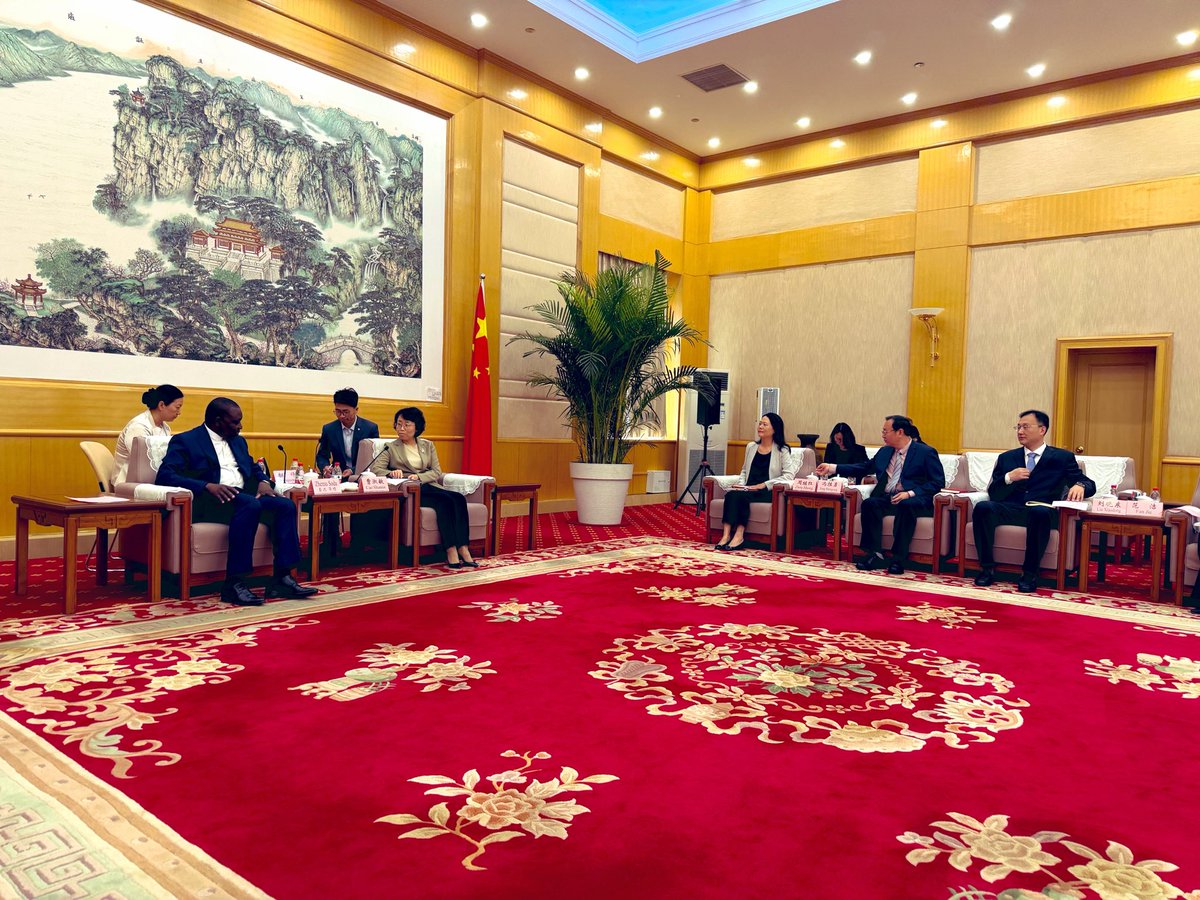
Today, I had the distinct honour of participating in a highly productive engagement led by Zimbabwe’s Hon. Minister of Information, Publicity and Broadcasting Services, Hon. Soda Zhemu, with the Minister of the National Radio and Television Administration of the People’s Republic of China, H.E. Cao Shumin.
The discussions focused on strengthening Zimbabwe-China cooperation in the areas of broadcasting, television production, content sharing, digital media development, and technical and professional skills exchange within the media sector.
The Chinese delegation included senior officials from the National Radio and Television Administration, among them Director-General of the Television Drama Department, Mr. Feng Shengyong; Director-General of the International Cooperation Department, Ms. Zhou Jihong; Deputy Director-General of the Publicity Department, Mr. Liu Xiaodong; Deputy Director-General in the Department of Management of Online Audio-Video Contents, Ms. Fan Jie; and Director of the External Relations Division, Ms. Qi Xiaochao.
Accompanying Hon. Soda Zhemu on the Zimbabwean side were Zimbabwe’s Ambassador to China, Her Excellency Ambassador Abigail Shoniwa; Minister Counsellor at the Embassy of Zimbabwe in China, Mr. Pedzisai Peter Mwayera; the Chief Director in the Ministry of Information, Publicity and Broadcasting Services, Mr. Jonathan Gandari; ZBC News and Current Affairs Director, Mr. Effort Magoso; and myself.
The engagement reflected the deepening strategic partnership between Zimbabwe and China, particularly in the fields of media cooperation, communication infrastructure, content development, and the exchange of professional expertise between the two nations.
China Just Opened the Door. Will Zimbabwe Seize This Opportunity?
There is a particular kind of diplomatic announcement that sounds, on first reading, like bureaucratic routine. Then you sit with it, trace its implications, and realise that what just happened is not routine at all.
On 14 February 2026, President Xi Jinping told the African Union Summit that China would extend zero-tariff treatment to all 53 African countries with which it holds diplomatic relations - not some, not only the poorest, but all of them, including Zimbabwe, effective 1 May 2026. No conditions. No governance benchmarks. No reciprocal liberalisation demands. The world’s second-largest economy had just unilaterally abolished tariffs on an entire continent.
If you are waiting for the Western financial press to call this historic, do not hold your breath. History does not wait for permission to be historic.
To understand what this moment means, you must first understand what it replaces. For decades, African countries seeking preferential market access were required to earn it - through structural adjustment programmes, governance conditionalities, and reciprocal market-opening obligations designed in Brussels or Washington. The European Union’s Economic Partnership Agreements require African countries to dismantle their own trade barriers in return for access. AGOA ties market access to political eligibility criteria, invoked and revoked with the rhythm of Washington’s shifting foreign policy priorities. The underlying premise has always been that African access to global markets is a privilege to be conditionally granted, not a right to be structurally enabled. China, on 1 May 2026, walked away from that premise entirely - without inserting itself into African governance, without making development conditional on political alignment, and without asking for anything in return.
The numbers reinforce the significance. In 2025, bilateral trade between China and Zimbabwe reached US$4.4 billion - a record - and Zimbabwe ran a trade surplus of US$740 million with the world’s largest trading nation. These are not the numbers of dependency. They reflect a relationship generating real returns for Zimbabwe. But developmental honesty requires going further. Volume is not transformation. A surplus built on raw minerals and unprocessed tobacco leaves the most valuable parts of the transaction - processing, employment, and technology - elsewhere. The zero-tariff regime fundamentally alters the incentive structure. When Zimbabwe’s avocados, macadamia nuts, processed textiles, and essential oils can enter a market of 1.4 billion consumers - where avocado imports alone have grown by over 20% annually - without tariff penalties, the calculus for domestic value addition changes overnight. Early evidence supports this: after China extended zero-tariff access to 33 African least-developed countries in December 2024, imports from those countries grew by 15.2% in four months. By the first quarter of 2026, total China-Africa trade exceeded US$90 billion, growing at 23.7% year-on-year. These are outcomes, not projections.
Beneath the headline lies something more durable. The China-Africa Economic Partnership Agreement (CADEPA) is under active negotiation, with Zimbabwe among the participants. The zero-tariff measure is an early harvest - a front-loaded benefit delivered before the agreement is finalised, signalling intent. CADEPA is expected to provide institutional predictability - a long-term, treaty-based regulatory framework that converts a favourable policy window into a structural economic condition, shifting investment decisions from “wait and see” to “invest now.” China’s parallel commitment to help African countries meet its technical and phytosanitary standards - transferring capability, not merely demanding compliance - addresses the capability gap that market access alone cannot close.
Zimbabwe is not a passive recipient in this moment. The Second Republic has staked its credibility on the proposition that Zimbabwe is open for business and serious about transformation. The zero-tariff regime does not hand Zimbabwe a future - it provides tools and an open door. The priorities are clear: invest in agricultural value chains with export potential, fast-track compliance with Chinese import standards, and use the CADEPA negotiations to lock in gains that cannot be easily reversed.
Step back, and what is unfolding is a shift in the political economy of the Global South that will be studied for decades. China’s zero-tariff offer is the most comprehensive unilateral market-opening measure ever extended to Africa by a major economy. It arrived without conditions, on time, and at a moment when Africa needed to be reminded that the rules of the international economic order are not fixed - they are choices, and they can be made differently.
Zimbabwe stands at a genuine hinge of opportunity. The only remaining question is the one every such moment poses: what will it build with this?