I'm very happy to announce that I'll be joining @offchain as Senior Product Manager of @Arbitrum Core Protocol 🧑🚀🔥
I will help lead the team to deliver scaling & innovation-focused solutions such as Orbit Stack, ZK chains, and bringing to market novel 0-to-1 technologies.
We recently launched our Privacy page, featuring support for three major privacy pools. While these protocols promise to decouple deposits from withdrawals, your activity could still be linked if you don't follow basic privacy pool hygiene.
Based on the article we published, here are 6 core practices 👇
L1 or L2?
Many enterprises assume L1 = customization.
In reality, L2s already provide the flexibility that matters:
- launch on shared infrastructure designed to scale with your business
- evolve into a dedicated, customized environment when needed
- maintain ownership over your policies, economics and user experience
Adapt without rebuilding your foundation.
Sending ETH on @Arbitrum almost costs nothing.
Average native token transfer fees on Arbitrum are currently around $0.000007.
On Arbitrum, the costs to transfer native tokens are now:
• ~83x cheaper than @Base
• ~367x cheaper than @Optimism
• ~2,350x cheaper than @Ethereum
As ETH transfer costs approach near-zero, programmable onchain interactions become far more scalable on @Arbitrum
Earn is live on the Arbitrum Portal.
Powered by @lifiprotocol's cross-chain routing, users can:
- swap from different chains
- access yield opportunities
- manage vaults in one place
Start using Earn today with @aave, @Morpho, @pendle_fi and more.
https://t.co/Z9dWdtYJbi
RWA szn on @Arbitrum
> @Ostium integrates @Nasdaq market data to power stock perpetuals onchain
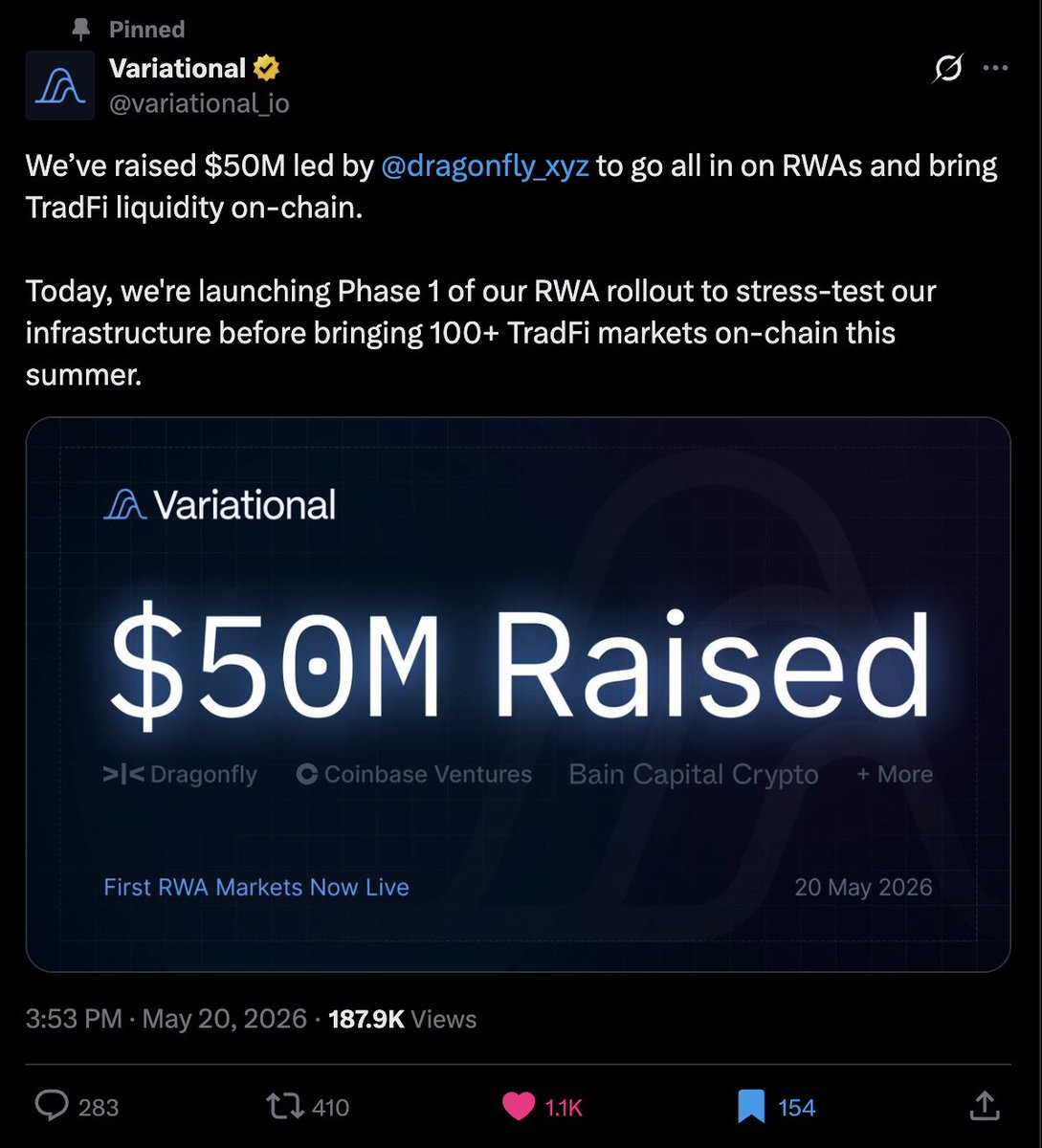
> @variational_io raises $50M to aggregate RWA liquidity through its RFQ infrastructure
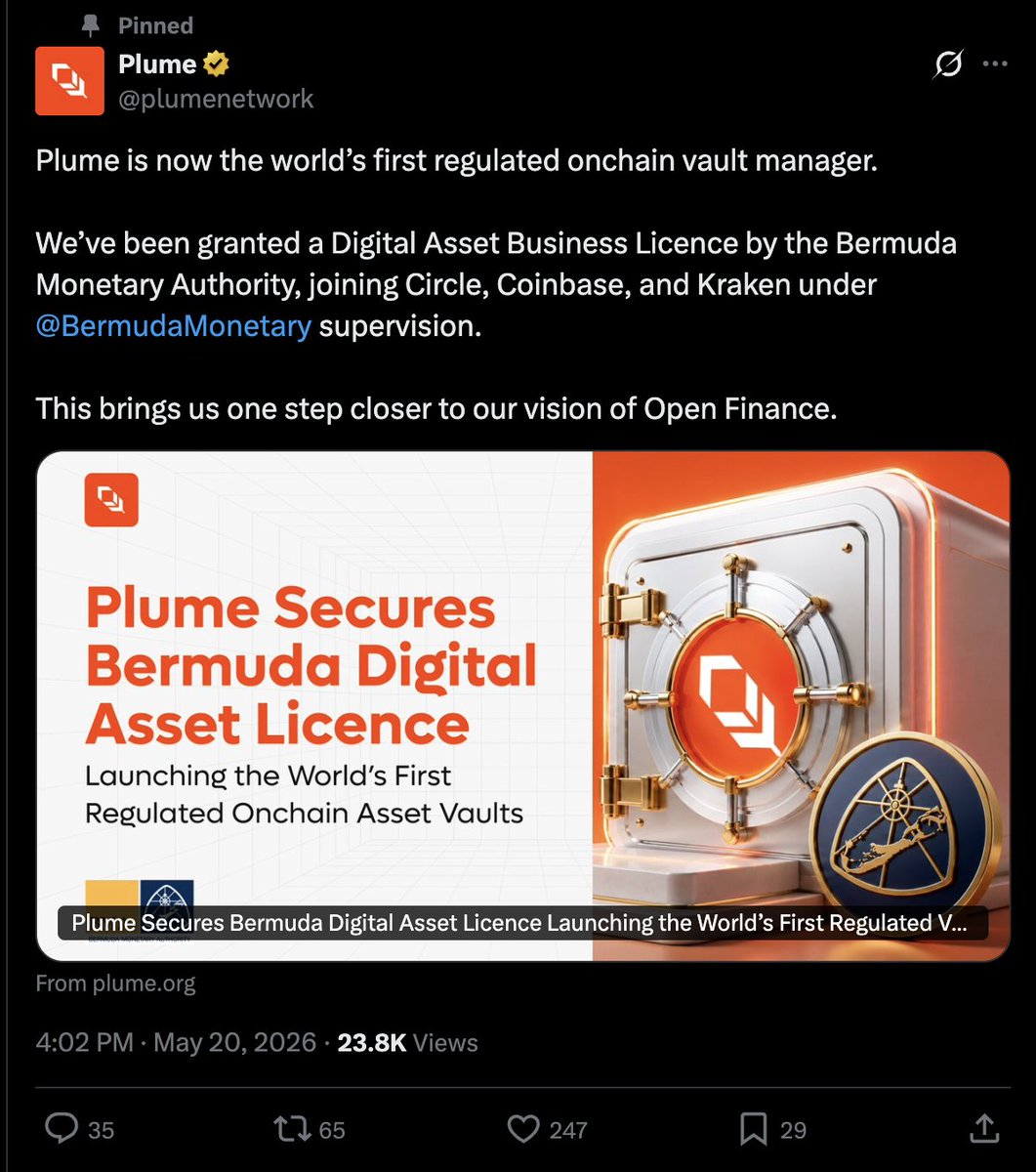
> @Plume secures a Bermuda Digital Asset License, joining Circle, Coinbase, and Kraken in bringing regulated, high quality assets to global users within a regulated framework
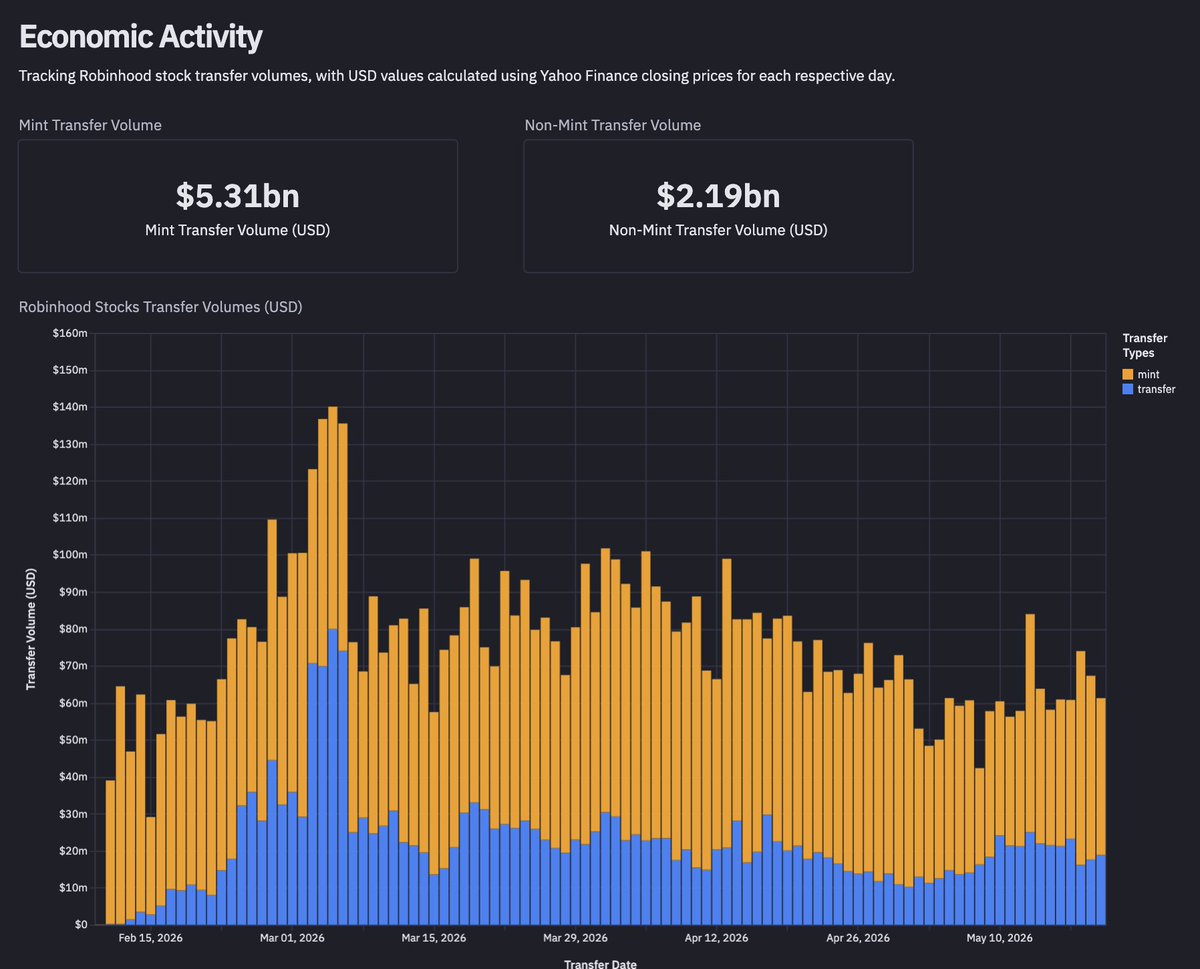
> @RobinhoodApp’s testnet surpasses $2B in RWA transfer volume
Arbitrum is programmed to lead RWAs onchain
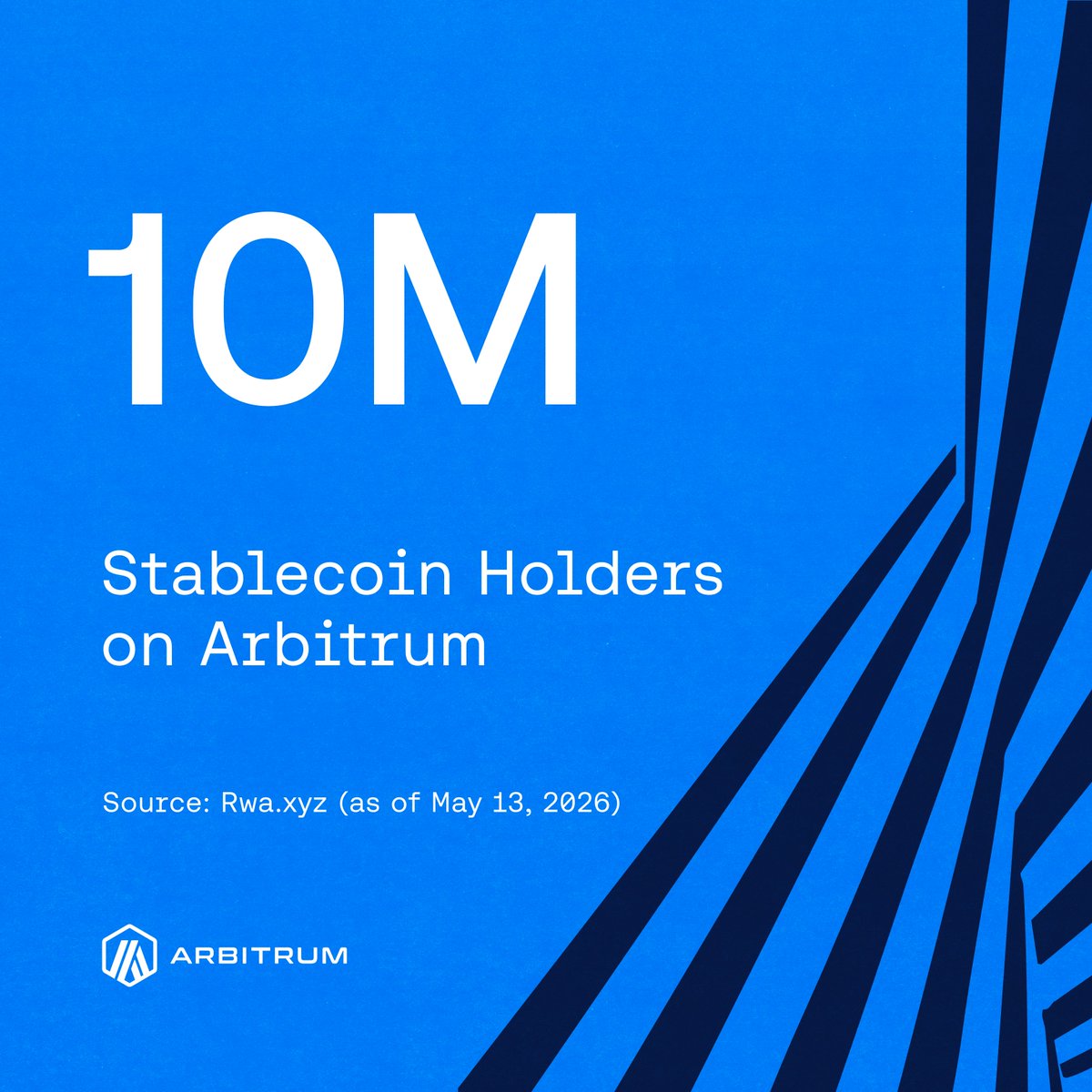
10 million stablecoin holders. $1 trillion transferred in a year. Every stablecoin category represented.
Arbitrum is the finance native platform where the programmable economy settles: Deep liquidity, predictable costs and infrastructure that institutional capital trusts.
On an airplane with no internet, running a local LLM feels like having the entire internet compressed into 2.5gb in your hand.
Its still crazy to me that there even exists an algorithm that can compress all human knowledge (well, at least a lot of the useful bits) just by predicting the next word 🤯
8/ Key distinction:
BAL helps nodes consume a block faster and stay up to the tip of the chain.
Opportunistic parallel execution helps the Builder / Sequencer execute the block faster and thus increase throughput by ~40-50%.
Those are different bottlenecks.
1/ There seems to be a common misconception about what Block-Level Access Lists (BAL) mean for Ethereum parallel execution.
BALs do not make execution parallel for every actor or automatically increase throughput of L2s if they implement it.
They help after a Builder/Sequencer has already constructed the block & access lists.
7/ To actually increase throughput of the chain (Builder / Sequencer parallelism), one interesting model is opportunistic parallel execution:
run txs speculatively in parallel, track reads/writes, abort + restart when a prior tx wrote state a later tx touched, then retire txs in canonical order.
Same sequential semantics, more parallel execution throughput.
Last week, Ethereum core contributors gathered in Svalbard for the Soldøgn interop: a week long event focused on hardening Glamsterdam implementations to scale Ethereum securely ☀️
Read the full recap, including their candidate post-fork gas limit, below:
A fact I feel like almost nobody knows: Ethereum's gas limit will be increased to ~200M after Glamsterdam, a huge increase from the 60M we have today.
That’s a 3x+ of L1 execution capacity, with expectation of further doubling soons after that. Assuming no similar increase in demand, fees could stay near zero for years.
This is the result of several innovations coming together at the right time: ePBS gives payloads more time, BALs let clients prefetch/parallelize execution work, and gas repricings make higher limits safe.