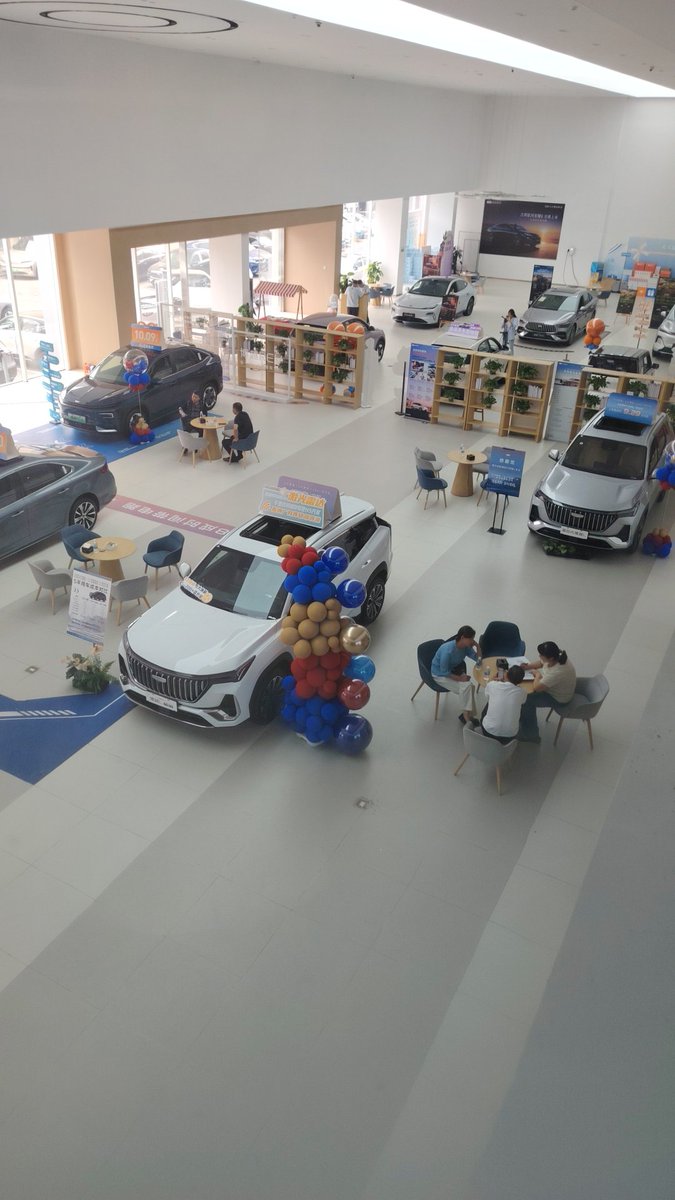
I'm starting a China sourcing business from 0 followers on X.
I help businesses source products from reliable Chinese suppliers.
My main categories:
→ Steel shelving
→ Metal furniture
→ Auto parts
→ Auto
I'll share what I learn along the way:
• Factory insights
• Product specifications
• Pricing
• MOQ & shipping
• Supplier sourcing
• AI + automation
No fake guru content.
Just real products, real suppliers and real business.
If you're looking for a supplier in China, DM me.
Let's build something.
Can you export ONE car from China? Yes. Here's how the economics work:
Your cost stack (one SUV, approx):
→ Car price: $18,000
→ Export docs & license: $300-600
→ Container: $2,000-2,500 (one 20ft, one car) OR RoRo ~$500-800 if routes allow
→ Insurance: ~1% of value
→ Destination tax/duty: varies 10-30% by market — know it BEFORE you quote
Single-car export works if:
→ You already have a buyer with a deposit
→ Your margin covers the fixed costs (docs + freight don't scale down)
→ You understand the destination's import rules
When it DOESN'T work:
→ "Let's import one and see if it sells" — that's a hobby, not a business
Rule: never buy the car before the buyer pays a deposit. Freight is fixed; your risk is not.
Central Asia is buying Chinese cars — a lot.
Why the market is hot right now:
→ Kazakh & Uzbek buyers want value: Chinese models often land 30-40% below European rivals
→ Fuel + parts availability: Chinese parts are everywhere in the region
→ LHD markets (Kazakhstan, Uzbekistan, Kyrgyzstan) — no RHD conversion needed
→ Local assembly plants are opening — demand for CKD kits is rising
What exporters should know:
→ Payment: buyers prefer T/T, but ask for a deposit + balance structure
→ Logistics: land border shipping (rail/road) or RoRo to nearby ports — compare both
→ Docs: COC + invoice + export license; some markets need certification of conformity
I'm seeing real orders from this region, not just inquiries.
If you're new to car export, Central Asia is a serious place to start.
Why Chinese EVs are winning export markets right now:
1. Price — a well-equipped Chinese EV often lands at 50-60% of a comparable European model
2. Specs per dollar — larger screens, longer range, more features at the same price point
3. Localization — many brands now build or assemble in target markets (EU, SEA, Middle East)
4. Fast iteration — China launches new models in months, not years
What buyers should know:
→ Range claims are WLTP-tested — check real-world figures for hot or cold climates
→ Charging standard matters: CCS2 (EU), CHAdeMO, or GB/T
→ Battery warranty & after-sales network — who services it in YOUR market?
EVs are the growth story. But due diligence is still the same.
"Why does my shelf look a different color than the sample?"
Powder coating color issues happen more than you think. Here's why:
1. Batch variation — pigment mixing differs slightly between powder batches
2. Film thickness — thicker coat = darker shade, even with the same powder
3. Curing temperature — under-cured looks lighter and chips easily
4. Different suppliers — same RAL code ≠ same color from two factories
How to protect yourself:
→ Ask for a physical color chip, not just a RAL number
→ Request samples from the same batch that will run your order
→ Accept ΔE ≤ 1.0 as standard tolerance (write it in the contract)
Color is a spec, not a vibe. Lock it down.
After you pay the deposit, here's the real timeline (metal products, typical):
Week 1-2: Material procurement (steel coil delivery)
Week 2-3: Cutting, punching, forming
Week 3-4: Welding & assembly
Week 4-5: Powder coating + curing
Week 5-6: Packing (KD or assembled), loading test
Week 6: Export docs (CIQ, customs clearance)
Week 6-7: Container loading + departure
Then shipping itself: China → EU ≈ 30-40 days by sea, US West ≈ 15-20 days, US East ≈ 30-35 days.
So "your order is 8 weeks out" usually means: 6 weeks production + 1 week docs + the rest is buffer.
Rule: never promise a delivery date you didn't calculate backwards from.
The sample was perfect. The bulk order was garbage." — every buyer's worst story.
Why it happens: → Sample made by the best workers, bulk rushed by the line → Different material lot (thinner steel, cheaper paint) → "Sample approved" but the drawing was never locked
How to prevent it:
Keep a signed sample + spec sheet as the contract baseline
Require "first article inspection" — QC checks the first batch BEFORE full production
Ask for photos of the exact material lot used in production
Mid-production check: random 10% inspection at the line
Final pre-shipment inspection (PSI) — third party, before the container loads
Cost of a PSI: ~$200-300. Cost of a bad container: your whole margin.
Got a quote that's 20% below everyone else? Read this before you celebrate.
"Low" prices often hide 4 costs:
Mold/tooling charged separately — sometimes reappears as "setup fee"
Packaging charged as an add-on (a real cost: 5-8% of FOB price)
Payment fees — T/T wiring fees eat 1-2% each side
QC/third-party inspection quoted only after you ask
When I compare quotes, I build one single line: FOB + packaging + inspection + bank fees. That's the real price. The "cheapest" quote is rarely the cheapest order.
Buying air/oil filters from China? 5 things that separate good from garbage:Filtration media — cellulose vs glass fiber vs synthetic. Price doubles with quality.
Filtration efficiency — ask for ISO 5011 test data, not marketing words
Gasket/seal rubber — cheap EPDM cracks in a year
Anti-drain back valve — non-negotiable for oil filters
Fitment accuracy — the thread and O-ring must match OEM spec, or it leaks at 5000 miles
A filter is a $3 part that can kill a $3,000 engine.Ask for test data. Pay for real media. Skip the "compatible with everything" listings.
从中国采购空气 / 机油滤清器?区分好坏就看这 5 点:滤材 —— 纤维素 vs 玻纤 vs 合成纤维,价格随质量翻倍
过滤效率 —— 要 ISO 5011 测试数据,不要听营销话术
密封圈橡胶 —— 便宜的 EPDM 一年就开裂
止回阀(防回流阀)—— 机油滤清器必须有
安装精度 —— 螺纹和 O 型圈必须符合原厂规格,否则 5000 英里就漏
一个滤清器才 3 美元,却可能毁掉一台 3000 美元的发动机。要测试数据。为真滤材付费。跳过那些写着 "适配一切" 的链接。
What "China car exports" actually looks like in 2026:
• SUVs & EVs are the growth engines — not sedans • Russia & Central Asia: huge demand for mid-range SUVs • Left-hand drive markets (Indonesia, Russia) are the biggest buyers • Dealer networks are forming around Chinese brands — parts & service follow
The opportunity isn't just selling the car. It's the aftermarket: parts, service, accessories, for years after.
I help buyers source both — the vehicles and the parts that keep them on the road.
DM me your country. Let's see what fits.
First-time buyers: know the difference before you pay.
FOB — you own the freight from the port. Cheapest, most work.
CIF — seller covers freight + insurance to your port. Sounds easy, but you lose control of the carrier.
DDP — seller delivers to your door. Easiest, priciest. Watch for "fake DDP" quotes that quietly exclude customs.
Rule of thumb: start with FOB for your first 3 shipments. Then negotiate DDP.
And remember — on a small LCL shipment, freight can be 30-50% of your goods value.
MOQ isn't the biggest cost. Freight is.
Exporting Chinese cars? Yes — that's now part of what I do.
Not just parts. Complete vehicles.
Where China-made cars are winning right now:
• Central Asia & Russia — demand for affordable, well-specced SUVs
• Indonesia — the biggest left-hand-drive market in SEA
•Middle East & Africa — growing fast
What I can help with: → Factory-direct pricing (no middleman markup) → Model & spec selection for your local market → Left-hand vs right-hand drive availability → Shipping, customs & documentation
Whether you're a dealer, distributor, or fleet buyer — DM me the country and I'll check what's available.
Real cars. Real suppliers. Real business.
Metal furniture buyers: the gap between an $80 and a $180 quote is usually NOT the factory's margin.
It's the spec you never specified:
Steel tube — 0.8mm vs 1.2mm (that's ~40% more steel)
Powder coat — 50μm vs 80μm
Weld finish — sanded & sealed, or rough
Hardware — zinc bolts vs stainless
Load test — does it pass the static load you need?
Steel shelving buyers: don't ask "how much per shelf?"
Ask these 5 first:
Steel grade (Q195 vs Q235 vs Q355)
Powder coat thickness (60μm is the floor)
Load rating — static AND dynamic
Galvanized or painted?
Packaging: KD (knock-down) saves 40% freight
Price means nothing until spec is fixed.
Share if this saves you one bad PO.
How I use AI in sourcing :
Spec sheets → auto-translate & compare across 3 suppliers
Email drafting → polite, professional follow-ups in bulk
Price tracking → flag when a quote is out of line with the market
Q&A with old inspection reports
AI doesn't replace the factory visit. It just makes the boring 80% faster.
What's your most-used AI tool for sourcing?