Peri-pentacence and peri-hexacene finally done! They were on my research proposal for a faculty position 18 years ago. The hero is @ZouYa16, who also tamed the beast 'circumcoronene'. Paper is now @J_A_C_S: https://t.co/ThaL7ApHJ6
Excited to share our new JACS paper: Ion-Pair Receptors Couple Cation Binding with Molecular Electron Storage for Room-Temperature Birch-Type Reduction. Grateful to all students, collaborators and colleagues who contributed to this work.
#JACS#ionPairReceptors#BirchReduction
Thrilled to share our review "Synthesis of atomically thin amorphous materials" in @NatureSynthesis. Advances in synthesis and emerging applications of this exciting class of materials are discussed. https://t.co/EUBFICRN7F
The #NobelPrize in Chemistry 2026 recognises discoveries that have enabled chemists to drive chemical reactions that lead to homochirality.
Life’s chemistry is what chemists call homochiral, after the Greek words for “same” and “hand”. Like hands, all amino acids exist as two mirrored variants, but only one of them is found in the proteins in your cells. The other is rarely found in nature.
For a long time, chemists wondered how homochirality can emerge. When they began to experiment with chemical reactions that can form two mirrored molecules, they always obtained equal proportions of both in their test tubes. However, chemists strived to produce only one of these mirror images, because in the development of molecules that will interact with living beings – such as in pharmaceuticals – only one mirror image will have the desired effect.
Thanks to laureates Henri Kagan and Kenso Soai, we now know how homochirality can emerge. Their discoveries have been decisive for chemists who design reactions for the manufacture of pharmaceuticals.
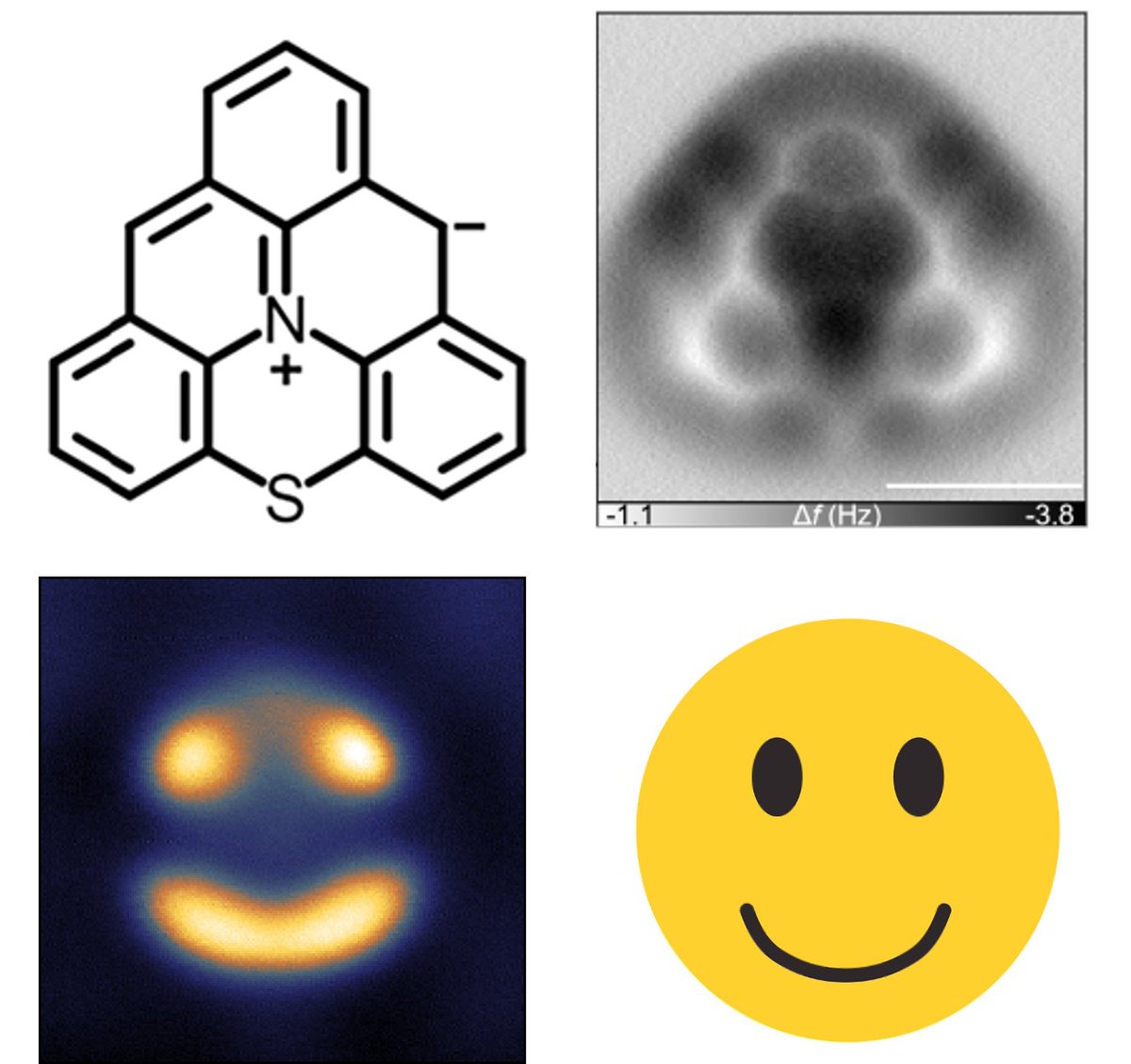
Thrilled to share our latest work on N,S-[3]triangulene, a "happy" molecule that looks surprisingly cheerful under the microscope 😊 now published online! @J_A_C_S@NUSResearch https://t.co/dWFKdoQgNV
Be honored to receive the President's Science Award from the President of Singapore, in recognition of our contribution to molecular carbon science. Sincere thanks to all my students, collaborators and supporters accompanying me over the past 19 years! https://t.co/2zxHicjvxd
NUS research stars Prof Wu Jishan received the President’s Science Award while Asst Prof Liu Boxiang and Asst Prof Hou Yi won the Young Scientist Award at the President’s Science and Technology Awards 2026, organised by NRF. Congrats to our winners! 🎉
https://t.co/4ZXC4KtLm6
NUS research stars Prof Wu Jishan received the President’s Science Award while Asst Prof Liu Boxiang and Asst Prof Hou Yi won the Young Scientist Award at the President’s Science and Technology Awards 2026, organised by NRF. Congrats to our winners! 🎉
https://t.co/CPZ6ovPm0x
Excited to share our recent Account in Accounts of Chemical Research @ACSPublications, where we highlight the synthetic breakthroughs, host–guest chemistry, and functional applications that are shaping the emerging field of superphane chemistry.
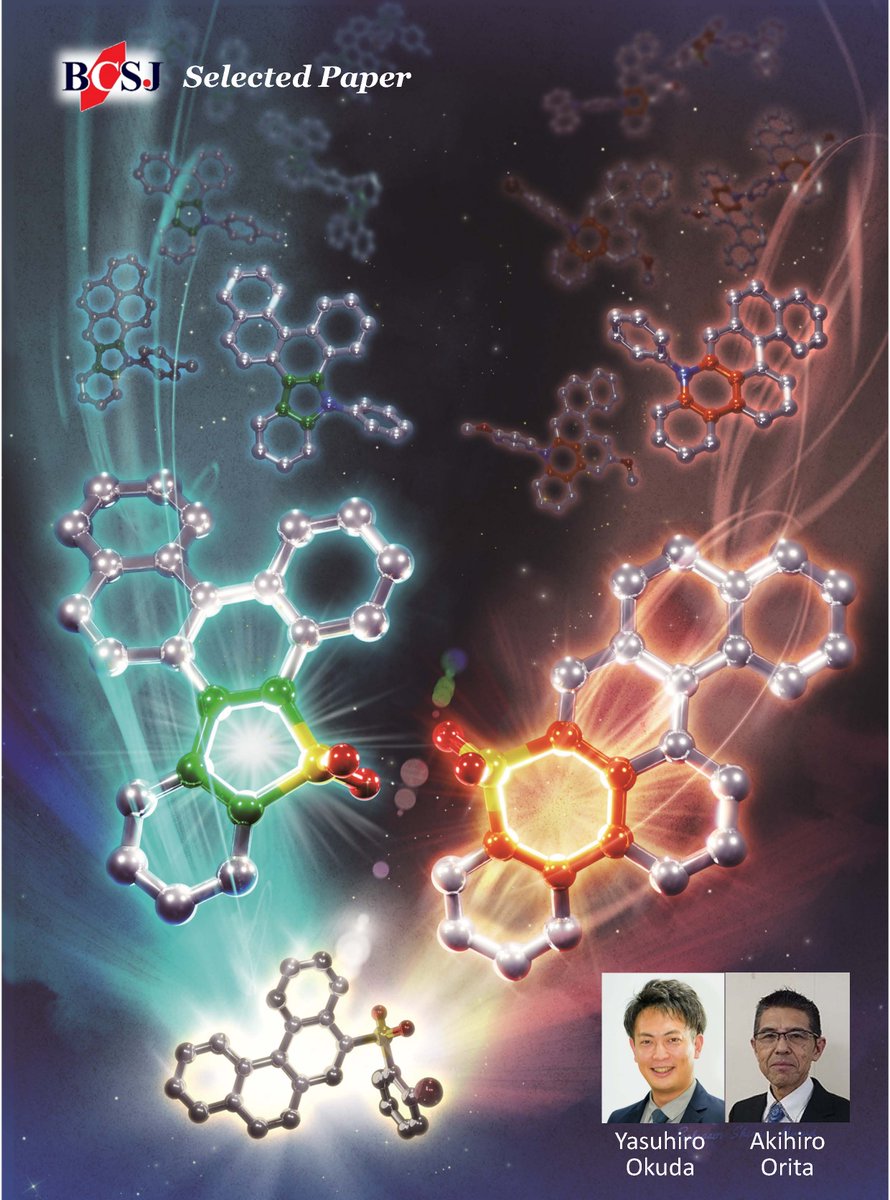
[Selected Paper]
amination, chemodivergence, sulfones
Article by Prof. Akihiro Orita (Okayama University of Science)
#OnTheCover
https://t.co/hP0QP7UE2f
The most rewarding projects often begin with serendipity. Nearly a decade ago, I wondered if we could tell the handedness of the pillararene crystals we had just grown. Beginner's luck was on our side. Finally published in @J_A_C_S. https://t.co/ykEiz5iluc
Superphane Chemistry: We are delighted to share our latest work featured in Chem (@Chem_CP). This study exploits the unique superphane scaffolds to fabricate advanced ion-selective membranes toward high-efficiency, eco-friendly redox flow battery systems.
Happy to share our recent work on the antiaromatic cyclooctatetraene-embedded, BODIPY-fused nanographene with an NIR-II chiroptical response, which is now published in @J_A_C_S : https://t.co/NOtkWy8tm0