RoyaleWeb3 @RoyaleWeb3 operates as a Web3 community that integrates marketing and project support such as AMAs, content creation, and social media promotion in exchange for community access to whitelists and partner allocations
If you want to try your luck, go ahead and sign up. It’s free to check out, and you might just score a reward; however, the approval process is quite slow only two "OG" spots have been added so far
🔗 Link: https://t.co/wVJmjAsTBk @RoyaleWeb3
GM GM GM
I’ve been thinking about where coding agents are heading, and @NucleusCodes caught my attention
Generating code is becoming the easy part
The harder problem is giving AI enough context to understand an entire codebase, reason through complex workflows, and actually move a project forward
That’s where NucleusCodes gets interesting
The bigger shift may be from AI that simply writes code to AI that can understand, build, test, debug, and iterate alongside developers
Instead of manually writing every line, developers could increasingly focus on describing what they want and guiding intelligent agents through the engineering process
If that becomes the new development workflow, infrastructure like NucleusCodes could end up being an important layer of the transition
I just joined the shhhhhcat whitelist — the first free silent NFT collection on BRC-20
Inspired by $shhhhh, the first BRC-20 deployed with Bitcoin Silent Payments (BIP352), verified with a BIP374 DLEQ proof. Quiet by design, verifiable on-chain
Shhhhh-GU42F
$shhhhhcat $shhhhh
Rarelist is live!
Curated projects. Creator campaigns. Launches. Priority access.
Familiar ways to earn, built around a new approach.
The first 500 to join get OG: https://t.co/hlGjkOzX7r
Rarelist is live!
Curated projects. Creator campaigns. Launches. Priority access.
Familiar ways to earn, built around a new approach.
The first 500 to join get OG: https://t.co/hlGjkOzX7r
Robots don’t learn how to handle the real world by reading a few textbook @axisrobotics
Unfortunately, they also can’t just watch a 10 minute YouTube tutorial and suddenly become professional baristas
They have to learn by doing
And that’s where robotics gets expensive
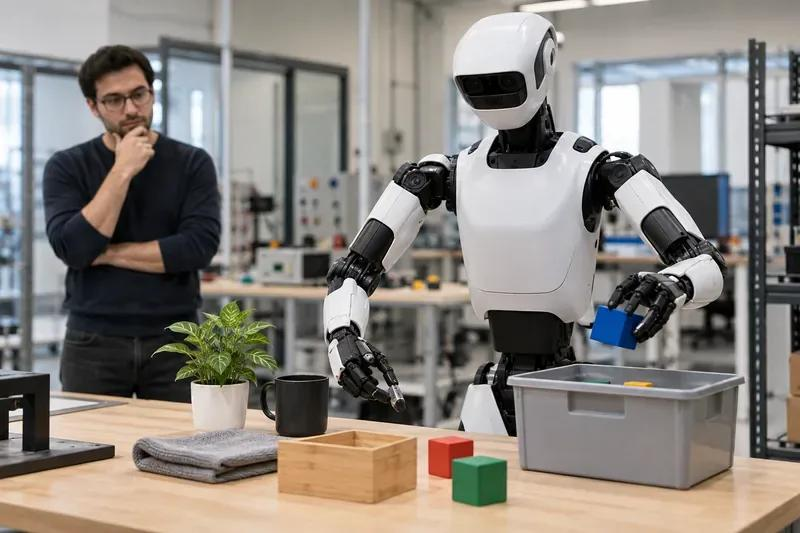
Imagine training a robotic arm to pick up a cup. You record a few dozen demonstrations, the robot finally gets the hang of it, and everyone celebrates
Then someone moves the cup two centimeters
Or changes the lighting
Or puts the cup in a slightly different position
Suddenly, your highly sophisticated robot starts acting like it has never seen a cup in its entire life
The problem isn’t just intelligence. It’s the cost of teaching machines to handle variation in the physical world
This is where @axisrobotics takes a different approach
Instead of relying entirely on expensive physical experiments, AXIS brings robot control into a browser based simulation
Pick up a cup. Open a drawer. Pour water. Repeat
Every session can capture a complete trajectory, including joint angles, object positions, actions, and camera imagery
But the interesting part happens after the demonstration
These trajectories can be filtered, smoothed, and replayed across different layouts, lighting conditions, and noise level
A few dozen demonstrations can become thousands of training samples, without needing to buy thousands of physical robot
Your hardware budget can finally stop having nightmares
Of course, synthetic data isn’t a magical replacement for the real world
A robot that performs perfectly in simulation but fails the moment it touches a real object isn’t exactly ready to take over the kitchen
The point is to expose the robot to more variations before deployment, so it has a better chance of handling them in reality
And not all synthetic data is created equal
Generating endless simulated movements is easy enough
Generating useful training data is much harder
The data needs to respect physics, follow task logic, and be validated against actual task success. Otherwise, you’re just teaching robots to produce very convincing nonsense
There’s another part of the AXIS approach that I find particularly interesting: failure correction
When a robot fails, the goal isn’t simply to record another attempt and hope for the best
The policy itself can be corrected
Those corrections can be especially valuable because they target the exact gaps in the robot’s current capabilities
A clean demonstration shows the robot what success looks like
A corrected failure helps explain what went wrong
And sometimes, knowing why you failed is more useful than watching someone else get everything right
This connects directly to the bigger idea behind AXIS: continuously generating, improving, and validating robot training data
More demonstrations create more training opportunities
More variations expose weaknesses
More failures reveal what the policy still doesn’t understand
Corrections improve the next attempt
And the process starts again
Demonstration → simulation → variation → failure → correction → better policy.
That’s a much more interesting proposition than simply throwing more data at a model
Because Physical AI doesn’t just need robots that can perform a task once
It needs robots that can perform that task reliably when the environment changes
The real world will always find a way to move the cup, change the lighting, or introduce some completely unreasonable new obstacle
The question is whether the robot can learn from it without requiring an entirely new and expensive round of physical experiments every time
That’s why I think the simulation based, iterative training loop being built by @axisrobotics is worth watching
The goal isn’t to keep robots inside a browser forever
It’s to use simulation to prepare them for the chaos outside it
And if AXIS can consistently turn realistic interactions, useful corrections, and validated trajectories into better real-world performance, it could become an important piece of the infrastructure behind the next generation of Physical AI
Because the future of robotics probably won’t be built by robots that never make mistakes
It’ll be built by systems that get better every time they do
What I find interesting about @axisrobotics is that the learning loop doesn't have to stop with human demonstrations
A trained robot can generate new attempts, learn from the outcomes, and turn those experiences into data for the next generation of models
The bigger piece is the combination of simulation + real-world experience
Simulation gives robots room to explore thousands of scenarios cheaply, while real-world interactions ground those skills in actual physics
Over time, this creates a compounding loop:
train → act → collect experience → improve → repeat
Instead of rebuilding robot intelligence from scratch, each cycle can become the foundation for the next
That's the direction I find most interesting about Axis: robots that don't just learn once, but keep getting better through experience
GM CT fan
One thing that stands out about @axisrobotics is that scaling a robotics network isn't simply about collecting more trajectories
The harder the task, the more important it becomes to route it to the right contributor
The current Challenger zone makes this visible. Anyone can inspect it, but submitting requires the Seek the Unseen badge. There are currently 478 badge holders, while difficult tasks can pay 2–3× the Axis Points of comparable regular tasks
But the more interesting part isn't the higher reward
It's how contributors are selected
Axis appears to factor in contributor history, including consistency, quality and experience across both pre-training and post-training work. In other words, reputation becomes part of the data pipeline.
That matters because difficult manipulation tasks are more likely to produce noisy or failed demonstrations when assigned to someone unfamiliar with the interface or task dynamics
Routing those tasks toward proven contributors could reduce that mismatch before verification even starts
There is a clear trade-off: tighter access means less openness for some contributors, while completely open access can create more low-quality data that has to be filtered later
So the scaling question for Axis isn't just:
How many contributors can join?
It's also:
Can the network learn which contributor is best suited for each data problem?
For Physical AI, contributor to task matching could become nearly as important as contributor count
$AXIS token soon