🟦 BELANGRIJK NIEUWS 🟥 NIEUWE UWV MEMO POST-COVID-SYNDROOM
🔲 interessante - positieve - ontwikkelingen volgen elkaar ineens snel op
🔲 op 4 februari was bij de Centrale Raad een themazitting gepland over 6 Long COVID zaken
🔲 die is niet doorgegaan
🟧 de stafartsen van Bezwaar en Beroep UWV hebben deze zaken opnieuw onder de loep genomen en ‘op basis van voortschrijdend inzicht’ geconcludeerd dat in alle gevallen een forsere medische urenbeperking aan de orde is
🟧 in de 6 dossiers kwam onder andere naar voren dat klachten passend bij PEM werden geduid als gedrag
✔️ deze memo is uiterst belangrijk voor alle lopende beoordelingen inclusief bezwaar- en beroepszaken
✔️ ter brede verdere verspreiding dus!
✔️ voor iedereen die met post-COVID en UWV te maken heeft…
Meer hierover op LI 👉 https://t.co/1PSKbqdihk
VOILA 🙋♂️🎶 de playlist👇 gedraaid zondag 1 maart juni 19-21 uur 👉 https://t.co/kHrScch4RA
🎼 🙏🏽 RIP @neilsedaka 👏👏
🎸🎹 Check out his great 1973 album ‘The Tra-la Days Are Over’ here 👉 https://t.co/is4xjuOcGd
(it’s not on Apple or Spotify)
🥁🎤 thanks for listening, tot de volgende keer!
🟥🟦 Had dan ‘universiteit van de straat’ op je cv gezet… 🤷♂️
✔️ dan was er niks aan de hand geweest
✔️ niet dan? of toch wel?
✔️ eh, iets met kip en ei… 🐣
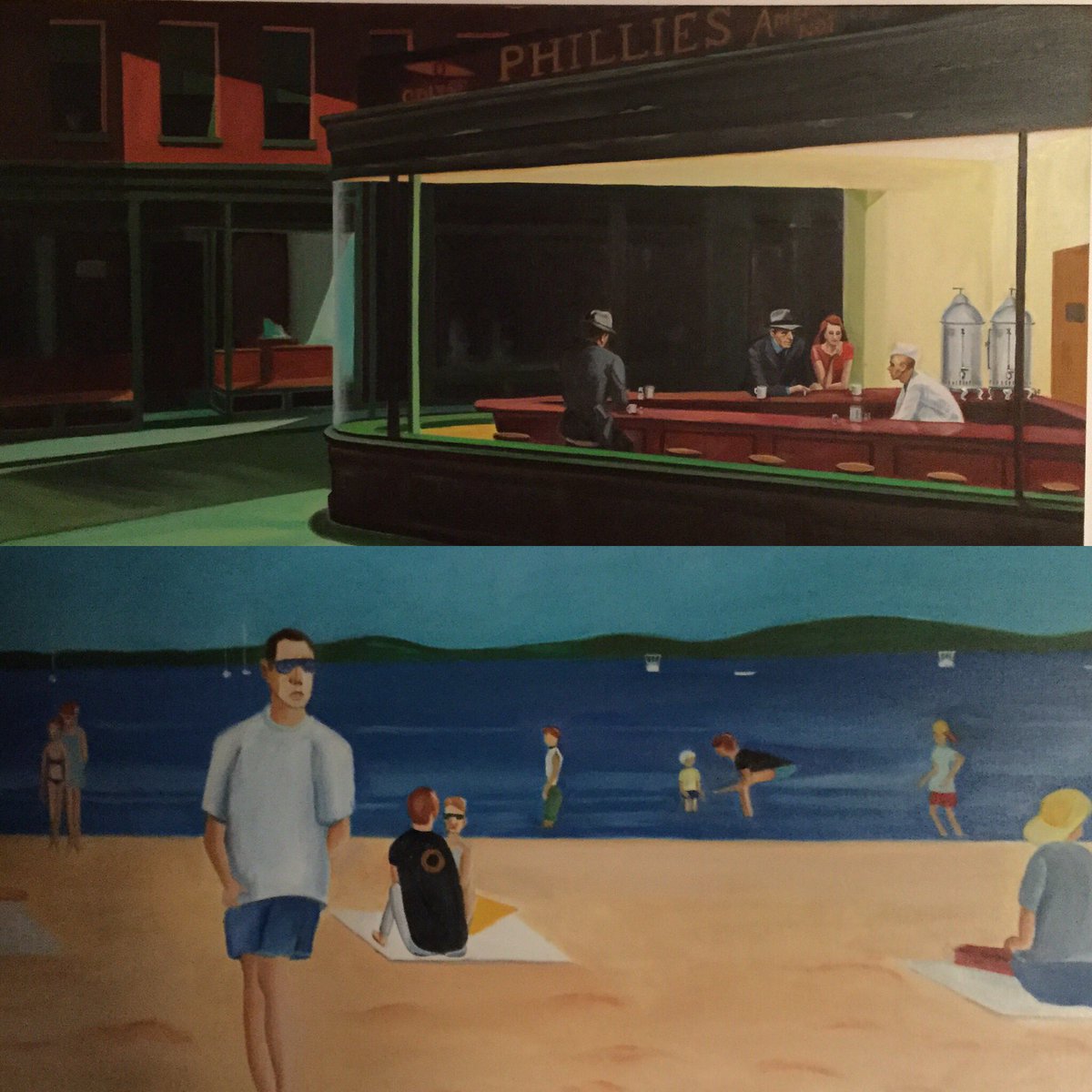
"Nighthawks" is an iconic painting created by the American artist Edward Hopper in 1942. It has become one of the most famous and recognizable works in American art history. The painting depicts a scene of urban solitude and loneliness, featuring four people in a brightly lit diner late at night. The diner's interior is the central focus, with large windows allowing viewers to glimpse the empty streets and buildings outside.
To understand the historical background of "Nighthawks," it is crucial to consider the broader context of the time in which it was created:
1. World War II: In 1942, the world was in the midst of World War II. The United States had entered the war after the attack on Pearl Harbor in December 1941. The war effort was in full swing, leading to significant social and economic changes within the country.
2. Urbanization and Industrialization: The early 20th century saw a rapid growth of urban areas in the United States, accompanied by industrialization and modernization. Hopper's painting captures the sense of urban isolation and detachment that can often be felt in such cities.
3. The Great Depression: While the painting was created in 1942, the effects of the Great Depression that began in 1929 still lingered in American society. The economic downturn had left a lasting impact on the country, shaping the lives and experiences of people during that time. Hopper's portrayal of the night scene and the sense of isolation in "Nighthawks" might be seen as reflecting the emotional aftermath of this difficult period.
4. Artistic Style and Themes: Edward Hopper was part of the American realist movement, known for his ability to capture ordinary scenes with remarkable emotional intensity. His works often depicted themes of loneliness, alienation, and the complexities of modern life. "Nighthawks" exemplifies these themes, showcasing a sense of alienation and emotional disconnection between the figures in the painting.
5. Societal Changes: The painting's focus on individuals in a public space hints at the shifting dynamics of American society. During this time, people's lifestyles were changing, and more individuals found themselves living in cities, leading to an increase in anonymous encounters and a sense of isolation amidst the crowd.
"Nighthawks" is a masterful representation of the human condition and the impact of the changing urban landscape on human emotions. It continues to resonate with audiences and art enthusiasts worldwide, offering a glimpse into the psychological complexities of a rapidly evolving society during a momentous period in history.
Er gaat bericht rond op internet dat ik een goedaardige tumor heb laten verwijderen uit mijn alvleesklier. Dat de operatie geslaagd is. Dit bericht IS NIET WAAR. Walgelijk dat dit soort leugens wordt verspreid🤮. Zeker gezien het feit dat mijn man overleed aan alvleesklierkanker
Thread: Aleksandr Deyneka (1899-1969) was a Soviet Social realist painter. His work is considered some of the finest Russian art of the first half of the 20th C. Although known primarily for propaganda his art goes far deeper than that.