gliquid
I already had a feeling that they were going to raise some more, and here we are with another funding round of $18M led by Neo and LeftLaneCap.
I just continued my trading journey with Liquid, and as I also do in the future.
Hope this funding can help them to grow more.
./ THINK OPEN
A big hidden cost in training large language models isn’t the model itself it’s the RL rollout infrastructure.
The ECHO-2 framework proposes a smarter design:
Keep learning centralized on a small set of GPUs, but move rollout generation to distributed, cheaper inference nodes across the network.
By allowing bounded policy staleness and using peer-assisted broadcast, training, rollouts, and policy updates can run in parallel without stalling the learner.
The result:
■ better GPU utilization
■ lower training cost
■ scalable RL post-training for large models
Progress in AI isn’t only about bigger models it’s about rethinking the systems that train them.
@Gradient_HQ
Gmic
New art for @SeismicSys
Seismic’s primary differentiator is that it is a Privacy-First EVM designed for high-performance fintech, specifically using hardware (TEEs) rather than just math (ZKP).
While most privacy coins are like digital cash (Monero) or private scaling layers (Zksync), Seismic is positioning itself as the private back-end for the banking system.
@heathcliff_eth
./ What is Gradient actually solving?
Today AI runs on centralized clouds like Amazon Web Services and Google Cloud.
A few companies control the compute.
Everyone else just rents it.
Gradient flips the model.
Instead of massive data centers, it turns millions of idle devices into a decentralized AI compute network.
The stack:
■ Lattica P2P connectivity linking devices globally with low latency.
■ Parallax Unifies heterogeneous hardware (GPUs, laptops, Apple Silicon) into one compute pool.
■ Adaptive Orchestration Dynamically routes AI workloads across the network.
The endgame:
AI compute that’s distributed, permissionless, and globally accessible.
./ THINK OPEN
@Gradient
The future will be defined by
artificial general intelligence, and
openness will determine who it
serves. We are developing open
foundation models, rebuilding the
training and serving stack that
makes accessing intelligence as
easy as turning on a light.
What This Means for the User?
If they succeed in making access as easy as turning on a light, it implies:
Zero-Infrastructure AI: You wouldn't need to manage clusters or GPUs; the distributed network handles the grid.
Privacy by Design: Since the stack is open and distributed, data doesn't necessarily have to be funneled into a single corporate silo for processing.
The @Gradient_HQ of Intelligence: Access isn't binary (on/off). It becomes a fluid resource that scales to your needs, from a simple script to a complex AGI agent.
PrismaX has restructured the Robot Control Center to match how operators actually train and compete:
🦾 Training Arm Gold
🦾 Training Arm Black (NEW)
🏟️ Arena Arm
🔐 Private Arm (NEW)
🏋️ Training Arms (Gold + Black)
Built for practice + skill development
Amplifier → up to 3×/day
Innovator → up to 6×/day
Two lanes. Same logic. More capacity.
🏟️ Arena Arm
For higher-volume sessions
First-time Amplifier → up to 3×
Innovator → unlimited access
Built for operators who want more reps.
🔐 Private Arm
Invitation-only. Used for events, content series & partner activations.
Expect to see it in competitions and special drops.
Plus upgrades across the experience:
🔔 Queue notifications
🚪 Leave-queue confirmation
⚙️ Account upgrades
This update is about clarity, capacity, and control.
Log in and try it out: https://gateway.]prismax.]ai
@PrismaXai
gprisma
Gprisma
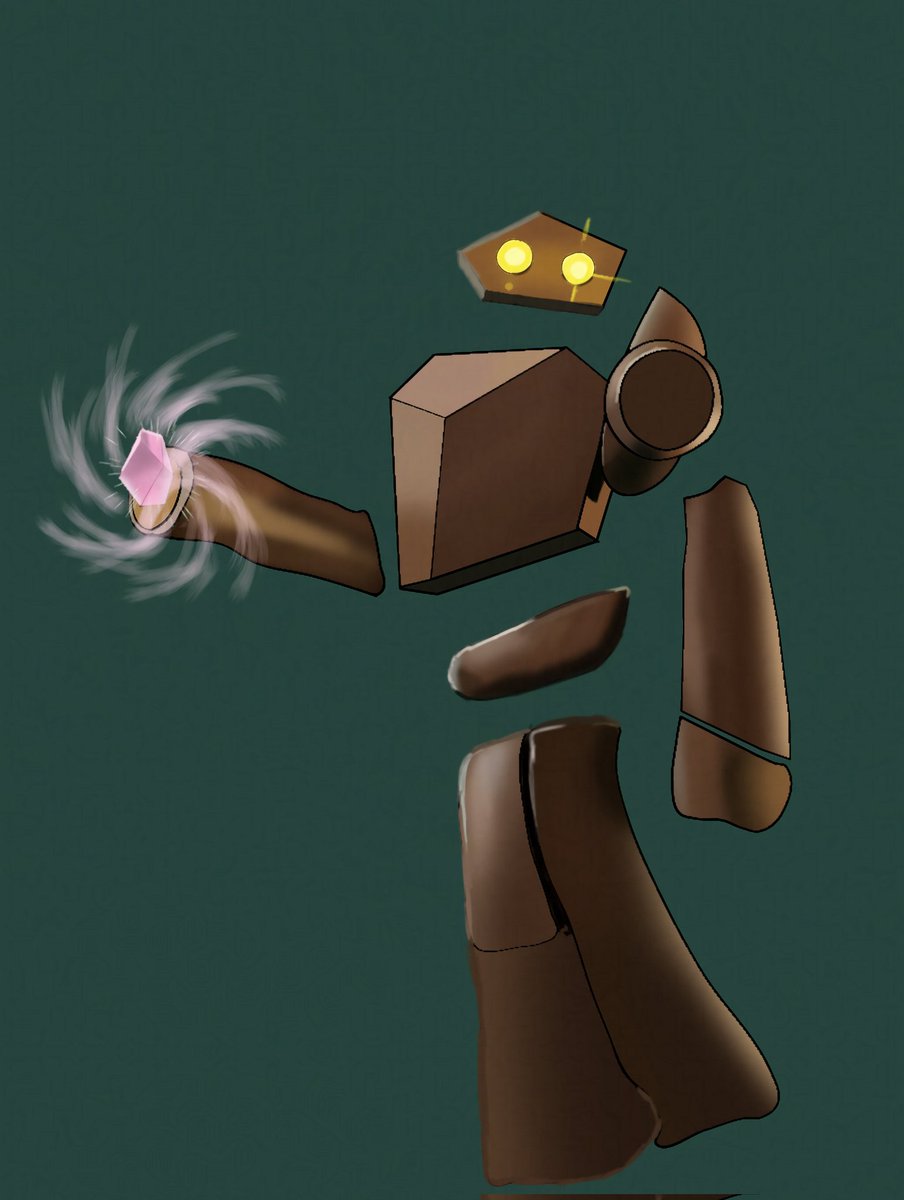
New art
Are you guys teleop today on @PrismaXai
For me i am doing it every day
Its simple way to earn some point and give some physical data to robots 🤖
If you think what actually PrismaX?
PrismaX is a decentralized coordination layer that connects human operators (like you) to physical robots (like the Unitree G1 or Reachy 2).
What's our role:
When you control a robot arm to pick up an object or navigate a space, your traces (the movement data) are recorded and sold to robotics companies to train their foundation models.
Gprisma @chynaqqq




![Rimuru9204's tweet photo. PrismaX has restructured the Robot Control Center to match how operators actually train and compete:
🦾 Training Arm Gold
🦾 Training Arm Black (NEW)
🏟️ Arena Arm
🔐 Private Arm (NEW)
🏋️ Training Arms (Gold + Black)
Built for practice + skill development
Amplifier → up to 3×/day
Innovator → up to 6×/day
Two lanes. Same logic. More capacity.
🏟️ Arena Arm
For higher-volume sessions
First-time Amplifier → up to 3×
Innovator → unlimited access
Built for operators who want more reps.
🔐 Private Arm
Invitation-only. Used for events, content series & partner activations.
Expect to see it in competitions and special drops.
Plus upgrades across the experience:
🔔 Queue notifications
🚪 Leave-queue confirmation
⚙️ Account upgrades
This update is about clarity, capacity, and control.
Log in and try it out: https://gateway.]prismax.]ai
@PrismaXai
gprisma](https://pbs.twimg.com/media/HCjc2ONbIAAG86A.png)