A friend of mine built Exploratores, an online collection of OSINT tools inspired by CyberChef and Michael Bazzell's books.
It brings a wide range of investigation 🕵️ tools in one interface:
• Clear web and darknet search engines
• People search
• Social media research
• IP address and domain analysis
• GEOINT tools
• Media analysis
• Cryptocurrency lookups
��� Company name and IBAN searches
The best part: you only need a browser. You can also download it and run everything locally!
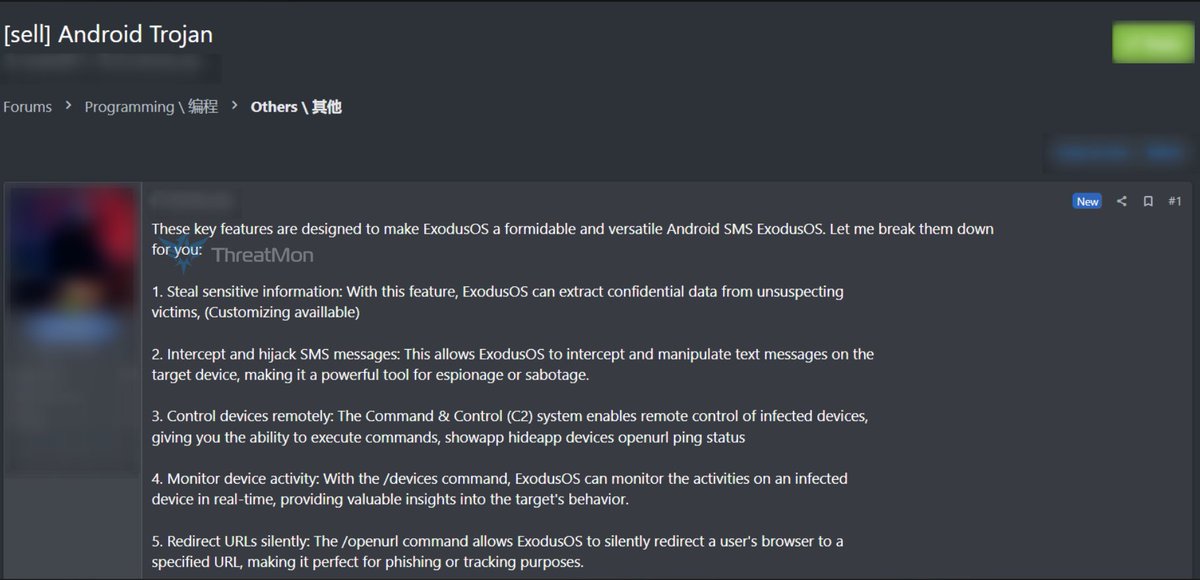
🚨 ExodusOS: Alleged Sale of Android Trojan 🚨
A threat actor has announced on underground forums that he has put up for sale a malicious Android toolkit dubbed ExodusOS. The malware has features such as real-time device monitoring, SMS interception and hijacking, URL redirection, stealth mode switching and remote device control via C2 infrastructure.
#Malware #ExodusOS #DarkWeb #CyberSecurity
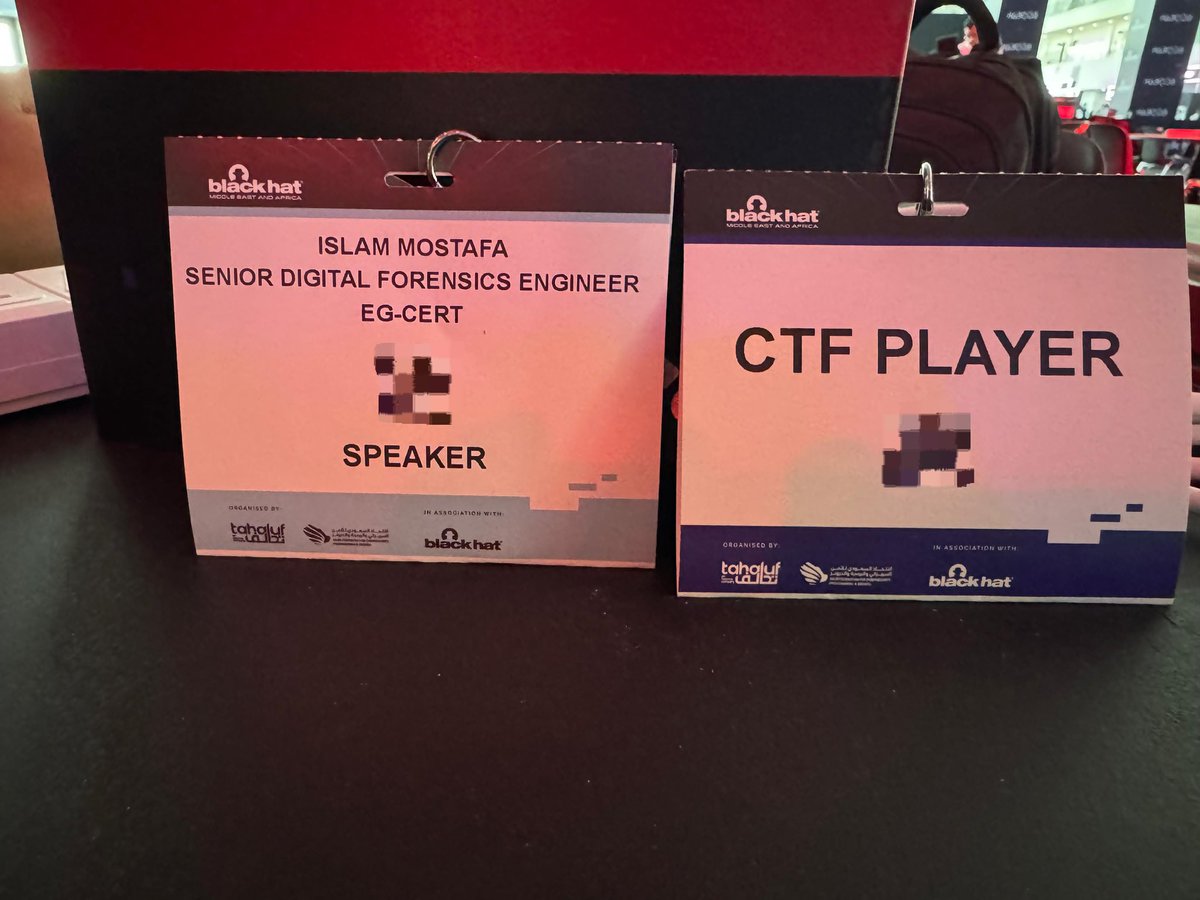
hello guys, for the fifth year in a row I've had the honor to write ASCWG challenges.
Here's my writeup for the challenges I created for ASCWG 2024 Qual Round
https://t.co/ZPuY9oPxR0
#CTF#Forensics
Another massive week for AI.
Important developments from OpenAI, Anthropic, UC Berkeley, NeuroSkin, Microsoft, Google, DefCon, Amazon, Robomart, Netflix, WhatsApp, Snapchat, Adobe, Sakana AI, and BeFake.
Here's everything you need to know (thread 🧵):
I can't believe I've just fine-tuned a 33B-parameter LLM on Google Colab in a few hours.😱
Insane announcement for any of you using open-source LLMs on normal GPUs! 🤯
A new paper has been released, QLoRA, which is nothing short of game-changing for the ability to train and fine-tune LLMs on consumers' GPUs.
In a few words:
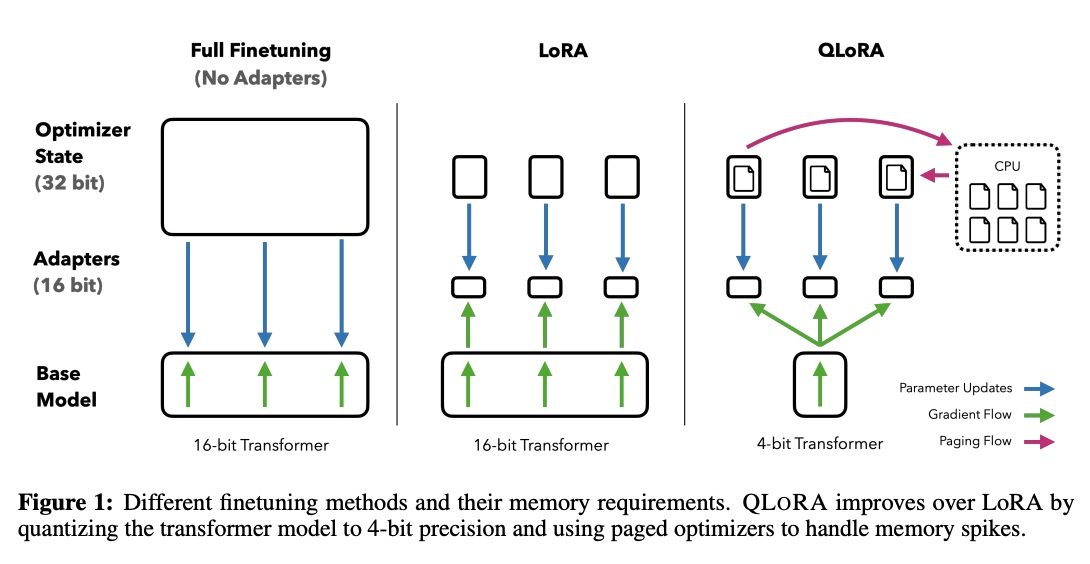
QLoRA reduces the memory usage of LLM fine-tuning without any performance tradeoffs compared to standard 16-bit model fine-tuning.
This method enables 33B model fine-tuning on a single 24GB GPU and 65B model fine-tuning on a single 46GB GPU. This is incredible! 😍
More specifically, QLoRA uses 4-bit quantization to compress a pre-trained language model. The LM parameters are then frozen, and a relatively small number of trainable parameters are added to the model in the form of Low-Rank Adapters.
During finetuning, QLoRA backpropagates gradients through the frozen 4-bit quantized pretrained language model into the Low-Rank Adapters. The LoRA layers are the only parameters being updated during training. Read more about LoRA in the original LoRA paper (https://t.co/54Lsb4DBFi). 🤓
QLoRA has one storage data type (usually 4-bit NormalFloat) for the base model weights and a computation data type (16-bit BrainFloat) used to perform computations. QLoRA dequantizes weights from the storage data type to the computation data type to perform the forward and backward passes, but only computes weight gradients for the LoRA parameters, which use 16-bit bfloat. The weights are decompressed only when they are needed, therefore the memory usage stays low during training and inference. Beautiful!😱
QLoRA tuning is shown to match 16-bit finetuning methods in a wide range of experiments. In addition, the Guanaco models, which use QLoRA finetuning for LLaMA models on the OpenAssistant dataset (OASST1), are state-of-the-art chatbot systems and are close to ChatGPT on the Vicuna benchmark. This is an additional demonstration of the power of QLoRA tuning.
Their Guanaco models are reaching 99.3% of the performance level of ChatGPT while only requiring 24 hours of fine-tuning on a single GPU. You can actually do it in Google Colab.
📚 Links-
QLoRA Paper - https://t.co/srUrDq4PS6
Colab for inference - https://t.co/iBtmLleCLf
Colab for fine-tuning - https://t.co/8eZQLxKozM
GitHub Repository- https://t.co/Jo50Ltn1Xw
Use it with HuggingFace - https://t.co/TWT0xPfr2g
Setting up an analysis VM for reverse engineering?
Here are a few good tools (with short demos) that I recommend after running the Mandiant/FLARE script, (which installs 99% of tooling for you) 🔥
TLDR:
Garbageman, SpeakEasy, BlobRunner, Dumpulator
#Malware#RE#Analysis
Windows kernel drivers for red team in series of 3 parts :
Part 3 : Sailing to the land of the user (and debugging the ship) : https://t.co/rI7EYaIjdr
2 : A tale of routines, IOCTLs and IRPs : https://t.co/lhp3MuL7Yl
1 : Intro : https://t.co/GkhAbwMFnC credits @Idov31
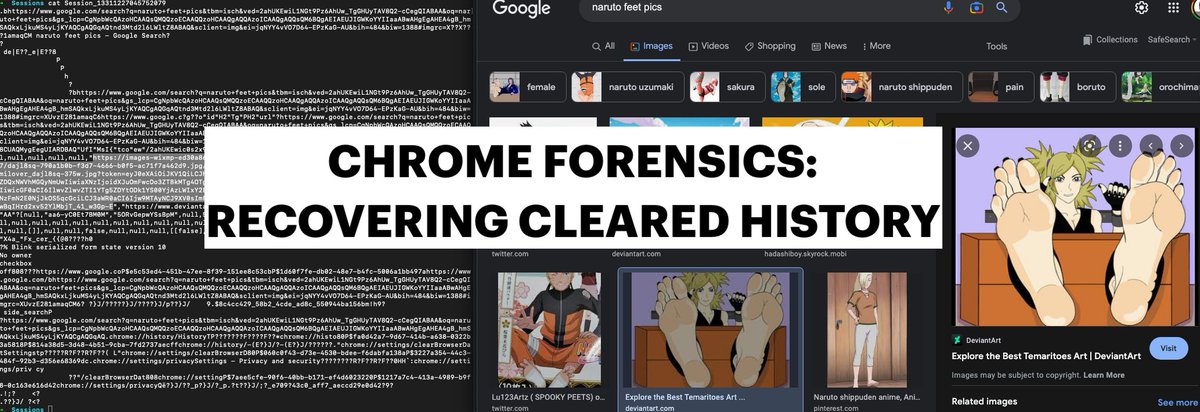
1\ #DFIR: Chrome Forensics - How to Recover CLEARED History
If a user just cleared their browser history, you can still recover everything they were just looking at from the session files:
%appdata%\Local\Google\Chrome\User Data\Default\Sessions
https://t.co/FaDbeJwhQC
When it comes to DFIR, Reverse Engineering, and performing security analysis in general, there's a number of useful, hidden gems out there. Here's some sites which you may, or may not know about, including some of the best in the industry👇
In case of that vulnerable GIGABYTE driver, let's not just use the hash, as it can easily by changed (eg add a byte) we also want to detect samples that embed the driver
YARA
https://t.co/Y4iVumwbDa
Sigma
https://t.co/jq7K6r5gI1
Example Cuba Ransomware
https://t.co/ZWIppCGBMX