BlockBooster Fund I has made its first investment.
$10M anchor commitment to @SignalPlus_Web3, in its $50M Series B1 round, advised by @GoldmanSachs.
SignalPlus runs the leading derivatives terminal for institutions in digital assets, now extending into traditional finance. We are committed to staying an active partner as SignalPlus continues to expand.
Read the full announcement → https://t.co/b1FNdFEtgh
TradFi has the capital. Web3 has the infrastructure. The market needs operators who understand both.
Operating across Asia and the Middle East, we are building a full-stack alternative asset platform. Fund I was the first step.
BlockBooster's first portfolio investment will be announced in the coming weeks.
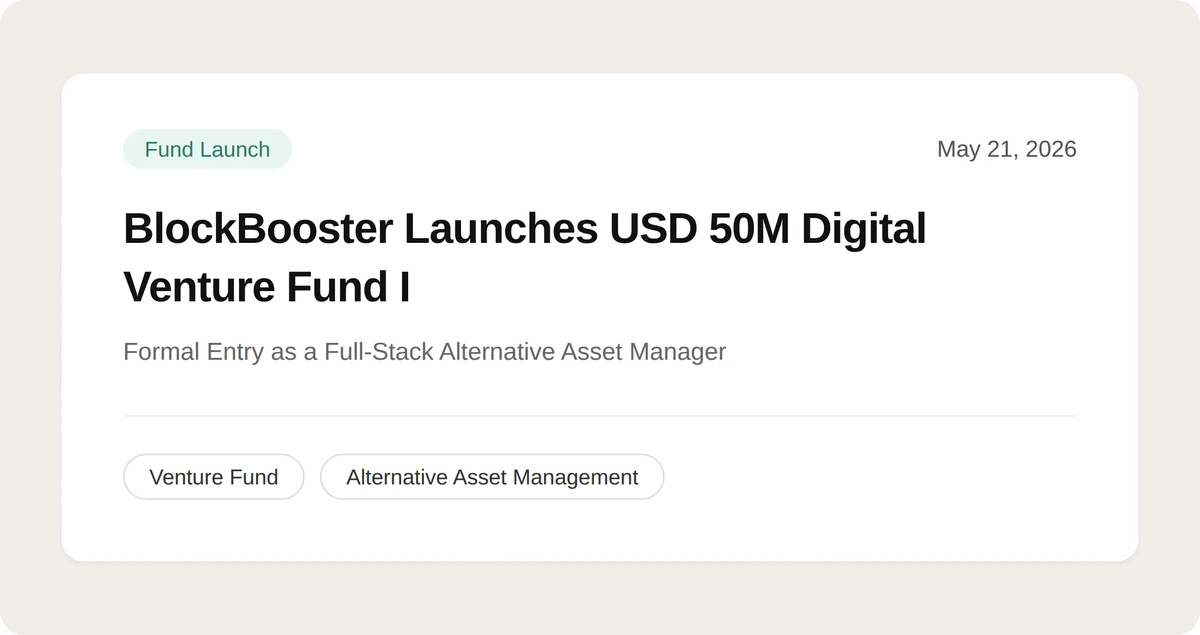
BlockBooster has launched its USD 50M Digital Venture Fund I, marking our formal entry as a full-stack alternative asset manager.
The fund targets growth-stage opportunities across four verticals: AI infrastructure, on-chain trading, on-chain asset management, and RWA tokenization.
True incubation is the most active form of asset management. We operate a dual-engine model: we co-build the rails and manage the assets that run on them.
Read the full announcement here → https://t.co/7tsg8ryhio
BlockBooster New Chapter
Some milestones deserve a toast, and today we celebrate the opening of our new office.
Grateful for everyone who is part of the journey.
New chapter, but same mission 🥂
Recently, BlockBooster joined the Canton Foundation as an official member.
We now stand alongside global leaders, including DTCC, Euroclear, BNP Paribas, HSBC, Goldman Sachs, Tradeweb, and Digital Asset on the Canton Network.
This marks a major step forward for institutional onchain finance.
Read the full announcement here → https://t.co/Y4qTvey0No
BlockBooster has joined @CantonFdn as a member.
The Foundation governs the Canton Network. Its members include DTCC, Euroclear, BNP Paribas, HSBC, Goldman Sachs, Tradeweb, and Digital Asset.
Canton has emerged as a leading venue for institutional on-chain finance, which fits directly with BlockBooster's work as an on-chain alternative asset manager.
BB Space EP1 drops May 28 at 12:30 PM UTC.
In this episode, we sit down with @0xSamuelG, Founder & CEO of BlockBooster, to unpack why the market is shifting and why Build + Manage is our answer to it.
TradFi holds the capital. Blockchain provides the infrastructure. What sits between them? What BlockBooster is building?
Tune in and set a reminder → https://t.co/NV3y0zR5TQ
BlockBooster has launched its USD 50M Digital Venture Fund I, marking our formal entry as a full-stack alternative asset manager.
The fund targets growth-stage opportunities across four verticals: AI infrastructure, on-chain trading, on-chain asset management, and RWA tokenization.
True incubation is the most active form of asset management. We operate a dual-engine model: we co-build the rails and manage the assets that run on them.
Read the full announcement here → https://t.co/7tsg8ryhio
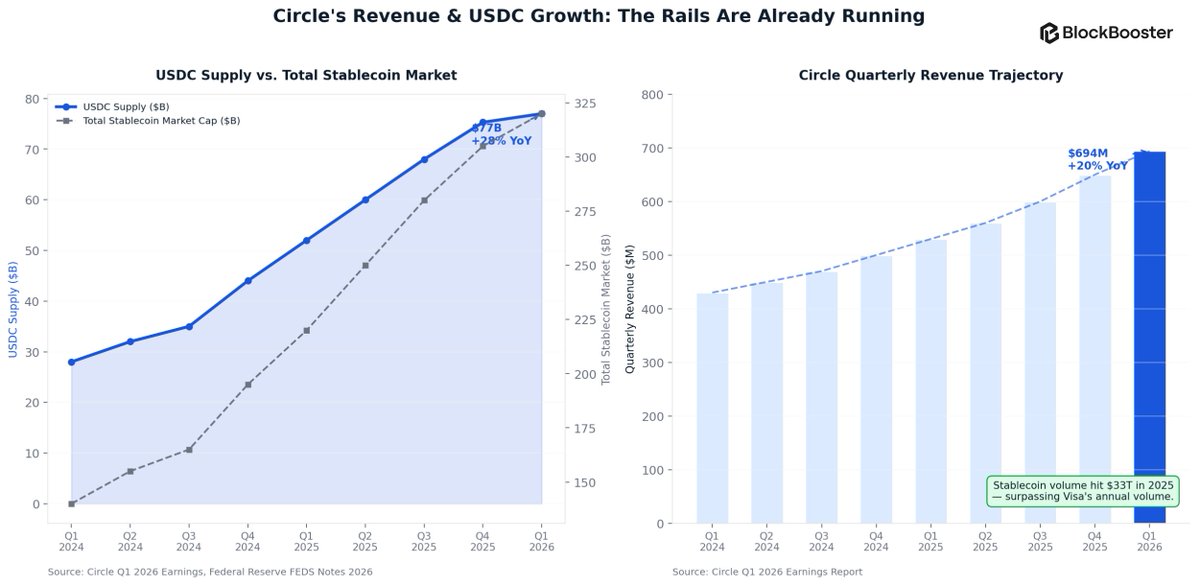
Circle raised $222M at a $3B valuation for ARC, a Layer-1 built for regulated institutions. The round was backed by BlackRock, Apollo, ICE, Standard Chartered, Janus Henderson, SBI Group, ARK Invest, and a16z.
The architecture is purpose-built around two barriers that have kept institutions off public blockchains: auditability requirements and counterparty whitelisting. Configurable privacy, permissioned validators, and compliance-focused transaction design are the direct responses.
Gas fees are paid in $USDC. There is no treasury friction and no exposure to volatile tokens. Those fees flow back through validator rewards and burns, keeping institutions comfortable while value accrues to ARC holders.
But here’s the part most people miss: Circle holds 25% of the initial supply and operates core validator infrastructure. The issuer, validator, and primary token beneficiary are all the same entity. This structure represents a company-led financial infrastructure layer, not a community-driven token network.
100+ institutions are already on Arc testnet, working through tokenized fund issuance, onchain settlement, and capital markets workflows.
The real differentiation is not speed or throughput. It is the combination of institutional RWA infrastructure, onchain FX settlement, and multi-stablecoin liquidity on a rail that incumbents can adopt without triggering their own compliance frameworks.
Three signals worth watching:
→ When does mainnet beta launch?
→ Which institution migrates production workflows first?
→ Does meaningful inter-institution USDC settlement volume emerge on ARC?
If Circle converts USDC distribution into ownership of regulated transaction rails, it will be significantly more difficult for competitors to launch another institutional blockchain.
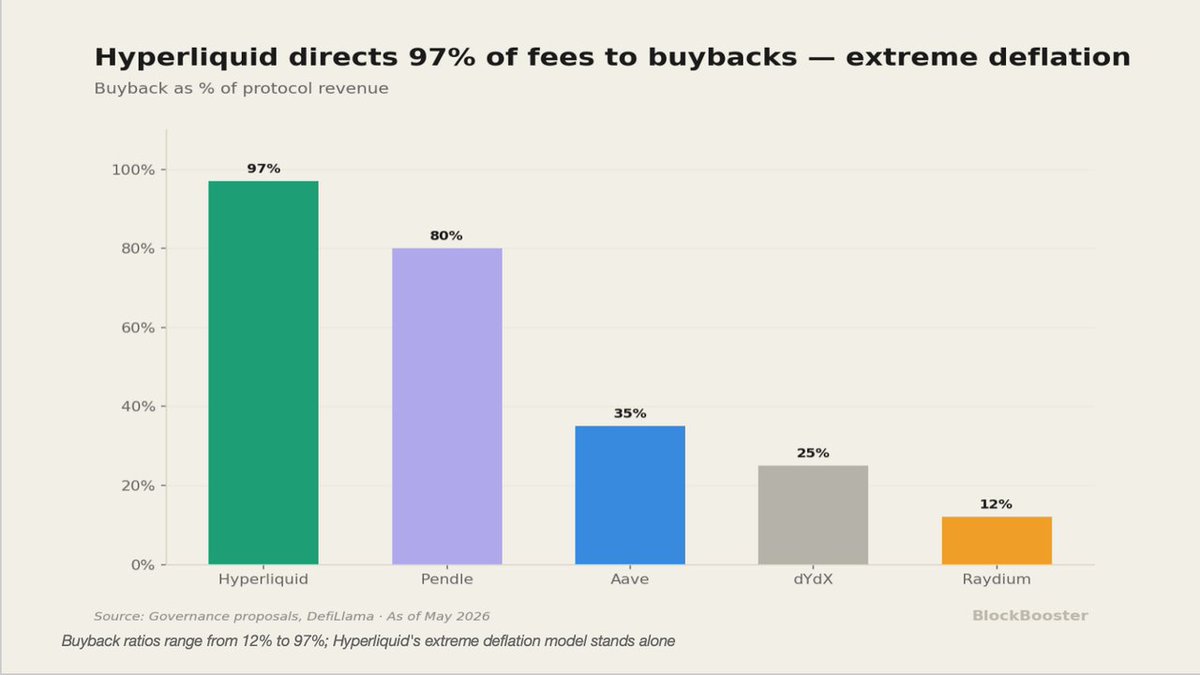
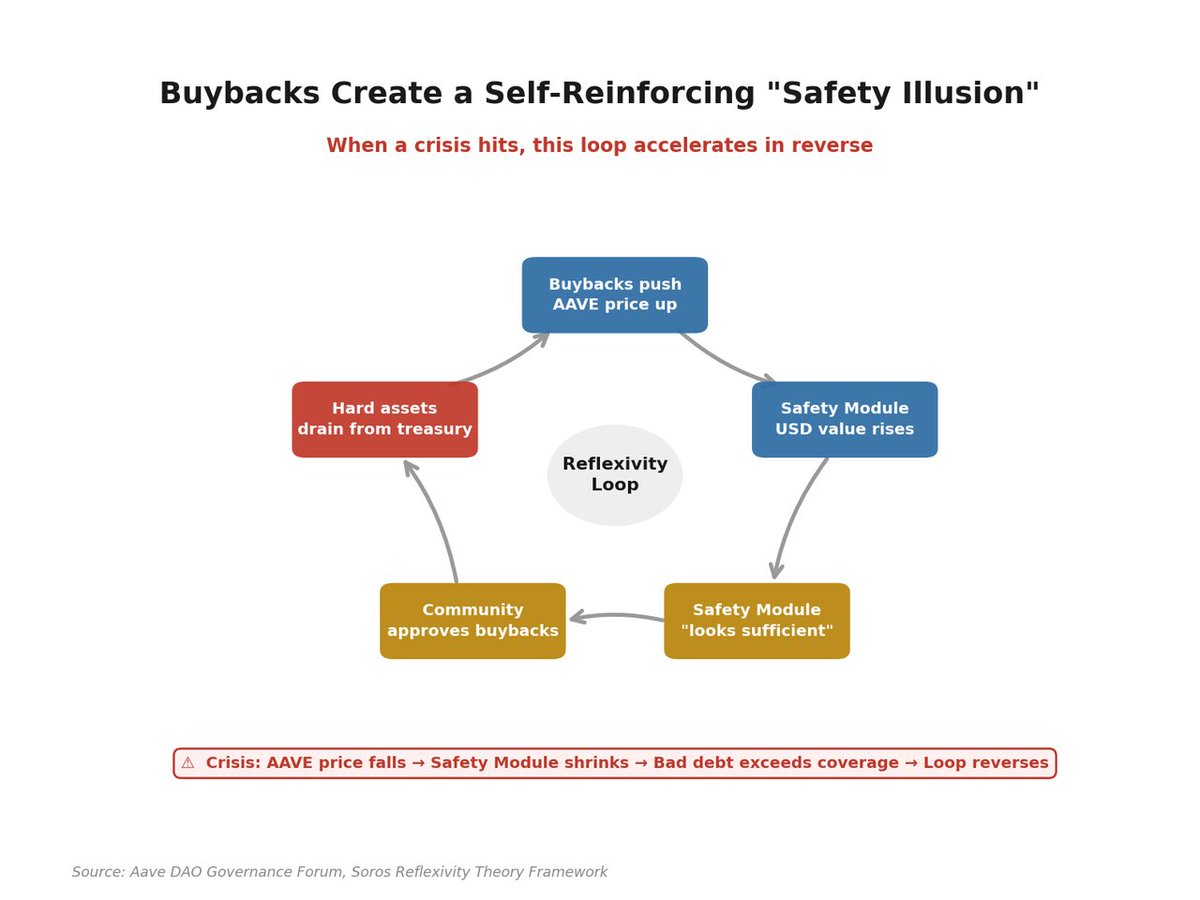
Aave, Hyperliquid, and Raydium have all moved to implement token buyback mechanisms. The market has largely received this as a bullish signal.
It warrants closer scrutiny.
A buyback program and genuine net deflation are not the same thing. Three criteria determine whether a buyback is structurally meaningful:
→ Is it funded by organic protocol revenue or drawn from treasury reserves?
→ Are repurchased tokens permanently removed from circulation, or redistributed?
→ Does the program remain viable if fee revenue declines significantly?
Thanks to @ForesightNews for the feature.
Our researcher @BlazingKevin_ shared some sharp takes on DeFi security. Here’s the short version:
→ Security incidents are the best filter for real protocols vs narrative bubbles. If TVL holds steady during panic, that’s a protocol worth watching long-term.
→ Cross-chain is infrastructure, just not safe infrastructure yet. Every bridge concentrates both capital and trust assumptions. One weak link means total loss.
→ Restaking is conditional leverage, not yield enhancement. Slashing cascades, liquidity illusions, and opaque yield sources are the three risks most people miss.
→ On AI × DeFi: AI is expanding the attack surface faster than it’s securing it.
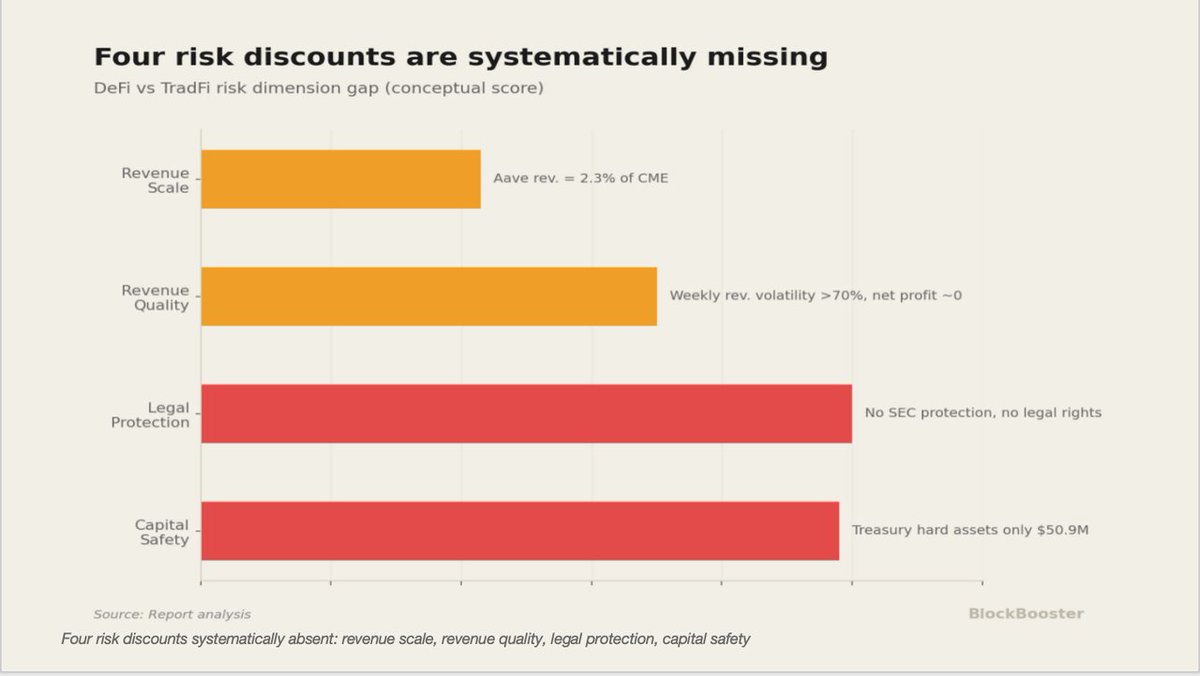
My prediction: DeFi protocols will soon compete on risk reserves and capital adequacy metrics, just as CEXs compete on proof of reserves.
Protocols that go beyond that standard will attract institutional capital. The ones that don't will get repriced.
@circle The CLI is the detail most people will skip past. Repeatable financial actions executed programmatically enable the agent to actively manage funds rather than just hold them.
@arc Based on the whitepaper, we can definitely say that Circle built the most widely used stablecoin on other people's infrastructure, and Arc is a solid attempt to own the layer beneath it