Sick of paying monthly cloud taxes for basic infrastructure?
It’s time to take back your data. The ultimate Self-Hosting Guide just dropped on GitHub, covering everything from Docker containers to local AI deployment.
Here is what you need to master your own hardware ↴
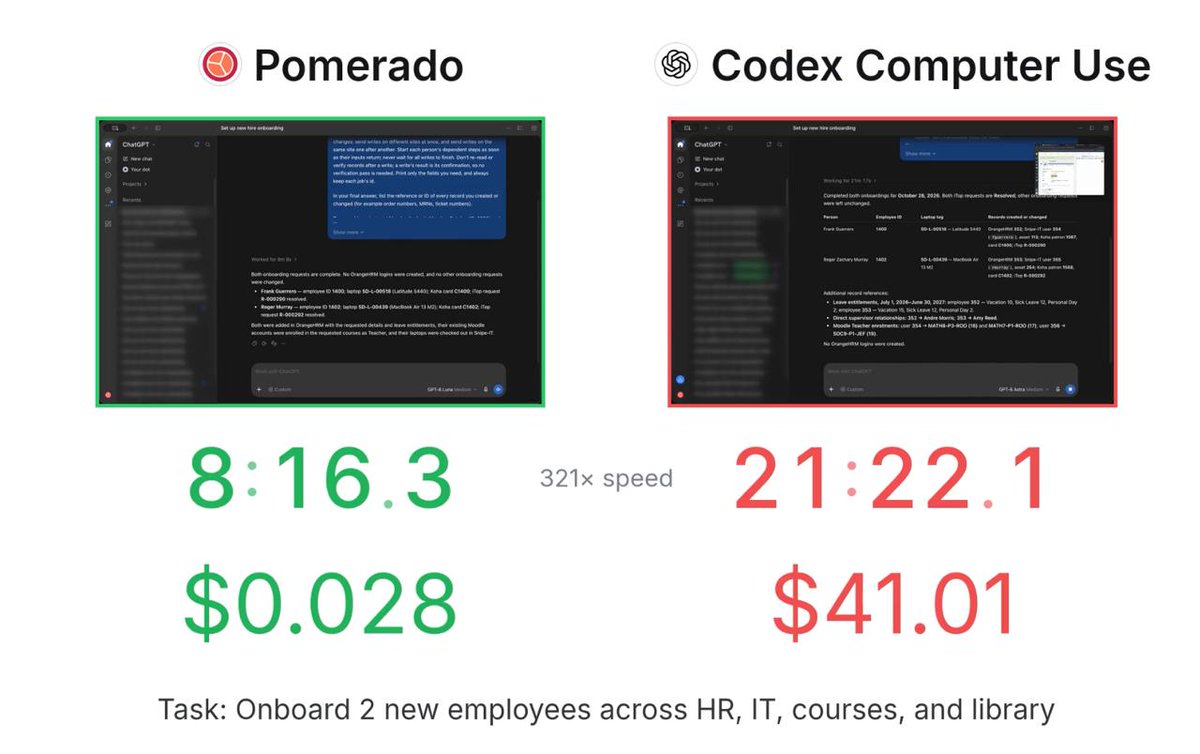
Generating deterministic code paths instead of running a full browser loop for every agent tool call drops latency from minutes to milliseconds.
The cost delta on repeat runs is brutal when you stop paying the vision token tax.
https://t.co/HIEBpjj4m6
--- project brief ---
Pomerado 🔌
https://t.co/RHDMlWjxMi
turns any website into an mcp tool for your agent. it generates deterministic code, so no api needed and no computer use on every call.
good alternative to computer/browser use for repeat tasks on sites with no api.
-- who is it for?
devs who want their agent to access content of a site. not site owners.
-- where does it keep the data?
nowhere. it generates code + json files. data is fetched live on each call.
-- does it work with google sign-in or captchas?
probably not in open source. cloud handles oauth and bot protection.
-- any competitors?
integuru: generates code from a recorded har file
workflow-use / skyvern: record and replay browser workflows
browserbase + stagehand: hosted browsers + ai sdk
-- open source vs cloud?
open source: free, runs locally, asks for login on every call
cloud: hosting, saved logins, anti-bot browsers, auto-repair
authors: @akshay_manglik
combined weight of the old stack.", "The developer experience is unmatched:\n\n• 1 login, 1 port (6262)\n• Built-in streaming-style UI (browse, hover for trailers, clean metadata)\n• request management for friends & family\n• Native integrations with Plex, Jellyfin, and
{
"thread": [
"Running a self-hosted media stack usually means managing 6 different apps: Sonarr, Radarr, Lidarr, Prowlarr, Bazarr, and Seerr.\n\nThat's 6 logins, 6 ports, 6 update cycles, and a nightmare of API keys.
🧵👇", "HolyArrs consolidates the entire arr-stack into a single, cohesive self-hosted application.\n\nInstead of bloated individual containers, it packs everything into a ~15 MB image that idles at just ~140 MB of RAM with 10,000+ titles loaded.\n\nCompare that to the 700+ MB
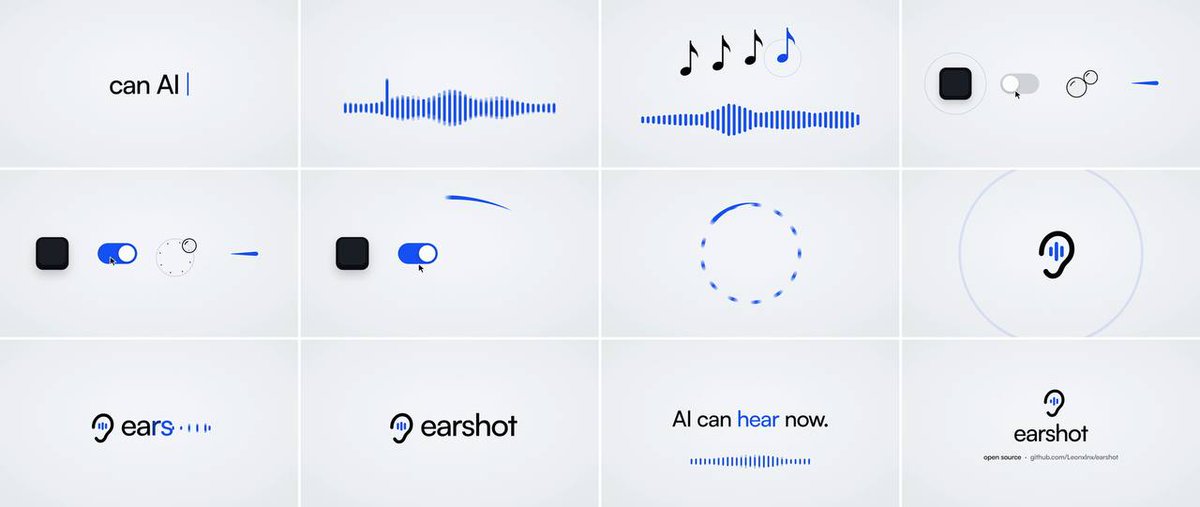
By moving audio DSP loops into the agent's context window, engineers can automate complex Foley work and sound design without context switching out of the terminal. The repository includes everything needed to wire local audio synthesis directly into your existing development harness.
Most automated multimedia pipelines treat audio as an afterthought, relying on clumsy heuristic scripts or manual timeline syncing in heavy DAWs. Earshot changes the architecture by giving LLM agents direct local control over sound effect generation, spatial alignment, and volume normalization. It runs locally on standard CPU hardware without demanding dedicated GPU clusters for inference.
The implementation relies on the Model Context Protocol to bridge Claude Code and other autonomous agents with real-time audio processing tools.
• Local processing: executes entirely on CPU
• Capabilities: classifies audio tracks, synthesizes missing effects, verifies volume levels against target vectors, and enforces precise frame-level video sync
• Built-in asset pool: includes an index of 252 baseline samples for comparative synthesis and iterative prompt refinement
It also supports dictionary compression via API or CLI (-D). Feed it a 64 KB sample file as a reference dictionary (or combine it with Zstandard's Dictionary Builder), and small-file compression efficiency spikes dramatically.
Clean BSD/GPL-2.0 licensing. Zero bloat.
Most developers sleep on data compression bottlenecks until their node sync times or logging pipelines crawl to a halt.
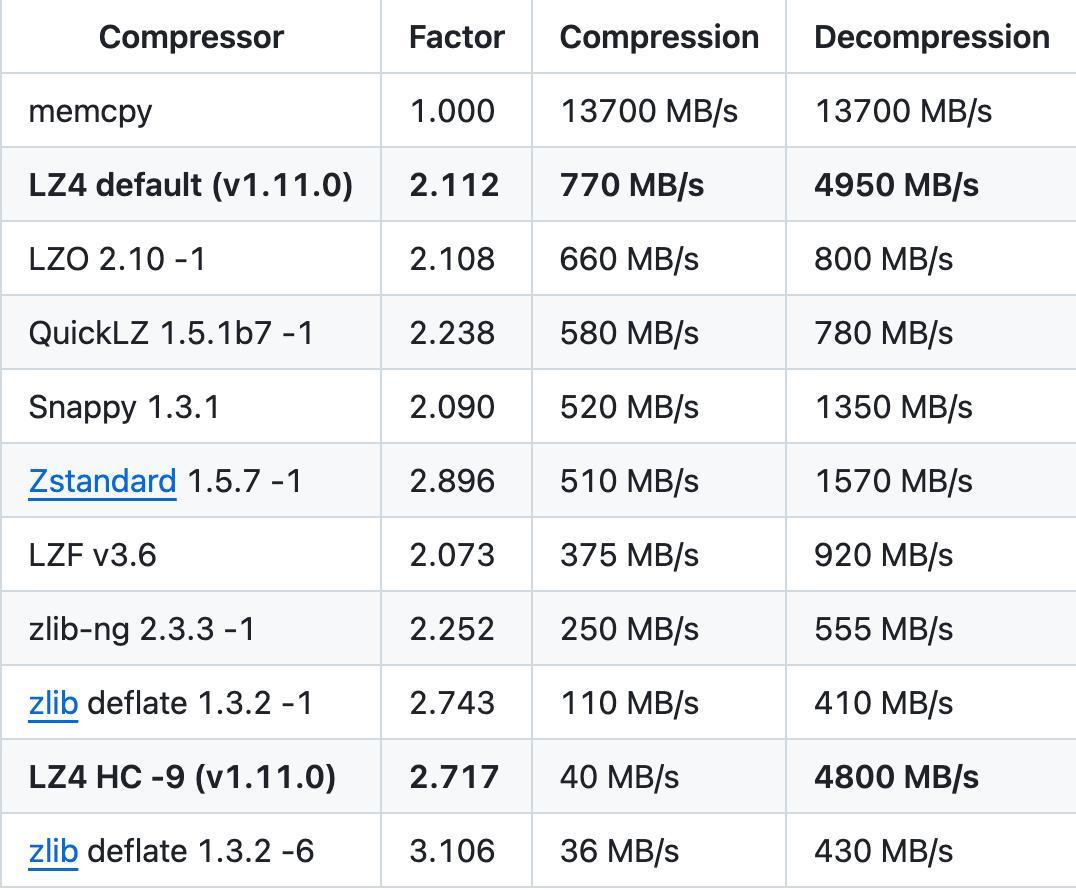
If you're handling high-throughput state data or heavy server logs, look at LZ4. It’s an absolute engineering masterclass in raw speed.
The secret sauce is trade-off tuning.
You can dynamically adjust an "acceleration" factor to trade minor compression ratios for blazing-fast execution. Need denser packing? Switch to LZ4_HC, which trades CPU cycles for improved ratios while keeping decompression absurdly fast.
Here’s what a typical audit uncovers if you haven’t manually locked it down:
• 165 pending security updates sitting there
• 26 active services running by default
• 8 public ports exposed (including custom SSH, web, and DNS)
• 64 SUID files (massive privilege escalation vector)
Most devs spin up a VPS, drop their node or validator, and completely ignore the attack surface.
Then wonder why their infra gets compromised.
Ran `vps-audit` on a standard Ubuntu box running nodes. The results are a stark reminder that default settings are an open invitation.
The heavy lifting still runs on industry-standard engines, but the workflow is faster now.
• Ghidra (NSA's open-source powerhouse)
• Hex-Rays IDA Pro
• JADX for Android/APK teardowns
• Il2CppDumper for Unity-based game architectures
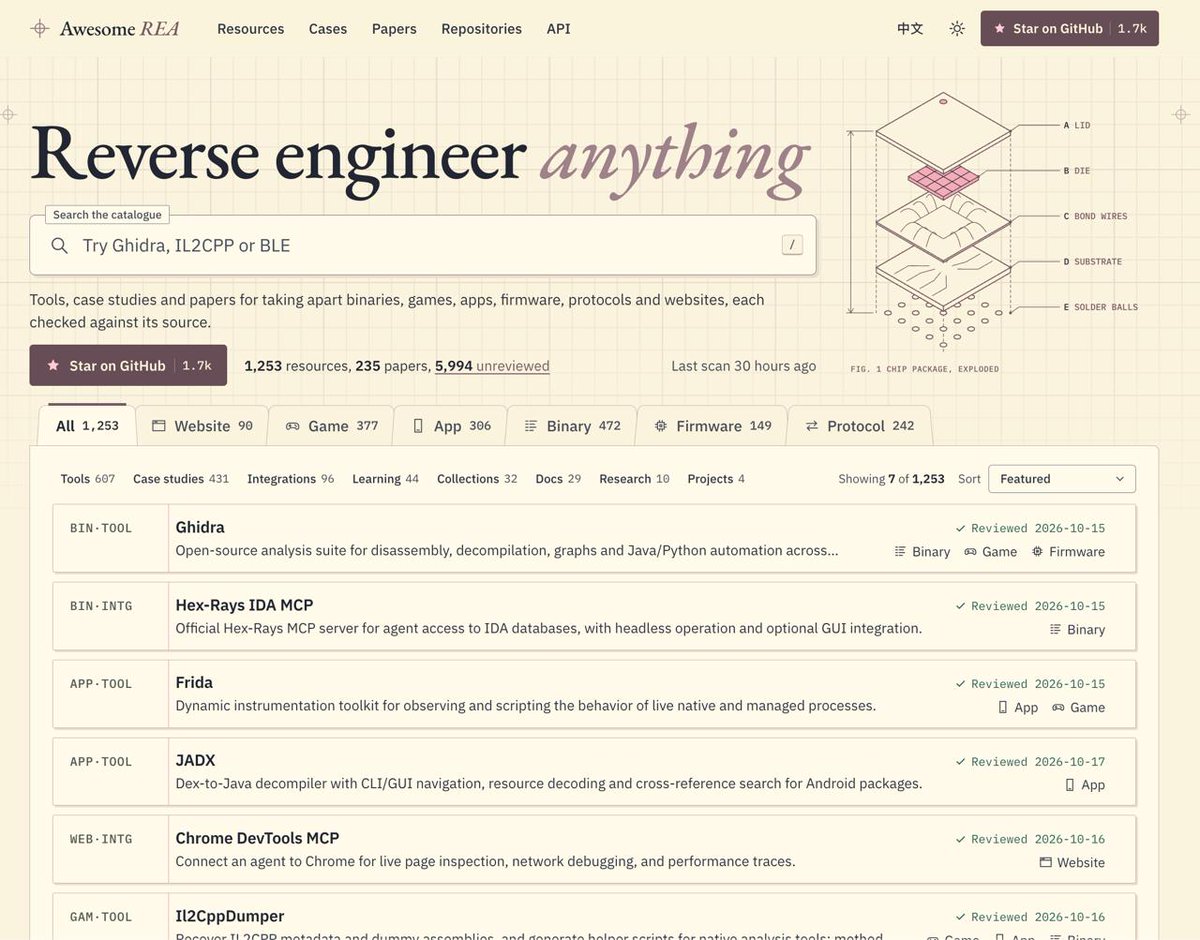
Just dropped into an insane open-source repo that aggregates the bleeding edge of RE tools: 1,253 verified resources, 235 research papers, and modern debugging setups.
A breakdown of what's actually inside the stack worth bookmarking
1/ Decompilers & Binary Analysis