New option in impacket for ADCS ESC relay attacks:
--altsid
This option is needed with
StrongCertificateBindingEnforcement, enforced on DC's since 2026-02 (KB5014754).
https://t.co/Xsus8THJE3
See reply for example command.
More info:
https://t.co/8Rrb1iR5Z4 by @harmj0y
This is absurdly clever: there is a way you can cut Fable 5 costs by up to ~70%. Just turn Claude Code context into an image and make Fable OCR them. 😂
https://t.co/ewjdpf32yC
Claude Code Full Sandbox Escape (CVE-2026-55607)
writeup: https://t.co/kzJ04Fqu4Y
prompt injection -> code execution on the host.
works even in read-only permissions mode + full sandbox
(it could be my Pwn2Own bug, but p2o was weird this year lol)
Onelogon: Taking over Active Directory Accounts via Netlogon🔑
We analyzed Netlogon, bypassed the Zerologon patch, resulting in a full auth bypass. An attacker can leverage this to compromise computer accounts, or even the entire AD. Non-standard config must be present tho 🧵
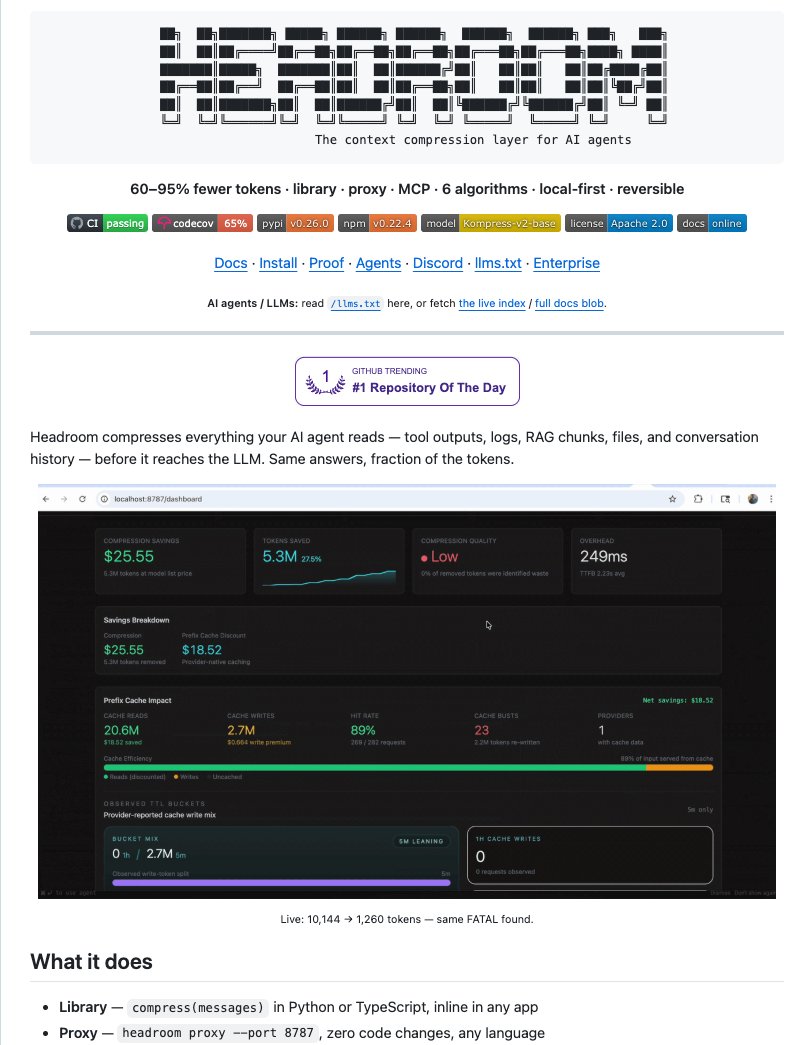
UP TO 95% TOKEN REDUCTION WITH ZERO CODE CHANGES
A Netflix engineer just open-sourced Headroom, and it’s one of the smartest ways I’ve seen to cut LLM costs.
It wraps Cursor or Claude in a local proxy to compress your payload before it hits the LLM:
→ Intelligently shrinks logs, JSON, and code
→ Perfectly preserves logic accuracy
→ Keeps 100% of your data local
→ Stops Opus-tier models from wasting tokens on boilerplate
It already crossed 35K stars, which says a lot.
100% free and open-source.
repo in 🧵↓
New entry added to the #LOLBAS Project:
Proxy execution via system-native scp.exe. Takes any remote destination, doesn't actually have to run an SSH server.
👉 https://t.co/jLCiaB1fuM
Thanks @BinFault
SPN-less RBCD with NetExec🔥
While classic RBCD requires a computer account, you can use U2U authentication to perform RBCD with a normal user account, if a computer account is not available.
Thanks to @azoxlpf, you can now perform this attack with NetExec as well🚀
ANDREJ KARPATHY COULD HAVE CHARGED $2,000 FOR THIS COURSE.
He put it on YouTube.
The full training stack. Tokenization. Neural network internals. Hallucinations. Tool use. Reinforcement learning. RLHF. DeepSeek. AlphaGo.
3 hours of the most comprehensive LLM education that exists anywhere at any price.
Not how to use the tools.
How the entire system was built from the ground up and why it behaves the way it does.
The engineers who understand this build things the ones who only use the tools cannot even conceive of.
The gap between those two groups is not 3 hours.
It is everything those 3 hours quietly unlock for the rest of your career.
Anthropic pays $750,000+ a year for engineers who know how to build LLMs from scratch.
Stanford just released the exact lecture that teaches it - 1 hour 44 minutes, free, straight from CS229.
Bookmark and watch it this weekend.
It'll teach you more about how ChatGPT & Claude actually work than most people at top AI companies learn in their entire careers.
instead of watching 2 hours of Netflix tonight, watch this 40-minute masterclass from the founder of a $20B China AI company
it's the clearest explanation I've seen of how Agent Swarms and AI systems actually work at scale
useful whether you've never built an agent in your life or have been using Claude every day for the past year
I took the key ideas and turned them into a practical guide on how to actually build with Kimi
find it below
Andrej Karpathy: "90% of Claude's mistakes come from missing context, not a weak model."
41% mistake rate without a CLAUDE.md. 11% with the 4-rule baseline. 3% with the 12-rule version below
here are the 12 rules senior engineers settled on:
1. think before coding: state assumptions, don't guess. the model can't read your mind, stop hoping it will
2. simplicity first: minimum code, no speculative abstractions. the moment you let Claude add "for future flexibility," you've added 200 lines you'll delete next quarter
3. surgical changes: touch only what you must. don't let it improve adjacent code, that's how PRs blow up
4. goal-driven execution: define success criteria upfront, loop until verified. without them Claude either loops forever or stops too early
5. use the model only for judgment calls: classification, drafting, summarization, extraction. NOT routing, retries, status-code handling, deterministic transforms. if code can answer, code answers
6. token budgets are not advisory: per-task 4000, per-session 30000. by message 40 of a long debug, Claude is re-suggesting fixes you rejected at message 5
7. surface conflicts, don't average them: two patterns in the codebase? pick one. Claude blending them is how errors get swallowed twice
8. read before you write: read exports, callers, shared utilities. Claude will happily add a duplicate function next to an identical one it never read
9. tests verify intent, not just behavior: a test that can't fail when business logic changes is wrong. all 12 of Claude's tests can pass while the function returns a constant
10. checkpoint every significant step: Claude finished steps 5 and 6 on top of a broken state from step 4. nobody noticed for an hour
11. match the codebase conventions: class components? don't fork to hooks silently. testing patterns assumed componentDidMount, hooks broke them without surfacing
12. fail loud: "completed successfully" with 14% of records silently skipped is the worst class of bug. surface uncertainty, don't hide it
what actually compounds instead of the next framework:
- the CLAUDE.md file as institutional memory across sessions
- eval-driven changes, not vibe-driven
- checkpoints over speed
- explicit conflicts over silent blending
- discipline over framework, every time
- one repo, one rules file, no exceptions
be a few rules ahead of AI twitter before this becomes mass-opinion
study this
The internet runs on Nginx.
And right now, millions of servers are one request away from getting owned.
A 17-year-old bug just turned into a full-blown RCE exploit:
→ CVE-2026-42945 (CVSS 9.2)
→ No auth
→ No credentials
→ Just a single malicious HTTP request
Attack chain:
Heap Overflow → Nginx Worker Hijack → Remote Code Execution
Researchers estimate ~19 MILLION exposed instances.
PoC is already public.
If you're running Nginx, patch NOW to 1.31.0 or 1.30.1 before bots start mass-scanning the internet.
During recent testing on a HubSpot-powered target, I needed a JSONP primitive to complete a DOM XSS chain.
One interesting behavior: HubSpot CMS exposes a built-in endpoint in this format:
`/_hcms/forms/embed/v3/form/{portalId}/{formId}?callback=alert`
Example :
`REDACTED. com/_hcms/forms/embed/v3/form/22544793/f411e5de-1b8b-4b19-8e6d-fe003d08cc8b?callback=alert`
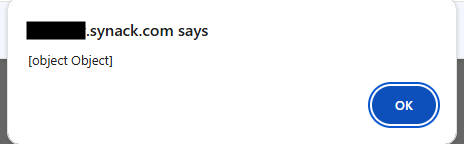
It's a JSONP endpoint that wraps the response in whatever function name you pass. Just load it as <script src=...> and your callback fires.
The callback param has char restrictions so not every payload goes through, but alert() or prompt() works fine for proof. If you're hunting on any HubSpot site and just need that last JSONP piece for the chain, this is it.
#bugbounty
Exim 4.99.3 is out, patching CVE-2026-45185, a critical RCE found by XBOW! Check out our post linked in the reply; I'll summarize some details in this thread.
PoCs for Apache Tomcat Unauth RCE (CVE-2026-34486) and Apache httpd Pre-auth RCE (CVE-2026-23918) are now public on our Github.
Tomcat exploit is fully reliable. httpd chain works in a controlled lab setup with a known info leak.
https://t.co/D3dg5iTuwP
https://t.co/2zyr1ds4Mo