Something’s washed ashore… 🌊🍡
Starting today, trade on Dango to earn Silver Boxes.
Some may contain rare Boosters.
A few may be worth up to 2.5x points for the duration of the epoch you find them in
The Summer Hunt begins now
billions network just crossed every possible limit of scams in web3
• 99% of the community ineligible
• peanuts for kaito yappers
• binance alpha users get first access
you’d think it ends there then you are wrong
this was just level 1 scam by them
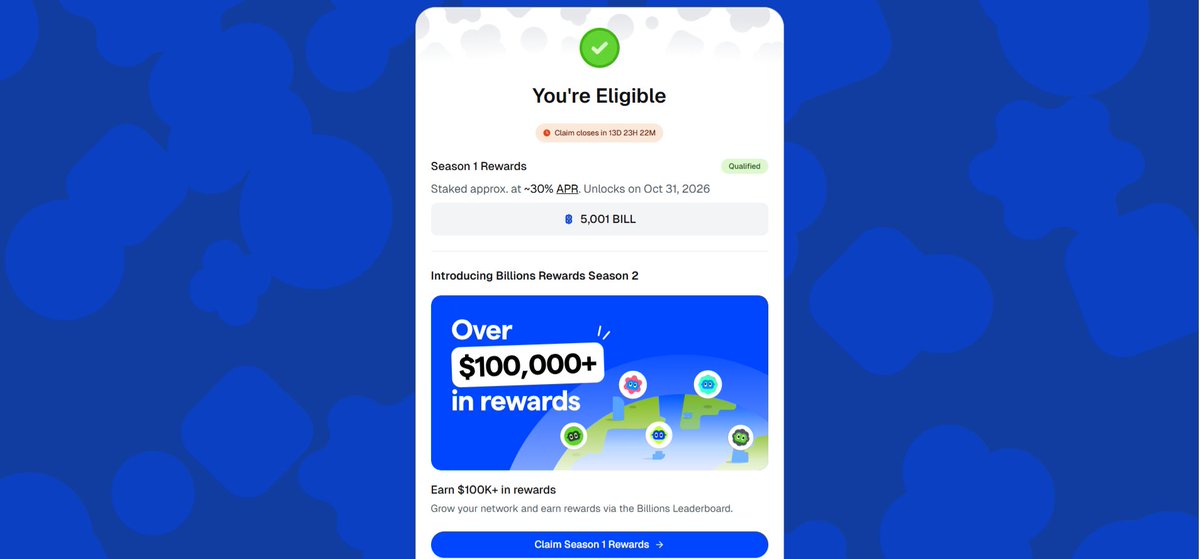
i’m eligible for 5001 $BILL tokens
but to even reach the claim page, you have to complete a video KYC via idOS portal
wait an min, it gets worse.
even after KYC
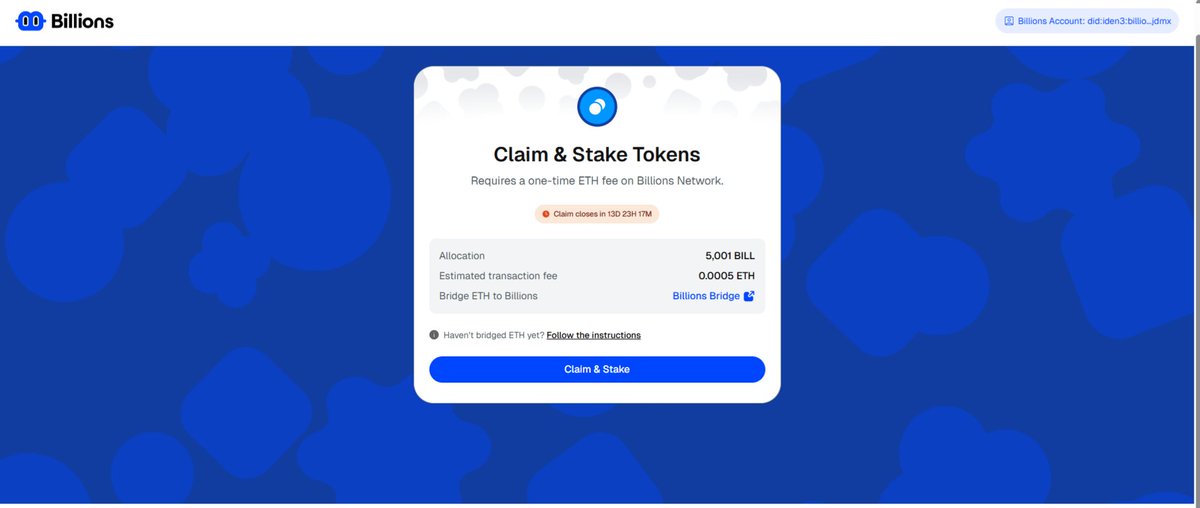
there is no option to claim your tokens.
your only choice:
👉 claim & stake until oct 31
👉 or just walk away and lose everything
and wait for it..
to stake, you must bridge a minimum of $8 just to proceed
so you can’t claim
you can’t withdraw
you’re forced to spend money to lock your own rewards
in 4+ years of crypto, i’ve seen rugs, scams, exploits
but this is next-level extraction by billions team
Web3 doesn’t have a security problem because teams aren’t trying, it has a security problem because everything is happening too fast.
Attacks today are automated, coordinated, and executed in seconds. Meanwhile, most security systems still rely on audits before launch and alerts after damage. That gap is exactly where billions disappear.
@CerbAgent is built for this reality.
Its real-time approach flips security from passive to active, constantly monitoring on-chain behavior, detecting anomalies as they form, and responding instantly before exploits fully execute. Not hours later. Not after funds are gone. In the moment it matters.
That’s the real edge.
Because in a machine-driven ecosystem, only machine-speed defense works. And that’s exactly what $CERB is positioning for, a layer where security isn’t delayed, it’s alive. @TheARCTERMINAL
𝐂𝐄𝐑𝐁𝐀𝐆𝐄𝐍𝐓 𝐂𝐇𝐑𝐎𝐍𝐈𝐂𝐋𝐄𝐒
🚥 𝐄𝐏𝐈𝐒𝐎𝐃𝐄 𝟐𝟖: 𝐖𝐀𝐋𝐋𝐄𝐓 𝐂𝐋𝐎𝐍𝐄 𝐒𝐈𝐓𝐄𝐒 𝐒𝐓𝐄𝐀𝐋 𝐁𝐄𝐅𝐎𝐑𝐄 𝐘𝐎𝐔 𝐋𝐎𝐆 𝐈𝐍
You thought you were opening your wallet.
You were opening the door
for an attacker.
A Thread 🧵👇
1️⃣ Real Hack Breakdown: Wallet Clone Site
🚦 user searches wallet website
🚦 clicks fake clone result
🚦 identical logo + interface
🚦 prompted to restore/import wallet
🚦 user enters seed phrase
🚦 attacker captures instantly
🚦 funds drained everywhere
The login page was the exploit.
2️⃣ Why This Attack Works
🚦 perfect branding copies
🚦 search ads / fake rankings
🚦 urgency to access funds
🚦 trust in familiar design
🚦 low URL verification habits
Users trust what looks real.
3️⃣ Why Existing Tools Fail
🚦 browsers don’t verify legitimacy clearly
🚦 no warning before seed entry
🚦 clone domains appear quickly
🚦 users ignore subtle URL changes
🚦 recovery impossible after phrase leak
One mistake becomes total loss.
4️⃣ Where @CerbAgent Comes In
🚦 incentivized clone-site breakdowns
🚦 AI-scored security education
🚦 real exploit case studies
🚦 rewards for clarity
Awareness becomes defense.
5️⃣ How $CERB Agents Protect Users
🚦 expose clone-site tactics
🚦 teach URL verification habits
🚦 highlight seed phrase dangers
🚦 share real victim stories
Clarity stops deception.
6️⃣ How to Stay Safe
🚦 bookmark official wallet sites
🚦 never search when in a rush
🚦 never enter seed phrase online casually
🚦 verify URLs character by character
Your seed phrase is the real target.
7️⃣ Why This Content Wins
🚦 real hack stories = high impact
🚦 clear warnings = higher score
🚦 practical tips = real value
🚦 consistency = leaderboard growth
Security insight earns more.
8️⃣ What This Prevents
🚦 seed phrase theft
🚦 total wallet compromise
🚦 cross-chain asset loss
🚦 repeated clone scams
Without awareness,
familiar pages become traps.
✅ TL;DR
🚦 Clone wallet sites steal phrases
🚦 Design can fake trust
🚦 Tools don’t stop every clone
🚦 Awareness is defense
🚦 $CERB rewards real insight
@CerbAgent
turns fake pages
into clear warnings.
There's a version of DeFi where everything just works.
No fragmented liquidity. No MEV nightmares. No "oops, I sent funds to the wrong address and now they're gone forever."
Dango is building that version. Brick by brick.
The ecosystem at a glance:
Spot trading? Live since January.
Perpetuals on BTC, ETH, SOL? Live since March. Up to 20x leverage. Half second finality.
Unified cross collateralized accounts? One Bitcoin deposit backs spot, perps, options, and lending. All at once.
The bank contract? Catches your typos so funds don't vanish.
DNG token? Every trade buys and burns it. Supply shrinks. Value compounds.
Epoch 1 points program is active. Trade, provide liquidity, refer friends. Testnet OATs give multipliers. A huge chunk of DNG supply goes to the community.
We're not trying to be the biggest. We're trying to be the realest.
The endgame exchange? Yeah, we're building it. Come see.
Dango builds the chain as the market’s own memory.
A native central limit order book lives in the same address space as unified margin, execution, and settlement. Spot, perps, and vaults draw from one pool; when any position moves, the entire system updates without calls, bridges, or reconciliation.
Grug turns that shared state into living intelligence: native cron jobs run funding and liquidations in-protocol, smart accounts make keys and approvals optional. Nothing is bolted on.
Most chains create general compute and hope trading fits. Dango refuses the separation. Trading is the root; everything else grows from its need for coherence.
You no longer see infrastructure supporting markets. You see a market that has learned to think.
CerbAgent: The Security Upgrade Web3 Needs
The rise of DeFi and NFTs has brought innovation, but also a host of new vulnerabilities. Exploits and hacks have grown more sophisticated, leaving users scrambling to recover lost funds. This is the reality we live in today.
That’s why @CerbAgent exists.
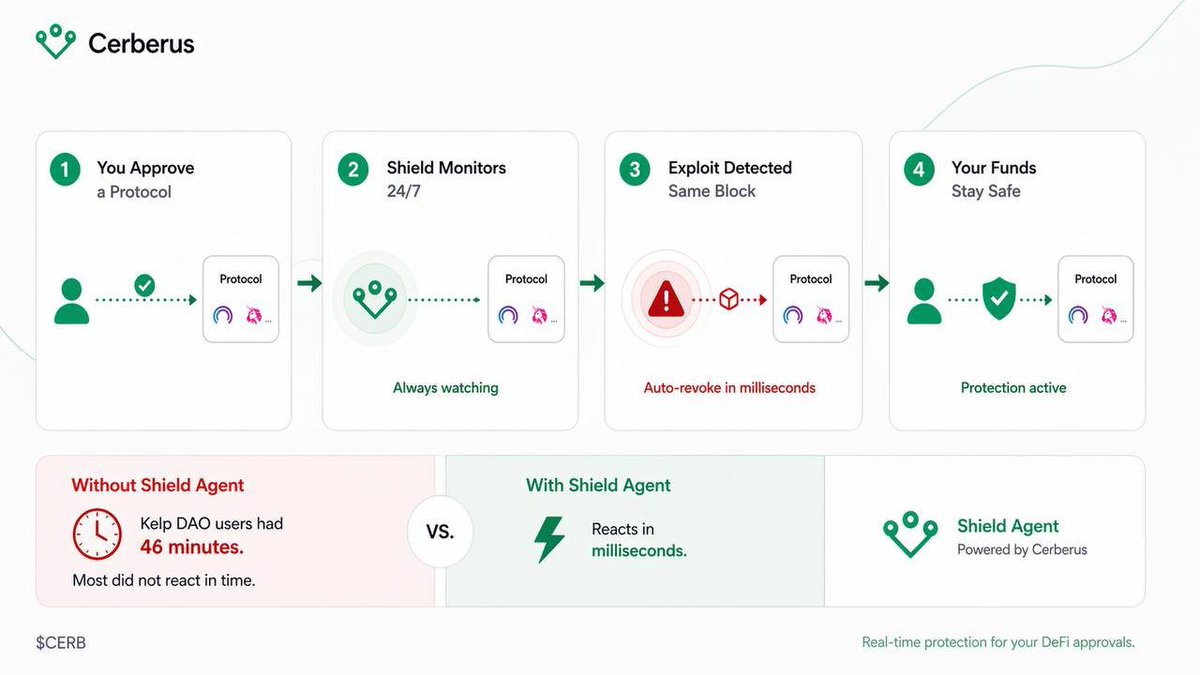
With CerbAgent, you gain real-time protection against the evolving threats of the crypto space. Whether it’s an exploit in a new smart contract or a malicious transaction, CerbAgent is there to stop it before it affects you. It’s not just a watchful eye; it’s an intelligent defense system.
The Shield Agent immediately revokes compromised permissions, Sentinel Agent scans transactions before they happen, and Recovery Agent actively saves your assets in real-time.
In a world of unpredictable threats, $CERB ensures that you can navigate Web3 with peace of mind.
Security is no longer optional. It’s critical.
𝐂𝐄𝐑𝐁𝐀𝐆𝐄𝐍𝐓 𝐂𝐇𝐑𝐎𝐍𝐈𝐂𝐋𝐄𝐒
🚥 𝐄𝐏𝐈𝐒𝐎𝐃𝐄 𝟐: 𝐁𝐋𝐈𝐍𝐃 𝐒𝐈𝐆𝐍𝐈𝐍𝐆 𝐈𝐒 𝐓𝐇𝐄 𝐑𝐄𝐀𝐋 𝐄𝐗𝐏𝐋𝐎𝐈𝐓
“It’s just a signature.”
That assumption
has cost users everything.
A Thread 🧵👇
1️⃣ The Moment 🚦 user connects wallet to interact
🚦 prompt pops up to “sign message”
🚦 no gas fee involved
🚦 looks quick and harmless
So they sign.
2️⃣ What Actually Happens 🚦 signature grants off-chain permission
🚦 no tokens move immediately
🚦 no alert gets triggered
🚦 attacker gains invisible control
Nothing leaves your wallet
yet.
3️⃣ Why It Works 🚦 no cost creates false safety
🚦 messages are unreadable to most users
🚦 wallets don’t explain intent
🚦 users trust the interface
If it’s free
it must be safe.
Wrong.
4️⃣ The Exploit Pattern 🚦 attacker stores signed permission
🚦 waits for valuable assets
🚦 executes later without interaction
🚦 drains wallet silently
The attack is delayed
but already approved.
5️⃣ Why Tools Fall Short 🚦 no translation of signature meaning
🚦 no risk scoring before signing
🚦 no memory of dangerous permissions
🚦 no alert when it’s later abused
You’re signing blind
every time.
6️⃣ Where @CerbAgent Steps In 🚦 interprets what the signature really does
🚦 flags suspicious permission requests
🚦 monitors wallet behavior after signing
🚦 revokes risky approvals automatically
It doesn’t just warn
it acts.
7️⃣ The Core Insight 🚦 most users fear transactions
🚦 but ignore signatures
Yet signatures
are where control is handed over.
8️⃣ How to Stay Safe 🚦 don’t sign what you don’t understand
🚦 avoid random dApps and links
🚦 use burner wallets for testing
🚦 review and revoke approvals regularly
Convenience is not security.
✅ TL;DR
🚦 signatures don’t look dangerous
🚦 no cost doesn’t mean no risk
🚦 approvals can be delayed exploits
🚦 wallets don’t explain enough
🚦 $CERB turns blind signing into informed action
@CerbAgent
what you sign
controls what happens next.
Wallet security is broken in ways most people still underestimate.
This isn’t theory. It’s based on how real hacks actually happen—and why most “security tools” fail when it matters most.
A thread 🧵
1/ The core problem: wallets are too trusting by design
Signing a transaction ≠ understanding it.
Users approve:
• Blind contract interactions
• Malicious approvals
• Hidden payloads
Attackers don’t “hack wallets”—they trick you into opening the door.
2/ Real hack pattern #1: Approval Drains
Victim signs a harmless-looking transaction.
Behind the scenes:
→ Grants unlimited token approval
→ Attacker contract gains control
→ Funds drained later (not instantly)
Why tools fail:
Most only warn after approval is granted.
Too late.
3/ Real hack pattern #2: Phishing + Signature Replay
Fake dApp UI → real contract interaction.
User signs:
• “Login” message
• Off-chain signature
Attacker reuses signature to authorize asset movement.
Why tools fail:
They treat signatures as “safe” because no gas = no risk.
Wrong.
4/ Real hack pattern #3: Contract Upgrades
You trust a protocol today.
Tomorrow:
→ Contract gets upgraded
→ Malicious logic injected
→ Existing approvals exploited
Why tools fail:
They assume contracts are static.
Attackers rely on that assumption.
5/ Real hack pattern #4: Social Engineering + Wallet Connect
User connects wallet to a “trusted” app.
Hidden actions:
• Batch transactions
• Multi-call exploits
• Permission escalation
Why tools fail:
They don’t simulate full execution paths.
They only show surface-level prompts.
6/ The uncomfortable truth:
Most wallet security tools are:
• Reactive
• Static
• UI-level only
They don’t think like attackers.
They don’t simulate intent.
They don’t protect before damage happens.
7/ Where @CerbAgent changes the model:
It doesn’t just scan transactions.
It interprets behavior in real time.
Key difference:
→ Intent-aware security vs prompt-based warnings
8/ How @CerbAgent handles Approval Drains:
Before you sign:
• Simulates downstream effects
• Detects hidden approval risks
• Flags delayed-drain patterns
Not “this might be risky”
But:
“This enables full token access later”
That clarity matters.
9/ Handling Signature Exploits:
@CerbAgent analyzes:
• Message structure
• Replay potential
• Off-chain risk vectors
It treats signatures as attack surfaces—not harmless actions.
10/ Contract Upgrade Risk:
Instead of trusting contract history:
@CerbAgent monitors:
• Upgradeability patterns
• Proxy behaviors
• Permission changes
If trust assumptions shift → you get warned before exposure
11/ Wallet Connect + Multi-call Defense:
@CerbAgent:
• Breaks down batched transactions
• Simulates execution paths
• Identifies privilege escalation
So you see what actually happens, not what UI shows.
12/ Why this matters:
Attackers evolve faster than static rules.
Security needs:
• Context
• Simulation
• Behavioral analysis
Not just blacklists and pop-ups.
13/ Bottom line:
Wallet security isn’t about stopping hackers.
It’s about stopping yourself from unknowingly authorizing them.
Tools that don’t understand intent will always lag behind attackers.
TLDR:
• Most wallet hacks = user-approved exploits
• Existing tools are reactive and surface-level
• Real risks: approvals, signatures, upgrades, multi-calls
• @CerbAgent focuses on intent + simulation
• Prevention > detection
Stay paranoid. Sign less. Verify everything.
Dango is a next-gen perpetual DEX built for traders who want full control without intermediaries. It brings decentralized trading to the forefront with speed, efficiency, and transparency.
Designed for on-chain perpetual futures, Dango enables users to trade with leverage while maintaining custody of their assets. no centralized risk.
With deep liquidity, low fees, and a seamless trading experience, it rivals traditional exchanges while staying fully decentralized.
Its robust architecture ensures security, composability, and scalability across the ecosystem.
Dango is redefining perp trading that's permissionless, non-custodial, and built for the future of DeFi.
A lot of conversations in Web3 focus on what’s new, new chains, new tokens, new features.
But not enough focus on what actually makes people stay.
Because staying usually comes down to one thing, how easy it feels to use.
That’s where @TheARCTERMINAL seems to be placing its focus.
Not just building something new, but making interaction feel simpler and more natural.
You’re not dealing with multiple steps and processes, you’re just focusing on the outcome you want.
And over time, that kind of experience is what keeps people engaged.
The Mindshare campaign adds another layer to it.
It’s not just about participation, it’s about communication.
Who can break things down clearly, who can make others understand without overcomplicating it.
Because in the end, the projects people understand are the ones they stick with.
And right now, it feels like one of those early stages where the conversation is still open for anyone willing to add real value.
Most people still talk about execution, memory, and AI agents as separate ideas.
But the bigger shift is what happens when they start converging.
@dango and ARC sit in different layers of that shift.
Dango focuses on execution.
In markets where slippage and MEV can quietly distort intent, it brings precision back to action.
Decisions hold their shape.
Then ARC pushes that one step further.
Not just execution.
Not just memory.
Agency.
This is where AI starts moving from assistant to operator.
570K messages processed.
25K active sessions.
2.8B AI tokens consumed in a month.
That’s not experimentation.
That’s infrastructure already in motion.
With ARC Terminal, the idea feels bigger than chat.
ANIMA carries persistent memory across interactions.
DeFAI agents can act while you sleep.
Context transfers across models.
One operating layer stretching across Web3.
And that’s where all three connect.
Dango protects how decisions get executed.
Permacast protects what those decisions teach.
@TheARCTERMINAL begins automating what those decisions can become.
Execution.
Memory.
Agency.
Three layers of the same evolution.
This is bigger than separate products.
It looks like the early shape of systems that can act, remember, and operate on your behalf.
And that feels a lot closer to where Web3 is going.
Most losses don’t arise from obvious threats but from unnoticed moments within everyday interactions. @CerbAgent transforms this by continuously monitoring behavior, enabling $CERB agents to detect subtle warning signs early and intervene before risks grows.