Excited to announce we have closed $20m for @frachtisvc Fund I, a crypto-native pre-seed fund supporting builders across decentralised infrastructure, AI, middleware, and consumer apps.
Looking forward to being back in SF from Nov 11 - Nov 19!
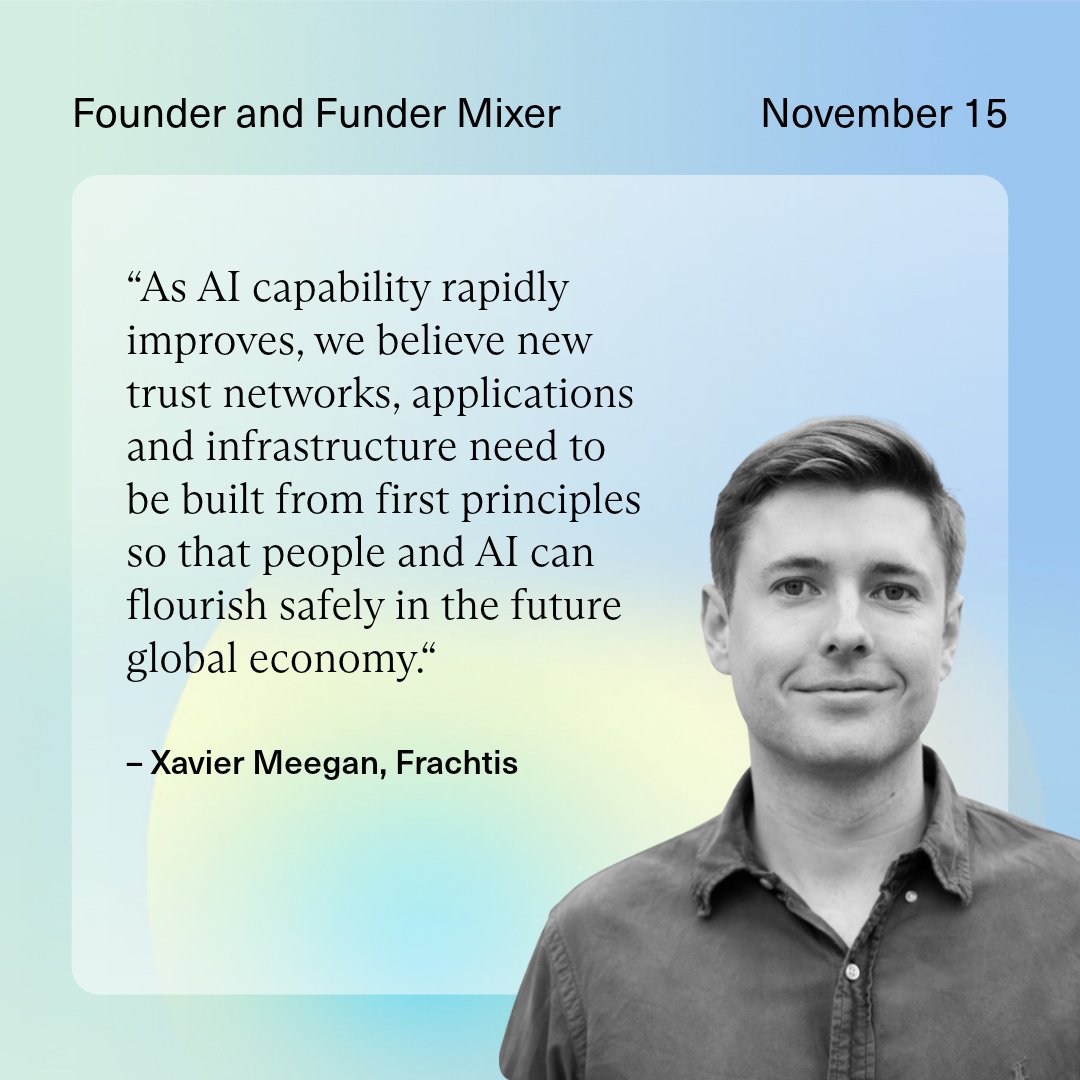
We are partnering with @foresightinst for their premier founder and funder mixer on November 15th.
Should be a great day exploring the latest and greatest in frontier tech.
For any founders raising or thinking about it (particularly in the secure & sovereign AI space) - there will be a pitch competition on, which I'll be a judge at. Apply here to pitch: https://t.co/UgOpNMpA0F
What happens when crypto applications are built for agents rather than people clicking through workflows?
@frachtisvc invests in agent-native crypto applications and infrastructure that abstract complexity, collapse workflows, execute reliably, personalise deeply, interoperate openly, and deliver trusted outcomes.
Are you building in self-sovereign AI, verifiable computation, private data or the crypto rails that let agents own, prove and pay?
Come meet @0xave and Frachtis in person our Founder & Funder Mixer on Nov 15 in SF.
Link in first reply.
Great read from @alexolegimas, @andrewjkoh, and @ShaneLegg
Think agent coordination is about to explode in the next 12 months. This @GoogleDeepMind essay models what happens when agents become supercooperative within organisations and assumes that coordination gets internalised into ever-larger firms. I actually think the more interesting (and more likely) path is coordination across organisations via open, neutral networks of heterogeneous agents.
My view is that we end up with ASI. Human work migrates to relational sectors and deep scalable markets will get dominated by multi-agent networks spanning organisations as opposed to a few giant AI firms.
I believe the way we see this unfold will be through open, neutral, multi-agent heterogeneous coordination networks both inside and across organisations. Network effects here will be insane. Excited to be working with a few teams building in this direction.
I joined @GoogleDeepMind to develop a research program on the economics of AGI. Today, together with Andrew Koh (@andrewjkoh) and Shane Legg (@ShaneLegg), we are incredibly excited to release The Economics of Intelligence, the first in a series of projects from our group on how AGI will change the economy.
How do capability improvements transform the economy, and when? In this project, we define thresholds of economic capabilities, e.g., minimal AGI, based on how they transform the economy. We then track how the economy–market structure, employment, and wages–changes during the transition across capability regimes.
We have seen exponential increases in what AI agents can do but the broader economy seems almost remarkably unchanged. Part of the reason is that the solo AI agent is the wrong economic object; economic transformation is an equilibrium outcome where organizations compete. Looking at how intelligence functions within organizations, transformation will depend on when two key capability thresholds are crossed: competence (gains on individual skills, e.g., coding, math) and coordination (gains on ability of agents to cooperate and work together).
We show that what economic transformation looks like depends on whether AI becomes supercompetent, supercooperative, or both—the regime of artificial superintelligence (ASI). Tracking this transition shows why the real visible transformation may come from improvements in coordination—a capability most benchmarks don’t yet track. Past a certain threshold, AI capabilities can break the Coasian ceiling on firm size and lead to an economy that looks drastically different than the one we see today.
Two main takeaways:
1. To understand the path of transformation, we should be tracking agentic coordination more closely.
2. The impact of AI will likely show up in wages before market structure or employment.
We are really excited about this paper. Excited to hear people’s thoughts.
Link: https://t.co/9DTGSeKoSA
Excited to see @indexnetwork_ go live!
I’ve had the pleasure of testing it the last few months and have already found terrific value in using it.
Simply, Index moves discovery from reactive to proactive. I share a few things with my agent about who I’m looking for and it seeks to find me the right match.
Whether it’s someone to date, someone to hire, someone to bounce ideas with or someone to fund - your someone is out there and easier than ever to find through Index.
Can’t wait to see the network grow. Here’s to discovering those we never knew were out there 🥂
Today we’re launching @indexnetwork_
It’s been exciting to watch already. The first 100 people in are hiring founding engineers, raising seed rounds, writing speculative fiction. One said accepting an intro “feels like the early magic of the internet.”
Try it for yourself: https://t.co/QXepmjtM2L
The premise: With Index, personal agents can coordinate with each other and thus introduce the right people to their users. They do this by negotiating on their principals’ mutual intents, replacing the need for us to broadcast on platforms and scroll endless feeds.
In practice: You log what you're looking for (“signals”) by talking to your agent, it negotiates on fit with the others, and comes back to you with proposed intros for you to accept or pass on. It learns from each turn to surface more relevant people for you.
As founders, but also just as internet nerds - we feel the expectation to be constantly visible. It can be empowering but also tiring, especially when there’s little certainty in how algorithms will route the right people to see your post. On the market level, economists call this search friction: the idea that many deals are never made because it costs too much to find each other. We call it the right person, wrong time.
So that’s why we’re building Index - we’re keen to see what happens when we take social discovery out of the feeds. It’s possible now because of agents. They can help carry the burden of searching, shouting, negotiating, and coordinating in service of finding your others - and we’re so excited to see how this works in the wild.
We’re building this for a world where you can trust that the right person is not out there, but right around the corner. In fact, we even made a short film about it.
One of the biggest moats a founder can have is a strong personal network, which is particularly valuable during the earliest stages of a company’s lifecycle.
A lot of successful teams end up building a product that is much different to the first pitch and/or go-to-market.
If a founder is sharp enough, they can quickly iterate (especially in the age of AI) and continuously test the value of new products quickly within their own network.
Friends, geographies and networks which are closer to a founder are much more likely to give feedback if they are familiar with the founder. Sharp founders can use this feedback to iterate faster than founders who are targeting markets where they have no social edge to get ahead of competitors.
Have seen this consistently within our portfolio at @frachtisvc. If a founding team is driven, well-connected, sharp, strategic and charismatic - it greatly increases their chance of success.
This does not explain all success though. Founders with a strong personal network that do not iterate, or are not resourceful, still suffer a similar fate to founders without a personal network.
The founders most likely to find PMF have a strong personal network, iterate ferociously and fail fast (if need be) until they find something that sticks.
my 2026 @token2049 singapore takeaways
Crypto:
- believe we’re at the start of a new bull market and some high-quality liquid assets have been oversold during the bear despite underlying businesses continuing to grow - liquid venture is starting to look attractive for the first time in a long time
- Trading is by far the topic that dominated most conversations in Singapore
- Pearl @prlnet is doing some of the most interesting work at the intersection of AI and crypto - clear demand for the AI infrastructure and some of the smartest people I know are in the community
- @Zcash / ZEC, @prlnet / PRL and others were talk of the town - people are clearly looking for new sovereign stores of value - expect this trend to continue this cycle
- BTC is under threat and new SoVs are here to eat its lunch, we are in the early innings of this and the market is large for any credible competitors
- ETH is money was a narrative last cycle that didn’t take off, think it can take off this cycle as a genuine Bitcoin alternative that solves a lot of Bitcoin’s problems and is battle-tested / hardened - expect this could happen late in the cycle after other SoV success
- cryptographic security clearly being talked about more as urgency to mitigate doomsday scenarios resulting from AI acceleration increases - strong opportunity for startups
- onchain capital allocators / curators still struggle with trusting asset issuers as they are not liable when they misreport data, solutions exist to solve for this today but market is likely ripe for a new entrant - this will be a big market long term
- onchain prime brokers are having a moment, think there can be a winner here if some kind of crypto-native innovation is unlocked (like perps for derivatives before it)
Robotics, AI:
- Using crypto to finance AI is about to explode - tokenising this is smart
- Robots are coming faster than expected - intersection of this in crypto will be interesting
- Data for AI is going to explode - could see a DePIN summer in 2027 related to this (finally) - also expect X-to-earn to return at some point
Industry:
- Less quality pitches overall, although the good ones are still as good as you’ll get any other year (crypto not done yet)
- Smart friends continue to consider taking a break and/or moving industry - mostly into robotics, AI and/or cybersecurity (will be some fantastic founders to back here in next 12 months)
- Still a lot of unserious people in the industry - used to be grifters extracting retail through token launches, now it is people dressed up in suits attending side events and sharing stories of extracting from uneducated financial institutions
- 90% of crypto VCs are now spending time across technologies outside crypto - not fully out but also not fully focused on market (time will tell if this is smart or not)
- Fewer LPs around this token2049 - although most LPs I spoke to are still wanting exposure to the asset class via GPs - I think 2027 will be a much stronger fundraising environment for crypto funds
- Not many crypto VCs based in Asia left, mostly US and EU VCs in attendance
Looking into Q4 2026, I believe we are at the very start of a multi-year crypto bull market. Very excited to see what this cycle beholds. It will be like nothing we have experienced before.
For those still committed to the industry - buckle up.
Introducing the Naytive Open Stack.
Every jurisdiction runs its own system. Tax, residency, companies, banking, compliance. None of it talks to each other.
Global citizens need all of it, often in several countries at once.
Naytive Open Stack fixes that.
Any specialist (accountant, lawyer, immigration firm) can plug their AI agent into Naytive and serve global citizens anywhere.
How it works:
1. Specialists register their agent
2. Naytive matches them with users who need them
3. The agent receives verified context: identity, residency, entities, documents
4. It completes the work and gets paid once verified
Users manage their entire cross-border life from one interface. Providers get clients with zero friction.
https://t.co/fJh8HzfWZg
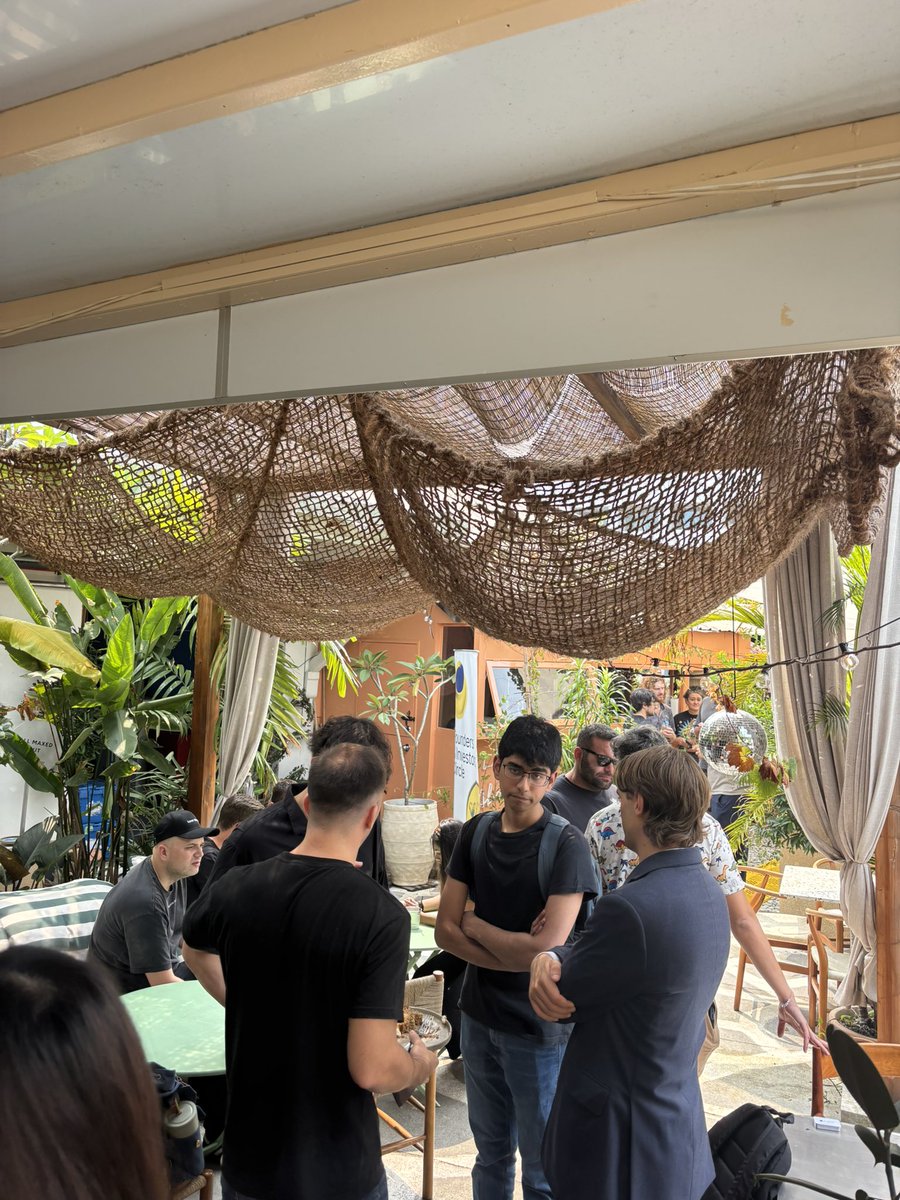
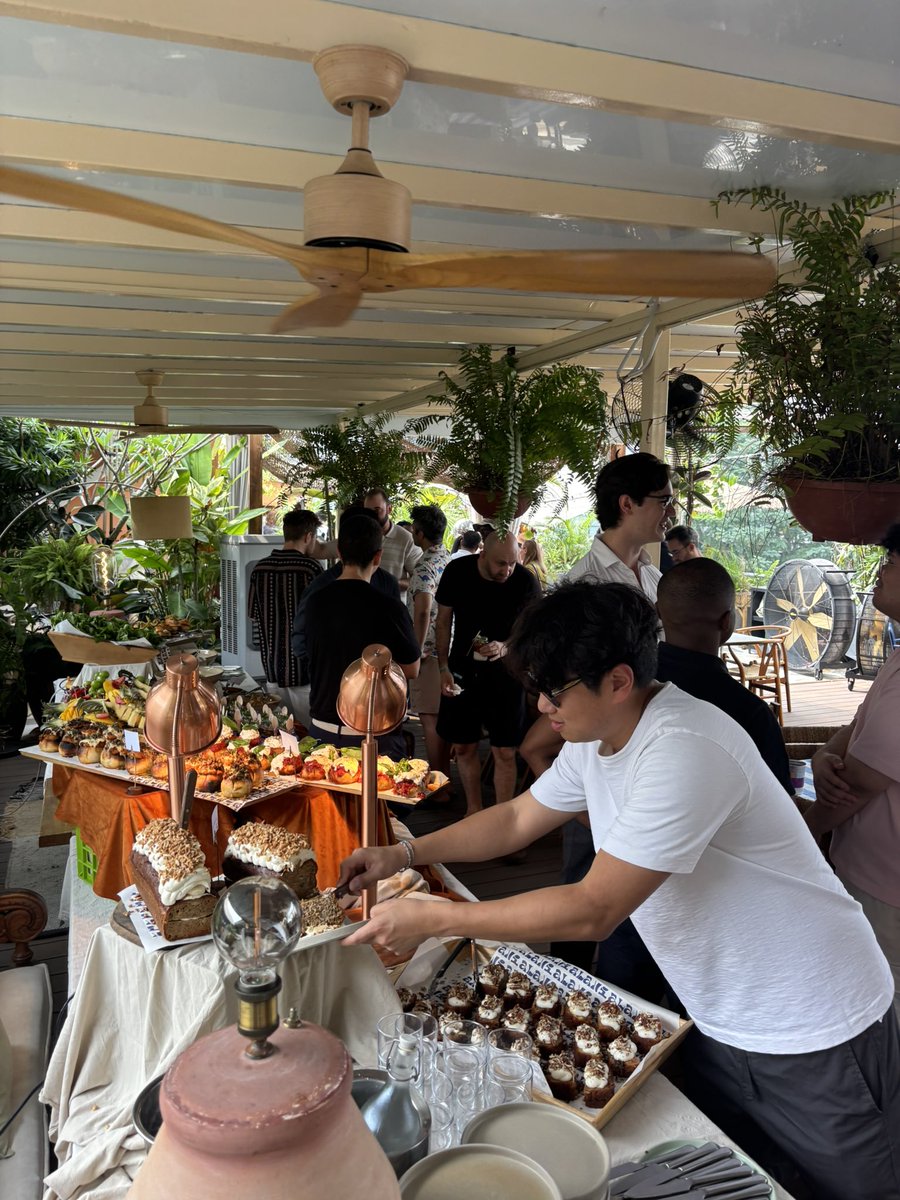
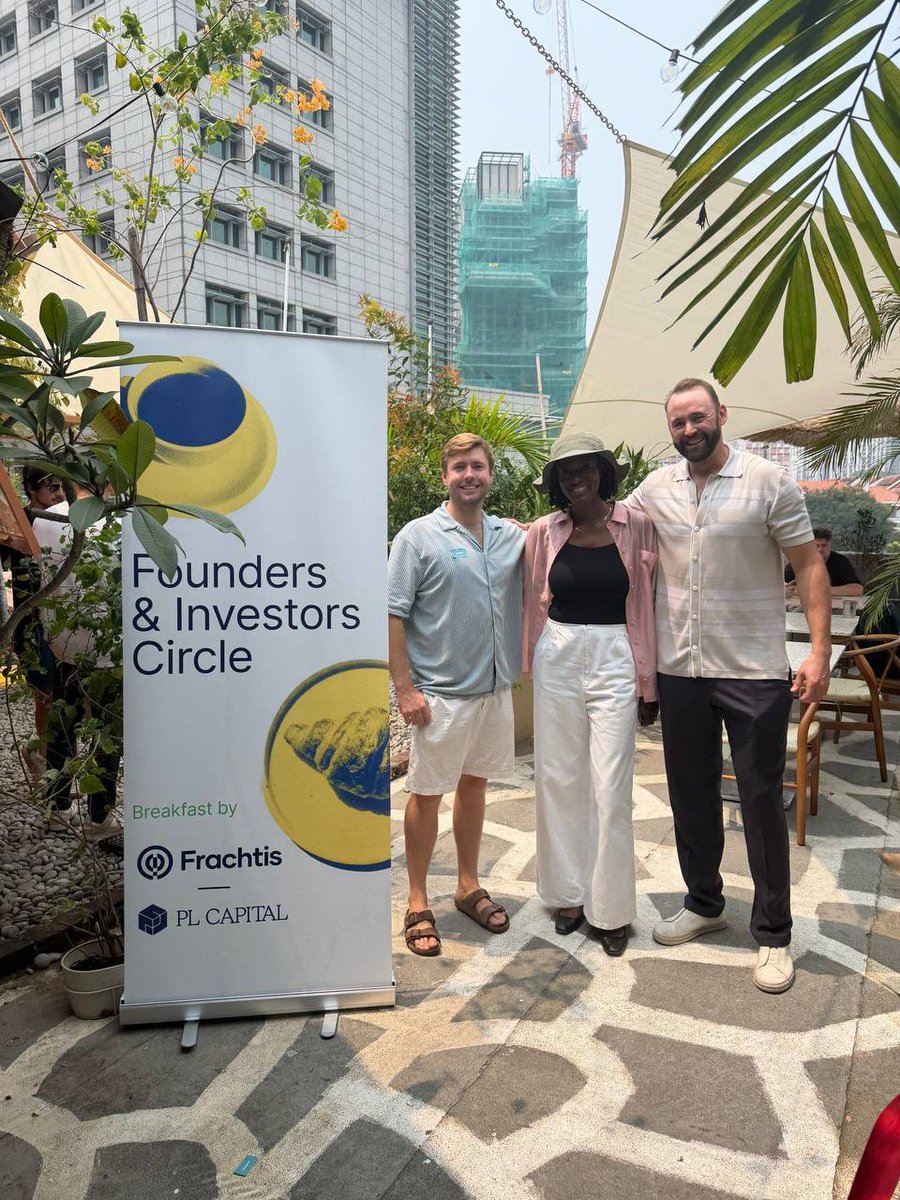
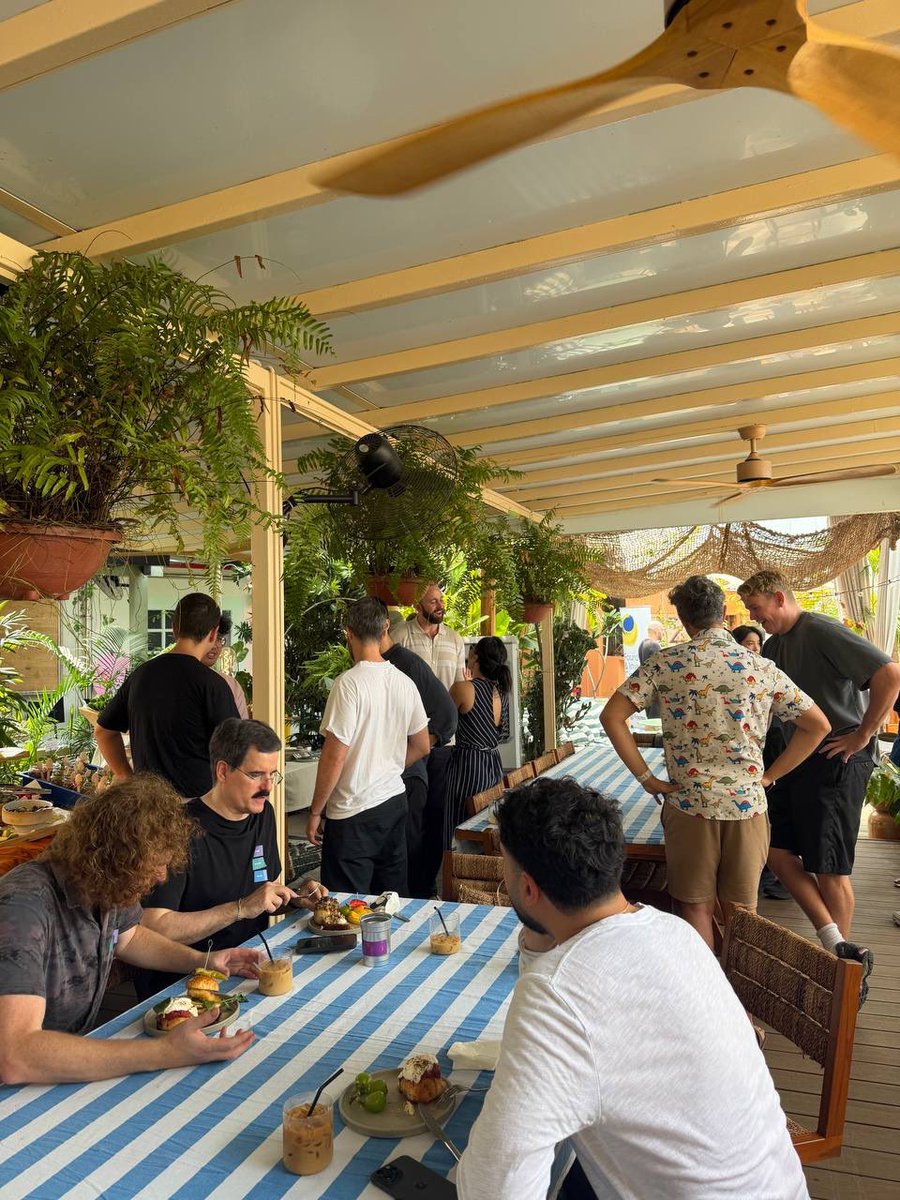
Great start to @token2049 co-hosting our usual @frachtisvc founders and investors circle with the legendary team at @plcapital
Thanks to to all those who attended!
For those who couldn’t make it and are in town raising for a crypto x AI startup - DM me to arrange a coffee ☕️