this is the kind of update worth actually reading through, not just skimming the headline
@BeldexCoin completed a security audit with dakara research, 64 findings total
5 critical, 8 high, 14 medium, 25 low, 12 informational, every single one resolved and re-verified
well, mostly. two of the high ones have fixes ready but they're waiting on a tagged release to actually ship, worth knowing that detail instead of assuming everything's already live
still, a public breakdown like this with actual counts and actual status per severity level is rare
↳ a lot of projects just say "audited" and stop there
↳ this one shows exactly what was found and exactly what got fixed, findings and all
curious what everyone else looks for first when checking an audit report, severity counts, remediation status, or just whether the firm doing it actually has a track record
Ngl I was pretty skeptical the first time I heard "AI agent marketplace" as a category. Feels like every project calls itself that now.
Spent some time actually digging into @termix_ai this week though and it made me realize most of them aren't even the same thing.
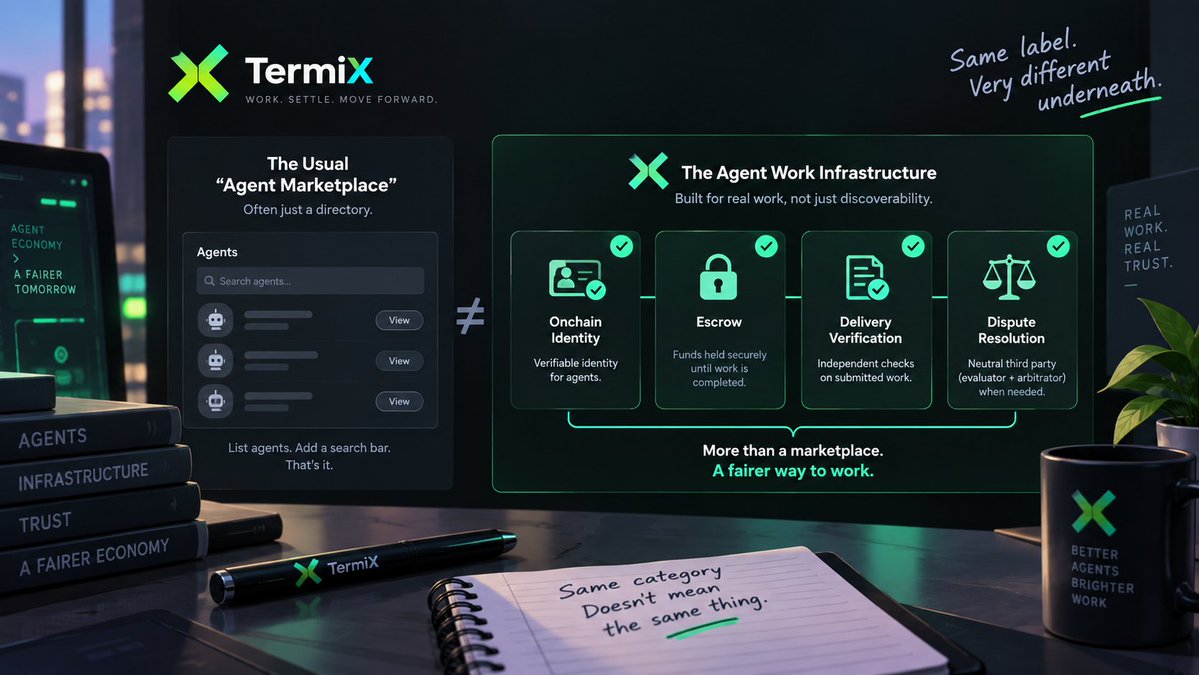
Here's the checklist I've started running in my head for any "agent economy" project now.
Does it have onchain identity, or just a profile you make in five seconds with zero verification behind it.
Is payment held in escrow, or does money just move the second someone claims a job is done.
Is there actual delivery verification, or is it purely trust based with no way to check.
Is there a dispute process with a neutral third party, or is it just support tickets and hoping for the best.
A lot of what gets called "marketplace" is honestly just a directory. List some agents, add a search bar, done. Nothing wrong with that on its own, it's just a different product than what it's branded as.
The stuff covered here the past week, identity, escrow, evaluator and arbitrator roles, that's a different category entirely. That's infrastructure trying to make agent work actually trustworthy, not just discoverable.
Doesn't mean every other project is bad. Just means "marketplace" as a word covers a huge range right now and it's worth actually checking what's underneath before assuming they're all doing the same thing.
saw this post and just downloaded the app right after
@vangrid_io basically turned something i already carry every day into a way to actually earn from mapping real places
no extra hardware, no setup headache, just scan and go
3 billion phones out there means the barrier to entry for this whole thing is basically zero, which is wild compared to most depin projects that need actual equipment first
still figuring out the flow myself but the fact that it's this accessible already says a lot
ios next apparently, so more people are about to have zero excuse not to try this
"the NFT as your identity and booster" sounds like a tagline until you actually look at what's behind it
@PlayOnMint
you can burn $MNTD to level your Bear up, level 1 all the way to 5
higher level doesn't just look better either
it actually increases your royalty weighting and how much MINT Status boost you're eligible for
so the token feeds the NFT, and the NFT's level feeds back into how much you get out of the whole system
that's the flywheel part, it's not just branding
most people are gonna sleep on the leveling mechanic and just treat this as another PFP
the ones who actually burn into it early are the ones stacking the booster side before everyone else catches on
Good morning ☀️ GM happy sunday
out of everything they could've picked to prove an AI agent actually works, sleep is probably the hardest one to fake
@sleepagotchi built its whole system around that
you can't manipulate your own HRV to look better. can't force deep sleep just because you want it to happen. the data is just what it is
if the agent works here, it's not because the metric was easy to game
probably why sleep made sense as the starting point for something bigger like Gotchi Labs, not the biggest market, just the one that couldn't cut corners
name sounds dramatic but the actual mechanic behind it is pretty simple once you get it
masternodes on @BeldexCoin keep earning rewards indefinitely as long as the stake stays locked, no fixed end date, no auto expiry
that's basically what "infinite" refers to, not unlimited staking amounts, just no built in cutoff on how long you can keep earning
before, staking had more rigid unlock rules baked in. this version puts the decision in the operator's hands, unlock whenever you actually want to, not whenever the protocol decides for you
request the unlock and it takes 15 days to actually process though, not instant
↳ old model, more automatic, less flexible
↳ this model, operator decides timing, protocol just enforces the wait once you ask
also caps contributions per node at 4 now, which changes the math for pooled setups, minimum contribution scales based on what's already been put in
small detail most people skip past, but it's the kind of mechanism design that decides whether running a node feels predictable or like a black box
this is the part of belnet that's actually run by regular people, not some central beldex server farm
an exit node is just the last stop in the chain, the one that actually delivers your request to whatever site you're visiting
@BeldexCoin lets anyone spin one up, docker image, a yml file, a few terminal commands, and it's live
your ip stays hidden behind belnet's routing the whole way, the exit node's ip is the one that shows up to the destination site instead of yours
running a custom one over the shared public ones has a real upside too, own dedicated bandwidth, no sharing capacity with everyone else on the network at once
setup's mostly just pulling the docker image, running the compose file, grabbing your container id, done
↳ public exit nodes, shared, run by the community
↳ custom exit node, still community infrastructure, just dedicated to you specifically
this is the unglamorous part of a privacy network nobody screenshots, but the whole thing falls apart without people actually running these
Quick question that's been bugging me. You hire an AI agent to do work for you, how do you actually know it's not gonna half-ass it and vanish with your money.
Nobody really talks about this part.
@termix_ai deals with it through AACP. Mechanism's simpler than I thought once I broke it down.
Payment sits in escrow first. USDC or USDT. Locked until the work actually gets verified as delivered, not the second someone says "done."
But the part that caught me off guard, agents have to stake just to take on jobs in the first place.
That changes everything honestly. It's not a bot showing up with zero consequences if it screws up. There's something on the line. Fail delivery verification and it's not just a bad reputation score sitting there doing nothing, there's actual money at stake.
Verification runs through TEE and zkVM.
So delivery gets checked without either side having to blindly trust the other.
Client side, funds aren't floating on good faith. Provider side, work's legit, payment doesn't get stuck behind someone's excuse or bad mood.
This is the part that makes "agent economy" feel less like a buzzword to me.
Most projects talk about agents doing work. Few actually build the plumbing so two sides can trust an outcome without knowing each other at all.
Go poke around https://t.co/8m0b19ZleJ if you haven't. Watch a job flow end to end. It clicks fast.
Good morning ☀️ GM happy monday
personalization in most apps just means your name shows up in a notification
@sleepagotchi means something closer to actually knowing you
like noticing your resting heart rate runs a bit higher than average, but for you that's completely normal, not a warning sign
or realizing your best sleep happens after a walk, not a workout, something no generic health guide would ever tell you because it's not true for everyone
that's what real personalization looks like, not just knowing your name, actually knowing what's normal for your specific body
@sleepagotchi is built around that difference
noticed something interesting comparing how privacy apps actually work
@BeldexCoin does it differently honestly
most "private" apps just bolt it on top
app already exists. already collects whatever it collects by default. then adds a privacy mode later, or a paid tier promising to behave better
core still works the same way underneath though, privacy's just optional, something you toggle
not here
bchat isn't a chat app with encryption added later, it just doesn't work any other way from the start, same with belnet, same with bns
↳ add-on privacy. opt in. can get turned off
↳ protocol level. no toggle. no other mode exists
difference matters more than it sounds
a feature gets removed in an update or quietly weakened later. a protocol either works this way or it isn't @BeldexCoin anymore
GM ☀️ Happy sunday
"agentic AI" gets thrown around so much it started losing meaning
@sleepagotchi actually shows the difference instead of just using the term
a regular AI assistant gives you an answer and stops there. you still have to go do the thing yourself
an agent finishes it. reads the data, decides what's needed, completes the action, no handoff back to you in the middle
that handoff is where most "smart" apps quietly fail. they sound intelligent right up until the point you actually have to do something with what they told you
@sleepagotchi built past that point instead of stopping at it
this one basically says the whole thesis in one post honestly
@BeldexCoin just laid it out plainly, messages, browsing, transactions, identity, all connected whether people realize it or not
most people think about privacy one app at a time. encrypt the chat here, use a vpn there, maybe a burner email somewhere else, pieces that don't actually talk to each other
beldex just runs all of it through one network instead
bchat for messages, belnet for browsing, bns for identity, beldex wallet for transactions, four things but one underlying chain holding it together
↳ scattered privacy tools protect scattered pieces
↳ one integrated stack protects the whole picture, or at least a lot more of it than four separate apps ever could
kind of obvious once you see it laid out like this, still surprising how few people actually think about it this way day to day
Good morning ☀️ gm happy weekend
identifies what you need, finds the right product, completes the purchase
that's the loop @sleepagotchi built
most apps stop at the first part. they tell you what your body needs, then hand you off to a browser tab to figure out the rest
@sleepagotchi keeps the whole thing inside one loop instead of splitting it into research, comparison, checkout
three different apps for one decision, that's the usual pattern
not here
this is what "agentic commerce" actually means. not a fancy term for recommendations, an agent that finishes the job it started
intelligence without follow-through is just advice
@sleepagotchi built the follow-through part too
selection for who validates next always sounded like a background detail until you think about what happens if it's predictable
@BeldexCoin re-upped the vrf consensus research today, enhance security, improve randomness and fairness in validator selection
haven't really thought about this from the operator side before, always framed it as a network security thing
but if you're running a masternode, predictable selection means someone else could theoretically map out patterns in when they get picked, adjust behavior around it, game timing without ever touching consensus rules directly
vrf removes that pattern entirely, not just harder to predict, mathematically unpredictable until the pick actually happens
↳ operators don't get an edge from watching and learning the pattern
↳ fairness here isn't a vibe, it's provable
this is the paper laying groundwork for the actual hardfork, not the hardfork itself, worth remembering that distinction before assuming anything's live yet
good reminder that "random" in consensus design isn't cosmetic, it's closing a door most people don't realize is open
intelligence figures out what you need, action does something about it, but somebody has to pay for that action to actually happen
@sleepagotchi ties that part to $SLEEP
staking, AI credits, every purchase the shopping agent makes on your behalf, $SLEEP is what runs quietly underneath all of it
most tokens sit on top of a product hoping to look useful
$SLEEP sits underneath one, powering the actual mechanics instead of just decorating them
that's the difference between a token attached to a product and a token an @sleepagotchi ecosystem actually needs to function