We increased our weekly outbound capacity from 80 prospects to 500 this week.
Previously, our team selected 80 people and wrote each message manually. That generated an average of 20 replies so far, a 25% response rate.
Our new GTM engine divides the process across specialized skills.
It evaluates ICP fit, selects the most relevant sales thesis, and generates each message accordingly. We can also A/B test alternatives at every stage.
The same team can now run outbound for 500 prospects on LinkedIn per week.
Our next test is whether we can maintain that 25% reply rate at this volume.
For us, scaling B2B outbound comes from systematically choosing the right prospect, sales thesis, and message, then continuously testing each decision.
We'll run the first test using Gojiberry for lead generation and distribution! I'll share some results later on.
Last week I made a video ad while having dinner with friends.
I sent Hermes a voice note from Telegram with the idea.
Then we went back to the juicy kebabs. Needless to say it was awesome.
In the background, Hermes used the NewFrame CLI to generate the keyframes and render the video.
15-20 minutes later, I had something real to review.
A few months ago this was a 3-4 hour task for me.
Open laptop. Turn the thought into a brief. Gather references and assets. Move between tools. Get the video started. Go back and forth.
The change for me is not just that the output comes faster.
Visual and video work no longer needs a proper “sit down and start a project” moment.
The idea, brand context, assets, and production tools are already in the same Telegram loop.
Since moving to the NewFrame CLI, I can have a rough thought at dinner, send it, and come back to a video instead of another thing I need to schedule.
I still have to look at it and decide whether any of it is actually good.
But 3-4 hours becoming 15-20 minutes while I am eating with friends is a very weird thing to get used to.
We will unveil the NF CLI soon!
I think I finally stopped treating projects like one long debugging fight. Thanks to our devs xd
My process now is more like:
> pen and paper first.
I map the whole thing before touching tools. what needs to happen, what stays with me, what agents should help with, what should be plain automation, and where the human taste/checkpoints need to stay.
I map every single action related to executing whatever I have in mind. outbound strategy, Product Hunt campaign, product mockups, whatever.
Then I give that messy map to my Hermes agent, my beloved Mjölnir, and turn it into a real execution plan. sometimes I send screenshots, sometimes voice recordings.
> After that I don’t trust the plan yet. I start grilling it.
Pocock’s grill-me skill is probably the single best skill out there for projects IMO.
I push on the weak parts: what is too big for v0, what will break in practice, what sounds automated but actually needs human judgment, what needs to be tracked, what can be cut, what is expensive to deploy, etc.
> Then I build the smallest useful v0 and start running it.
For the inbound automation system I created, this became:
paper notes -> agent plan -> grilled plan -> output on what’s needed -> briefs to execute -> Notion database -> cronjobs -> daily content serving -> weekly reporting -> small fixes while the system is live.
That last part is where real improvement gets done.
I don’t want these projects to be perfect before they start. I want them to run, show where they break, and get a little better every week.
Agents are really useful here, but not as magic buttons. More like planning partners, pressure testers, and operators for the boring recurring pieces.
It’s really important to build hybrid systems first and automate as you go.
No one wants to admit this, but the old marketing assembly line is completely dead.
For years, the model was predictable:
>Strategy writes the plan.
>Creative turns it into assets.
>Distribution pushes it out.
And somewhere in the middle, everyone loses a week to meetings 👎
That made sense when campaigns needed long timelines, big teams, and expensive production.
It does not make much sense now.
AI is collapsing the distance between strategy, creative, and GTM. Work that used to move across three teams can now happen inside one tighter motion.
The new advantage is not more output.
It is the loop:
Product context → campaign direction → artifact → outbound → reply → demo → feedback → sharper direction.
You do not need more creatives.
You do not need more directionless strategy.
You need to create and run the loop.
This is what Madison is for.
Not more random creatives, angles, marketing directions.
A tighter loop between product context, campaign direction, artifacts, and market feedback.
we are officially living inside a world where 90% of the ads are AI
billboards, buses, social feeds, websites, inboxes. every surface we have has become a playground for AI ads that compete for attention.
so if AI is generating everything you see, how can you differentiate? 🧵
Most DeFi protocols fought for years just to distribute 15% of the generated value.
We're launching with 90%.
ZNT goes live with the LGE on June 7, 2026 built around one idea: protocol participants should be aligned with the value they help create.
🧵
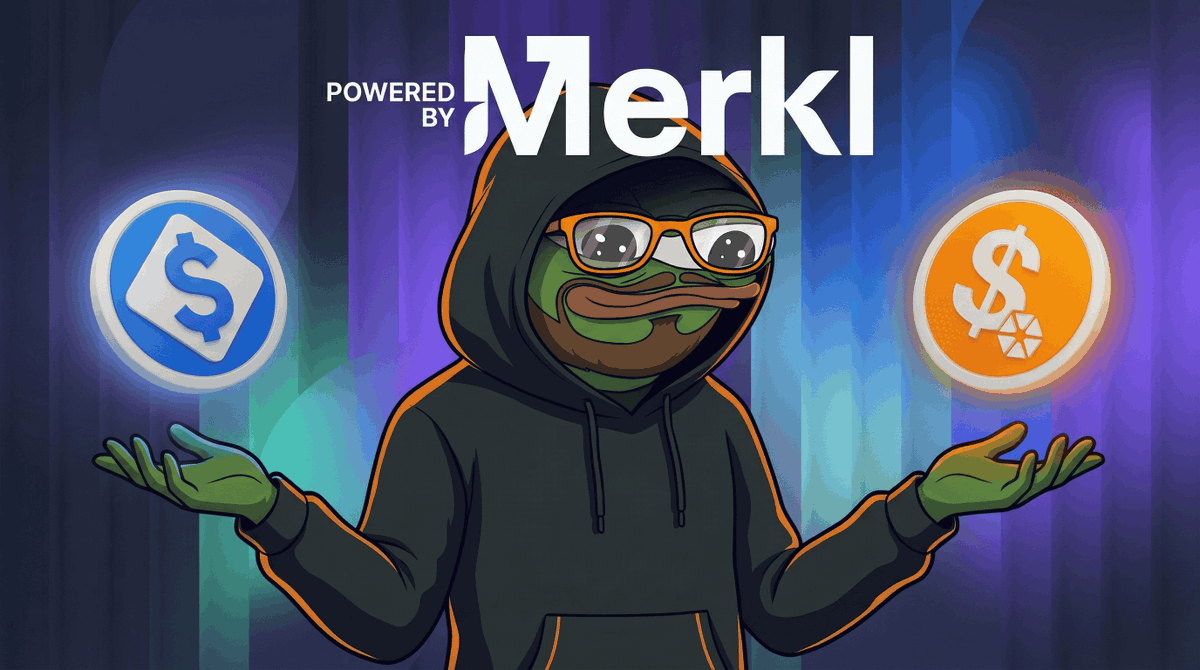
If you have any stables sitting idle, on Citrea or anywhere else, this is worth five minutes of your time. The ctUSD-GUSD pool on Satsuma just did 10x in two weeks. There's a 90-day Merkl campaign running, and most people still haven't touched it 🧵
Do you remember the Ooga Buuga version @HypernativeLabs firewall integration by me? Now there's a 4th step.
We tell Phylax on Malda 1+1=2.
If someone, somehow, manages to convince the contracts and the hypernative firewall that 1+1=3.
Phylax comes into play and blocks the txn.
What’s the perfect pairing with audits?
Preventative security measures to stop malicious txns in their tracks.
This is how @phylaxsystem secures Unified Liquidity.
Oracle error on @MoonwellDeFi caused $1.8M bad debt.
We've started to see many oracle failures regardless of which firm.
Double oracle setup should become an industry standard to avoid these incidents. Glad that our team at @malda_xyz is already aware of this necessity.
Remember when we needed different chargers for every device until manufacturers standardized on USB-C and one cable started working for everything?
That’s where we’re headed. Everything will be Unified.
Most Bitcoin tools end up choosing a side: strong self custody that is hard to use, or convenience that quietly gives up ownership.
@tanaribtc is exploring what it looks like to narrow that gap, without changing what makes Bitcoin Bitcoin.
Here’s exactly how they’re doing it ↓
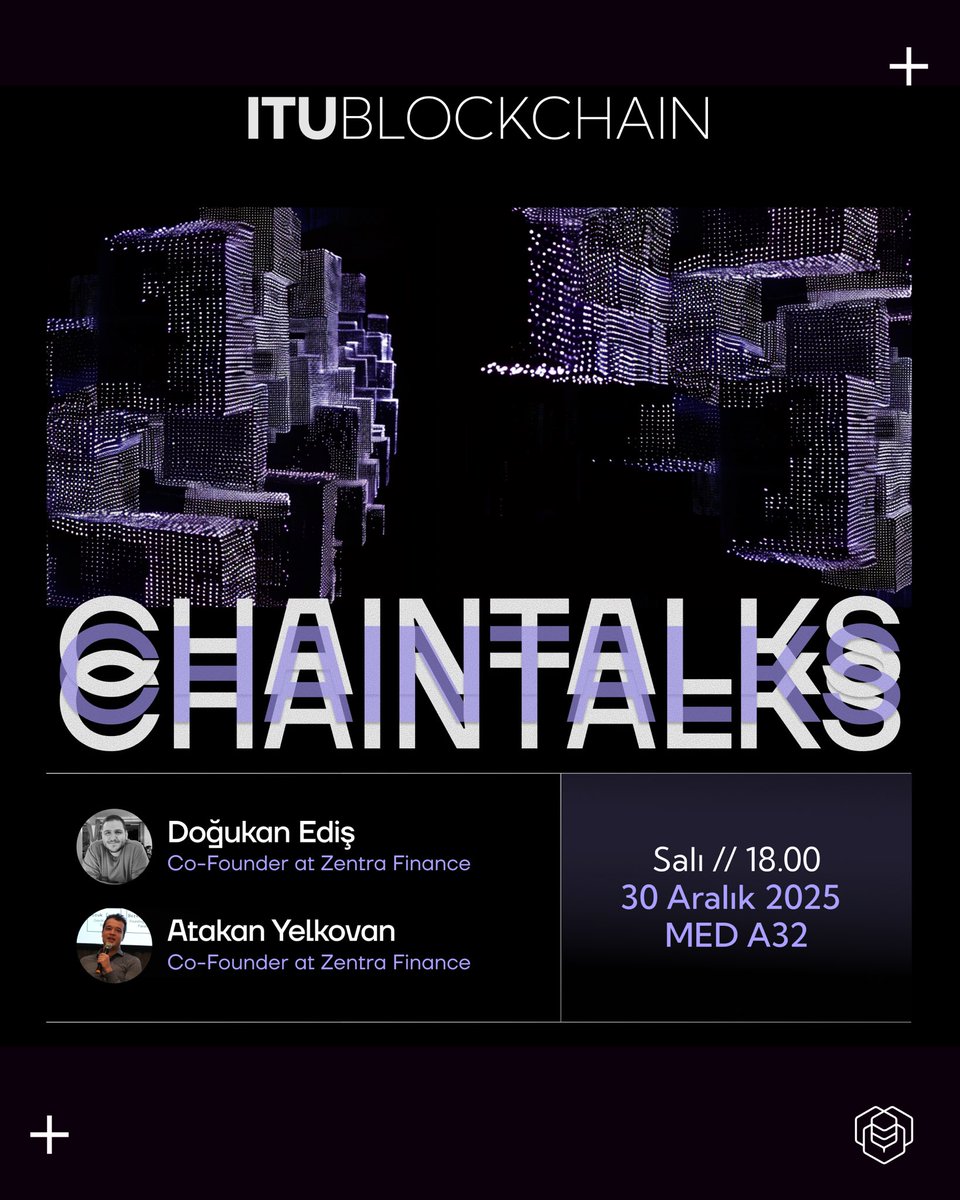
İlk dönemi harika bir ChainTalks ile kapatıyoruz!🔥
Bu hafta @ZentraFinance kurucu ortakları @dedis_fi ve @DefiIntro’yu ağırlıyoruz.🎙️
Zentra nedir, sürdürülebilir yield stratejileri, @citrea_xyz üzerinde build etmek ve çok daha fazlasını konuşacağız.
Herkesi bekliyoruz!🙌🏻