Running @roocode in @windsurf_ai for 2x3.7-thinking because I'm drunk with power.
I'm sure I'm going to regret this... (make sure the streams don't touch)
To understand Cork a little bit easier, listen to our wine bottle example to understand why something like a Depeg Swap is necessary if you’re operating within DeFi. 🍾
Post Mortem
For context - Squarespace purchased all domain registrations and related customer accounts from Google Domains in June 2023, which forced the migration of domains.
Recently, attackers exploited a vulnerability in Squarespace, hijacking domains hosted on their platform. Security experts are still working out the exact mechanism for the hijacking attacks, but many domains (including Pendle’s) that were migrated from Google to Squarespace have been affected.
Due to ICANN’s domain transfer policies, domain transfer away from Squarespace was not an option for another ~20 days.
----------
Upon learning of Squarespace's issue affecting some projects at ~12pm GMT yesterday, our team was on high alert and started a series of countermeasures to defend against a potential attack.
We got in touch with affected projects like @CelerNetwork, got valuable information on how it happened for them, and toughened up our defense accordingly. We set up real-time bots to alert us of any DNS changes which signal a hijack event. We were also prepared to immediately shutdown the app if necessary.
At ~10.27pm GMT, our bot detected that a new malicious DNS record was added to redirect Pendle’s dApp to a malicious site. Within 30 seconds, the team mobilised to shut down the app and started our countermeasures to defend against the attack.
At ~11.07pm GMT, just 40 minutes after the domain hijack attempt, our dev team successfully regained full control of the domain, and had taken all necessary steps to ensure normal operations were restored.
Throughout this incident, we maintained constant, active communication with security professionals to mitigate the situation. We would like to extend a shoutout to @no89thkey, @samczsun, @tayvano_, Junda and a special mention to @AndrewMohawk for their invaluable assistance.
Pendle protocol and smart contracts remain unaffected, and funds are safe.
At Pendle, security is our top priority. We remain vigilant in ensuring our security protocols are in place to best protect users
🏰 What is Castle? 🏰
An introduction to Castle Capital, who we are, what we do, and how you can join our collective.
Castle Capital is a research collective deeply rooted in the on-chain world. Our members are not simply market participants, but a blend of on-chain natives who are active contributors to the ecosystem across multiple verticals.
This diversity ensures a solid base of expertise across various sectors in the space, from the technical intricacies of a product stack to the user behavior across different chains.
Our niche lies in our deep and unique resonance within on-chain communities and crypto culture in general, paired with the research-focused lens through which we view the ecosystem.
We don't just observe; we engage, interact, and evolve with the space.
We are a community-first collective, and many of our operations are not outward-facing. The client/public-facing organization is empowered by a strong research-focused community. Within these walls, we operate as a meritocracy, where members have the opportunity to contribute, provide value, and be recognized. We reward people for their hard work and accomplishments, regardless of their background.
🏰 Here are the core areas members are encouraged to get stuck in (and where you could too):
• Leading and supporting community initiatives
• Contributing to advisory services and consultancy
• Performing due diligence on potential dealflow
• Writing institutional-grade research or opinion pieces
• Supporting the growth of our newsletter as an author
• Representing the collective in governance forums
🏰 What's our vision?
Our vision is to embed ourselves as a trusted organization in the crypto ecosystem, consistently delivering high-value research and advisory services to protocols and DAOs while prioritizing openness and transparency.
🏰 How did it start, and how did we get here?
Castle was created in November 2021 as a hub for crypto researchers, analysts, and investors to discuss trade ideas and critique investment theses. Formed during a critical period after the second BTC peak and the onset of the bear market, the group focused on excelling through the lows. Over time, we grew by adding impressive members who proved their worth publicly, in private groups, or on-chain.
As 2022 came and went, we evolved from a relatively stealth group into a more visible entity, accelerated by the launch of our newsletter, The Castle Chronicle, in January 2023. Soon after, we began delving into long-form content publications, enhancing our reputation as a research collective.
As the lows of the bear were forming, and the slow crab market was taking hold, the next logical step was to venture into dealflow, recognizing the growing appetite from teams to raise from native communities and DAOs vs. larger VCs in a push towards grassroots and more decentralized fundraising.
Meanwhile, we found success servicing teams in the space, particularly those with strong technical backgrounds but who struggled to communicate effectively with native audiences. Since then, our primary focus has been on advisory, consultancy, and marketing services dedicated to teams across crypto.
🏰 Accomplishments and Involvement
🛠️ Advisory
• Worked with 10+ clients generating over 6 figures of revenue — including Curvance, Aark Digital, Level Finance, and the Arbitrum DAO
• Secured an Advisor role in Arbitrum’s Long-term Incentive Program Pilot (LTIPP) and Short-term Incentive Program Bridge (STIP.b), having won over 110M ARB votes Advised 70+ teams in their application and incentive design achieving the highest approval rate of any advisor — we are currently in the process of supervising successful applicants in their distribution to maximise impact during the 12 week incentive period
🗞️ Newsletter
• Over 76 volumes over 1.5 years of continuous weekly publishing Grown organically throughout the bear market to 2,500 subscribers with open rates >36% and click rates >20%
• Had over 20 authors in the publication
📚 Research Reports
• Published 15 research reports across a range of topics (Governance, Modular, Protocol-Specific, DeFi) from notable researchers
⚖️ Governance
• Active delegates in both Arbitrum and GMX governance
• During the initial Arbitrum Short-term Incentive Program (STIP), we were one of the only vocal delegates in the forums, providing feedback to over 45 teams out of 100+ applicants. From this group, 35 projects engaged with us in the forum, resulting in 21 updates to proposals. Of these updates, 14 lowered their requests, totaling 12.37M ARB saved for other protocols - https://t.co/RbrlRKqzaJ
• Were awarded OP in the RetroPGF 3 for our research and education contributions
• Successfully secured 1 of 12 positions on the Arbitrum DAO’s Multi-Sig Service (MSS) demonstrating delegates’ trust in Castle
🌎 Other
• Attended events and represented the industry across the globe (Tokyo, Taipei, Paris, Singapore, Milan, Amsterdam, Istanbul, Dubai, Brussels)
🔮 Roadmap
• Advisory: We are currently focused on delivering high impact results for our clients. This mainly consists of supporting teams in their go-to-market and marketing strategies as well as championing the Advisor role within Arbitrum’s incentive programs.
• Newsletter: We are in the midst of re-purposing our growth strategy and plan to pour more resources into this branch moving forward
• Research: Currently being revamped, our research arm is expanding to ensure consistent and high-quality content — give us a shout if you want to get involved
• Governance: Our involvement around the Arbitrum DAO (and other DAOs) continues to grow, and this should see no sign of slowing
🏰 What is our objective in the future?
Whilst you can expect to see us making strides in all the above areas, there are a few new avenues you may see us exploring publicly soon enough:
• Social Graph/Scraper Product: Behind the scenes, we have been building one of the most comprehensive social graphs of CT — the exact output of this is TBD and is being discussed internally, maybe this interests you?
• Open and Competent Data Services: With the plethora of DAOs, incentive programs, points campaigns, trading competitions, and more, it’s hard to keep up with everything on-chain — we believe these opportunities should be clear, open and accessible to everyone
🏰 How to get involved with Castle?
Castle is always open to new applicants searching for a new home!
Apply here: https://t.co/ii7jlRgMHJ
We are seeking passionate and dedicated individuals eager to become active members of our vibrant community. At Castle Capital, we believe in the power of collaboration and collective knowledge to drive innovation and progress within the space. If you share this belief and are willing to continually immerse yourself in crypto, we invite you to join our community and actively contribute to its growth.
As a member of Castle Capital, you will have the opportunity to:
• Engage in meaningful discussions with fellow crypto enthusiasts: Share your insights, exchange ideas, and learn from the expertise of others within our community.
• Contribute your knowledge and skills to collective projects: Collaborate with fellow members to develop innovative solutions, tools, and resources that benefit the broader crypto community.
• Share your ideas with the world: Utilise our brand’s platform to showcase your knowledge and expertise and contribute to advancing the crypto landscape.
🏰 How can users contribute?
Along with joining the collective, we encourage all members to be active in our growth. This varies depending on each member's skillset and current path in the industry and life as a whole.
These areas are almost too many to list: community operations, dealflow due diligence, client-facing advisory work, sharing and compiling alpha, unlocking new networks, writing in our newsletter and research publications, supporting our data and developer groups, strategizing our business operations, and many more!
🏰 Want to have a real impact at Castle?
Here’s how to get involved to help us take things to the next level:
• Writers & Content Creators: Whether short-form or longer, we want more writers and creators in our mix. Many shapes and sizes can fit into our flows, from newsletters to threads and from ghostwritten articles for protocols to institutional-grade research around tech stacks and ecosystems.
• Newsletter & Social Lead: We are looking for a hungry writer/marketer/strategist to grab the bull by the horns and lead the Castle Chronicle and Castle’s Twitter to new heights and beyond. This would encompass marketing strategy, newsletter collabs, partnerships, referral programs, sponsors, ads, etc., all tied up with creating and publishing content across platforms using the collective and a fountain of inspiration and delegation.
🏰 Want to get in touch about any of the above?
Whether interested in joining our community, contributing to Castle, or a protocol looking for support, reach out to us here on DMs, or directly with @0xatomist or @francescoweb3 🫡
On the Arbitrum Long Term Incentive Program Pilot (LTIPP) and our Role as Advisors 🏰
In light of the upcoming start of the LTIPP grants, we provide some context on the updates on the scope of the grant, the differences with the previous STIP, and our experience as advisors.
Firstly, let's have a quick look back at why this pilot is running.
The LTIPP is all about taking learnings from the STIP to implement a short 3-month incentive program with new application processes, new frameworks and rubrics, and new roles.
It's important to remember that this is a Pilot, with the purpose of helping the Arbitrum DAO learn quickly and iterate to build resilient, efficient systems for future grant programs.
The learnings from LTIPP will be crucial for both the DAO and @arbitrum's protocols, enabling us to design robust and long-lasting incentive mechanisms together and informing future grant programs of our operational challenges and successes.
The LTIPP pilot program can distribute up to 45M ARB to protocols to incentivize users on their products.
As the scope of the pilot is to incorporate learnings from the STIP we want to highlight some of the differences:
❌ STIP: Short timeframe for the application window (2 weeks total)
✅ LTIPP: Applicants had 2 weeks to apply on their own and 2 weeks to work with an Advisor to refine their application and its mechanisms
❌ STIP: Too much weight was put on delegates, who were expected to review and vote on every application, with 100+ Snapshot votes
✅ LTIP: Upfront analysis and scoring of applicants is placed on a trusted Council that recommends actions to delegates, after the Advisors have worked with protocols to refine their proposals
❌ STIP: The lack of formalized feedback on proposals meant teams were often left in the dark
✅ LTIP: The Council and Advisors created a logical exercise for applicants to ensure their goals and grant asks were realistic, achievable, and justified, and were fully aligned prior to working with project teams
❌ STIP: The lack of a framework for assessing applications
✅ LTIP: The Council and Advisors created a clear scoring rubric before the application window to clearly define what a strong application should look like
Grant Program Insights 📝
The program brought about a huge influx of diverse applicants reaching a total of 174, doubling the expectations of the original proposal, with each Advisor taking on nearly 60 protocols.
Each participant proposed interesting and unique solutions aimed at growing or bootstrapping their product.
Our experience as advisors was incredibly positive. It was a pleasure to work with such dedicated and driven contributors, who were open and extremely receptive to taking our advice not only to improve their chances of a grant but also to strengthen their overall product offering and value proposition.
Our Collective Achievement 🏆
Initially, the program had a total request of 152.4M ARB (300% oversubscription).
Following a comprehensive application and revision process, we're pleased to announce that the total grant request has been finalized at 65.9M ARB ( a 50% oversubscription), showcasing the alignment of advisors and protocols in logically approaching the incentive program in the frame of a pilot with short-term achievements in mind.
Expressing Our Gratitude🫂
Our heartfelt thanks go out to all applicants for their innovative proposals and readiness to engage in a productive feedback loop.
Your efforts are the cornerstone of this initiative's success. We also extend our gratitude to the other dedicated Advisors @jojothecow@SEEDLatam (aside our very own @0xAtomist and @francescoweb3) whose insights and guidance have been crucial in steering the program's direction and impact.
We are continually humbled to be selected for such a program and that our feedback and advice can contribute to the Arbitrum ecosystem.
Looking Ahead 🔮
• Screening Period: We are currently in the Screening Period, with the Council evaluating applications against a detailed rubric. This stage is vital for identifying projects that resonate with the goals of the program and the DAO. The Council selects which Applicants will move to a Snapshot vote. It is currently set to end on the 31st March (announcement in the forums shortly)
• Voting Period: This will run from 1st April to 6th April, where Arbitrum Delegates will vote for which applicants will receive incentives
For comprehensive details on the program timeline, application specifics, and FAQs, please visit our Program FAQ: https://t.co/DTD0p8Fh3U)
For more info on each application, check out the LTIPP Applicant Database: https://t.co/nZNoHUMVYO
Comparing Capital Efficiency on @Solana to Ethereum:
The boundaries of technology and finance are being pushed in today’s DeFi sector, catalyzing a transformative era in which protocols look to leverage blockchain technology to outcompete on speed, fees, and efficiency. Within this evolving landscape, the principle of capital efficiency has emerged as a cornerstone metric, pivotal in evaluating the operational and financial prowess of these new and novel protocols. This report delves into the significance of capital efficiency, exploring its definition, importance, and calculation methodologies as it pertains to blockchains. While Total Value Locked (TVL) has long been a core metric for comparing smart contract blockchains, incorporating different capital efficiency metrics alongside TVL can provide a more complete and nuanced picture. While a high TVL is inarguably beneficial for a blockchain, its liquidity, and network effects, it is what users and dApps are able to do with this TVL that is most important. By dissecting the application of capital efficiency in TradFi and extending the analysis into the dynamic realm of DeFi, we uncover the multifaceted impact of this metric on maximizing returns, enhancing competitive advantage, and fostering sustainable growth.
Capital Efficiency
In Traditional Finance (TradFi), particularly within the startup ecosystem, the concept of capital efficiency stands as a key metric, reflecting a company's adeptness at utilizing its financial resources to fuel growth and generate returns. To define it in more mathematical terms, capital efficiency measures the ratio between the funds a company allocates towards growth initiatives and the revenue these efforts yield. At its core, capital efficiency looks to clearly calculate the proficiency with which a company deploys its capital and the return this expense generates. This metric serves as a crucial indicator of a company’s operational and financial health, especially for startups navigating the precarious early stages of development. This concept underscores the importance of leveraging financial resources effectively to bolster a company’s profitability and growth prospects.
In DeFi
The relevance of capital efficiency extends into the burgeoning field of Decentralized Finance (DeFi), where it emerges as a pivotal element underpinning the vitality and sustainability of DeFi protocols. The pursuit of capital efficiency within these decentralized ecosystems is critical for several reasons:
Maximization of Returns: Capital efficiency enhances the potential for user profits by optimizing investment strategies.
Competitive Advantage: Protocols that demonstrate high capital efficiency attract a larger user base and more liquidity, positioning them favorably against competitors.
Enhancement of Liquidity: Effective capital utilization ensures optimal use of user-provided liquidity, facilitating smoother transactions, loans, and other financial operations. This not only minimizes slippage but also improves the overall trading experience, drawing more participants to the platform.
Risk Reduction: DeFi platforms mitigate risks by diversifying investments across various assets or protocols, thereby limiting the impact of individual failures and protecting user funds.
Promotion of Innovation and Sustainability: A focus on capital efficiency encourages the development of innovative solutions, contributing to the long-term growth of the DeFi ecosystem.
Capital efficiency serves as a critical barometer for the operational effectiveness of protocols within the digital asset landscape. This metric, which gauges the adeptness with which capital is utilized, is pivotal for stakeholders/Liquidity Providers (LPs) looking to yield farm, i.e., put their crypto assets “to work.” However, how LPs calculate capital efficiency, as well as, how they weigh that against other important factors such as smart contract risk and fees, is critical in a user’s risk-adjusted returns.
Some popular ways of calculating capital efficiency are evaluating the ratio of total trading volume to the total value locked (TVL) or total volume divided by fully diluted market cap (FDV). While these can be helpful to a potential LP, no one metric tells the whole story (discussed more in later sections). The quest for high capital efficiency raises concerns about the potential for skewed figures, primarily through the strategic reduction of swap fees. While lower fees can enhance a DEX's capital efficiency by necessitating less TVL to achieve higher volumes, this approach may not invariably translate to increased returns for liquidity providers (LPs). The nuanced relationship between capital efficiency and fee generation underscores the importance of a comprehensive evaluation beyond mere efficiency metrics. A DEX that showcases superior capital efficiency might not necessarily deliver proportionate revenue to its LPs, highlighting the complex interplay between operational efficiency and profitability.
Liquidity Efficiency
DeFi represents a pivotal shift in the financial sector by offering services that operate without centralized oversight, leveraging community-contributed liquidity. This model of community-provided liquidity contrasts sharply with TradFi, where liquidity is typically provided by well-capitalized, institutional entities. DeFi's reliance on its user base for liquidity introduces operational complexities, particularly given the generally lower capitalization of its participants. This necessitates a more strategic and efficient use of available funds to ensure platform functionality and success.
The challenge for DeFi platforms is to attract and sustain liquidity, which is essential for transaction execution, platform stability, and user satisfaction. In simple terms, liquidity refers to the ease with which an asset can be bought or sold without causing significant price movement. It indicates the presence of enough market depth for traders to execute their transactions quickly. Without adequate liquidity, platforms may experience increased transaction costs and reduced efficiency, jeopardizing user retention. Consequently, DeFi initiatives employ mechanisms such as liquidity mining and yield farming to incentivize user participation and liquidity provision, which are vital for their long-term viability. Other strategies to enhance liquidity (and capital) efficiency in the DeFi world include:
Liquidity Pool (LP) Management: Beyond maintaining healthy liquidity levels, the strategic deployment of these funds is crucial for maximizing participant returns.
Unlocking Collateral Assets: Collateral is essential for borrowing within DeFi. Expanding the range of acceptable collateral types not only improves capital efficiency but also lays the groundwork for innovative business models and higher profitability.
Protocol-Owned Liquidity: While Liquidity Mining can initially attract users through high Annual Percentage Yields (APYs), it can also lead to market saturation and rapid declines in Total Value Locked (TVL). Projects are thus exploring ways to manage their liquidity more effectively, ensuring stable, long-term growth.
DeFi and Interactive Non-Fungible Tokens (NFTs): The integration of Interactive NFTs in DeFi projects opens up new avenues for attracting value and enhancing capital efficiency for users. For instance, certain lending protocols have introduced NFTs with financial utilities, such as serving as collateral.
These attempts to enhance liquidity efficiency are looking to improve the overall user experience but also initiate a virtuous cycle of growth, attracting more users and fostering a competitive and diverse ecosystem.
DeFi’s Efficiency Evolution
Simple AMMs to Concentrated Liquidity
Uniswap's evolution from its first version to the third has significantly advanced the landscape of DeFi, particularly in the realm of on-chain token swaps and liquidity efficiency. Uniswap V1 laid the groundwork by introducing decentralized liquidity pools for token pairs, rewarding users for their liquidity contributions. Advancing this concept, Uniswap V2 brought several enhancements, including ERC-20 to ERC-20 swaps, the integration of a price oracle, and expanded support for non-standard ERC-20 tokens.
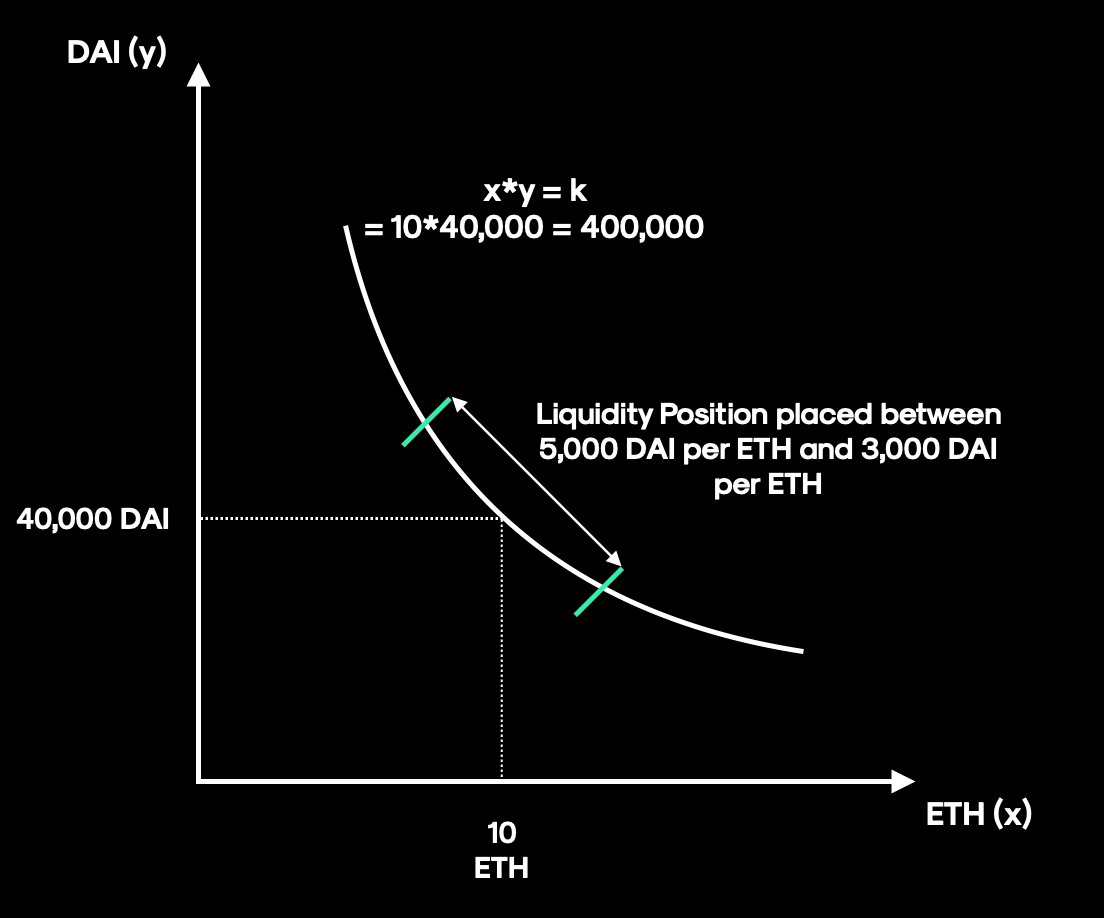
However, it was Uniswap V3 that marked a significant leap in liquidity efficiency through two groundbreaking features: concentrated liquidity and multiple fee tiers. Unlike its previous versions, where liquidity was distributed evenly across the entire price curve of its markets, V3 introduced the concept of concentrated liquidity. This innovation allows liquidity providers to allocate their capital to specific price ranges, optimizing the use of funds by concentrating liquidity where it is most needed. As a result, pools can offer greater liquidity within targeted price segments, enabling individualized price curves and allowing for more efficient trading without increasing gas costs per liquidity provider.
The introduction of concentrated liquidity not only enhances capital efficiency—by up to 4,000 times relative to V2—but also enables providers to achieve higher returns on their capital within selected price ranges. This focused approach allows for comparable or enhanced gains with reduced principal investment.
Additionally, Uniswap V3's multiple fee tiers represent a strategic evolution in risk compensation for liquidity providers. With three distinct fee tiers (0.05%, 0.30%, and 1%) available for each token pair, liquidity pools can tailor their fee structures to better align with the volatility and risk profile of the assets involved. This customization ensures that providers are adequately compensated for the risks they assume, further refining the economic model of liquidity provision on Uniswap.
Balancer V2’s Liquidity Management
Balancer V2's asset manager functions by dynamically allocating capital between trading activities and yield-generating opportunities. This allows LPs to earn passive income on their assets, even in periods when trading fees are not being actively generated. This dual revenue stream significantly enhances the attractiveness of providing liquidity on Balancer V2, presenting a compelling value proposition for investors seeking to optimize their DeFi asset allocations.
Reducing Collateral Utilization Rates and Improved Liquidations
On the collateralization front, DeFi has continually improved with the more efficient use and liquidation of collateral. Liquity is one such project that was able to drive down the amount of over-collateralization needed (from ~150% to ~110%) by optimizing its liquidation process and the speed at which it executes. Similarly, other protocols have automated the rebalancing of deposited collateral, smoothing out the liquidation process and potentially reducing the risk for lenders. These innovations indicate a trend towards minimizing collateral requirements without compromising the security and stability of lending platforms, offering a glimpse into a future where financial operations are both more efficient and user-friendly.
Intents
Centralized Exchanges (CEXs) remain at the forefront of the crypto market, favored for their quick transaction times, robust liquidity, and diverse trading options. Their edge lies in superior user interface (UI) and user experience (UX) designs, which have become the gold standard for trading platforms. These elements are crucial in attracting and retaining users, offering them a seamless and efficient trading environment.
Conversely, Decentralized Exchanges (DEXs) grapple with slower transaction speeds due to blockchain confirmations and generally suffer from lower liquidity levels compared to CEXs. Additionally, the UX design of many DEXs falls short of the refined interfaces provided by CEXs, posing a hurdle to wider adoption.
Intent-based DEXs emerge as a solution to these challenges, aiming to align the platform's features with the specific trading needs of users. An intent is essentially a user-signed declaration of desired outcomes, articulated through constraints that focus on end goals rather than specifying the exact steps to achieve them. This method facilitates a more intuitive and fluid process for executing trades, allowing users to convey their broader objectives to the protocol without getting bogged down in the minutiae of transaction details. By adopting intents, users gain the ability to delegate the execution of transactions to third parties while retaining control over their assets.
Key focus areas include enhancing liquidity and capital efficiency. Liquidity is vital for a stable trading environment, enabling smooth price discovery and reducing slippage. Achieving this requires significant capital input from liquidity providers (LPs). Capital efficiency, on the other hand, focuses on maximizing returns on the capital locked in by LPs, which is essential for the success of DEXs. Future developments are likely to concentrate on improving capital efficiency through innovative mechanisms, such as flexible staking options or new yield strategies, to optimize asset allocation and boost returns.
Hashflow
Hashflow has taken a more radical departure from conventional DeFi models by eliminating the on-chain pricing function entirely. By leveraging off-chain pricing mechanisms, Hashflow facilitates direct quote provision by market makers to traders in real time. This system ensures that capital allocation is optimized with precision, allowing market makers to capture the spread on successful trades or quickly reallocate their capital should the quote remain unfilled.
LSTs: Rehypothecation of Assets in DeFi
Each native crypto asset (i.e., ETH, SOL, MATIC, etc.) in a Proof of Stake (PoS) ecosystem plays a multifaceted role, serving as a crucial component in lending, borrowing, and liquidity provision across decentralized exchanges. Yet, the conventional framework of staking imposes a significant limitation—once staked, the asset becomes non-rehypothecatable, preventing its use within the broader DeFi ecosystem. This dichotomy forces the crypto asset holders to choose between earning staking yields or utilizing their assets within DeFi protocols.
In DeFi’s quest for increased capital efficiency, liquid staking emerged as a groundbreaking solution to this dilemma, offering a mechanism that allows for the staking of the asset while retaining its liquidity. By engaging in liquid staking, holders can deposit their assets into a staking contract and receive a tokenized derivative in return. This derivative mirrors the utility of the native asset, enabling participation across DeFi protocols without sacrificing the benefits of staking yields. Such an innovation significantly enhances the flexibility and yield potential for stakeholders, reshaping the incentive structures within the cryptocurrency domain.
While Ethereum boasts the largest liquid staking market (by TVL), platforms like JitoSOL on Solana are pioneering similar innovations. JitoSOL enables stakers to earn yields on their staked SOL through a derivative token, which can be utilized within DeFi ecosystems. A unique aspect of JitoSOL is its integration of Miner Extractable Value (MEV) extraction, providing an additional revenue stream atop traditional staking rewards. This feature not only enhances the attractiveness of JitoSOL as an investment but also contributes to the growth and vibrancy of the DeFi space on Solana by increasing the total value locked (TVL) and transaction volume across protocols.
The Quest for Unsecured Credit in DeFi
Perhaps the most ambitious under-explored area in DeFi is the provision of unsecured credit. The constraint of over-collateralization limits the scope of lending protocols, tethering them to the safety net of liquidations. Transitioning towards unsecured lending necessitates robust identity and reputation systems to mitigate the risk of default without the safeguard of collateral. Initiatives like Celo's integration of phone numbers with public keys and its exploration of decentralized Eigentrust for establishing on-chain identity and reputation are pioneering efforts to bridge this gap. Successfully implementing unsecured credit would not only mark a significant milestone in DeFi's evolution but also potentially revolutionize how credit is extended in the digital age, offering a seamless, trust-based system that rewards positive financial behavior.
The EVM Dominates DeFi Currently
Ethereum and its Ethereum Virtual Machine (EVM) are infamous for expanding upon Bitcoin’s functionality, creating a Turing-complete environment that enables smart contract execution. At their core, smart contracts are computer programs hosted on blockchain platforms, which autonomously execute actions when predetermined conditions are met.
Over the last ~7 years, Ethereum has become synonymous with smart contract development, largely due to its support for languages such as Solidity and Vyper. Solidity, an object-oriented programming language, draws inspiration from C++, JavaScript, and Python, and is tailored for compatibility with the Ethereum Virtual Machine (EVM). Vyper, on the other hand, offers an experimental approach to contract development, with design cues taken from Python, emphasizing security and simplicity.
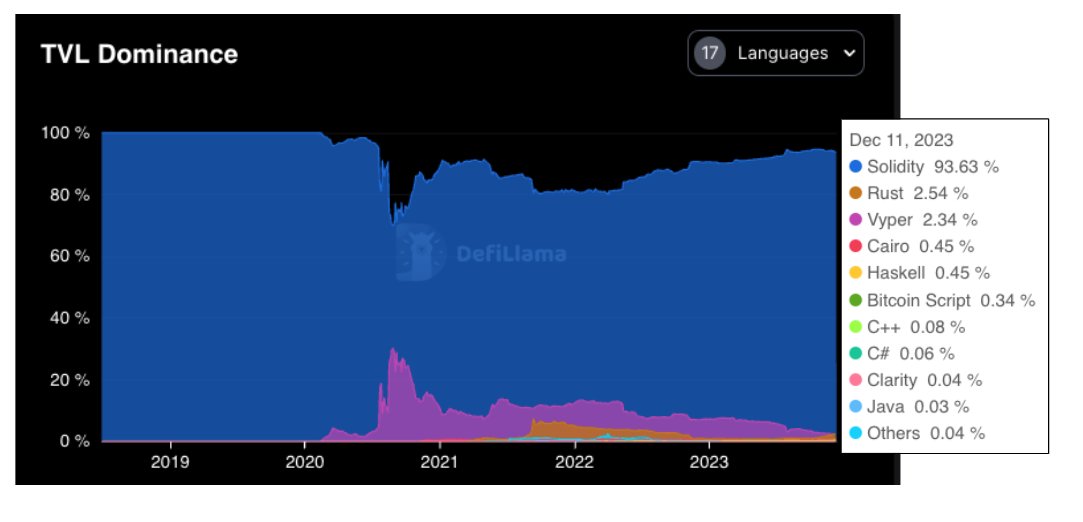
As of February 2024, ~90%+ of the total DeFi TVL is held in contracts written in Solidity, the preferred programming language of Ethereum’s Virtual Machine (EVM). Vyper, an additional smart contract language designed for the EVM, holds ~2% of the entire TVL. Meaning, ~96% of DeFi value is stored on EVMs built in Solidity or Vyper.
The EVM plays a pivotal role in the Ethereum ecosystem, acting as an abstraction layer that seamlessly bridges the gap between smart contract code and the hardware executing the code. The programming language, Solidity, used by developers is designed to ultimately compile down to EVM bytecode, an even simpler set of instructions that the EVM can interpret and then execute. Through this process, the EVM can then take the current valid state and apply a series of transactions to produce a new valid state.
One of the unique features of the EVM is the concept of gas (discussed in future sections). Unlike Bitcoin, which simply charges users for each financial transaction, Ethereum's model charges users based on the computational instructions executed. This element of gas adds a new layer of complexity to the system and is largely responsible for how much or how little the blockchain can scale.
Issues with Solidity and the EVM
Despite the EVM being the undisputed leader in the VM space currently, it is widely accepted that it has significant tradeoffs compared to other, newer VMs. Scalability and performance issues present significant challenges that need addressing to enhance the EVM's efficiency and utility. Moreover, the inherent complexities of smart contract coding and the interaction between composable dApps introduce a heightened risk of bugs and security vulnerabilities.
Among the prevalent security risks seen in the EVM and with Solidity code are re-entrancy attacks. This type of vulnerability enables an attacker to repeatedly call a contract's function in a malicious loop, potentially draining funds or destabilizing the protocol. Another common issue lies in simple coding or mathematical errors within smart contracts, where even minor oversights in formulae or calculation logic can lead to significant financial losses. Additionally, the oversight in enforcing correct call permissions represents a critical vulnerability. Contracts that fail to restrict function calls to authorized roles adequately may inadvertently grant malicious actors the ability to execute unauthorized transactions or alter contract states.
Despite the allure of rapid deployment capabilities, the reality is that securing dApps against evolving threats requires a continuous commitment to learning, vigilant code auditing, and the implementation of advanced security measures. This environment not only places user funds in perpetual jeopardy but also demands significant investment from developers in terms of time and resources to fortify their applications against malicious exploits.
As for the scalability of the EVM, the concept of gas is integral to the network. Gas serves as a metric for the computational effort required to execute transactions and smart contracts. Each transaction is allocated a specific amount of gas, setting a cap on the computational steps that can be performed. This system, while designed to mitigate spam transactions and allocate network resources fairly, introduces a “self-imposed” scalability ceiling for the network. Developers aiming to optimize contract execution in the EVM face the task of minimizing gas consumption. Strategies include bytecode optimization—reducing the number of opcodes (basic operations of the EVM)—and employing techniques like loop unrolling and code simplification. Other scaling enhancements to the EVM over the years include incrementally increasing the block size and reducing the block times (via the transition to PoS). While these improvements over the years have led to a ~3-5x gain in scalability from Ethereum’s genesis, the EVM is still far less performant than other blockchain VM designs.
Alt-L1 blockchains like Tron and Binance Smart Chain have chosent to adopt the EVM but push the limits of its performance to the detriment of other areas of the blockchain. Binance Smart Chain (BSC) has pursued scalability by significantly increasing the gas limits and utilizing faster block times. While this approach has led to lower transaction fees and higher transaction volumes, it raises concerns about the network's long-term viability (state bloat) and decentralization (~30 validators). As the state size expands, the hardware requirements to run a node may become prohibitive, threatening the decentralized nature of these networks.The reliance on increasing gas limits to manage congestion suggests a temporary fix rather than a sustainable solution.
The SVM: DeFi’s Next Dominant VM?
Solana's blockchain architecture represents a pioneering approach to resolving the scalability trilemma—a challenge that involves balancing scalability, security, and decentralization. Key to its strategy are several innovative technologies that ensure its position as a highly performant and competitive protocol in the blockchain ecosystem. These different innovative technologies culminate in an alternative virtual machine known as the Solana Virtual Machine (SVM).
Programming Language
In the world of blockchain technology, where most alt-L1 chains have chosen to piggyback off of the success of the EVM, Solana has chosen a divergent path. Opting against EVM compatibility, Solana leverages the Low-Level Virtual Machine (LLVM) framework, a cornerstone in modern programming that offers a suite of modular and reusable compiler and toolchain technologies. The LLVM serves as an intermediary, facilitating the translation from high-level code to machine code, thereby ensuring optimal performance across diverse hardware setups.
The most common programming language used in the Solana ecosystem is Rust. The decision to prioritize Rust as the primary language for Solana is rooted in the language's distinctive capabilities and the strategic advantages it brings to Solana's infrastructure. Rust's reputation for facilitating high performance and concurrency aligns seamlessly with Solana's architectural goals, particularly its focus on scalability.
Similar to Ethereum’s smart contracts, Solana introduces the concept of "programs." These programs, primarily authored in Rust but also supporting C and C++, are what power Solana’s blazing-fast DeFi and NFT ecosystems. At the heart of Rust's approach to memory safety is its ownership model coupled with the borrow checker mechanism, which collectively obviates the need for a garbage collector. This strategic design choice ensures Rust achieves the high-performance characteristic of languages like C and C++, while significantly enhancing safety.
Turbine and Gulf Stream
At the heart of Solana's scalability solutions is Turbine, a block propagation protocol inspired by BitTorrent. Traditional blockchain networks face scalability issues as the bandwidth needed to support an expanding network of nodes increases, alongside the time required to propagate on-chain data. Turbine addresses this by breaking data into smaller packets that are transmitted through random paths to validators across the network. Each validator, in turn, forwards the packet to a group of peers known as a "neighborhood," facilitating efficient data distribution without overburdening the network.
Turns out @krakenfx has a policy of only allowing you a single deposit address ever. For all ETH and ERC20 deposits…
So if your opsec is above crayon-eating toddler level then Kraken is not for you.
fyi @krakensupport
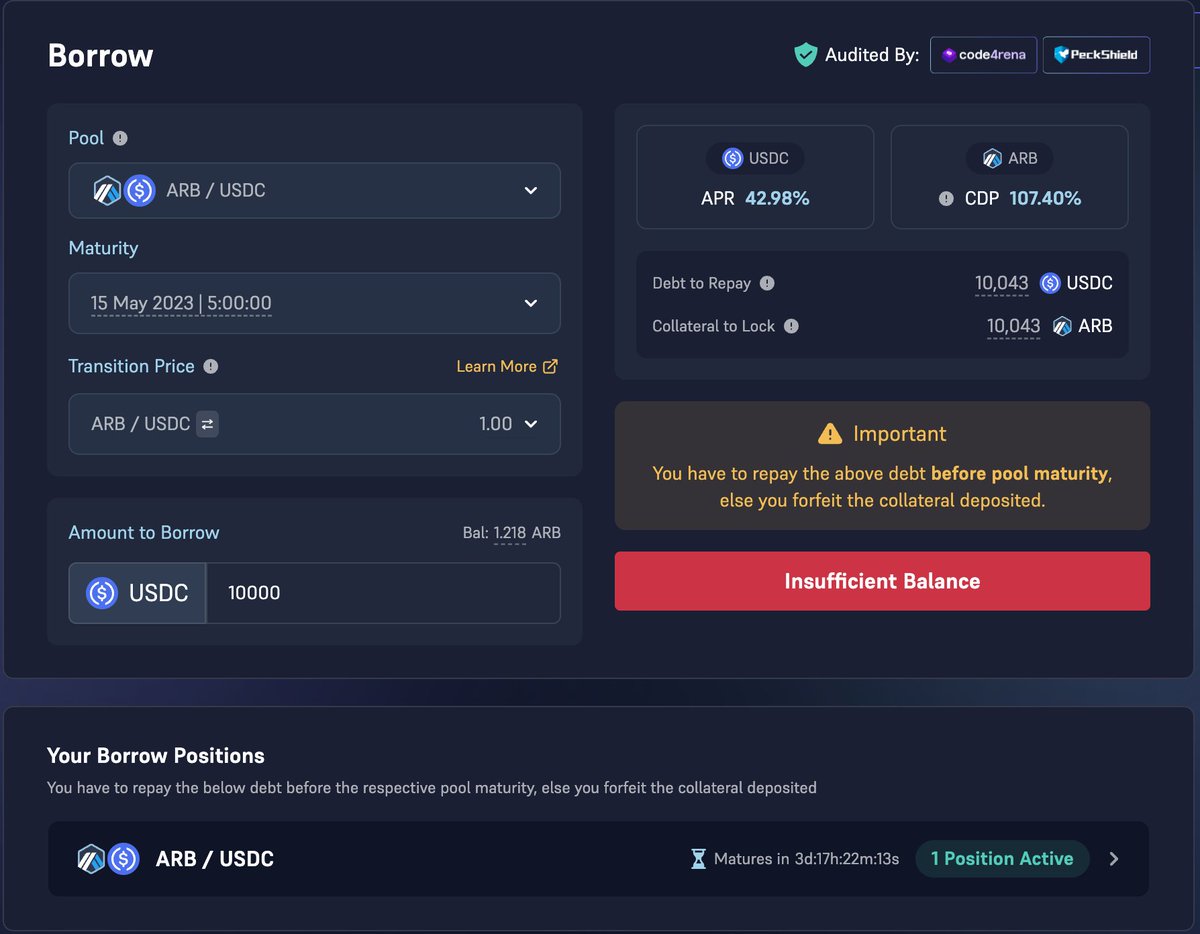
@WIP_DEFI If ARB stays above $1, then you repay the USDC collateral and are out your fees.
If ARB goes below $1, then you keep the USDC, and your downside was protected.
@WIP_DEFI So the collateral is 1:1 ARB:USDC, regardless of the current price of $ARB (for this epoch).
So yesterday when ARB was at 1.06, you could put up 1 ARB to borrow 1 USDC.
@WIP_DEFI After reflecting I think you're actually right on it behaving like a call option (rather than put).
Downside protection with open-ended upside.
How?
Use ARB collateral to borrow USDC at a fixed APR.
If ARB closes below $1.00, then just walk away and pocket your USDC (the delta is profit). If ARB closes above $1.00, repay and you're only out the borrow fee.