managing multiple wallets on solana usually turns into a mess of seed phrases, browser profiles, and accidentally linking your addresses together on solscan.
and with most privacy tools, if you send the wrong token or switch devices without backing up a dozen different note files, your funds are stuck.
dug into the Keys and Wallets setup on @veilzk tonight to see how the vault architecture actually works under the hood:
- your vault lives encrypted directly inside your browser (with a one click encrypted backup file) so no central server ever holds your keys
- every vault has a dedicated add funds address where incoming tokens move into your private balance automatically, plus a built in "Recover funds" safety net if you ever send an unsupported or frozen token by mistake
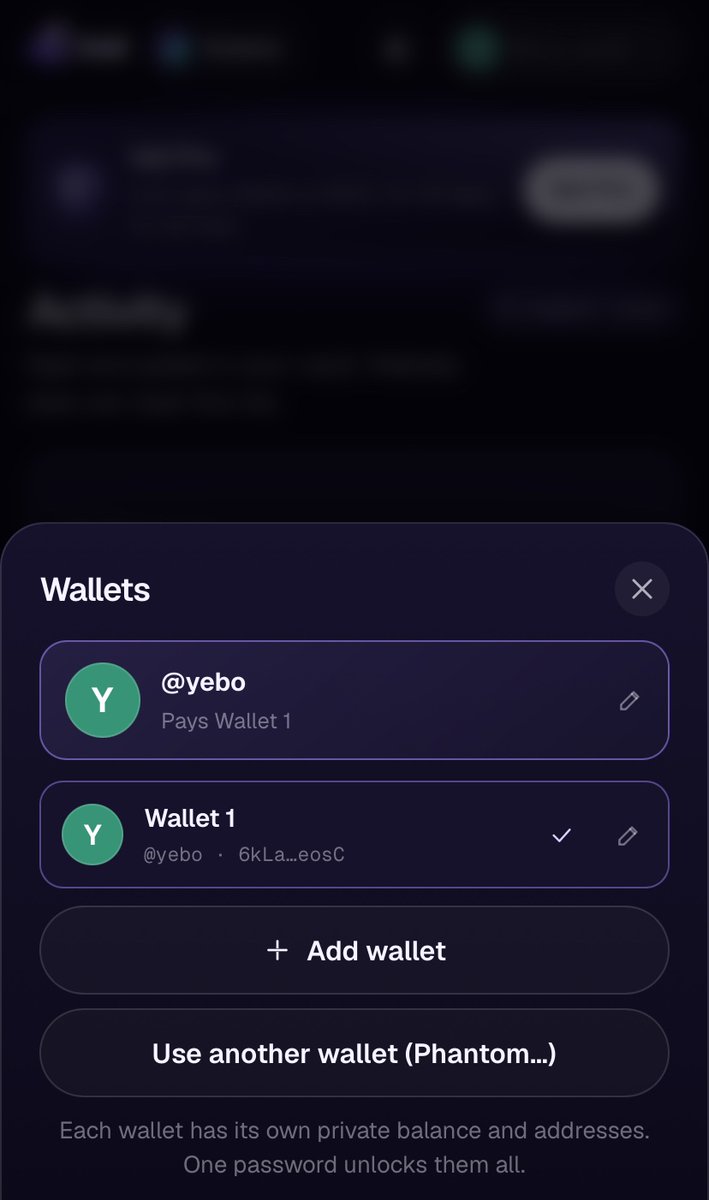
- you can spin up multiple sub wallets from the top menu where each wallet gets its own isolated private balance and addresses, all unlocked with one password
- your @username (like @yebo) routes incoming payments straight to whichever sub wallet you set without exposing your main wallet
way cleaner than juggling ten phantom accounts and praying you don't cross contaminate your transfers.
dropping the web app link in the first reply if you want to check it out 👇
most people assume using a privacy wallet on solana means locking your tokens in a dark box where they just sit idle.
if you have to unshield back to phantom every time you want to earn yield on stables or manage fresh wallets, you end up exposing your main address on solscan anyway.
dug into the Earn and Addresses tabs on @veilzk tonight to see how it handles this:
- you can lend JupUSD, USDC, USDT, or WSOL straight from your private balance to earn yield (as the app puts it: the vault lends, not you: your position stays private and keeps earning)
- the Addresses tab manages all your one time solana addresses for exits and incoming payments, and none of them are linked to your main wallet or to each other on-chain
- if you ever switch devices, your recovery key scans and restores every one time address you've used before
actually feels like a full private DeFi workspace instead of a one off mixer.
putting the web app link in the first reply if you want to check it out 👇
using centralized exchanges just to fund a fresh wallet on another chain is getting old.
sending SOL to a CEX, waiting for deposits to clear, and paying withdrawal fees just so trackers can't link your wallets takes way too much time.
tested out VeilSwap inside @veilzk tonight and it cuts out the CEX middleman completely:
- your SOL leaves from Veil's pool to a one time deposit address so your main wallet never appears on chain
- NEAR Intents market makers deliver the USDC on the destination chain (like Aptos), and Veil requests the quote for you so NEAR never even sees your IP
- if a swap ever can't be delivered, it refunds privately to a new one time address and you just shield it right back
pair that with the random time delay toggle and only your fresh destination address is ever public.
dropping the web app link in the first reply if you want to check it out 👇
most people forget that even if an app hides your wallet on solscan, a backend server or referral link can still expose who you are.
if an indexer can read your transaction list or your invite code links straight back to your main phantom wallet, your setup isn't actually private.
dug into the Activity and Invite tabs on @veilzk tonight to see how it keeps both local data and referrals anonymous:
- your activity list stays encrypted inside your vault so nobody else can read your history
- incoming payments are found automatically by trial decrypting every commitment in the pool right inside your browser
- even your invite link is anonymous (it uses a one time address generated from your vault, not your public wallet, while giving friends 50% of their shield fee back for 30 days and paying you 20% every monday)
every piece of the web app is built so nothing traces back to your main address.
dropping the web app link in the first reply if you want to check it out 👇