1/ Just shipped my hackathon project and honestly think this pattern is bigger than the hackathon itself.
Riskeon - AI + CRE risk execution layer for stablecoins & tokenized vaults.
Built for @chainlink hackathon (CRE track). Would love your feedback 🧵👇
Docs: https://t.co/RulbPfJbSN
Quick start runs a Console + 2 Nodes in ~10 minutes.
PRs welcome. "I expected this to work and it didn't" reports especially welcome.
Spinning up a WireGuard server takes 60 seconds.
Operating a fleet of them is unsolved.
Not by wg-easy. Not by Tailscale. Not by Firezone.
It's not a config problem.
It's a control-plane problem.
🧵
So I built it.
WGKeeper. AGPL-3.0. Self-hosted. Docker image.
→ Not a SaaS
→ Not a Tailscale clone
→ Not a ZTNA platform
One UI, many WireGuard servers. That's it.
Side project. No company. No roadmap deck.
Writeup ↓
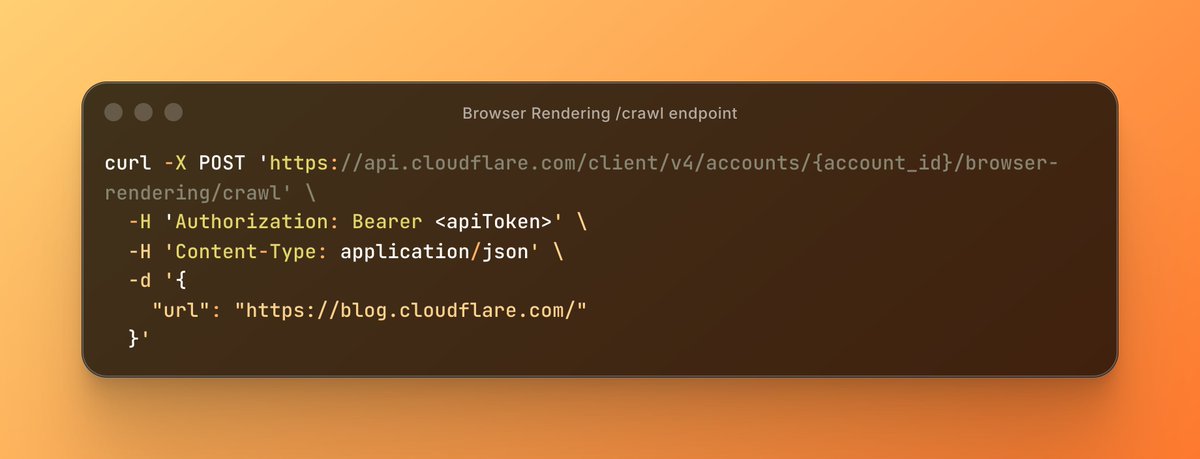
Introducing the new /crawl endpoint - one API call and an entire site crawled.
No scripts. No browser management. Just the content in HTML, Markdown, or JSON.
Karpathy built GitHub. But for agents.
They push code, run experiments, build on each other’s work. Overnight. Without you.
Open source. Early. Kind of insane.
https://t.co/COyQFDOeDr
@AnnieSpine@chainlink The hardest part was definitely wiring up CRE 🚧
Spent hours debugging edge cases, re-reading docs, breaking things and fixing them again until 6am 😅
But walked away actually understanding how it works end to end - worth every hour 💪
1/ Just shipped my hackathon project and honestly think this pattern is bigger than the hackathon itself.
Riskeon - AI + CRE risk execution layer for stablecoins & tokenized vaults.
Built for @chainlink hackathon (CRE track). Would love your feedback 🧵👇
@AnnieSpine@chainlink Thanks! 🙏
About 4 days of nonstop building 😅
The hackathon's been running for a month - I jumped in at the very end so it was full sleep-optional crunch mode lol
But sometimes that pressure is exactly what you need to lock in and ship 🔥
@SarahWahinya@chainlink Exactly - if you can't prove why an action happened onchain, it's just another black box. That's the whole point of governed execution over manual response.
5/ Here's where it clicks — the demo:
Deposits open ✅
→ CRE run triggers, risk escalates, policy matches threshold
→ Deposits paused 🛑 + incident created onchain with tx hash ✅
One automated loop. End to end. Fully verifiable.
If you're building stablecoins, RWAs, or treasury vaults — this pattern applies everywhere. Would love to hear what you think 👇
4/ The part I'm most proud of: governed execution.
AI can't do whatever it wants. It only proposes a risk score. The PolicyContract onchain decides which actions are allowed based on thresholds.
No black box. Everything deterministic, auditable, verifiable.
This is what makes it different from "just another AI agent."
@lektracloud batching is key for scale + transparency:
One task can be executed by multiple GPU nodes, and Lektra settles it with one onchain batch tx.
So the entire payout split is visible in a single transaction — efficient settlement with fixed overhead per task + per-recipient cost.