@inkonchain If the version of you that just finished this launch could go back and whisper one sentence to the version of you that started it, what would that sentence be and how does it change what you build next?
@inkonchain Looking at what you now know through the shipping process, which assumption from the original plan turned out to be the most expensive, correct or needing course correction and would you still make the same bet today?
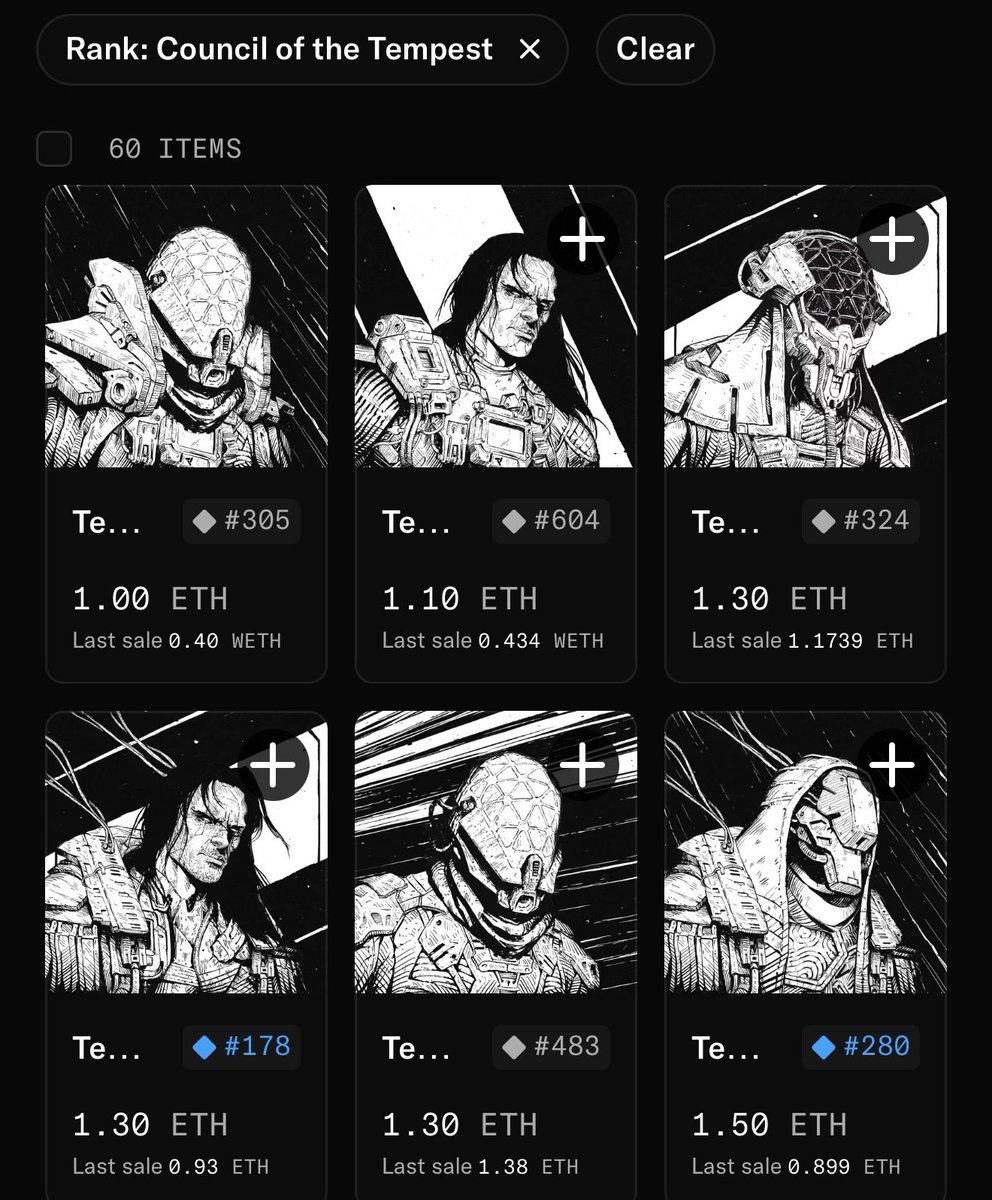
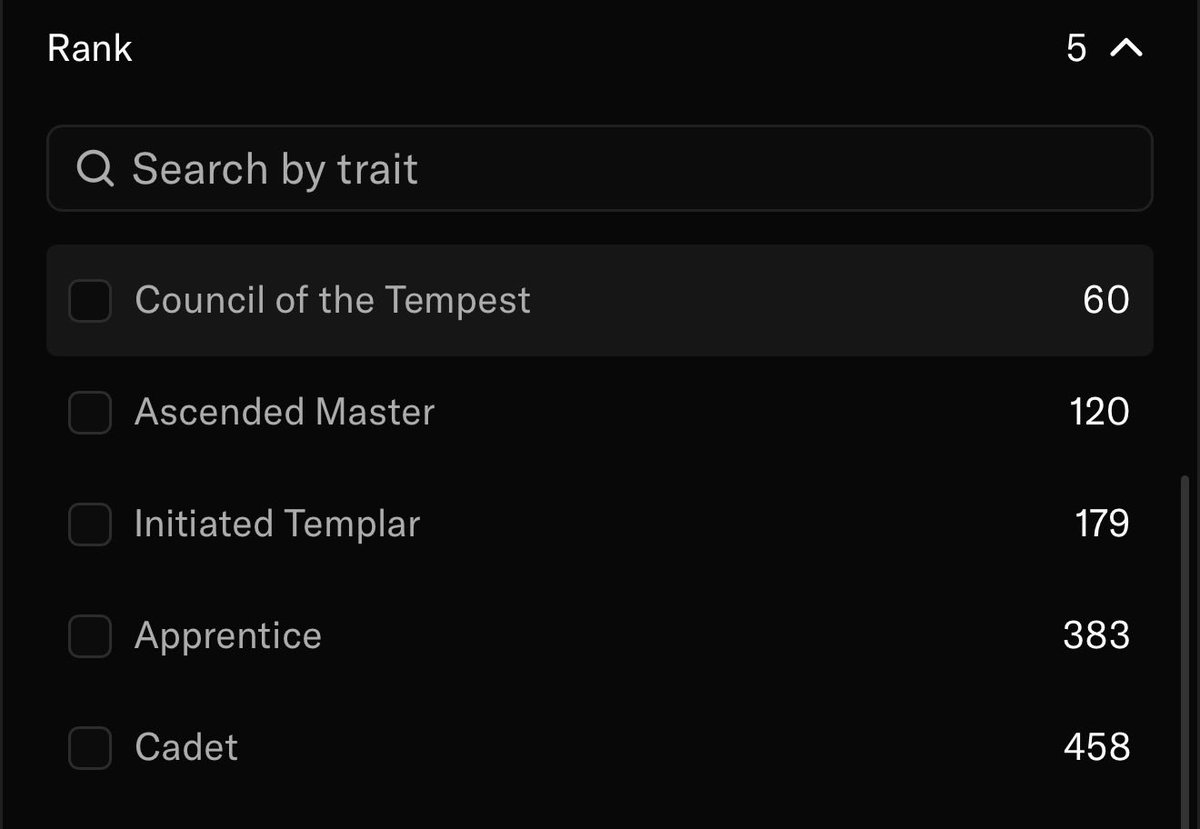
@nadoHQ how important is the rank of the Templars of the Storm?
The council of the tempest seems to have the highest rarity and greater weight…..could they be undervalued @inkonchain@Jackisnotinabox
this is the direction i want to see v4 integrations move toward. credit to @0xbeans and @standard_rsv for taking venue-policy discovery through the standardization process with URC-5.
i built around this problem with @Quotrons404 in early august, then worked directly with trading platforms to get the canonical execution path supported.
on august 13th, i published the $QUOTRON integration guide: deployed contracts, a machine-readable manifest, complete ABIs, quoting instructions, approvals, and execution requirements.
https://t.co/ljeD1YeGEY
Quotrons’ canonical v4 pool funds its Terminal reward engine and other protocol allocations. trading through a separate pool can bypass those mechanics, so i built three distinct enforcement controls:
• address restrictions through setBlacklisted
• runtime-codehash restrictions through banVenueCodehash
• hook-authorized v4 settlement
the third is the critical piece.
v4 pools share a PoolManager.
an ERC-20 transfer into or out of that contract does not, by itself, tell the token which pool produced the settlement. so, simply allowing PoolManager does not establish that the intended hook ran.
Quotrons’ registered hook authorizes the QUOTRON settlement amount and direction in transient storage. the token checks and consumes that authorization when settlement occurs. inbound settlement additionally requires the canonical router, which supplies payer and recipient context to the hook.
external venues are handled separately.
address bans cover specific addresses;
codehash bans can cover identical deployed clones.
neither automatically covers every future pool or implementation.
i documented those boundaries and the supported execution path, but getting trading platforms to consistently use it was another challenge (shout out @lute for being the first and only platform to directly integrate from my published work).
i ran into this firsthand integrating Quotrons with @fomo in august. despite @0xProject already supporting the canonical path, i was seeing failed trades (and even worse, horribly priced fills) and routes through small v3 pools. the same token traded successfully through @opensea's 0x integration, which made the gap clear: upstream support did not automatically translate into compatible execution downstream.
credit to @seyong for being responsive and helping coordinate the work, and to fomo's team for getting the route supported. i supplied the canonical contracts, execution docs, and a view quoter that returned output and payer-specific fees without requiring an existing balance or allowance.
the integration got working through direct coordination.
that experience, starting in august, is exactly why standardized venue discovery matters: a documented, functioning trading path still needed bespoke work to reach users.
all of this shaped how i read 0x’s later “Uniswap v4 hooks were a mistake” article:
https://t.co/cZJV1d60OQ
the malicious behavior they describe is a real concern. misleading quotes and unexpected settlement behavior demand stronger detection and execution checks.
but i disagree with the headline’s conclusion.
hooks let developers make trading behavior part of the product. the response should be clearer requirements, compatible execution, and verified user outcomes. 0x itself had supported Quotrons’ canonical path; the remaining friction extended across the integration stack.
URC-5 addresses an important part of that friction by giving integrations a shared policy interface:
• canonicalPools() exposes canonical v4 pool keys.
• venueEnforcement() distinguishes preferred venues from enforced restrictions.
• venueAllowed() exposes permissions by venue and direction.
• externalVenues() exposes directional restrictions and allowlists outside v4.
events keep cached policy current, and a standardized refusal error helps identify unsupported routes.
directional permissions also let implementations block new deposits while preserving withdrawals.
Quotrons’ existing address and codehash bans block both directions, so that is a useful distinction for future designs.
discovery still complements execution support and security checks. a canonical declaration is not a security certification or a guarantee that an arbitrary router can execute the trade.
there are enforcement limits too. when an intermediate token nets to zero entirely inside shared accounting, no ERC-20 transfer occurs for a transfer-level gate to inspect. the proposal explicitly acknowledges that.
this is why @standard_rsv’s work matters. Quotrons had enforcement and integration docs, but supporting it still required direct coordination between myself, platforms, and routing providers.
i’m grateful this is moving forward as i prepare to bring Quotrons to @inkonchain.
the migration is an opportunity to carry these lessons into the next implementation and build toward better support at the liquidity and trading layer with explicit venue policy, clear execution requirements, and less guesswork for integrators.
as routers and platforms adopt URC-5, that should mean less custom coordination and fewer failed routes for holders.
after working through those problems firsthand, i’m excited and proud to see this moving toward a standardized venue policy for interacting with tokens and the economic models built around them.
tfw "we must protect the quotrons" really ended up translating to protecting every projects economic model.
gud tek if you ask me.
QWO
@Quotrons404 and @sentrylauncher reveal a broader ecosystem connecting assets, markets and liquidity on @inkonchain.
1. Quotrons builds xStocks liquidity rails with fee-sharing for NFT holders.
2. Sentry expands access to token creation and markets.
3. If AI-agent access to those pools becomes reality, NFTs could unlock new ways to participate in onchain asset flows—and new utilities built around them.
“there is a storm coming, and not a one of you is prepared for it” -@cruelhandeth
I bought my first penguin a week after it launched and rode the wave up until a week before abstract was released and have not an NFT until @Quotrons404 around a month ago.
I realized that pfp NFTs were doomed and the team never wanted to admit it but there really was no "utility" to be added except for vibes.
Well now that the vibes have been permanently extinguished there is still time to hop on board the next legitimate narrative, tokenized equities.
Kraken and their parent company @Payward will be leading the way with their product, @xStocksFi, to be one of the first movers in this space and hopefully the fees will be routed through enough quotron pools that will make this a generational play.
If you still believe in NFTs, its time to wake up and realize the tides are shifting. This is your last chance to adopt the future of NFTs before you are completely left behind and become a relic of time.
QWO
we haven’t scratched the surface of what NFTs can do.
if we go through another cycle and they’re still what they’ve always been, we’ve failed.
it’s time to reimagine NFTs from first principles.
slowly at first. then all at once.