Celebrate with us the ascent from Christmas to Easter in extended worshipful Advent. One sacred name of Jesus Christ each day. Contributions welcome. (DM/tag)
Day 101: Omnipotent
The name I’ve chosen to focus on today is found in Revelation 19:6: “the Lord God Omnipotent.”
The word omnipotent means all-powerful. And truly the Lord has all power.
Christ gave us the perfect example of perfectly controlled power in His Meekness.
[W]e live in a world that is often suspicious of power, sometimes for good reason. We see power abused in institutions, families, and personal relationships. People say “power corrupts,” and too often that happens.
People can even feel uneasy about God’s power and about the power He delegates through His holy priesthood. Some are uncomfortable with the Jehovah of the Old Testament because they see Him as angry or severe. Others prefer a picture of Christ that is so soft and unthreatening that His glorious Second Coming is expected to be affirmation for all—with very little judgment or justice.
… [P]ower is never evil when governed by righteousness.
“The Savior[‘s] power is in truth, love, and persuasion. His power blesses. It lifts. It heals. It saves.
So, as we think of Our all-powerful Christ, we never need to be afraid. We can feel completely and eternally safe.
What a comfort to know that the greatest power in the universe is not evil or chaos or oppression or cruelty.
The greatest power in the universe is held in the perfect hands of Jesus.
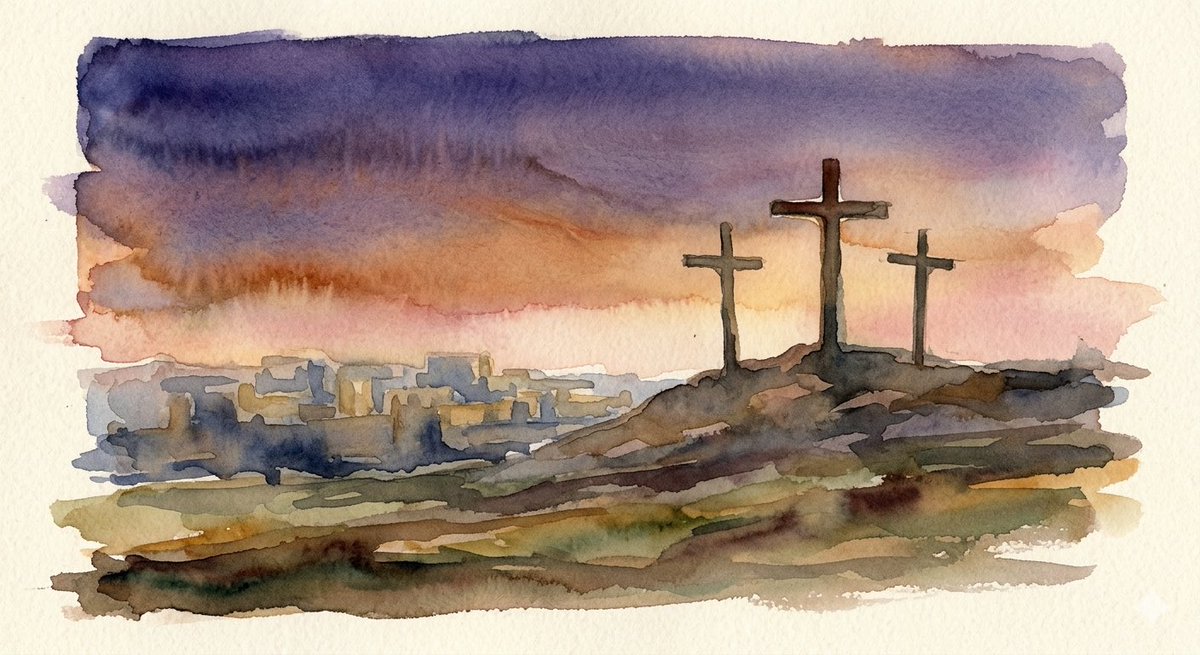
What we celebrate at Easter time is that Jesus Christ ALONE had the unique power to die and rise again. From His mortal mother, Mary, He inherited the power to lay down His life--to let His body and spirit be separated in death. From His Immortal Father, He inherited the power to raise His body from the sepulchre and unite it in resurrected perfection with His spirit. He was the only one who could.
Excerpts taken from Lili De Hoyos Anderson’s Choosing Glory Easter episode (links below):
https://t.co/9OViJJ0F68
https://t.co/0B9JLGDPh8
Art: https://t.co/5BFY7vS824
Day 100: Bright and Morning Star
“My thought on this sacred name of the Savior, ‘The Bright and Morning Star,’ is just a reminder—especially at this time of year, at Easter time, but also always, is to remember the Savior. The hope that we can have in and through Him because of His atoning sacrifice. I’m so thankful for Him. I love Him. I testify of Him and of the power of His Atonement to strengthen and bless and heal us—now, at this Easter time, and of course, always.
Contributor: @scrollpastthis
Day 100: Amen
Holy Saturday—the day of the "Great Silence."
A day of profound silence and grief. Jesus remains in the tomb, and his followers observe the Sabbath, likely in hiding and confusion, believing their hopes have been buried with him.
The palm branches from Sunday are withered. The bread from Thursday is gone. The agony of Friday has faded into a numbing, hollow grief.
For the disciples, this was the most devastating day of their lives. They were hiding in upper rooms, perhaps whispering in confusion: “We trusted that it had been he which should have redeemed Israel.” (Luke 24:21)
Elder Jeffrey R. Holland: “I have thought about the Apostles on the day after the Crucifixion. ... That must have been the most hopeless, devastating Saturday in the history of the world. ... They were in that terrible 'in-between' time when the old life was gone and the new life had not yet begun. They were waiting on the Lord, and for one long, silent day, it seemed He would never come." (Waiting on the Lord- Liahona 10/2020)
While the disciples sat in darkness, thinking their hopes were buried behind a heavy stone, the Savior was busy.
It is the loneliest day of the year, but it is also the day where our faith is defined. Are we willing to wait for the Sunday we've been promised?
As President Joseph F. Smith saw in a vision: "They were assembled awaiting the advent of the Son of God into the spirit world, to declare their redemption from the bands of death." (DC 138:16)
We all have "Saturdays" in our lives. Times when God seems silent, when our prayers feel unanswered, and when our hopes seem entombed. If you are in a "Saturday" right now, remember: The stone is still there, but the work is still happening. The silence of Saturday is the necessary precursor to the shout of Sunday.
Saturday wasn't a day of rest for the Savior; it was the day He brought liberty to the captives.
Day 99: Jesus The Christ - Good Friday
Today, we pause. We reflect on the ultimate sacrifice. But why do we call this day of darkness "Good"?
On this Good Friday, we remember when the Savior of the world, Jesus Christ, gave His life. It was a day of profound pain, injustice, and betrayal. Excruciating. From the agony in Gethsemane to the sorrow of the cross at Golgotha, He endured it all. He endured a level of suffering we will not be asked to endure.
How can a day of such suffering be "Good"?
We understand that this day marks the culmination of the Savior’s infinite Atonement. The "Goodness" lies not in the act of suffering itself, but in the unconditional love that motivated it and the miraculous blessings that followed.
The "Goodness" of the day lies in the healing it provides. The Atonement doesn't just provide for the forgiveness of sins, but for the healing of all "pains and afflictions and temptations of every kind." (Alma 7:11)
The Victory: Although darkness covered the land, it was the moment He declared, "It is finished." His mortal ministry was complete, His sacrifice accepted, and the final victory over sin and death had been secured.
It was a day of unrivaled tragedy; it was also the hour of triumph. The Savior’s death was "not a defeat" but the very condition for victory.
President Dallin H. Oaks reminds us that Good Friday wasn't something that "happened" to Jesus—it was something He "brought to pass." He wasn't a victim of the cross; He was the Master of it. He stood between us and the demands of justice, offering His own perfection to pay a debt He didn't owe, so that we could receive a mercy we couldn't earn.
As dusk falls, let’s remember that the darkness of this day was temporary, but the "Good" He brought to pass is eternal. Because of Him, our daily frustrations have a purpose, our worries have a resting place, and the heaviest of grief is felt and carried by Him. Our daily activities are seen and known by a Savior who walked the loneliest path so we would never have to.
"He is the light and the life of the world; yea, a light that is endless, that can never be darkened." (Mosiah 16:9)
Day 98: The Bread of Life
As the sun sets on Holy Thursday, the atmosphere in Jerusalem turns intimate and heavy. In an upper room, away from the crowds and the critics, Jesus gathers His friends for one final meal. This isn't just a dinner; it is the moment the Old Covenant meets the New.
Scholar S. Kent Brown (The Testimony of Luke) offers a beautiful insight into this transition. He notes that while the Passover looked backward to the deliverance from Egypt, Jesus was now handing over a new ordinance—the Sacrament—designed to look forward to our deliverance from sin through His own blood.
Brown also points out the staggering irony of the "hymn" they sang before leaving for the Mount of Olives. They likely sang the Hallel (Psalms 113–118). Imagine the Savior’s voice steady and clear, singing: "The sorrows of death compassed me... I will take the cup of salvation" (Psalm 116), knowing exactly what that "cup" would cost Him in just a few hours.
Have you ever thought about hearing the Savior sing a hymn ?
Alonzo Gaskill (The Lost Language of Symbolism) adds another layer of depth to the washing of the disciples' feet. He suggests this wasn't just a lesson in humility, but a symbolic "cleansing" from the dust of the world—preparing the Apostles to enter the "Holy of Holies" of the Gethsemane experience with Him.
Gaskill also reminds us that the bread was broken before it was eaten. Christ’s body had to be broken so that we could be made whole. By partaking, we aren't just remembering a historical event; we are symbolically taking His life and nature into our own.
We are coming to the close of our 101 holy names journey as the Savior completes his ministry. We move toward the Garden tonight, are we allowing the Savior to "wash our feet"—to clear away the dust of our worldly distractions? Are we ready to "partake" of His strength for the trials ahead? Having this knowledge is the bridge that carries us across the raging rivers of our messy lives to be healed, to be fed.
Art: AI
Day 97: Mighty One of Jacob
From the beginning, God has been a covenant-making God, and that changes everything. It is how He binds Himself to His children and brings us home.
In a loud and uncertain world, those who have made covenants with Him stand on something immovable.
We are not drifting. We are bound to Him.
Through covenants, we are connected to heaven in a way that is real and enduring. Not because we are better, but because we have chosen a relationship He offers to all.
This path is not exclusive. It is the most inclusive invitation ever given: Come. Belong. Be bound to God.
Through baptism and temple covenants, we are drawn closer to our Heavenly Father and woven into a covenant family. At the head of that family stands Jesus Christ, the Mighty One of Jacob.
Isaiah teaches that “the prey of the terrible shall be delivered… for the Lord will contend with them that contendeth with thee… and all flesh shall know that I the Lord am thy Savior and thy Redeemer, the Mighty One of Jacob.”
Sometimes we feel like the prey. Sometimes the world feels stronger and relentless. But He does not stand at a distance. He stands with you. He fights for you.
I have felt Him intervene. I have seen Him make a way where there was no way. I have felt Him stand between me and things I could not face alone.
And I have come to understand this: I do not just believe in a Savior. I belong to Him.
Through covenant, I am tied to Him.
He is not only the Savior of the world.
He is my Mighty One.
The Mighty One of Jacob
Art: “Lion of Judah” by Joseph Alexander Paradis
https://t.co/5Kbv6ADtE9
Used with permission. All rights reserved.
Day 96: Teacher
As Holy Week continues, we find our Savior returning to the Temple. He is met by the Pharisees, Sadducees, and Herodians—not to learn, but to trap Him. They questioned Him on taxes, marriage, and authority, trying to force Him into a political corner.
He taught them true doctrine.
Alonzo Gaskill (The Lost Language of Symbolism) points out that these traps tested whether Jesus would prioritize the "kingdoms of this world" over the "Kingdom of God." By answering, "Render unto Caesar the things that are Caesar's," Jesus taught that our ultimate "image and superscription" belongs to God, not the world.
Hugh Nibley noted that this day represented the final "testing" of the Lamb. In ancient Israel, the paschal lamb was inspected for four days before Passover to ensure it was "without blemish." On this Tuesday, the religious leaders unwittingly acted as inspectors. They probed His mind and doctrine with every difficult question, yet found no blemish. He was spiritually "without spot."
As the sun set, Jesus left the noise of the Temple for the quiet of the Mount of Olives. There, He gave the Olivet Discourse—a sobering look at the destruction of the Temple and the trials of the last days. His message wasn't meant to cause fear, but vigilance. As He looked across the valley at the beautiful Temple, He warned us to "watch and pray."
The Savior spent His final Tuesday being attacked by those who should have known Him best, yet He spent His evening preparing His friends for the challenges ahead.
Elder Jeffrey R. Holland reminds us that the Mount of Olives was a place of "agonizing perspective." Jesus taught there in the light on Tuesday so He could walk the "lonely path" of Gethsemane in the darkness on Thursday—ensuring that we never have to be truly alone.
Our world today works tirelessly to trap us in its complexities, are we staying "watchful"? Are we focusing on the image of God engraved upon our souls? Are we being taught ? Do we accept the instruction as truth and the way to happiness?
Art: https://t.co/wayCpO6If8
Day 95: Jesus Christ our Redeemer
Yesterday was Palm Sunday—a day of "Hosannas" and celebration. But as the palm branches settle, the tone in Jerusalem shifts. Today is Holy Monday, and the weight of why Jesus came begins to settle in.
On this day, we see a side of the Savior that demands our attention through two events—a "double witness" against the same spiritual problem: Hypocrisy.
The Fruitless Tree
On the way to the Temple, Jesus cursed a fig tree that was full of leaves but bore no fruit. James E. Talmage, in Jesus the Christ, noted the tree was a symbol of "pretense." It wasn’t just barren; it was misleading. By having leaves out of season, it advertised fruit it didn't possess.
The Cleansed Temple
Jesus then enters the Temple and finds it filled with "merchandise and traffic." As Talmage explains:
"The tree was cursed for its deceptiveness; the Temple was cleansed because of the unholy traffic... both the tree and the Temple were symbols... which had become a thing of show and pretense."
The Lesson for Us
These aren't random events. They are a warning that "looking the part" isn’t enough.
•The tree had the leaves, but no fruit.
•The Temple had the rituals, but no spirit.
Jesus isn't interested in our "leaves"—the outward appearance of being a follower. He is looking for the fruit of a changed heart. He cleared the merchandise out of the Temple to make room for what mattered: healing the blind and the lame who came to Him immediately after.
The reflection for us this Monday: Are we tending to our "leaves" or our "fruit"? Is there anything in our own "temple" that needs to be cleared out to make more room for Him?
Where are you this Monday?
Day 94: Son of David
It’d been 33 years since he was born in the manger. He had learned by obedience and taught by example. He called 12 apostles and healed the sick and raised the dead and raised the ire of many who felt threatened by him. He had a huge following of believers and worshippers and countless enemies; and they all converged in Jerusalem - the City of David.
Jesus rode into Jerusalem on a donkey as the crowd welcomed Him by waving palm fronds (symbols of victory), shouting “Hosanna to the Son of David: Blessed is he that cometh in the name of the Lord; Hosanna in the highest.” Matt 21:9
The title “Son of David” is more than a statement of physical genealogy. It is a Messianic title. When people referred to Jesus as the Son of David, they meant that He was the long-awaited Deliverer, the fulfillment of the Old Testament prophecies.
Jesus was addressed as “Lord, thou son of David” several times by people who, by faith, were seeking mercy or healing. The woman whose daughter was being tormented by a demon (Matthew 15:22) and the two blind men by the wayside (Matthew 20:30) all cried out to the Son of David for help. The titles of honor they gave Him declared their faith in Him. Calling Him “Lord” expressed their sense of His deity, dominion, and power, and calling Him “Son of David,” expressed their faith that He was the Messiah.
Although on “Palm Sunday” He was hailed as the long-awaited Redeemer and Deliverer, by Thursday, many of that same crowd would be clamoring for His crucifixion….
Art: J. Kirk Richards "Triumphal Entry"
Day 93: Refuge From the Storm
Isaiah 25:4 “For thou hast been a strength to the poor, a strength to the needy in his distress, a refuge from the storm, a shadow from the heat, when the blast of the terrible ones is as a storm against the wall.”
Throughout scripture and ancient literature and myth, water symbolizes chaos. Christ brings order amidst chaos. His righteousness and priesthood hold the universe in place. His gospel brings order and understanding to chaotic uncertainties and disagreements. He can bring order to our chaotic circumstances and personal lives. Many times He literally calms the storm as described in Mark 4:35-41 to the amazement of His disciples. Other times He doesn't calm the storm, but provides peace and strength to endure the storm and arrive in "a promised land" typified by Noah and the ark, Lehi's family's journey to a new world, the Jaredite voyage in 8 barges, and many others.
“Whatever our challenges are, whatever troubles may come, whatever pain we feel, or whatever storms arise, Jesus is our refuge and protection in such times. Just as He calmed the Galilean storm when His disciples were sure they were going to lose their lives, so can He calm our storms and give us refuge from them until they dissipate and life is calm again. In such times, He will be ‘a strength to the needy’ and ‘a shadow from the heat.’” --Jeffrey R. Holland “Witness for His Names” p. 127
Art: “Turbulent Waters” by Manzi
Day 92: Alpha and Omega
In the Doctrine and Covenants, the Savior introduces Himself as the Alpha and Omega no fewer than 13 times. From the very first section to the deep revelations of the restoration, He constantly reminds us: "I am he who was from the beginning, and I am he who will be at the end."
Why does He repeat this so often? Because in a world that feels fractured and uncertain, Christ is the constant. He is the way.
From Jeffrey R Holland :
“ To John on the Isle of Patmos, the resurrected Jesus announced himself, “I am Alpha and Omega, the beginning and the ending, … which is, and which was, and which is to come, the Almighty.” (Rev. 1:8.) Nothing is so pervasive in our lives, nothing so encompassing and enfolding and upholding, as the Savior of this world and the Redeemer of all men.
“We know that this beloved Son of God strengthened our convictions and created this world to which we would come. He was “the firstborn of every creature.” (Col. 1:15.) I am Alpha.
“As he was in the beginning, so will he be when this world ends. As Omega, a name taken from the last letter of the Greek alphabet, Christ is the terminus, the end cause as well as the end result of mortal experience. I am Omega.
“We should not stray outside him. We should not want to try. I am Alpha and Omega. “
https://t.co/0Ltd23xTa4
Day 91: Angel of His Presence
“In all their afflictions he was afflicted. And the Angel of His Presence saved them; and in his love, and in his pity, he redeemed them, and bore them, and carried them all the days of old”. DC 133:53
The Angel of His Presence. In the old language, that word "angel" really just means a messenger, but this isn't just any messenger. This is the One who brings the very presence of God the Father right into our lives. When we can't get to where we need to be, He brings that holy presence to us. It’s such a powerful way to think of Him—not as someone far away in the heavens, but as the direct bridge to the Father's love and power.
It’s one thing to read a name in a book, but it’s another to see how it worked in real life.
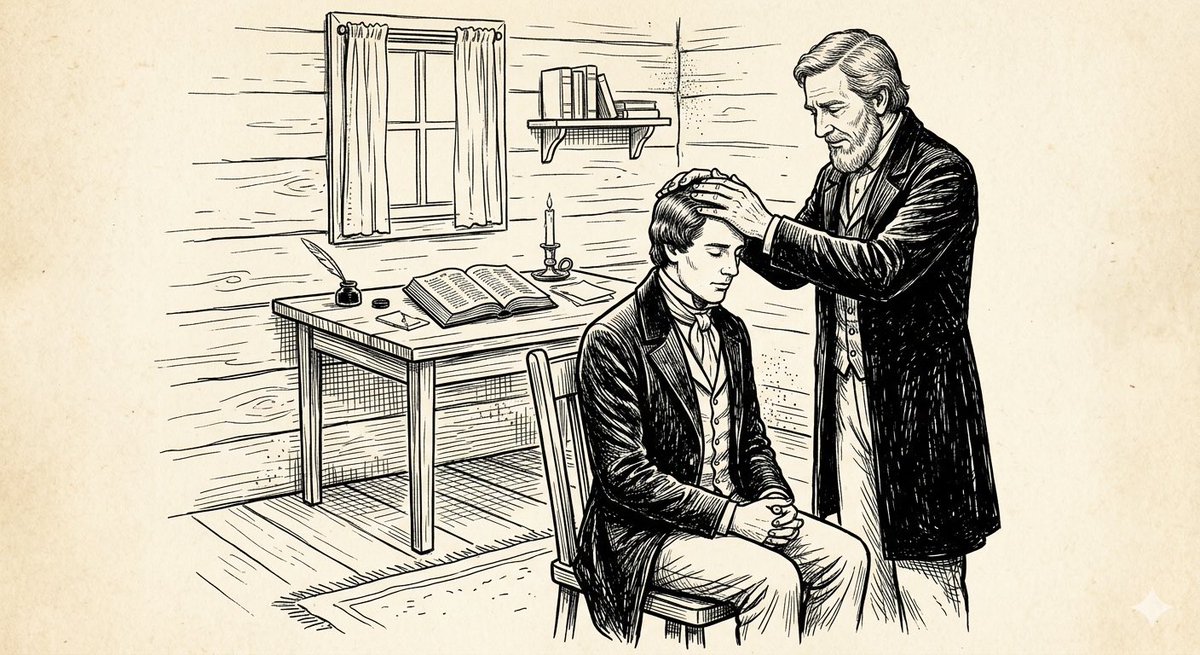
Joseph Smith’s own father gave him his Patriarchal Blessing back in 1834, he used this exact name. He told Joseph that the "hand of the Angel of His Presence" had been reached out to lift him up and keep him going through his darkest hours. It wasn't just a title to Joseph; it was the actual hand that held him steady when everything else was falling apart.
This name is a promise that we are never truly out of God’s reach. If we are in a place where we feel forgotten, the Angel of His Presence is the one who comes to find us. He’s been doing it "all the days of old," and He’s still doing it today.
He doesn't just send a message of hope; He is the message, bringing the peace and the presence of God right into the room with us. It’s a beautiful thing to know we have a Savior who carries a name like that.
https://t.co/KCRIHynwxs
Day 90: Fountain of Living Water
Have you ever found yourself working so hard to fill your life with joy, peace, or acceptance, only to feel empty again a few days later? It’s a common experience, Jeremiah 2:13 offers a powerful diagnosis and a beautiful solution.
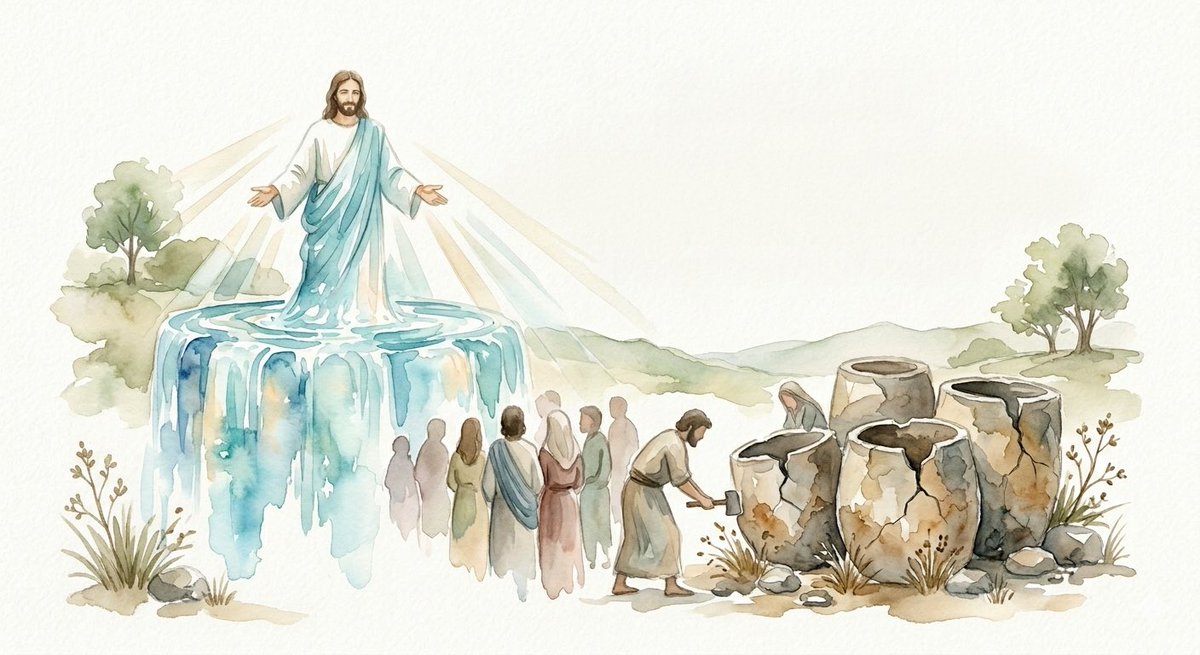
The Lord said to Israel: “For my people have committed two evils; they have forsaken me the fountain of living waters, and hewed them out cisterns, broken cisterns, that can hold no water.”
The contrast is stunning. On one hand, you have the Lord as a fountain of living waters—a clear, flowing, inexhaustible source. This water is fresh, pure, and life-sustaining. For us today, that living water is Jesus Christ and His restored gospel. His teachings, His covenants, His ordinances, and His love are the only source that can truly and permanently quench the deepest thirsts of our souls.
On the other hand are the “broken cisterns.” A cistern is a storage tank for rainwater. But these cisterns are hewed by human hands, and more importantly, they are broken. They have cracks. You work and work to fill them up, but the water leaks out. What are the "broken cisterns" in your life? Are they social media validation? The endless pursuit of more status or material possessions? Philosophies of men? Even grief and sorrowful adversity. Even good things can become broken cisterns if we try to make them our primary source of joy, separate from Christ. They offer only temporary relief before the void returns.
The context note for this scripture reminds us of our invitation: “Keep yourself immersed in the living water of the gospel of Jesus Christ.”
Notice it doesn’t say, “take a sip occasionally.” It says “keep yourself immersed.” This implies a continuous action. Daily scripture study, sincere prayer, faithful observance of covenants, serving others, and gathering with fellow saints are not chores; they are the acts that keep us immersed in the current of that living water. His water never runs dry, and it heals the cracks in our souls, so we can finally find lasting joy.
“Fountain of living waters” (Jeremiah 2:13) (John 4:7–14.)
Day 89: Brother
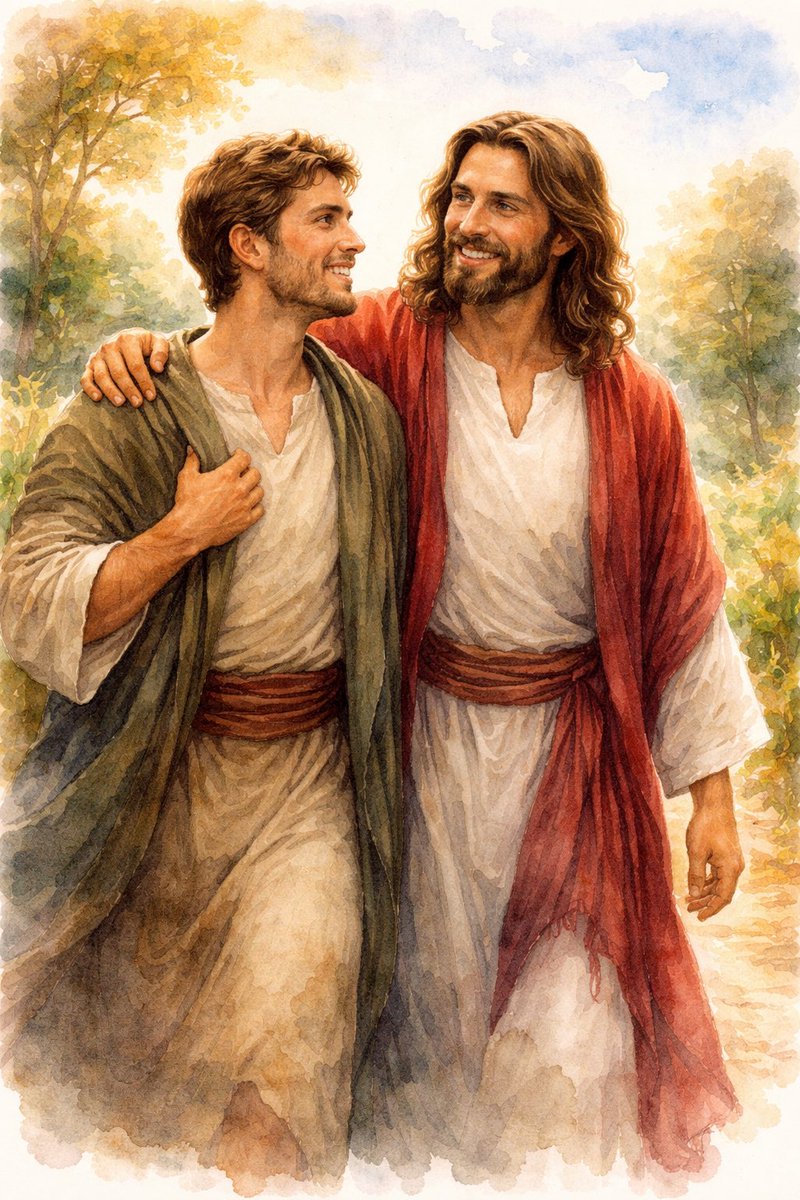
The name of Jesus as our Brother means we belong to His family—He is our Elder Brother who leads us back to the Father through covenant love and atoning grace.
In early Latter-day Saint teaching, Jesus is explicitly called “our elder brother,” emphasizing that we are literally spirit children of God, with Christ as the Firstborn who shows us the pattern of sonship and obedience. James E. Talmage linked the Lord’s prayer (“Our Father”) to this reality: if we share the same Father as Jesus, then there is a true brotherhood between Christ and humanity. Through His Atonement He becomes the “at-one-maker,” healing the estrangement in God’s family so that brothers and sisters can be “one” in Him
In a world of titles for Jesus—King of Kings, Lord, Savior—one name quietly reaches into our hearts:
Brother.
Early Latter-day Saint leaders spoke of Christ as “our Elder Brother,” the Firstborn Son of the Father who chose to walk before us so He could walk beside us. If God truly is “Our Father,” as the Lord taught, then we are not orphans in the universe; we are members of a real, eternal family, with Jesus as our perfect Elder Brother, showing us what a child of God looks like in flesh and blood.
Truman Madsen reminded us that in the ancient world, names are not just labels but power and relationship. To take upon us the name of Christ is to accept that relationship—to let His life define ours, His mercy shape our failures, His loyalty bind us to every other child of God.
Because He is our Brother, He does not stand far off. He runs to the prodigal. He weeps with the grieving. He stoops to wash dusty feet and to lift fallen souls.
When you whisper “Jesus,” remember: you are not calling out into the dark. You are calling to your Elder Brother—who has already walked your road, already descended below all things, and who will never, ever disown His family
“Be one; and if ye are not one ye are not mine.” Through Him, we can be one—with the Father, with each other, and with our Brother who bears the name above every name.
Day 88: Jesus, The Unknown God
In Acts 17, the Apostle Paul stands atop Mars Hill in Athens—a center of worldly wisdom that remained spiritually hungry. His address to the Athenian philosophers is a powerful example of finding "common ground" to testify of the Godhead.
Stirred by the city's idolatry, Paul noticed an altar inscribed: "TO THE UNKNOWN GOD." To the Athenians, this was a placeholder for any deity they might have missed. To Paul, it was the perfect opening to introduce our Heavenly Father.
While Paul identifies this Being as the Creator and Father of our spirits, he explains that the only way to truly "know" Him is through the Resurrection and Mediation of Jesus Christ. While the "Unknown God" refers to the Father, Jesus is the Person who makes that God known to the world.
The Assurance of the Savior:
The climax of Paul's testimony was the Resurrection. He taught that because we are God’s children, the Father provided a way for us to return to Him. By raising Jesus from the dead, God gave "assurance" to all that death is not the end.
A beautiful companion to this is 3 Nephi 11, where the Resurrected Savior appeared in the Americas. Just as Paul sought to make God known through words, Jesus personally bridged the gap for the Nephites, moving them from "hearing a voice" they did not understand to seeing and feeling the marks of His sacrifice.
Our Call to Testify:
Many today are still "feeling after" a peace the world cannot provide. Our mission is to move beyond abstract ideas and introduce others to the Living Christ. When we testify of Him, the "Unknown God" becomes a personal Savior, and the Gospel becomes a beacon of hope. By sharing His light, we help others realize that the God they have been seeking has been seeking them all along through His Son, Jesus Christ.
https://t.co/jE2ivrfLJa
Day 87: Minister of the Sanctuary
“Now of the things which we have spoken this is the sum: We have such an high priest, who is set on the right hand of the throne of the Majesty in the heavens;
“A minister of the sanctuary, and of the true tabernacle, which the Lord pitched, and not man.” Hebrews 8:1-2
“Minister of the sanctuary.” He’s actively working for us in the “true tabernacle” (the presence of God itself!).
Moses built a physical tabernacle. It was beautiful and sacred, but it was basically a "practice run" or a blueprint. It was built by human hands and meant to point us toward something bigger.
The real deal? That’s the celestial realm where Christ is today.
Ancient high priests would enter the Holy of Holies with a sacrifice once a year. But Jesus? He entered the actual presence of the Father and offered the ultimate sacrifice—Himself.
When we walk into our temples today, we’re stepping into a space designed to help us practice for that "true tabernacle." We aren't just performing rituals; we are connecting with the One who is currently standing at the right hand of God, ministering on our behalf.
He is the bridge. He is the Minister. And His "service" in that sanctuary is the reason we can all make it back home.
Day 86: Shilo
“The scepter shall not depart from Judah, nor a lawgiver from between his feet, until Shiloh come; and unto him shall the gathering of the people be." — Genesis 49:10
Have you ever studied the name Shiloh? As a title for Jesus Christ, it carries a powerful dual meaning that changes how we see His mission:
The Rightful King: Translating to “He to whom the ruler’s staff belongs,” Shiloh signifies Jesus as the ultimate heir from the tribe of Judah. He is the one prophesied to hold the authority and fulfill the ancient promise of a divine King.
The Peace-Bringer: Linked to the Hebrew word shalah (to be at ease or rest), Shiloh marks Jesus as the Messiah who brings true tranquility. He is the Prince of Peace who ends our spiritual conflict and brings us back into harmony with God.
When Genesis 49:10 says the scepter wouldn't depart until Shiloh comes, it’s pointing us directly to the arrival of Jesus. He is the promised descendant who establishes an eternal, peaceful kingdom in our hearts and in the world.
In Hebrew, the name Shiloh means “He to whom it belongs” and refers to the Messiah. Joseph Smith affirmed that Shiloh is Jesus Christ, who would be born in the lineage of Judah.
https://t.co/xjsZsJFwX5





![101HolyNames's tweet photo. Day 101: Omnipotent
The name I’ve chosen to focus on today is found in Revelation 19:6: “the Lord God Omnipotent.”
The word omnipotent means all-powerful. And truly the Lord has all power.
Christ gave us the perfect example of perfectly controlled power in His Meekness.
[W]e live in a world that is often suspicious of power, sometimes for good reason. We see power abused in institutions, families, and personal relationships. People say “power corrupts,” and too often that happens.
People can even feel uneasy about God’s power and about the power He delegates through His holy priesthood. Some are uncomfortable with the Jehovah of the Old Testament because they see Him as angry or severe. Others prefer a picture of Christ that is so soft and unthreatening that His glorious Second Coming is expected to be affirmation for all—with very little judgment or justice.
… [P]ower is never evil when governed by righteousness.
“The Savior[‘s] power is in truth, love, and persuasion. His power blesses. It lifts. It heals. It saves.
So, as we think of Our all-powerful Christ, we never need to be afraid. We can feel completely and eternally safe.
What a comfort to know that the greatest power in the universe is not evil or chaos or oppression or cruelty.
The greatest power in the universe is held in the perfect hands of Jesus.
What we celebrate at Easter time is that Jesus Christ ALONE had the unique power to die and rise again. From His mortal mother, Mary, He inherited the power to lay down His life--to let His body and spirit be separated in death. From His Immortal Father, He inherited the power to raise His body from the sepulchre and unite it in resurrected perfection with His spirit. He was the only one who could.
Excerpts taken from Lili De Hoyos Anderson’s Choosing Glory Easter episode (links below):
https://t.co/9OViJJ0F68
https://t.co/0B9JLGDPh8
Art: https://t.co/5BFY7vS824](https://pbs.twimg.com/media/HFKWnxYbUAAB_QD.jpg)