Survey apps—SurveyMonkey and Typeform help users produce surveys and gain feedback. What do you use to design surveys? What are the "best practices" you have discovered?
Mention—Do you use Mention? It claims to help with brand management, understanding and improving your brand's reputation, PR management, competitive analysis, crisis management, and market research. Tell us about your experience.
https://t.co/s9mu3w5v2N
AI and reading levels — Ask your favorite AI to proofread your next article. It can help you uncover writing glitches; it will also point out where your vocabulary is above your audience's reading level. An 8th-grade reading level works; 6th-grade is even better.
Eliminate jargon—Is your organization uniquely passionate and purpose-driven, with a profound commitment to making the world a better place? Then your website has failed. This satirical post pleads for the elimination of jargon. https://t.co/yP7lU4Jc7k
How Keywords Influence SEO Ranking—Keywords still have an important role in determining SEO, but they are not as influential as they once were. https://t.co/E781leMZqD
FREE graphics—Subsplash will provide free* Canva templates designed for events at your church or organization. You will need a Cana account. They are professionally designed and fully customizable. https://t.co/awd8cJCKHz?
*Free in exchange for your contact information.
Best Practices for Church Presentation Slides—Concordia Technology's advice is:
• Keep It Simple
• Make Sure Everything Is Consistent
• Choose the Right Slide Backgrounds
https://t.co/WuPseBsutD
Google Optimize—Google Optimize helps gather data on your landing pages so you know what is working and what is not. It also helps you test other formats. If you have used Google Optimize tell us about your experience. https://t.co/eVLUsTYcJM
Never "Click Here" again—Don't settle for "Click Here" as your call-to-action when you can write:
• Sign me up
• I want to start today
• Send me more information
• Help me change my life
Don't be a blahger—BuzzWhack defines "blahger" as a blogger whose message primarily consists of blah-blah-blah. Ann Wylie advises: "To increase reading [of your posts]...use a feature lead. Start with an anecdote, human interest story, metaphor, statistic, or wordplay."
Meta Communities—Meta is rolling out “Communities” on Messenger. "The feature is designed to help organizations, schools, and other private groups communicate in a more organized and structured way." How might your church or organization use Communities? https://t.co/EutEnUtM2n
Slide design—Church Motion Graphics offers a free (in exchange for your email address) 21-point guide for worship slides. CMG also has other freebies on its site. https://t.co/r9NswGFsqF
Communicating purpose—This FB graphic shows a frame that is easily redecorated for photo booth seasons. But what caught my eye was the congregation's purpose statement boldly displayed on a prominent wall. How does your church keep its purpose statement top-of-mind?
Anne Wylie writes, "People who use big words when smaller ones will do sound less intelligent, according to research at Princeton University. Participants who read the simplified version of a message rated the author more intelligent than those reading the original version."
JP Poulter on AI—James (JP) Poulter discusses the best and worst-case scenarios for AI in the next decade, practical AI tools you should start using now, and the pastoral implications for AI for every church leader. https://t.co/VF6EMAlpkG
Kenny Jahng on AI: In this video, Jahng explains what AI is, how it works, and why church leaders need to engage with it, whether they want to or not. https://t.co/S7YVvFPO3Z
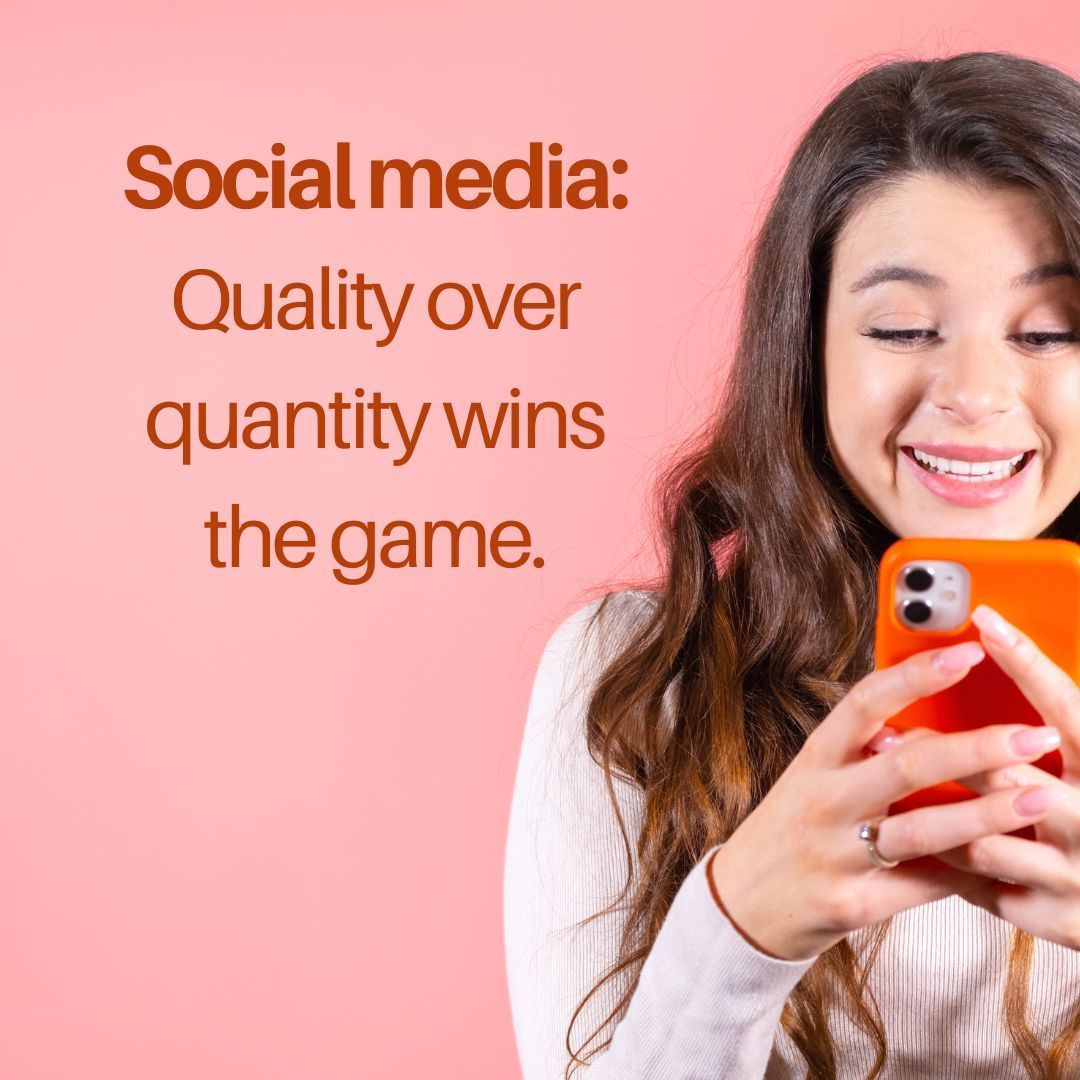
Do less—Don’t spread yourself too thin on social media. Top Hat advises, "It’s better to be amazing on one or two platforms than mediocre on five.... Quality over quantity wins the game."







![1080Allan's tweet photo. Don't be a blahger—BuzzWhack defines "blahger" as a blogger whose message primarily consists of blah-blah-blah. Ann Wylie advises: "To increase reading [of your posts]...use a feature lead. Start with an anecdote, human interest story, metaphor, statistic, or wordplay." https://t.co/SeZxEXSvyj](https://pbs.twimg.com/media/GQ_3jCIWgAAAQqM.jpg)