The decentralized cloud is here.
With Proof-of-Useful-Work v2, FluxCloud is reallocating resources from mining to powering real-world workloads, including AI training, dApps, and Web3 infrastructure.
Get Ready!
The Fork is Coming!
🌾 AgTech doesn't have a software problem. It has a trust problem.
The best agricultural platform in the world won't scale if farmers never hear about it from someone they trust.
That’s why I find @dimitratech’s latest Dimitra Partner Network update particularly interesting. $DMTR
The new Direct Farmer Relationship route is designed for people already working with growers every day:
👨🌾 Agronomists
🌱 Extension officers
🧑🔬 Field technicians
🤝 Agricultural advisors
📦 Input dealers
These professionals don't need to become software salespeople.
They make the introduction. Dimitra does the rest.
With a dedicated referral link or QR code, partners can introduce farmers and cooperatives to Connected Farmer, while Dimitra handles product demonstrations, technical requirements and commercial execution.
And there is no upfront barrier:
✅ Free to join
✅ No sales quotas
✅ Permanent referral attribution
✅ Fixed rewards when qualifying referrals generate revenue
💰 $5–$15 for qualifying Community Edition referrals
💰 $50–$150+ for qualifying Cooperative Edition referrals
But there's a bigger real-world reason this matters.
With EUDR requirements approaching, coffee, cocoa, rubber and palm-oil supply chains increasingly need reliable farm geolocation, traceability and deforestation-risk evidence.
A trusted local professional can be the bridge between those requirements and the farmer.
Connected Farmer can provide tools for GPS field mapping, satellite-based monitoring, deforestation checks and digital traceability—while the relationship remains local.
And from the Web3 perspective, this creates an interesting growth loop:
Trusted relationships → more farms digitized → more platform usage → more paid adoption → $DMTR ecosystem activity.
Dimitra's announced model also directs 50% of platform usage revenue toward $DMTR buybacks.
The important innovation here isn't just another referral program.
It's decentralizing the last mile of AgTech adoption. 🌍🚜
Join the Dimitra Partner Network
https://t.co/S91rcHKEAA
#Dimitra #AgTech #ConnectedFarmer #EUDR #DMTR
You already know your land.
Connected Farmer Community Edition helps you turn that experience into a digital farm history you can keep building season after season.
Map your fields, record crops and activities, and keep a clearer record of what worked, what changed, and what your farm can prove over time.
Start your digital farming journey: https://t.co/mqTZyxxLPk
#ConnectedFarmer #AgTech #DigitalAgriculture #FarmData
EUDR isn't a deadline. It's a supply-chain infrastructure shift. ⏱️🌍
The most important part of the EU Deforestation Regulation isn't the enforcement date.
It's the fact that agricultural commodities moving toward Europe today are already being evaluated through the lens of proof, traceability, and data integrity.
Why?
Because a September harvest doesn't magically become compliant at the port.
Coffee, cocoa, palm oil and other commodities can spend months moving from:
Farm → Processor → Exporter → Port → European Buyer
By the time a shipment reaches Hamburg, Rotterdam or Antwerp, the critical data must already exist.
That means farm-level geolocation, deforestation verification, supply-chain records and Due Diligence Statements cannot be reconstructed after the fact.
The data has to be captured at origin.
And this creates a structural opportunity for digital infrastructure.
@dimitratech is building precisely this layer across major agricultural corridors:
🇺🇬 Uganda — national coffee traceability infrastructure
🇮🇩 Indonesia — ID Connect with PT Surveyor Indonesia
🇨🇮 Côte d'Ivoire — cocoa export validation
🇭🇳 Honduras — EUDR-compliant coffee workflows
The bigger thesis isn't simply "EUDR compliance."
It's the creation of a persistent Digital Truth layer for global agriculture.
Every mapped farm creates data.
Every satellite verification creates another validation event.
Every DDS creates another compliance workflow.
Every transaction strengthens the digital infrastructure connecting smallholders with international markets.
And this is where the $DMTR utility model becomes interesting.
If platform usage generates protocol activity, then regulatory adoption can create recurring demand for the infrastructure powering these workflows.
Under Dimitra's updated model, 50% of platform usage revenue is allocated to $DMTR buybacks, creating a direct connection between enterprise activity and the token economy.
The key question isn't:
"When does EUDR start?"
It's:
"How much global agricultural trade will require verifiable digital proof every day?"
That's the market opportunity I'm watching.
Regulation creates the requirement.
Agriculture creates the volume.
Digital infrastructure captures the workflow.
The rails are already being built. 🌍📈
#EUDR #AgTech #DMTR #Dimitra #Traceability
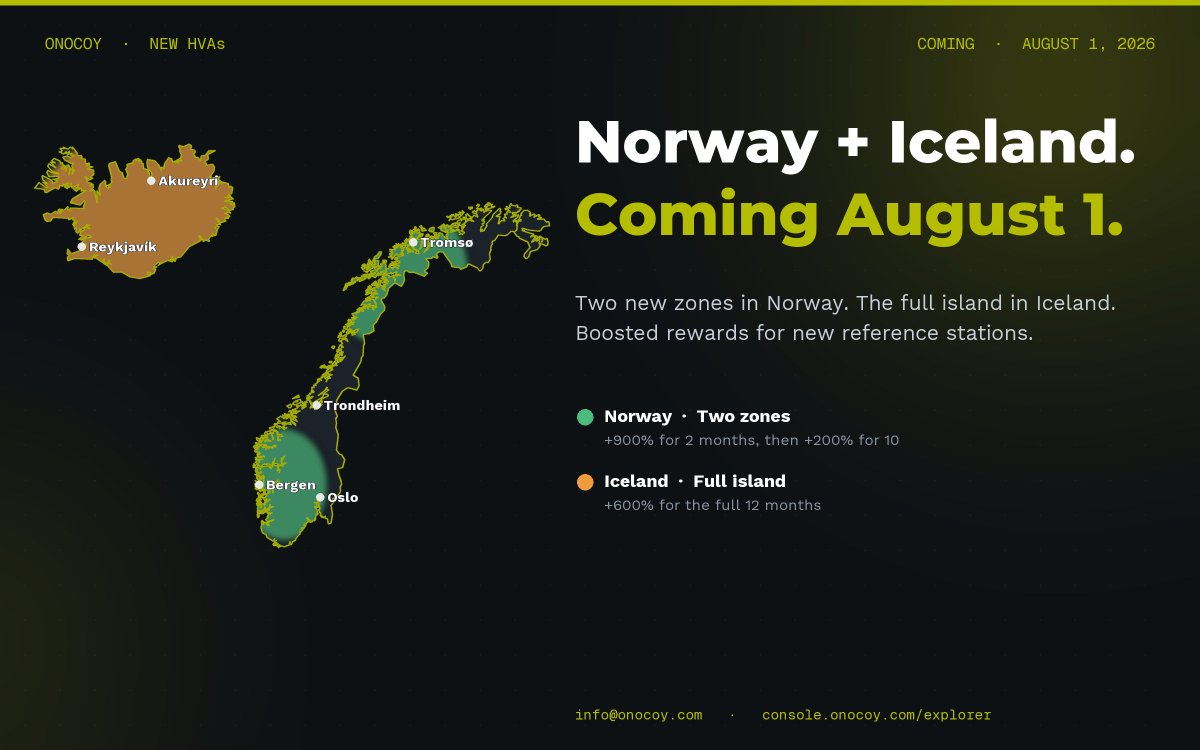
Norway and Iceland HVAs go live in 2 days.
Saturday, August 1, activates boosted rewards for GNSS reference stations across two zones in Norway (+900% for 2 months, then +200% for 10) and the full island of Iceland (+600% for 12 months).
Every station running by August 1 is counted from day one.
Denmark, Finland, Iceland, Norway, Sweden: The full Nordic sweep, live this weekend.
Carbon Market 2.0 Is Built on Trust, Not Technology Alone.
One sentence from the latest Coffee with Andreas episode perfectly captures why so many AgTech initiatives fail:
> "Farmers don't want technology. They want solutions."
That isn't just a good quote—it reflects one of the biggest challenges in global agriculture.
For decades, many digital agriculture projects have been designed from the top down. Sophisticated platforms, AI dashboards, and blockchain infrastructure were introduced with the expectation that farmers would naturally adopt them.
But technology without trust creates very little value.
That's why I believe @dimitratech has taken a fundamentally different approach.
Instead of asking farmers to adapt to technology, Dimitra adapts technology to the realities of farmers.
This philosophy becomes obvious across every region discussed by Calvin Bodden and Andreas Cerdan.
🇭🇳 Honduras
The COMRAEL cooperative didn't become the first organization in Honduras to export an EUDR-compliant coffee shipment because of blockchain alone.
It succeeded because growers received a practical solution that generated measurable economic value.
Verified farm polygons.
Digital traceability.
Deforestation-free verification.
These weren't compliance exercises—they became competitive advantages that allowed farmers to access premium international markets.
That's exactly what Carbon Market 2.0 should look like.
---
🇵🇪 Peru
In the Tambo Amazon Carbon Project, technology supports indigenous governance instead of replacing it.
Asháninka communities remain responsible for stewardship while Dimitra's digital MRV infrastructure provides the evidence required by global carbon markets.
Satellite monitoring.
AI-assisted biomass analysis.
Immutable blockchain records.
Technology becomes the language that translates generations of conservation into internationally verifiable environmental assets.
---
🇲🇽 Mexico
The Sierra de Álica initiative demonstrates another important evolution.
Protecting forests is no longer only an environmental objective.
With continuous digital monitoring and Verra-aligned methodologies, more than 26,000 hectares are becoming part of a scalable carbon infrastructure that aims to expand toward a 300,000-hectare conservation corridor.
Conservation becomes measurable.
Measurement becomes trust.
Trust becomes investable capital.
---
One detail from the discussion deserves even more attention.
Many rural regions still operate with unreliable or nonexistent internet connectivity.
Rather than assuming perfect infrastructure, Dimitra's Digital Champions can map farm polygons offline and synchronize the data later.
That may sound like a small engineering decision.
It isn't.
Building for real-world conditions instead of ideal conditions is exactly what separates deployable infrastructure from theoretical software.
---
The bigger picture is becoming increasingly clear.
Dimitra is no longer simply building farm management tools.
Across Kenya, Peru, Brazil, Honduras, Mexico, Indonesia, Tanzania, Côte d'Ivoire, and many other regions, the company is helping establish the digital infrastructure required for the next generation of agricultural trade and high-integrity carbon markets.
As millions of hectares move onto digital MRV systems, enterprise activity generates continuous demand for AI processing, satellite analytics, traceability, and compliance workflows across the Dimitra ecosystem.
For me, that's the real takeaway from this episode.
Carbon Market 2.0 won't be won by the company with the most sophisticated technology.
It will be won by the company that earns the trust of the people who work the land every day.
And trust has always been agriculture's most valuable asset.
🎥 Highly recommended episode for anyone interested in AgTech, climate finance, EUDR compliance, and the future of digital agriculture.
#Dimitra #DMTR #AgTech #CarbonMarkets #DigitalMRV #Blockchain #EUDR #RWA
One of the biggest opportunities in carbon markets isn't found in tropical rainforests—it's in the vast rangelands that have long been overlooked.
That's why the new MoU between CONEFF and @dimitratech is so significant.
The two organizations will work together to develop a 300,000-hectare carbon and ecosystem restoration program across Nuevo León and Coahuila, combining ecological restoration with digital infrastructure designed for high-integrity carbon markets.
Why this matters:
🌱 Restoring degraded rangelands
Healthy grasslands and soils can store significant amounts of carbon while improving biodiversity, water retention, and long-term agricultural productivity. Restoring these ecosystems benefits both the environment and local ranching communities.
📑 Built around internationally recognized methodologies
The program is designed using Verra VM0042 (Improved Agricultural Land Management) and VM0047 (Afforestation, Reforestation & Revegetation), creating a framework that measures both soil carbon and vegetation recovery through recognized carbon accounting methodologies.
🛰️ Digital MRV from day one
Rather than relying solely on periodic field audits, Dimitra's technology combines satellite monitoring, geospatial mapping, AI-powered analysis, and blockchain-backed records to support continuous Monitoring, Reporting, and Verification (MRV). Better data leads to stronger transparency and greater confidence throughout the project lifecycle.
🤝 Communities remain at the center
Ejidos and local ranchers have managed these lands for generations. The objective isn't simply to generate carbon credits—it's to give local land stewards better tools to restore ecosystems while creating new long-term economic opportunities.
For the Dimitra ecosystem, projects like this demonstrate how real-world adoption continues to expand beyond agricultural traceability into large-scale environmental infrastructure. As carbon monitoring, AI analysis, and compliance services grow, they strengthen the practical utility of the Dimitra Protocol and $DMTR.
The transition toward Carbon Market 2.0 isn't just about issuing more credits.
It's about creating higher-quality, verifiable environmental assets backed by trusted data, recognized methodologies, and measurable outcomes.
With a potential 300,000-hectare restoration corridor, this partnership represents another meaningful step in that direction.
#DMTR #CarbonMarkets #AgTech #RWA #DigitalMRV #Conservation #Mexico #SoilCarbon #Sustainability
The next 6 months could be one of the most important periods for coffee exporters across Southeast Asia.
As the Indonesian harvest season overlaps with the countdown to the EU Deforestation Regulation (EUDR), compliance is moving from policy discussions to real-world execution. The question is no longer whether companies need traceability—it's whether they can prove it when shipments are ready to leave port.
This is where @dimitratech's partnership with PT Surveyor Indonesia (PTSI) and the launch of ID Connect become highly relevant.
Instead of treating compliance as paperwork completed just before export, ID Connect creates a continuous digital record throughout the supply chain.
The platform helps connect:
🗺️ Farm mapping & geolocation to identify the exact origin of production.
🛰️ Satellite monitoring & AI analysis to support deforestation assessments and environmental due diligence.
📋 Chain-of-custody records that follow commodities from producers through cooperatives, processors, and exporters.
🤝 Independent verification through PTSI, one of Indonesia's leading Testing, Inspection, and Certification (TIC) organizations.
Another important aspect is data sovereignty.
Agricultural data remains managed within Indonesia while producing the standardized outputs needed for international buyers and regulatory requirements. This balances national control with global market access—an increasingly important topic as digital trade standards evolve.
For the Dimitra Protocol, growing adoption of these digital compliance workflows also expands real-world utility. Environmental assessments, AI analysis, traceability services, and compliance processes all contribute to activity across the ecosystem, strengthening the role of $DMTR as more producers, cooperatives, and exporters adopt the platform.
The biggest takeaway is simple:
EUDR compliance is no longer just about avoiding risk. It's becoming part of the digital infrastructure required to participate in global agricultural trade.
Projects like ID Connect demonstrate how technology can help bridge the gap between millions of smallholder farmers and increasingly demanding international markets.
#DMTR #Indonesia #Coffee #EUDR #AgTech #Traceability #Blockchain #DigitalAgriculture #Sustainability
What happens when trusted data, sustainability, and finance work together?
That's the focus of Dimitra's upcoming presentation at the Global Conference on Smart Farming. Our CEO Jon Trask will share how Dimitra’s connected ecosystem can help scale smarter agriculture, starting from data in the field to market access and connecting to capital.
#SmartFarming #Agriculture #Dimitra
Solo founders who use one-click or Git-native deployment tools ship their first version 4.2x faster than those who self-manage infrastructure from scratch, according to a 2025 survey of 800 early-stage founders.
Time-to-first-user is the metric that matters most at this stage.
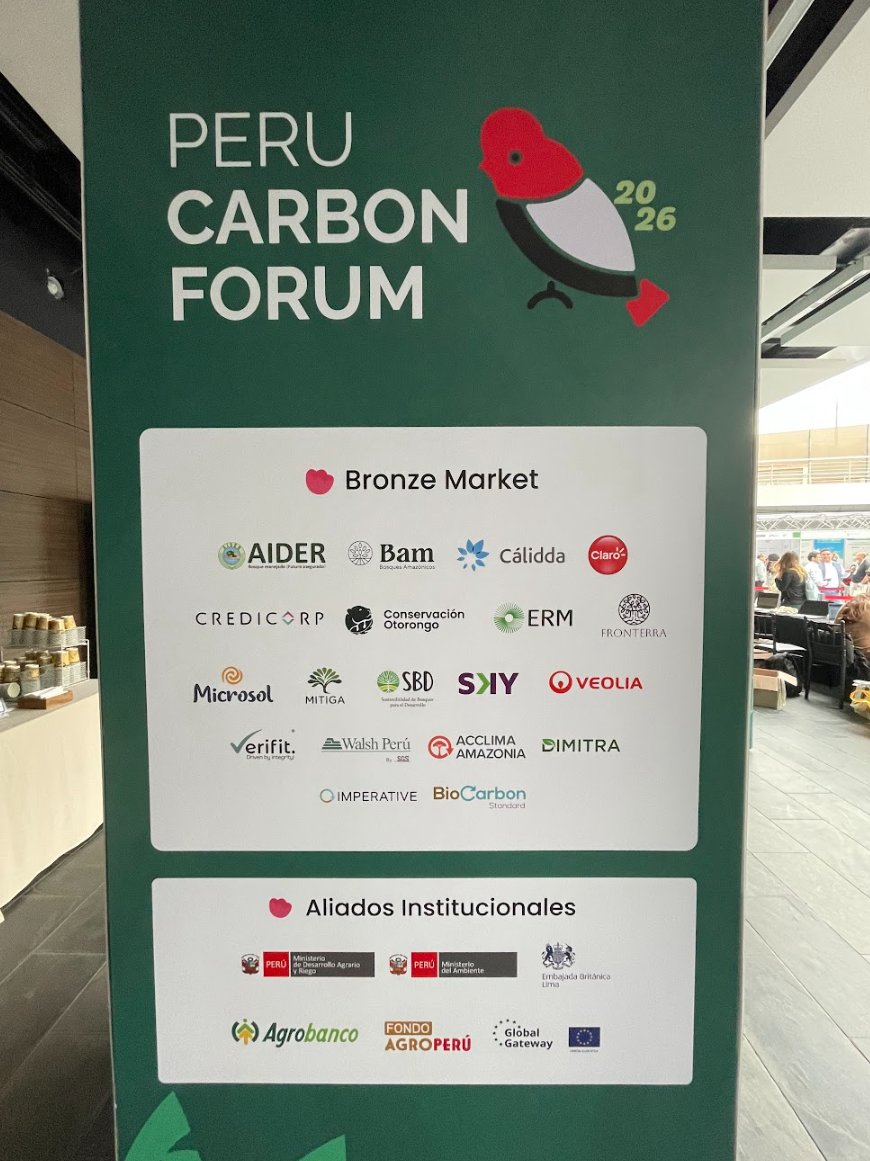
From panel discussions to conversations across the conference floor, Peru Carbon Forum 2026 brought together leaders shaping the future of carbon markets across Latin America.
Dimitra was proud to participate as a sponsor, with Calvin Bodden sharing Dimitra's perspective on traceability, data, and carbon infrastructure.
#PeruCarbonForum #CarbonMarkets #MRV
🌎 Carbon markets are entering a new phase.
The Peru Carbon Forum 2026 highlighted an important shift:
The future of climate finance will not be built on promises.
It will be built on proof.
For years, carbon markets struggled with one major challenge: trust.
How do we verify that environmental impact is real?
How do we measure change over time?
How do we connect local communities with global capital?
This is where @dimitratech is building.
The vision behind Dimitra Carbon is simple:
Turn real-world environmental data into transparent, verifiable infrastructure.
Using:
🛰️ Satellite monitoring
🤖 AI-powered analysis
📍 Geospatial data
🔗 Blockchain-backed verification
Dimitra creates a digital record of what is happening on the ground.
One of the strongest examples is the Tambo Amazon Carbon Project in Peru.
Over 45,000 hectares of Amazon territory.
Community-driven governance.
Local participation.
Technology supporting long-term conservation.
This is not just about generating carbon credits.
It is about creating a system where forests, communities, and investors can participate in a transparent climate economy.
The next generation of carbon markets will reward projects that can prove impact.
Measure.
Verify.
Track.
Repeat.
That is the foundation of Carbon Market 2.0.
And as more hectares enter Dimitra’s infrastructure, real-world activity continues creating utility for the Dimitra ecosystem and $DMTR.
The future of climate finance belongs to verifiable impact. 🌱
#CarbonMarkets #RWA #AgTech #Blockchain #DMTR #ClimateFinance
The best evidence for any infrastructure product isn't the pitch. It's what happens when developers actually use it.
Let's talk about the patterns that emerge when teams move workloads to FluxCloud.
Why Tanzania Matters
☕ Tanzania may not be the first country people think of when discussing coffee, but it could become one of the most important markets for agricultural traceability.
@dimitratech has signed an MOU with Mbifacu Ltd, marking its first cooperative partnership in Tanzania and bringing the Connected Coffee platform into the country's Southern Highlands.
Why is this significant?
Because coffee exporters are facing a completely new reality.
The EU Deforestation Regulation (EUDR) requires verifiable proof that coffee entering Europe was not produced on recently deforested land.
For many cooperatives, records are still fragmented across paper documents, spreadsheets, and disconnected systems.
That creates a major risk:
❌ No reliable farm mapping
❌ No geolocation records
❌ No audit-ready compliance data
❌ Potential loss of market access
Dimitra's approach is to turn compliance into infrastructure.
By digitizing farms, mapping plot boundaries, tracking coffee lots, and automating due diligence reporting, producers gain something increasingly valuable:
Verified proof.
And in modern agricultural trade, proof is becoming just as important as the coffee itself.
This is exactly why Dimitra continues expanding across major producing regions.
Not because compliance is a trend.
Because compliance is becoming a requirement for global trade.
$DMTR
#Coffee #EUDR #AgTech #Traceability
Most people are looking at EUDR as a compliance problem.
I think they're missing the bigger picture.
What @dimitratech and PT Surveyor Indonesia are building with ID Connect is not simply another traceability platform. It's the digital infrastructure layer that commodity-exporting nations will increasingly need to participate in global trade.
As regulations become stricter, access to markets will depend on something very simple:
Can you prove where a product came from?
Can you prove how it was produced?
Can you prove that the underlying data can be trusted?
For decades, agricultural supply chains have relied on fragmented paperwork, disconnected databases, and manual verification processes. That approach becomes increasingly difficult when millions of farmers, thousands of cooperatives, and international buyers all need access to the same trusted information.
ID Connect addresses that challenge at a national scale.
What stands out to me is the combination of three critical components:
• Producer onboarding and farm mapping
• Independent verification through PTSI
• Data sovereignty that keeps agricultural data under local control
This is important because countries don't want to choose between compliance and sovereignty.
They need both.
The partnership with PT Surveyor Indonesia is particularly interesting. Verification is where many traceability systems struggle. Blockchain can preserve records, but it cannot determine whether the original information is accurate.
That requires trusted institutions, field validation, and standardized review processes.
This is exactly the point Dimitra CEO Jon Trask has been making recently:
Measurement comes first.
Validation comes second.
Blockchain comes third.
When these layers work together, compliance stops being a burden and starts becoming infrastructure.
For $DMTR holders, the long-term implication is worth paying attention to.
Every traceability workflow, compliance process, environmental assessment, and protocol interaction contributes to real protocol activity.
As agricultural exports increasingly require verified proof, demand for these systems may become recurring rather than one-time.
That's a very different narrative from speculative crypto.
It's about building the rails that connect farmers, cooperatives, governments, regulators, and international markets.
Indonesia is one of the world's largest agricultural producers.
If sovereign-scale deployments like ID Connect continue to expand, we're looking at something much bigger than software.
We're looking at digital trade infrastructure.
$DMTR
#EUDR #Traceability #AgTech #Indonesia #Blockchain
Many enterprise AI tools run on AWS or Azure.
This means your sensitive business data is processed on infrastructure you don't control. Decentralized AI on DePIN networks like Beaver AI on FluxCloud for example, is an example of building on infra you can trust.
On the ground at Peru Carbon Forum 2026 🇵🇪
CEO Jon Trask, Director of Hispanic America Calvin Bodden, and Peru Sales Partner Neptali Salvador are in Lima this week discussing MRV, traceability, and carbon infrastructure with project developers and sustainability leaders across LATAM.
Tomorrow, Calvin joins Panel MC7 on technology and traceability in voluntary carbon markets.
#PeruCarbonForum #CarbonMarkets #MRV $DMTR
OpenClaw now has a dedicated website on Flux Cloud and it’s live!!!🔥🔥🔥
Self-host the viral 100k-star AI agent on decentralized infrastructure, fully owned, always on, and built for real-world agent execution.
From just $4.02/month vs ~$24 on traditional cloud providers.