One of the largest surviving Roman mosaic floors discovered during the construction of a hotel in Antakya, Turkey. The warping effect was caused by earthquakes and gives it the impression of a giant rippled blanket. [Image: courtesy of the Museum Hotel Antakya]
Roman shipwreck found at the bottom of a lake in Switzerland, full of ceramic pots and swords dated around 50AD. An absolutely unreal find that had to be kept secret to prevent looting.
Roman armour found at the Teutoburg massacre site 9AD, probably stood as a trophy over the ruined legions.
"On the open ground were whitening bones of men, as they had fled, or stood their ground, strewn everywhere or piled in heaps."
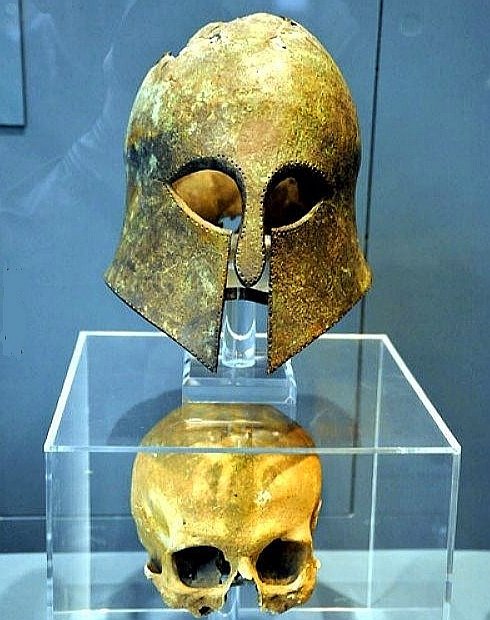
A 5thC BC corinthian helmet with the skull of a warrior inside supposedly found at the Battlefield of Marathon, Greece. The 192 Athenians killed in the battle were cremated, so there's a chance it belonged to one of the 11 Plataean allies who also fell during the fight in 490BC.
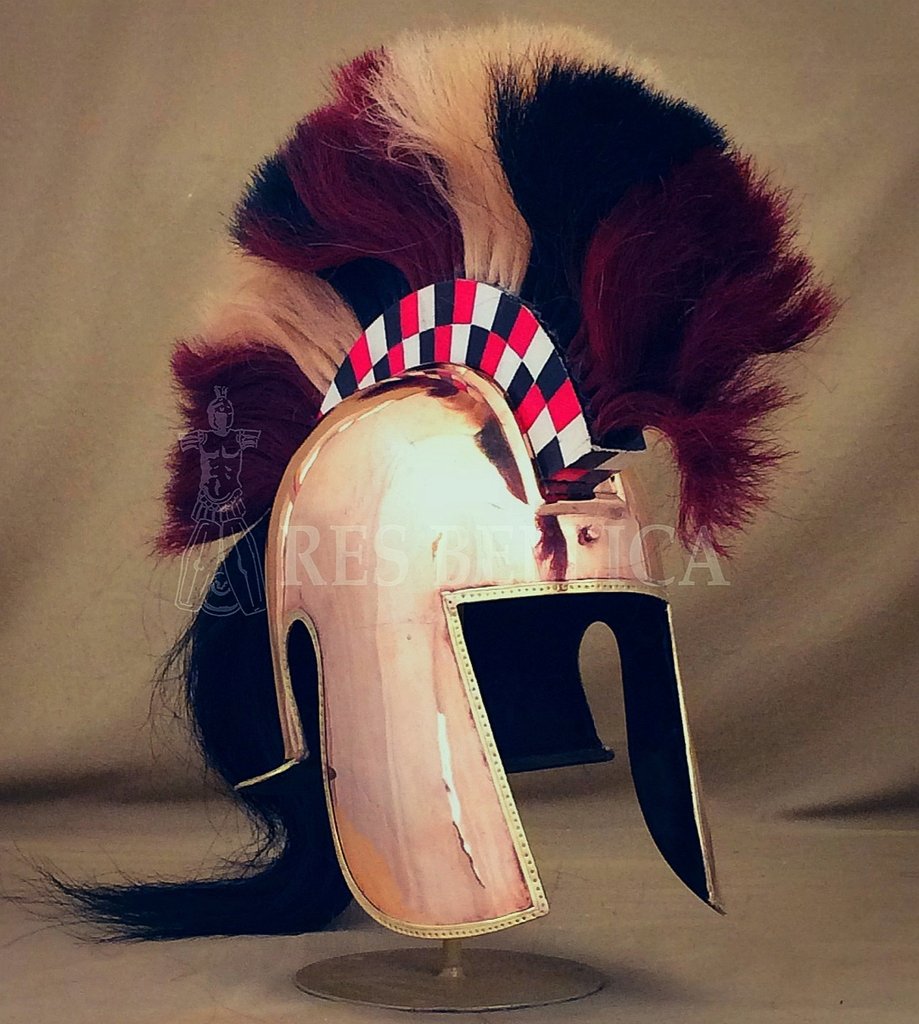
A 4thC BC bronze Illyrian type helmet recently discovered during excavations of a warrior's tomb in Croatia. Originally highly polished and decorated with a large crest fitted on top, the Illyrian type was a popular design for many centuries. Replica by Res-bellica.
Wheel ruts worn into the streets of Pompeii by the passage of thousands of carts over many years. Some streets barely wide enough for a single cart suggest the ancient city probably had some kind of one way system.
Rome's Atlantis, the sunken city of Baia on the Gulf of Naples, Italy. Due to volcanic activity over the centuries the beautiful mosaic floors, sculptures and villas now sit meters below the surface of the Mediterranean sea. Image credit [Edoardo Ruspantini]
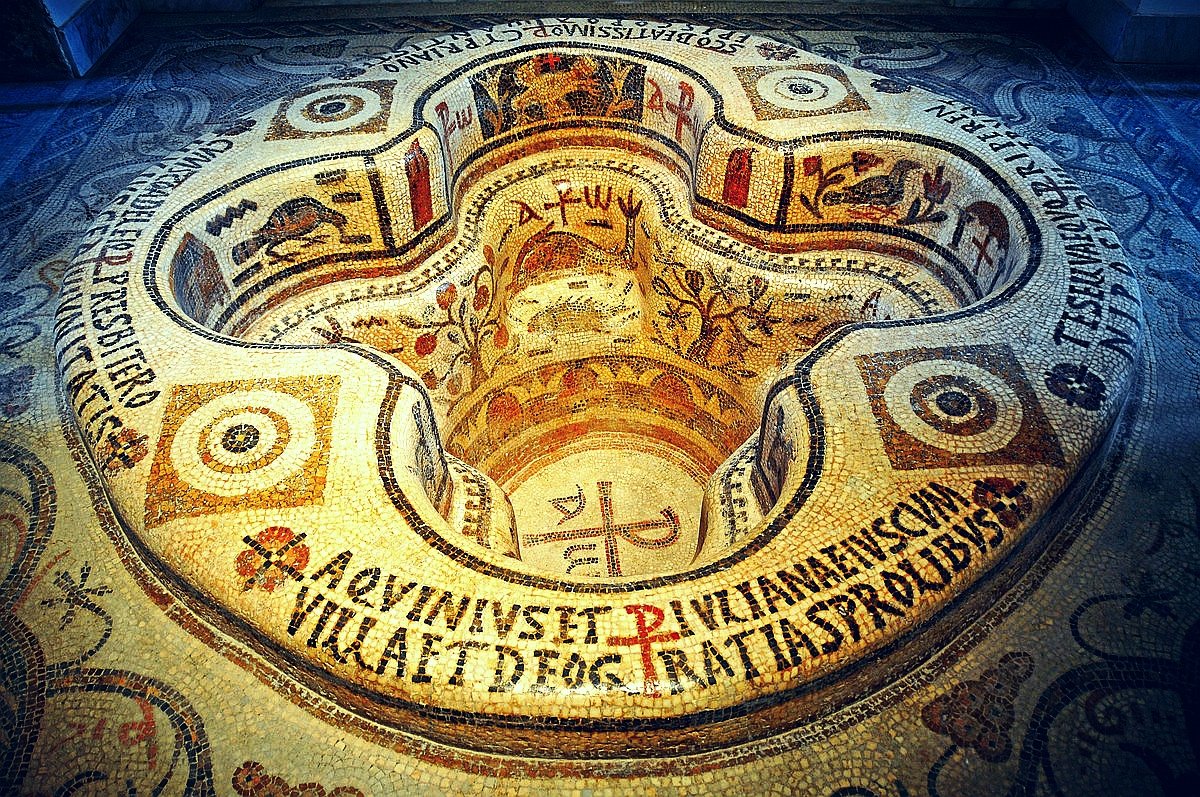
A beautiful 6thC AD baptismal font recovered from the ruins of a basilica in Demna, Tunisia. Richly decorated with some of the most fantastic surviving mosaic work, the fragile font was rescued and now sits as a centre piece in the Bardo national museum, Tunis.
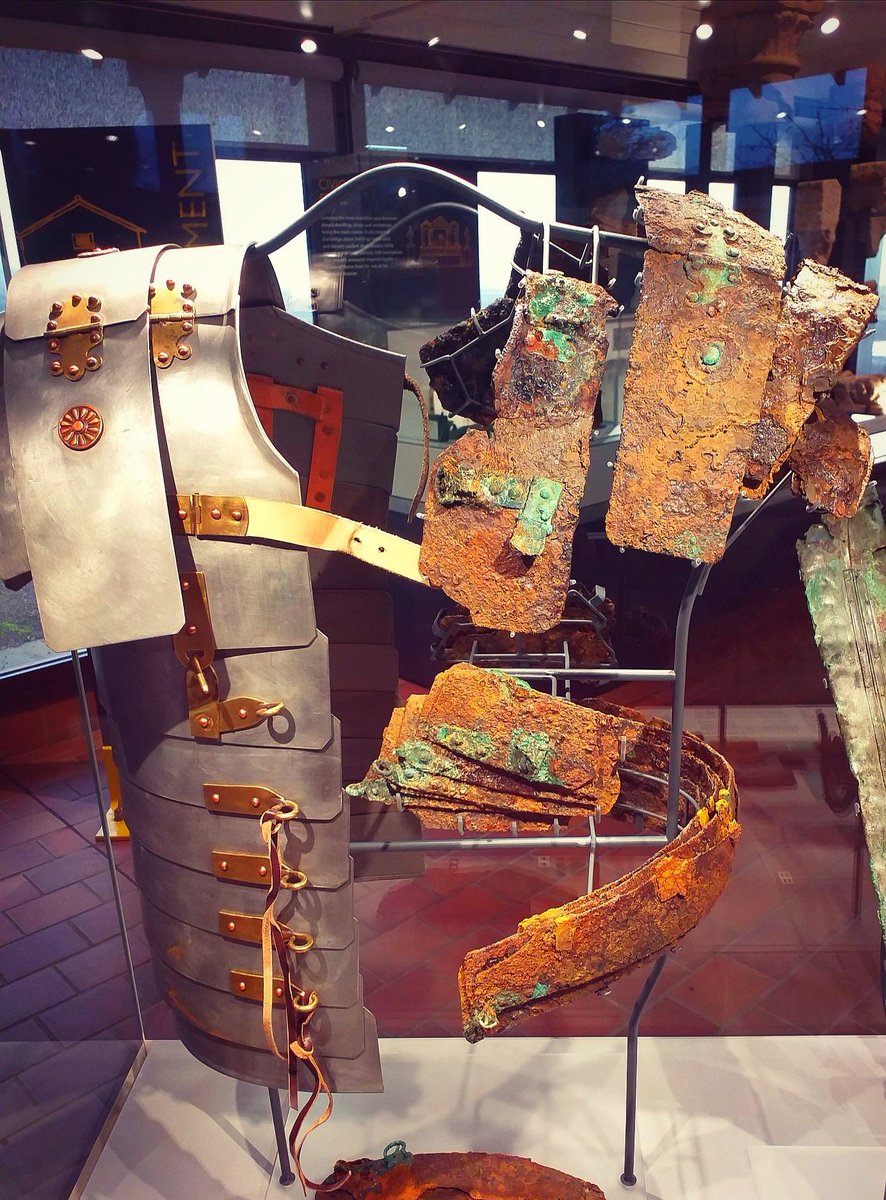
Pieces of 2ndC AD Roman segmented armour found in 1964 as part of a hoard during excavations at Corbridge, England. Carefully packed and buried beneath a fort by a Roman soldier who never returned, leaving a remarkable time capsule for 1900years.
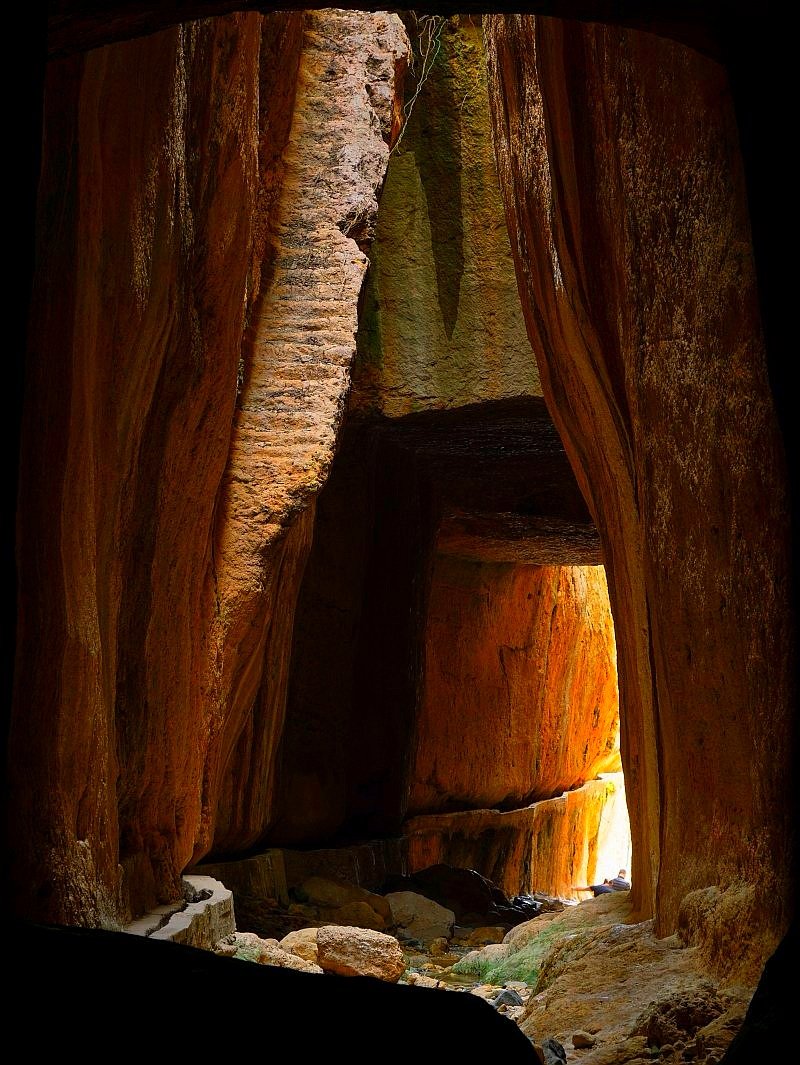
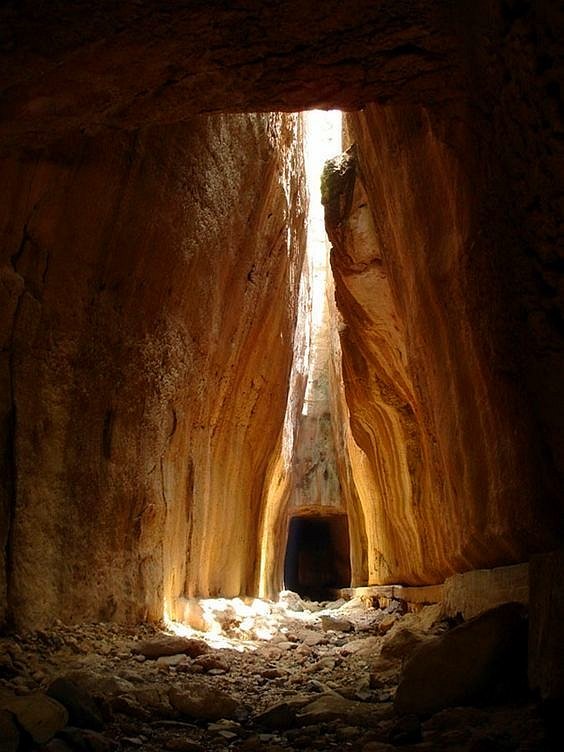
The incredible Vaspasianus Titus tunnel, a 1.4km long Roman engineering marvel built under orders of emperor Vaspasian to divert flood waters away from the city of Seleuceia Pieria, Turkey. Cut through solid rock by Roman legions and slaves it took over 50years to complete.
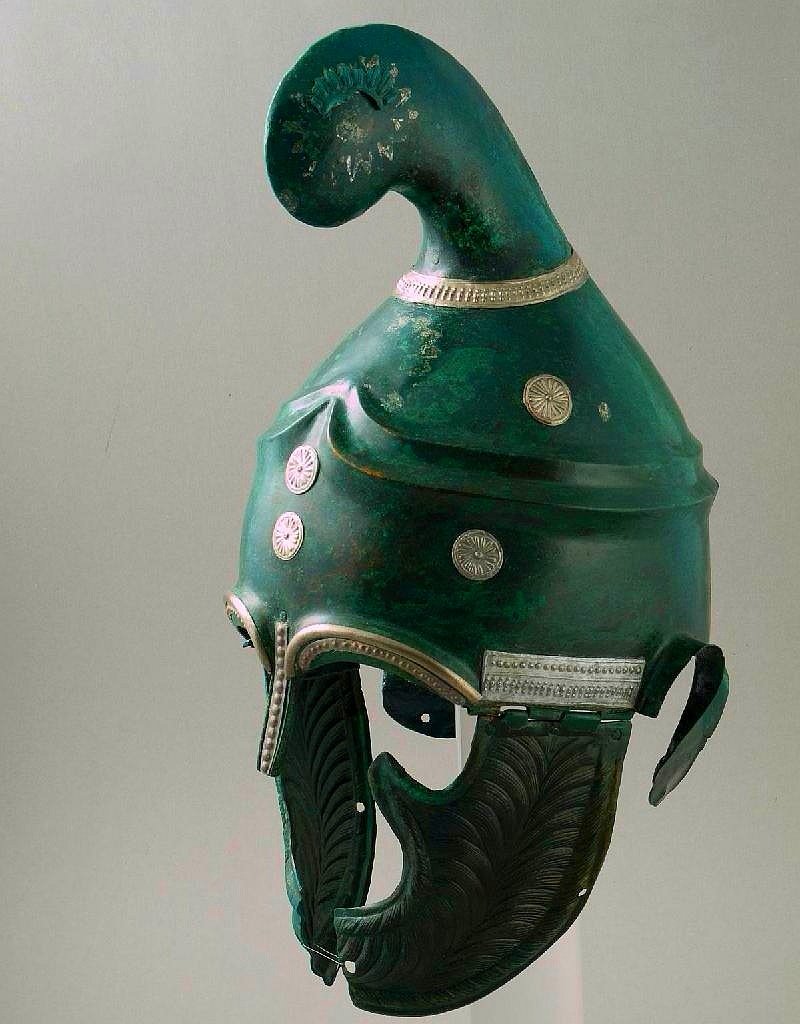
A 4thC BC bronze Thracian helmet discovered by chance in 1997 at the village of Pletena, Bulgaria. Decorated with silver bands and eyebrows with bearded patterns on the cheekpieces and a large Phrygian style crest. Now in the national history museum, Sofia.


![10thLegio's tweet photo. One of the largest surviving Roman mosaic floors discovered during the construction of a hotel in Antakya, Turkey. The warping effect was caused by earthquakes and gives it the impression of a giant rippled blanket. [Image: courtesy of the Museum Hotel Antakya] https://t.co/vPy8V25YqS](https://pbs.twimg.com/media/EwnkTCcWEAg3zxG.jpg)




![10thLegio's tweet photo. Rome's Atlantis, the sunken city of Baia on the Gulf of Naples, Italy. Due to volcanic activity over the centuries the beautiful mosaic floors, sculptures and villas now sit meters below the surface of the Mediterranean sea. Image credit [Edoardo Ruspantini] https://t.co/P0PqdKACTu](https://pbs.twimg.com/media/EyO1Sg7XEAY1ELb.jpg)



![10thLegio's tweet photo. One of the largest surviving Roman mosaic floors discovered during the construction of a hotel in Antakya, Turkey. The warping effect was caused by earthquakes and gives it the impression of a giant rippled blanket. [Image: courtesy of the Museum Hotel Antakya] https://t.co/vPy8V25YqS](https://pbs.twimg.com/media/EwnkTVMWYAU1qwn.jpg)






![10thLegio's tweet photo. Rome's Atlantis, the sunken city of Baia on the Gulf of Naples, Italy. Due to volcanic activity over the centuries the beautiful mosaic floors, sculptures and villas now sit meters below the surface of the Mediterranean sea. Image credit [Edoardo Ruspantini] https://t.co/P0PqdKACTu](https://pbs.twimg.com/media/EyO1Sv3XAAY8cK6.jpg)