In Xinjiang, Kunming & Beijing they staged riots, killing and injuring thousands.
Later in Bangkok they set off a bombing that left hundreds dead or wounded. After being sentenced to death they cried persecution.
Btw……have you ever seen any Muslims condemn them?
Tayland'da Çin baskısıyla idama çarptırılan Uygur Türkleri.
İDAM ÖNCESİ FERYATLARI:
Suçsuzuz, kendimizi savunmamıza bile izin verilmedi. Bizim kimsemiz yok.
BU ÇIĞLIĞA SESİZ KALMA.
It is quite ironic that, despite her tremendous contributions and winning the Nobel Prize, Prof. Tu was once jokingly referred to in China as a “three-no” scientist:
no doctoral degree,
no overseas study experience,
no academician title.
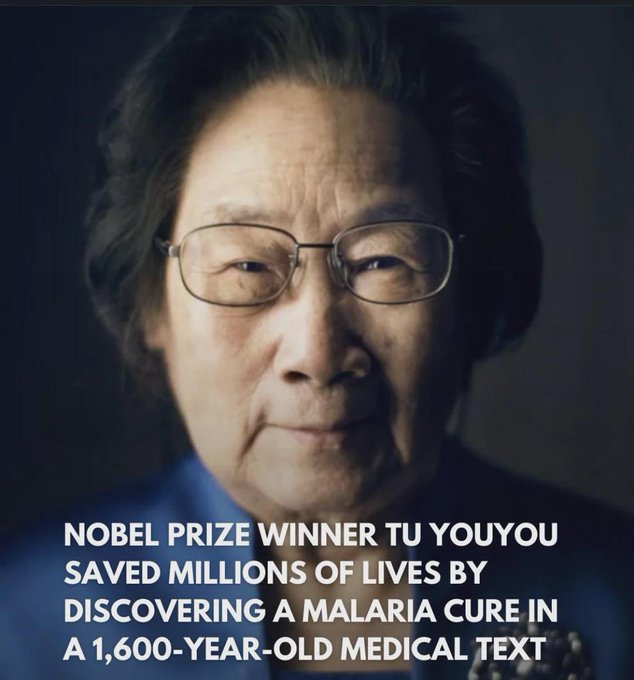
The remarkable story of Chinese scientist Tu Youyou, who won the 2015 Nobel Prize in Physiology or Medicine for her discovery of artemisinin — a breakthrough drug that has saved millions of lives from malaria worldwide.
In the late 1960s and early 1970s, amid China's "Project 523" (a secret effort to combat malaria during the Vietnam War era), Tu Youyou and her team reviewed thousands of ancient Chinese medical texts for herbal remedies against "intermittent fevers" (a classic description of malaria symptoms).
Most preparations involved boiling herbs into decoctions, but one key reference from the Eastern Jin Dynasty (around 340 AD) stood out — Ge Hong's A Handbook of Prescriptions for Emergencies (肘后备急方). It described using qinghao (sweet wormwood, Artemisia annua) by taking "a handful of qinghao, immerse in two liters of water, wring out the juice, and drink it all." Notably, this method used cold water steeping and wringing (squeezing) rather than heat.
This detail was pivotal: Traditional boiling methods had yielded inconsistent or ineffective results in modern tests because high temperatures degraded the active compound. Tu hypothesized that heat was destroying the antimalarial potency, so her team shifted to low-temperature extraction techniques.
In September 1971, they experimented with solvents like ethyl ether (which has a low boiling point of about 35°C) to extract the leaves and stems at reduced temperatures. On October 4, 1971, they obtained a highly effective sample (#191) that achieved 100% inhibition of malaria parasites in rodent and monkey models. This led to the isolation of artemisinin (also called qinghaosu) in 1972.
Tu even tested the safety of early extracts on herself first. Artemisinin-based combination therapies (ACTs) are now the WHO-recommended first-line treatment for malaria, dramatically reducing deaths, especially in Africa and Asia.
The remarkable story of Chinese scientist Tu Youyou, who won the 2015 Nobel Prize in Physiology or Medicine for her discovery of artemisinin — a breakthrough drug that has saved millions of lives from malaria worldwide.
In the late 1960s and early 1970s, amid China's "Project 523" (a secret effort to combat malaria during the Vietnam War era), Tu Youyou and her team reviewed thousands of ancient Chinese medical texts for herbal remedies against "intermittent fevers" (a classic description of malaria symptoms).
Most preparations involved boiling herbs into decoctions, but one key reference from the Eastern Jin Dynasty (around 340 AD) stood out — Ge Hong's A Handbook of Prescriptions for Emergencies (肘后备急方). It described using qinghao (sweet wormwood, Artemisia annua) by taking "a handful of qinghao, immerse in two liters of water, wring out the juice, and drink it all." Notably, this method used cold water steeping and wringing (squeezing) rather than heat.
This detail was pivotal: Traditional boiling methods had yielded inconsistent or ineffective results in modern tests because high temperatures degraded the active compound. Tu hypothesized that heat was destroying the antimalarial potency, so her team shifted to low-temperature extraction techniques.
In September 1971, they experimented with solvents like ethyl ether (which has a low boiling point of about 35°C) to extract the leaves and stems at reduced temperatures. On October 4, 1971, they obtained a highly effective sample (#191) that achieved 100% inhibition of malaria parasites in rodent and monkey models. This led to the isolation of artemisinin (also called qinghaosu) in 1972.
Tu even tested the safety of early extracts on herself first. Artemisinin-based combination therapies (ACTs) are now the WHO-recommended first-line treatment for malaria, dramatically reducing deaths, especially in Africa and Asia.
@DaQiHuangdi If this region were ceded to Vietnam, the only upside would be that 90% of those filthy, bullshit clips online—the ones originally used to mock China for eating weird stuff—would all be pinned on the Vietnamese instead.
Chinese runner Zhao Jiaju won the championship at the world top ultratrail race Tor des Géants, breaking the long standing dominance of European in this top tier extreme endurance event.
Zhao is a food delivery guy.
Un francés llevó a cabo un reto: dejar un portátil en varios lugares públicos del mundo para ver cuánto tardaba en ser robado.
Resultados:
🇫🇷 París: 8 segundos.
🇮🇳 India: 14 segundos.
🇨🇳China: ...
Korean spirituality did not begin with Buddhism, Confucianism or Christianity.
In this livestream, Dr. Shinjimunsa and I explore Korea’s ancient shamanic roots and how those beliefs continue to shape Korean culture today. We discuss mudang, ancestor worship, divination, saju and the zodiac, along with spirit communication, possession, astral projection, reincarnation and the afterlife.
We also compare Korean traditions with spiritual beliefs found across China, Japan and Vietnam—and share personal stories that are much harder to explain away.
Where does tradition end and superstition begin? And how much of the old spirit world still survives beneath modern Korean society?
@hardikjoshi101@DefecatorRep@benny0122333 No ppl on earth are more pathetic than Indians.
They think smearing others’ achievements can hide their total inferiority in every field.
1.5 billion ppl,
ave IQ 76,
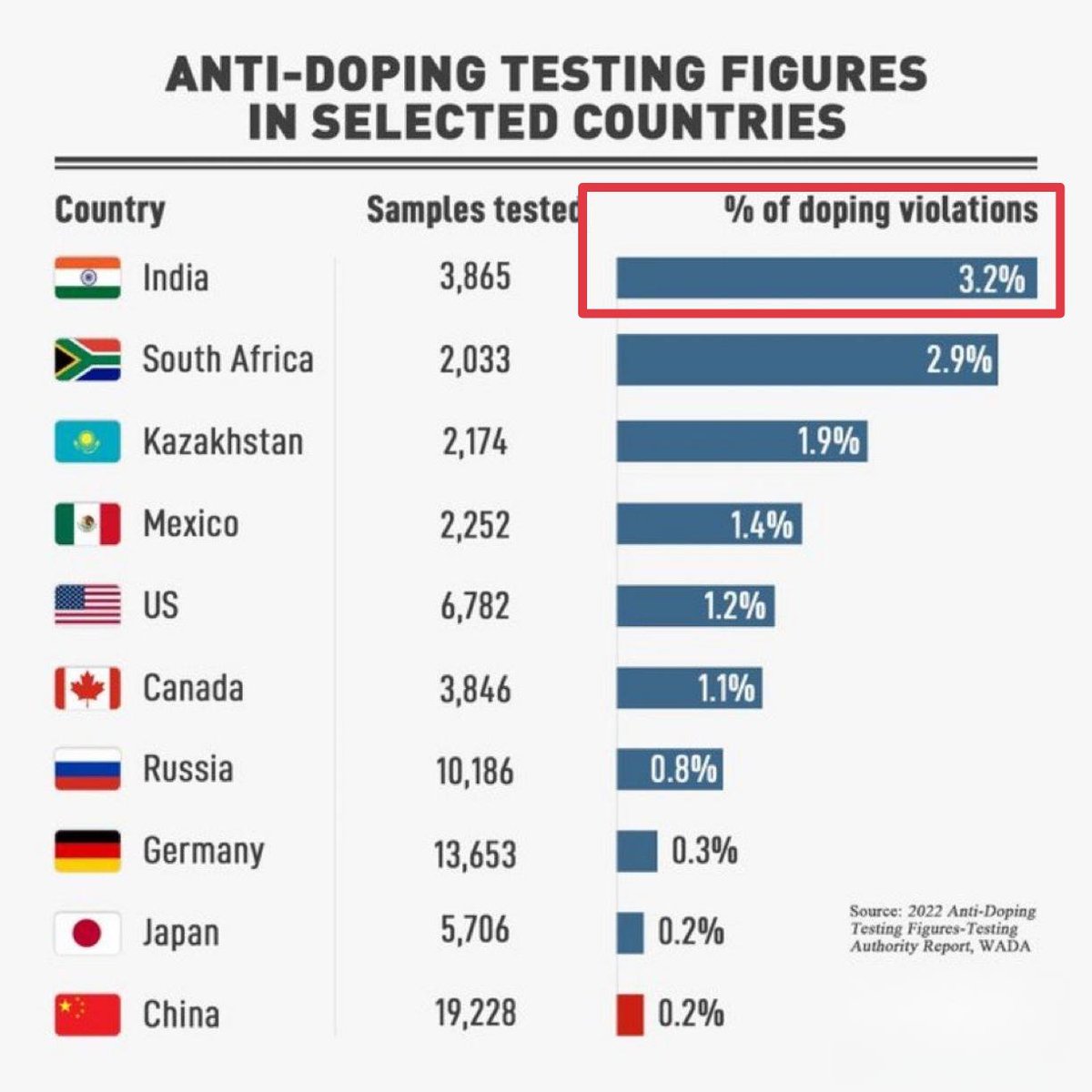
doping champs,
zero olympic golds.
lmao