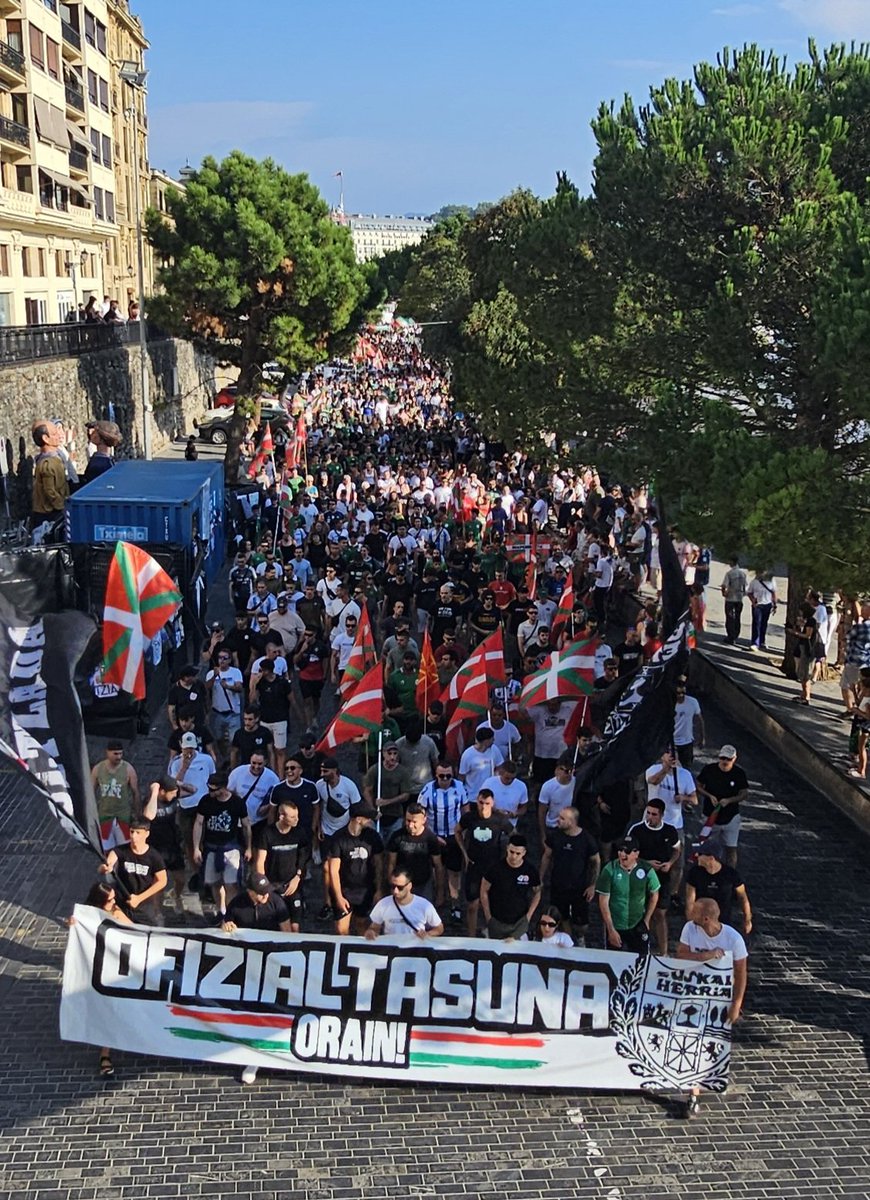
Ofizialtasunaren bidean indarrak batu eta borrokatu✊️
Asimilatuta dauden
euskaldun jatorren rolak
behin eta berriz zehaztu
izan dizkigu futbolak,
baino ez geranez frantsesak
eta ez geranez espainolak,
Oyarzabal ez ditugu
ospatuko zure golak.
La aniquilación de la identidad nacional vasca pasa por normalizar la selección española. Y para normalizar la selección española necesitan que se desconozcan los motivos por los que la Euskal Selekzioa está vetada.
Abro hilo quien y como ha impulsado ese veto 👇
Mi hijo Iban nacio en Venezuela; estudio primaria en Venezuela….este año se presento a Selectividad y aprobo euskera en Eibar!!! …. Y ha estudiado bachillerato en la publica! Si no apruebas es porque no estudias y no tienes interes en aprender euskera.
EUSKAL HERRIAN EUSKARAZ!
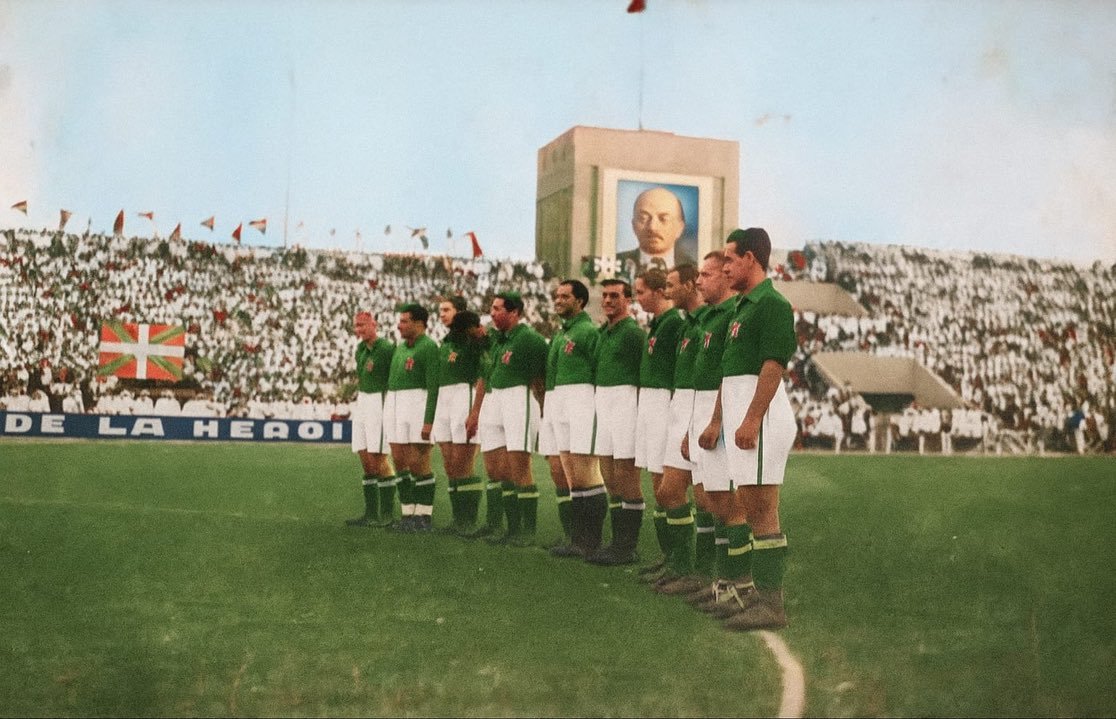
Basque National Football Team, in the Soviet Union. 1937.
During the Spanish Civil War, the Basque government formed a football team made up of professional players (the majority from Athletic Bilbao) and sent them on a world tour. Their aims went far beyond sport: to make the world aware of the situation of the Basque Country, to support the anti-fascist cause, and to raise funds to help children victimized by fascism.
These players were called “The Gudaris of the Ball.” In Basque, “gudari” means soldier and resistance fighter. On the football pitch, they thus became ambassadors of resistance and international solidarity.
On the day they played their first match in Paris against Racing Club de Paris (26 April 1937), the German Nazi air force was bombing the sacred Basque city of Guernica. The players entered the match with the news of this massacre, in deep sorrow and anger.
The team played matches in France, Czechoslovakia, Poland, the Soviet Union, Denmark and Norway. They received the strongest and warmest reception in the Soviet Union.
While the team was in the Soviet Union (the period when the photo below was taken), Bilbao fell. Most of the players were declared “traitors” by the fascist dictatorship of Francisco Franco, making their return to Spain impossible.
After Europe, they moved to the American continent. They played matches in Cuba and Mexico. They even entered the Mexican league under the name Club Deportivo Euzkadi and finished the 1938–39 season in second place.
With the money they raised, they covered the expenses of thousands of Basque refugee children (“Niños Vascos”) in the United Kingdom and France.
Today, in the emotional foundations of Athletic Bilbao's still-existing identity based on fielding only players of Basque origin, the struggle waged in exile by these “Gudaris of the Ball” holds a major place.
😱 ¡Increíble! Remiro convirtió la tensión de la tanda de penaltis en un momento espectacular al gritar "¡Kiricocho!". Pero ¿por qué? https://t.co/fZPRLB28P3