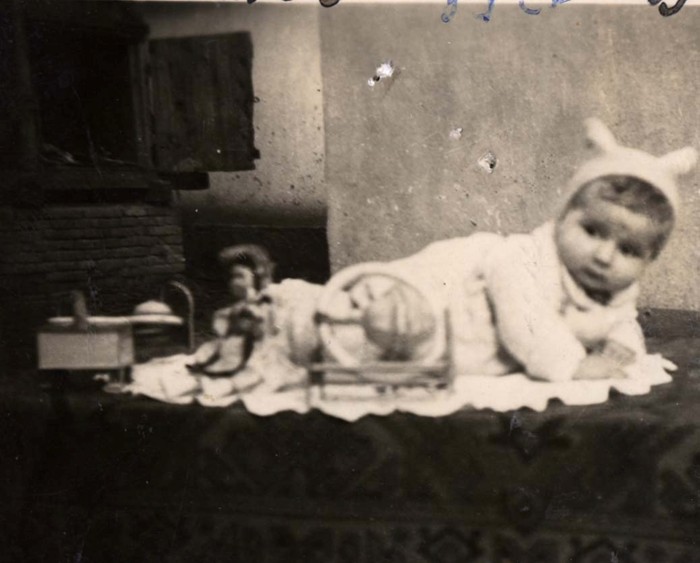
16 September 1943 | A Hungarian Jewish girl, Anna Schvorc, (or Schvarc) was born in Géberjén.
In 1944, she was deported to #Auschwitz and murdered in a gas chamber.
---
Deportations of Jews from Hungary to Auschwitz: https://t.co/UriR5fLdkB
In the dead of night at Bergen-Belsen concentration camp, a garbage truck stopped behind a women’s barracks. Its cargo was not trash.
One by one, 54 children were dumped into the freezing mud before the truck drove away, leaving them crying in the darkness.
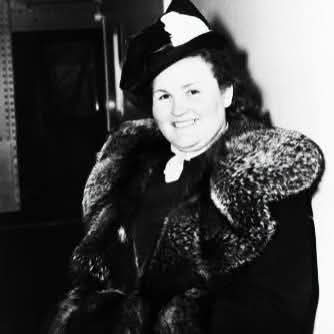
Inside the barracks, 26-year-old Luba Tryszynska heard the commotion through the thin walls. A former nurse from Kamenets-Litovsk, she had arrived at Bergen-Belsen only weeks earlier. When she stepped outside, she found terrified children between the ages of four and twelve.
Earlier that day, their mothers had been separated from them and transported to another camp near Hamburg. The children had been loaded onto a different vehicle, driven around for hours while officials decided their fate, and ultimately abandoned like unwanted cargo.
For Luba, the sight was unbearable.
Two years earlier, at Auschwitz, she had been forced to watch her own family disappear. During the selection process, an SS guard noticed her young son, Isaac. Knowing mothers with small children were often sent directly to the gas chambers, Luba’s mother-in-law pulled the boy from her arms in a desperate attempt to save her life.
Isaac, her husband Hersch, and her mother-in-law were all taken away. None returned.
Luba survived, but the loss haunted her every day. She often wondered why she had been spared when the people she loved most had not.
That night at Bergen-Belsen, standing before dozens of abandoned children, she finally found a purpose for her survival.
Without hesitation, she gathered the children and brought them inside. The other prisoners were terrified. Sheltering children could have resulted in severe punishment or death for everyone in the barracks.
Luba did it anyway.
She arranged bunks for them, tucked the youngest children into the safest corners, and reassured them with quiet words:
“You’re safe now. Stay quiet, and I’ll take care of you.”
Then she took an even greater risk.
Luba approached Fritz Klein, an SS doctor at the camp, and told him directly that she intended to keep the children hidden and under her care. Against all expectations, Klein agreed and allowed her to use a separate wooden hut.
Why he consented remains unclear.
With that small concession, Luba created something almost unimaginable inside one of the most horrific places on earth: a refuge for children.
Over the next four months, she and a handful of other women worked tirelessly to keep them alive. Hermina Krantz, a Slovak prisoner, helped clean and prepare whatever scraps of food could be found. Dr. Ada Bimko, another prisoner, cared for the sick and injured.
Luba became the heart of the operation.
Every day she searched for food, traded possessions, begged for supplies, and sometimes stole whatever was necessary to feed the children. Bread, water, bits of soup, and occasionally milk became precious treasures.
Remarkably, some German guards even began assisting her. They quietly provided firewood, extra bread, and on one occasion, an entire bucket of fresh milk.
As the months passed, more orphaned children arrived.
By April 1945, Luba was caring for 94 children, including an infant less than a year old.
Then, on April 15, British troops liberated Bergen-Belsen.
The soldiers entered a camp filled with death, disease, and starvation. Everywhere they looked were bodies and prisoners barely clinging to life.
But when they opened the door to Luba’s hut, they encountered something extraordinary.
Inside were dozens of children who had survived.
A British officer reportedly asked who was responsible for them.
Luba stepped forward and answered simply:
“I am.”
Thanks to her determination, nearly all of those children lived through the war.
After liberation, she personally helped return many of the children to their home countries. Some were escorted back to the Netherlands, while others were taken to safety in Sweden.
Eventually, Luba married fellow survivor Sol Frederick and settled in Washington, D.C., where she built a new life far from the horrors she had endured.
Yet the children never forgot her.
In 1995, fifty years after the war, many of those she had saved gathered in Amsterdam for a reunion. They arrived as adults—doctors, teachers, engineers, parents, and grandparents.
One after another, they embraced the woman who had protected them when no one else would.
The child Luba lost at Auschwitz could never be replaced. The pain of that loss stayed with her forever.
But through her courage, compassion, and refusal to look away, nearly one hundred other children were given the chance to grow up, build families, and live full lives.
Luba Tryszynska passed away in 2009 at the age of 91.
Her story remains one of the most powerful reminders that even in humanity’s darkest moments, a single act of love can become a lifeline for countless others.
When India accidentally wiped out its vultures, half a million people died in five years.
The bird doing zoomies in this video runs the most extreme digestive system in the animal kingdom. Vulture stomach acid sits near pH 1, strong enough to destroy anthrax, rabies, and botulism in the carcasses they eat. A flock strips a cow to bone in about 45 minutes.
India had 50 million of them. Free sanitation at national scale, in a country where religious custom means most cattle die natural deaths and every dead cow becomes a carcass someone has to deal with.
Then the patent on diclofenac expired in 1994. Farmers started using the cheap painkiller on livestock. Trace amounts left in a carcass cause kidney failure in vultures. Within a decade, 50 million birds fell to a few thousand. The fastest collapse of any bird species since the passenger pigeon.
The carcasses didn't disappear. Feral dogs took the vultures' place and brought rabies with them. Rotting remains leached into waterways. In districts where vultures once thrived, human death rates rose more than 4 percent. Economists at Chicago and Warwick put the toll at 100,000 extra deaths a year and $69 billion in annual damages.
So yes, the goofy bird sprinting down the walkway is adorable. It's also a disease firewall that evolution spent millions of years building and one generic painkiller nearly erased in ten.
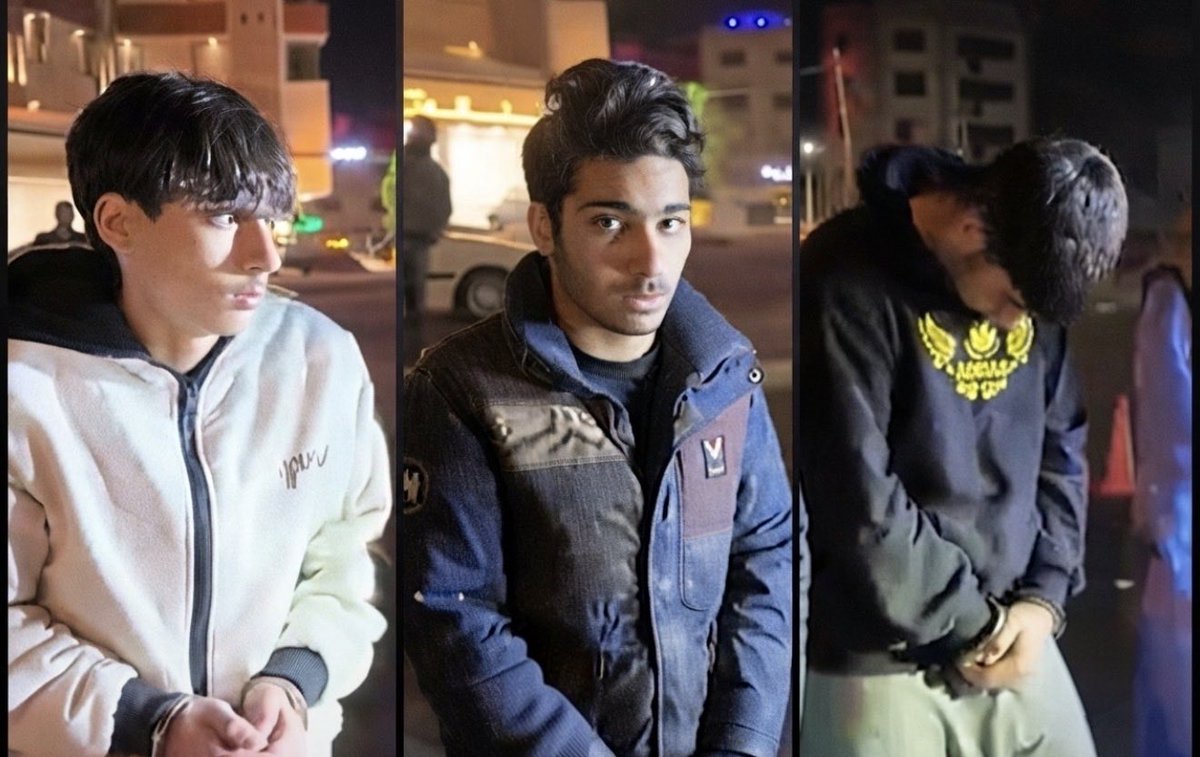
These are the three protesters who were hanged in Iran yesterday. One was disabled.
The media said nothing.
The voices of universal dignity and international justice said nothing.
The outraged lost no sleep.
The streets held no protest.
The socialist mayors filmed no speeches.
Murdered Iranians don’t fit the white oppressor narrative, so the world ignores the worst atrocities the mind can fathom.
I’m glad that makes you uncomfortable. Maybe it will finally wake you up to what the rest of us had to learn through betrayal:
Humanity is the greatest lie of our time.
Smoke from the ongoing wildfire within the Cairngorms National Park has now travelled into Aberdeenshire - including Inverurie, Banchory and Kintore - and Aberdeen https://t.co/S8ywyppArk