https://t.co/8VCSacEHBe not sure why someone wanted to research on that! But yeah now I don't wonder and question the patriotism of my fellow citizens who definitely don't want to return to India!
#ilovemyindia विविधता में एकता , I have had the fortune of travelling all around India in my life and now I can confirm, the "Spitting Culture" is so truly imbibed, be it north south east or west! May I add, education, social stature has nothing to do with it
@Try2StopME The post was bang on, and then I saw ur replies.. someone said right here "that's why no one take men seriously"! You will start with making excellent points and then down you'll say something like Hindu men should have 4 wives, and women will compete to finish household chores
This is what victory looks like.
India’s 90 minutes targeted strikes on major Pakistani airbases during #OperationSindoor marked a decisive shift in regional military dynamics. These preemptive and precision attacks dismantled Pakistan’s ability to maintain air superiority, coordinate national defense, and project any meaningful counter-response. Each base served a critical function, and its destruction inflicted strategic and psychological damage on the Pakistani military establishment.
1. Nur Khan/Chaklala Airbase (Rawalpindi)
India’s strike on Nur Khan disrupted the heart of Pakistan’s air logistics and high-level military coordination. As the base closest to Islamabad, often used for VIP transport and military logistics, its neutralization severed critical links between the Pakistan Air Force (PAF) leadership and its operational units during the conflict.
2. PAF Base Rafiqui (Shorkot)
Rafiqui, a key fighter base hosting frontline combat squadrons, was rendered inoperable. The destruction of its aircraft shelters and runway infrastructure significantly weakened Pakistan’s ability to launch counter-air operations, especially in central Punjab. This move effectively removed one of PAF’s sharpest offensive tools.
3. Murid Airbase (Punjab)
By targeting Murid, India disrupted a vital training and potential missile storage hub. The strike degraded Pakistan’s long-term air force readiness, cutting off a critical node in the pilot training pipeline and eliminating logistical depth for future operations.
4. Sukkur Airbase (Sindh)
India’s destruction of Sukkur Airbase cut Pakistan’s southern air corridor. Sukkur had been essential for troop and equipment movement across Sindh and Balochistan. Its loss severed key logistical arteries and reduced Pakistan’s operational range in the south.
5. Sialkot Airbase (Eastern Punjab)
Sialkot, situated close to the Indian border, was neutralized early in the conflict. This base had served as a forward-operating platform for launching sorties toward Jammu and Punjab. Its loss created a significant blind spot along the eastern frontier, exposing Pakistani ground forces to unchallenged Indian aerial dominance.
6. Pasrur Airstrip (Punjab)
Though smaller in scale, the Pasrur facility played a role in dispersal and emergency aircraft operations. By taking it out, India reduced Pakistan’s tactical flexibility and forced aircraft to concentrate at more vulnerable, high-profile locations.
7. Chunian (Radar/Support Installation)
Strikes on Chunian disrupted radar coverage and communications infrastructure vital for central Punjab’s airspace monitoring. This left a gap in Pakistan’s early warning systems, allowing Indian aircraft deeper penetration with reduced risk.
8. Sargodha Airbase (Mushaf Base)
The destruction of Sargodha was a strategic masterstroke. As the most critical base in Pakistan—home to the Combat Commanders School, nuclear delivery platforms, and elite squadrons—its decimation crippled Pakistan’s command-and-control structure. The blow was both operational and symbolic, shattering the myth of an invulnerable PAF.
9. Skardu Airbase (Gilgit-Baltistan)
India’s neutralization of Skardu degraded Pakistan’s northern surveillance and air operations near the Line of Actual Control. It also disrupted logistical links that could have supported Chinese-Pakistani coordination in the high Himalayas. The strategic advantage in the northern theater now firmly belongs to India.
10. Bholari Airbase (Near Karachi)
As one of Pakistan’s newest airbases with dual-use naval and air roles, Bholari had symbolized future ambitions of southern force projection. Its destruction erased those aspirations, compromising coastal defense coordination and leaving Karachi vulnerable to further strikes.
11. Jacobabad Airbase (Sindh-Balochistan)
Jacobabad’s neutralization further isolated western Pakistan. Historically used for rapid troop deployment and even by U.S. forces during the war on terror, its destruction cut off internal mobility, supply chains, and Pakistan’s western air surveillance.
In conclusion, India’s swift and coordinated strikes on these airbases delivered a strategic knockout to Pakistan’s aerial capabilities. The dismantling of radar networks, command hubs, and strike platforms left the PAF blind, grounded, and disoriented. More than just battlefield wins, these were structural demolitions—designed to disable Pakistan’s ability to fight today and deter it from even contemplating aggression in the future.
This operation not only demonstrated India’s technological and tactical superiority but also redefined the rules of engagement in South Asia. The destruction of Pakistan’s airbases sent an unambiguous message: India now holds the initiative, and the cost of provocation will be catastrophic.
@realDonaldTrump@realDonaldTrump now you have the proof that Pakistan has neither common sense not intelligence, however has IMF bailout package as well as nuclear weapons!Now if you're intelligent and have common sense put sanctions on Pakistan and cancel the bailout package
All media channels, digital platforms and individuals are advised to refrain from live coverage or real-time reporting of defence operations and movement of security forces. Disclosure of such sensitive or source-based information may jeopardize operational effectiveness and endanger lives. Past incidents like the #KargilWar, 26/11 attacks, and the #Kandahar hijacking underscore the risks of premature reporting. As per clause 6(1)(p) of the Cable Television Networks (Amendment) Rules, 2021, only periodic briefings by designated officials are permitted during anti-terror operations. All stakeholders are urged to exercise vigilance, sensitivity, and responsibility in coverage, upholding the highest standards in the service of the nation. 🇮🇳
Read more: https://t.co/bHscgUBMEV
#MediaAdvisory #NationalSecurity #MIBIndia #ResponsibleReporting
@rajnathsingh@DefenceMinIndia@SethSanjayMP@HQ_IDS_India@adgpi@indiannavy@IAF_MCC@PIB_India
@IRCTCofficial today I boarded shatabdi from Amritsar Junction in the morning at 3:30 am. No scan of luggage, no id check at entrance, i could simply walk in
🔴 When you report on Islam, the warnings start almost immediately:
“Be careful.”
“Watch your back.”
“Get protection.”
These warnings aren’t coming from online trolls. They’re coming from law enforcement officers, intelligence experts, and national security veterans—people who know exactly what happens when you pull back the curtain on Islam’s political agenda.
I can name countless friends in Europe who now live under 24-hour armed protection, bouncing between undisclosed safe houses. Others were murdered—for writing, drawing, teaching, or simply refusing to lie.
And when violence fails, the next weapon is lawfare—lawsuits meant to bankrupt, silence, and intimidate critics using our own legal system as a bludgeon.
So here’s the question no one in the mainstream media will dare ask:
If Islam is really “peaceful,” why does exposing it require armed guards, safe houses, bulletproof vests—and a legal defense team?
Just look at the names. Read their stories.
They weren’t the threat.
They held up a mirror to it.
And that’s what made them dangerous—to those who needed the truth buried.
These are just a few of the hunted.
🟥 Charlie Hebdo staff (France)– massacred in their Paris office for drawing Muhammad.
🟥 Samuel Paty (France) – beheaded for showing those cartoons in a classroom lesson on free speech.
🟥 Salman Rushdie – stabbed on stage in NY, nearly blinded, decades after Iran’s fatwa over The Satanic Verses.
🟥 Theo van Gogh (Netherlands)– murdered for directing a film about Islam’s abuse of women.
🟥Ayaan Hirsi Ali – fled the Netherlands, now lives under protection in the U.S.
🟥 Lars Vilks (Sweden) – killed in a car crash while under 24/7 police escort after years of death threats.
🟥 Geert Wilders (Netherlands) – lives under constant armed protection for opposing Islamic immigration.
🟥 Pamela Geller (USA)– targeted in a beheading plot by ISIS supporters in the U.S.
🟥 Bosch Fawstin (USA) – continually threatened for drawing Muhammad and winning the Garland cartoon contest.
🟥 Rasmus Paludan (Denmark) – lives in safe houses, under armed guard for burning Qur’ans and warning about Islamization.
🟥 Robert Spencer (USA) – poisoned in Iceland, caught on video after criticizing Islam publicly.
🟥 Masih Alinejad (USA)– targeted in Iranian plots to kidnap or assassinate her for leading the anti-hijab movement.
🟥 Vipul Amrutlal Shah – faced threats and bans for producing The Kerala Story, which exposed ISIS recruitment and Love Jihad in India.
🟥 Nupur Sharma (India)– received global death threats for quoting Hadiths about Aisha.
🟥 Mila (France) – under permanent police protection since age 16 for criticizing Islam on Instagram.
🟥 Laurence Marchand-Taillade – under 24/7 police protection for exposing Muslim Brotherhood networks in France.
🟥 Éric Zemmour (France) – follows armed bodyguards daily, relentlessly targeted for criticizing Islam and immigration.
🟥 Michel Houellebecq (France)– under gendarmerie protection for writing Submission.
🟥 Robert Redeker (France) – forced into hiding, his life shattered after one article in Le Figaro.
🟥 Mohammed Sifaoui (France) – branded a murtad, under police protection for infiltrating Islamist cells.
🟥 Frédéric Haziza, Philippe Val, Zineb El Rhazoui, Imam Hassen Chalghoumi – all under heavy protection in France for defending secularism and exposing Islamic extremism.
🟥 Father Jacques Hamel (France)– slaughtered at the altar by ISIS terrorists during Mass in Normandy.
🟥 Avijit Roy – butchered in the street in Bangladesh for writing a secular blog.
🟥 Saman Abbas – murdered by her family in Italy for embracing Western life.
🟥 Mahsa Amini – beaten to death in Iran for wearing her hijab “incorrectly.”
🟥 Ahmad Abu Marhia – beheaded in the West Bank for being gay.
🟥 Sarah Halimi, Lola, Luna – victims of Islamist rage and brutal violence in France.
🟥 Salwan Momika – killed in Sweden after burning the Qur’an—while awaiting trial for “blasphemy.”
🟥 Saïd Djabelkhir (Algeria) – sentenced to 3 years in prison for calling for Islamic reform.
🟥 Asif Mohiuddin (Bangladesh/Germany) – survived assassination, now in exile for secular activism.
🟥 Farag Foda (Egypt) – assassinated for advocating separation of mosque and state.
🟥 Fatima Naoot (Egypt) – imprisoned for criticizing Eid animal sacrifice.
🟥 Ahmad Al Shamri (Saudi Arabia) – sentenced to death for expressing atheism online.
🟥Mashal Khan (Pakistan) – lynched by a mob over false blasphemy claims.
🟥 Basuki Tjahaja Purnama “Ahok” (Indonesia) – imprisoned for “blasphemy” after quoting the Qur’an.
🟥 Asia Bibi (Pakistan) – spent 8 years on death row for false accusations, forced to flee the country.
🟥 Farkhunda Malikzada (Afghanistan) – beaten to death by a mob after false accusations of burning the Qur’an.
🟥 Hatun Tash (UK) – stabbed and targeted for death after publicly criticizing Islam at Speakers’ Corner. Lives under heightened security.
🟥 Tommy Robinson (UK) – constantly threatened and forced into hiding for exposing Islamic extremism and "grooming gangs."
🟥 Jyllands-Posten Staff (Denmark) – journalists and editors under threat after publishing Muhammad cartoons in 2005; continue to face security concerns.
🟥 Imran Firasat (Spain) – lost asylum status and faced arrest after producing anti-Islam films; targeted with death threats and legal action for his criticism of Islam.
🟥 Kurt Westergaard (Denmark) – The Danish cartoonist who drew the controversial Muhammad cartoon in 2005. He survived an assassination attempt in 2010 and lived under police protection until his death in 2021.
🔻 The Verdict
Not one of these individuals committed violence.
Their only “crime” was using their voice—through words, art, protest, or belief.
They questioned. They criticized. They told the truth as they saw it.
And for that, they were harassed, sued, hunted, stabbed, exiled, poisoned, and killed.
If Islam is truly “peaceful,” why does exposing it come at the cost of one’s safety, freedom, or life?
Why are so many forced to live behind security gates, rotate through safe houses, or rely on legal teams just to survive?
And these are only some of the names I’ve listed.
How many more have been silenced before they could speak?
How many are being intimidated into silence in their own communities?
How many live in fear—unseen, unheard—knowing that one wrong word could end everything?
Cost them their job? Their safety? Their future?
This is no longer just about free speech.
It’s about civilizational survival.
Because if we can no longer name the danger—
If we can no longer protect our own citizens from violence and intimidation,
If we allow fear to dictate truth, and submission to replace courage—
Then freedom is already gone.
Speech will die first.
But our countries will follow.
The names on this list are not just victims.
They are warnings.
And unless we force our political leaders to act now,
many more will follow.
History has made that pattern painfully clear.
TRUTH ABOUT INDIA and PAKISTAN!
Let me break this down before the radical left-wing media spins more lies and the jihadis in America start crying and claiming victimhood, let’s get the facts straight.
India Just Struck Back, Here’s Why:
On May 7, 2025, India launched Operation Sindoor, a decisive strike against terror camps within Pakistan-controlled territory.
These weren’t random targets. India hit known Islamic terrorist hubs used to train and launch attacks against Indian civilians and soldiers.
This wasn’t a drill. This was a calculated response to the Pahalgam Islamic massacre on April 22, 2025, when 27 Hindu tourists were executed in cold blood by terrorists backed by Pakistan.
These innocent civilians....newlyweds, families, honeymooners...were forced to strip, recite Islamic prayers, and prove their religion. When they couldn’t, they were shot on sight. They were slaughtered for not being Muslim.
Who Did India Target?
India hit key terror camps belonging to three of Pakistan’s most notorious jihadist groups. These camps are the core infrastructure of Pakistan’s proxy war strategy against India, housing radical Islamist fighters who routinely infiltrate Kashmir and conduct attacks on Indian civilians and military personnel.
1. Jaish-e-Mohammed (JeM)
A Deobandi jihadist group, JeM is known for carrying out some of the deadliest attacks on Indian soil, including the Pulwama attack (2019). It operates with direct support from Pakistan’s ISI and often functions openly in Pakistan. JeM openly advocates for violent jihad to separate Kashmir from India.
JeM Targets Hit:
Markaz Subhan Allah, Bahawalpur: A major training center for JeM militants, located in Punjab province, Pakistan. Known for recruiting, radicalizing, and arming jihadists.
Sarjal, Tehra Kalan: A strategic base used for combat training and logistics, located in Pakistan-administered territory.
Markaz Abbas, Kotli: A JeM hub involved in indoctrination and weapons training. Key for recruiting local youth for terrorist missions.
Syedna Bilal Camp, Muzaffarabad: An operational base in the Muzaffarabad region, frequently used for launching cross-border attacks into Indian territory.
2. Lashkar-e-Taiba (LeT)
LeT is one of the most dangerous Islamist militant groups globally, responsible for the 2008 Mumbai attacks that killed over 160 people, including foreign nationals. Despite being internationally condemned, LeT continues to operate under the guise of charity organizations and receives significant state support.
LeT Targets Hit:
Markaz Taiba, Muridke: The headquarters of LeT, openly functioning as a “charitable trust” while training militants for suicide missions.
Markaz Ahle Hadith, Barnala: A LeT-affiliated center camouflaged as a religious and educational institution but actively involved in terror training.
Shawai Nalla Camp, Muzaffarabad: A forward operating base for LeT, strategically located for cross-border incursions. Used for arms smuggling and militant training.
3. Hizbul Mujahideen (HM)
HM is the largest Islamist militant group in Kashmir, heavily backed by Pakistan’s ISI. It aims to create separatist insurgency in Kashmir and is responsible for numerous attacks on both civilians and Indian security forces.
HM Targets Hit:
Mehmoona Joya, Sialkot: A logistics center for HM operations, located near the border, facilitating recruitment and weapon distribution.
Maskar Raheel Shahid, Kotli: A training ground for urban warfare and guerrilla tactics. Essential for training new recruits before deployment into Kashmir.
Why Did India Strike?
Because Pakistan has been harboring, training, and equipping jihadists for decades. The Pahalgam massacre was the final straw, India had to respond to protect its citizens from state-sponsored terrorism.
India’s response was not just justified...it was long overdue.
Pakistan’s proxy war using terror groups has cost countless Indian lives.
Pakistan’s Pathetic Propaganda
After getting hit hard, Pakistan did what it does best: lie. Here’s how they tried to cover up their embarrassment:
Claimed to have shot down Indian jets (no proof).
Claimed to have attacked Srinagar Airport (shared a fake video from 2024).
Claimed to have captured Indian soldiers (retracted by their own Defense Minister).
Claimed missile strikes at 15 Indian locations (completely fabricated).
Why Is Pakistan Panicking?
Because they know the world is watching and their terror state status is under the spotlight. If Pakistan wasn’t a terror state, they’d be thanking India for eliminating jihadist breeding grounds. But NO they’re angry because they support terrorism.
(All of the Pakistani Imam's in America like in America are ALSO angry - which our government should be monitoring)
Instead of condemning the Pahalgam massacre, Pakistan is playing victim - spinning tales about nuclear threats and false flag operations. They’re desperate to look strong for their domestic audience, even if it means fabricating stories.
Radical Left-Wing Media - Stop the Lies
While Western journalists and Islamic apologists scramble to portray Pakistan as the victim, the truth is clear:
India didn’t attack randomly - it targeted terror camps responsible for massacres.
India is not the aggressor - it’s defending itself from decades of jihadist violence.
Western media needs to wake up and stop glorifying terrorists just because they’re backed by Pakistan.
To All the Jihadis Crying Victimhood in America:
Enough with the fake victimhood narratives. You support Pakistan’s terrorism, you cry about Indian retaliation, but you never condemn the brutal killings of innocent Hindus.
India is done being silent. The world sees Pakistan for what it is - A TERROR STATE!!!
India’s Message to Pakistan:
You can’t hide behind fake news and propaganda. You can’t cover up your terror state status. The world knows nd no amount of lies and victimhood will save you.
To Everyone Else:
Stay vigilant. Stay informed. Don’t buy the same old narrative that Pakistan is the victim when they are the architects of terrorism. Stand with India’s right to defend itself.
AND GET PAKISTANI RADICALS OUT OF AMERICA!!!
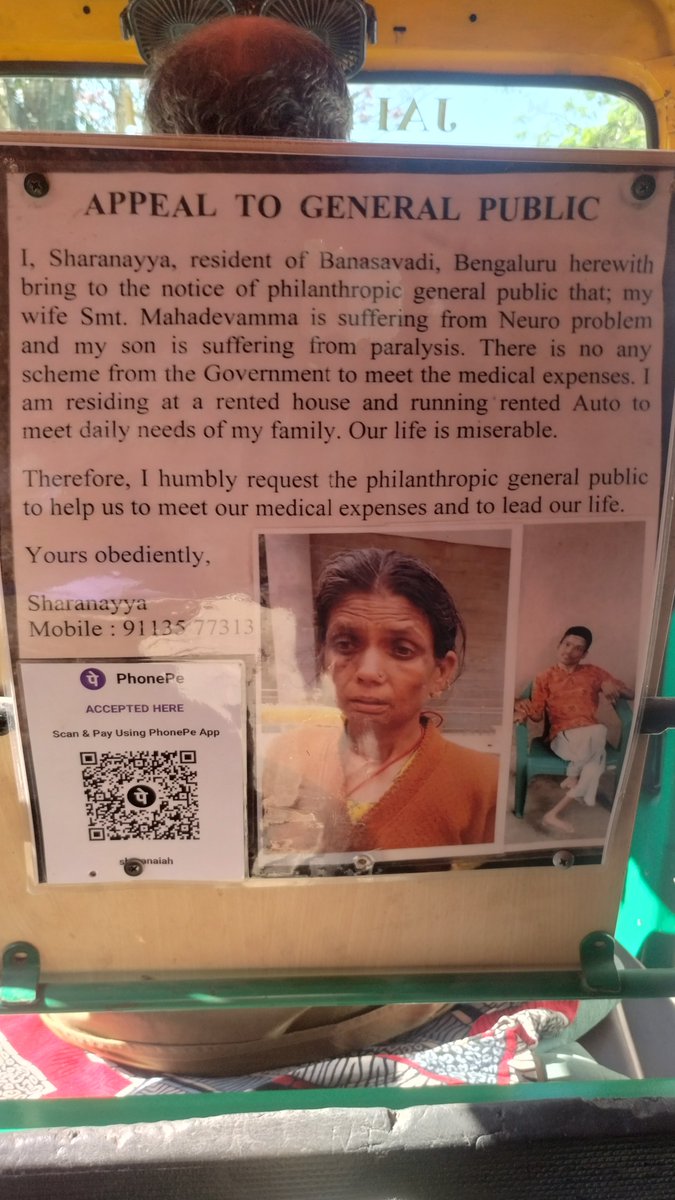
Which brings me to another query , how govt felt that making 200 units electricity free, BMTC for women free was important, however not taking care of medical bills for the less fortunate. #Bengaluru # Freebie
Boarded an auto , chasing the usual Monday morning blues and then was instantly reminded of how fortunate we are to just complain about traffic when there are actual real world problems. #Bengaluru#Freebie