I've discovered that Binance is not just a site for selling and buying crypto. There is so much money to be made on that platform.
Damn! What have I been doing on the internet all this time? 🤦♂️
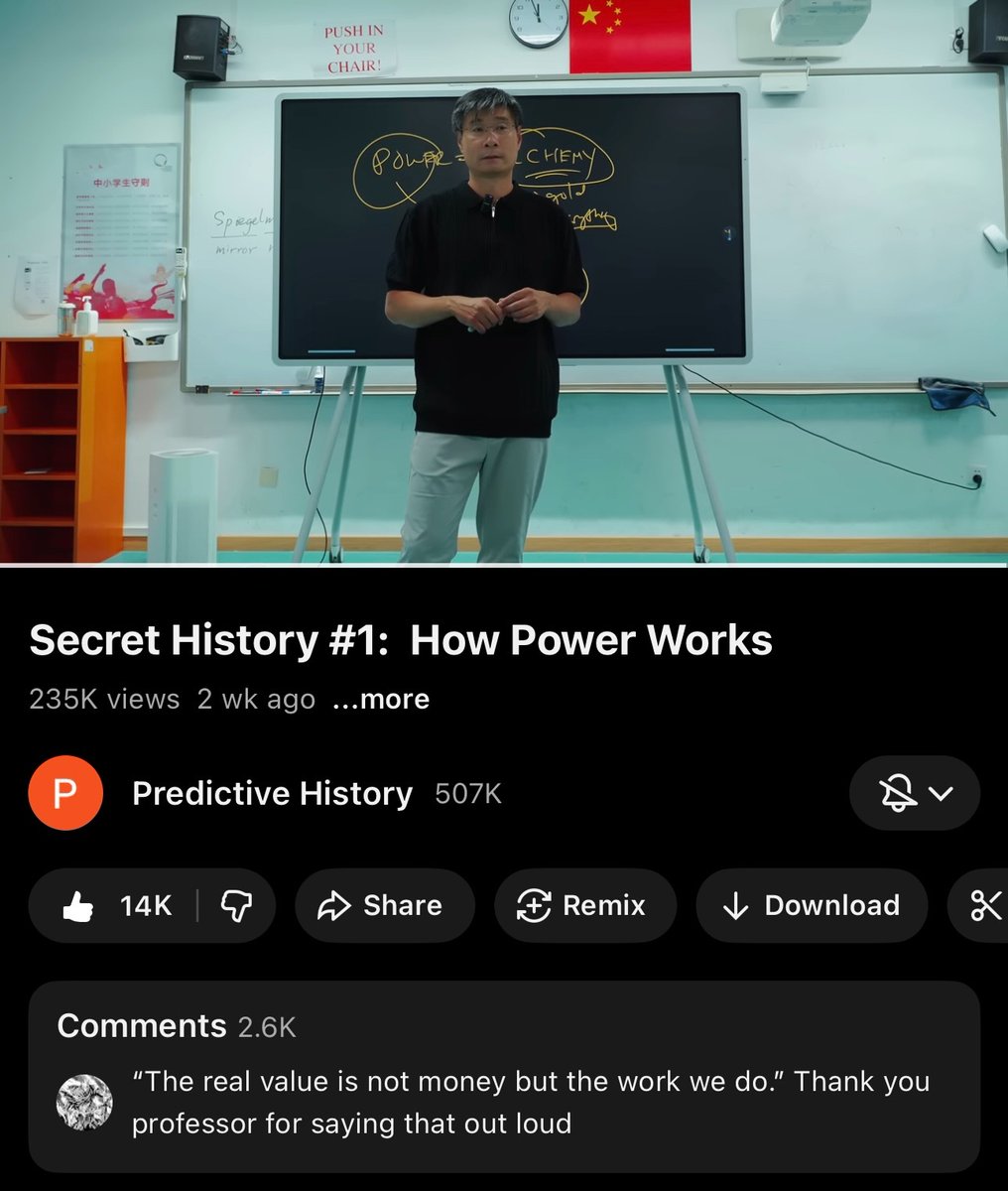
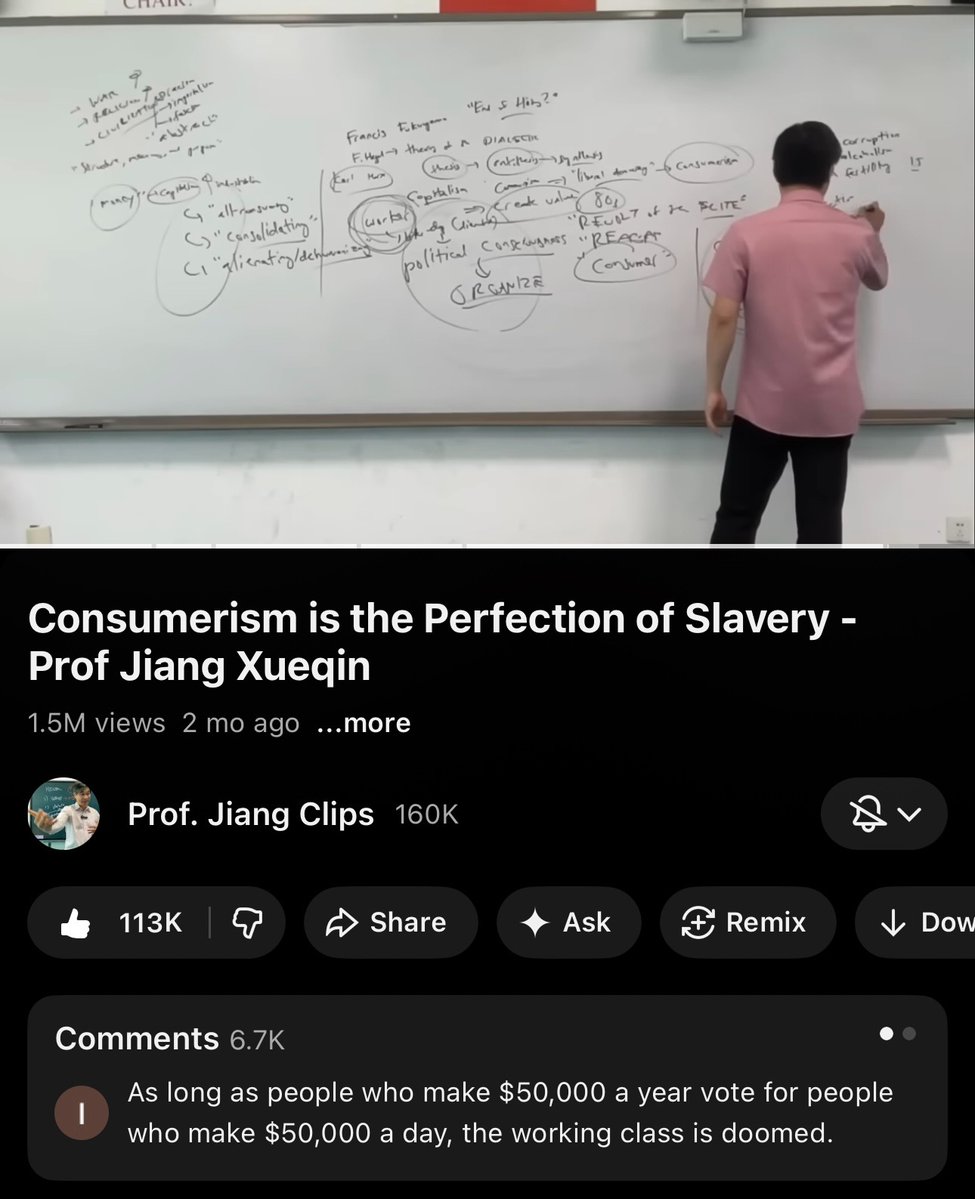
Okay, Documentary Twitter. Here are ten of my favourite YouTube documentaries with links. I tend to avoid AI videos because human beings aren't meant to consume AI slop.
A thread.
We hired a consulting firm to tell us why our profits are down.
They sent three 24-year-olds wearing vests.
They spent two months interviewing us about our own jobs.
Then they put our answers into a PowerPoint presentation.
They charged us $250K for this privilege.
During the final readout, one of them used the phrase synergy optimization without blinking.
I looked around the conference room.
Our CEO was nodding like he just received the Ten Commandments.
The grand conclusion was that we need to increase revenue and decrease costs.
I could've told them that for a gift card to Panera.
But nobody listens to the guy who works here.
You only listen to the guy who flies in on a Tuesday.
I'm updating my resume to include synergy optimization.
It feels like the right move.
#Paidlisting
2011 Toyota Rav4
This is the car for:
• The family person who needs reliability without conversation
• The biashara owner moving goods, people, and plans.
Press this link to contact seller / owner directly; https://t.co/gOU9usy0aj
ETIMS CHANGED HOW BUSINESSES OPERATE (BUSINESS MODEL) — NOT JUST HOW THEY INVOICE
-When eTIMS regulations took effect, my clarion call to businesses focused on two non-negotiables:
1. Vet your suppliers for eTIMS compliance
2. Restructure your supply chain and business model to ensure tax compliance
-While a few businesses took this seriously, many remained stuck in the mindset of:
“It’s not possible to have all expenditure on eTIMS.”
-This feedback continues to surface consistently in my Tax Clinics, SME trainings and advisory engagements.
-The reality, however, is uncomfortable but clear:
If your business model cannot support eTIMS-compliant expenditure, your expenses are at risk of being disallowed.
THE CORE PROBLEM: HOW SMEs PAY FOR EXPENSES
-From my observation and experience , most non-compliance does not arise from tax evasion, it arises from informal payment structures that no longer fit within the current tax regime.
The solution to this is not fear, but restructuring how SMEs procure, pay, and contract.
PRACTICAL RESTRUCTURING MEASURES FOR SMEs TO PLANNING THEIR TAXES UNDER eTIMS regime (PRE-VALIDATION ERA)
1. Procurement of Supplies
Avoid “Cheaper plugs” / informal suppliers and instead deal with suppliers who are eTIMS compliant .
The small saving today is not worth a disallowed expense tomorrow.
2. Casual Labour & Services
Instead of engaging and informally Paying technicians, Cleaners, Plumbers and other cashual workers in cash without any documentation and regards to tax compliance , Consider to Formalize the contract or work with Registered Service Providers
3. Communication Costs
Instead of buying Airtime & bundles casually via M-PESA, register for Postpaid Business Lines.
With this ,monthly eTIMS compliance invoice can be issued
4. Transport & Staff Movement
Instead of getting any available service provider (could be your regular Uber / bolt ride) and pay Cash, consider Corporate Accounts with Bolt /uber → One that consolidated monthly invoice
5. Deliveries & Logistics
Instead of getting any available service provider for your deliveries (could be your regular boda boda or the local delivery guy who are Informal ) , Get a Registered Courier Companies Or ensure the rider is eTIMS-registered
If they want your business, they must formalize
FINAL Thought TO SMEs on this matter
-Tax compliance is no longer just an accounting issue , it is an operational decision.
Businesses that restructure early will:
-Protect deductions
-Reduce audit exposure
-Improve financial discipline
-Gain credibility with financiers and regulators
Those that don’t will continue arguing that:
“Compliance is impossible”
until assessments prove otherwise.
#eTIMS #TaxCompliance #SMEsKenya #BusinessRestructuring #Taxplanning
#BusinessOperations #SupplyChain #RiskManagement
Sorry if I don't reach out anymore. I'm fighting for my life, second guessing my career path, debating my life choices, scrolling through social media, and sleeping whenever I get free time just to escape reality.
Tax Policy Proposal: Amendment to the VAT Act to Align Time of Supply with Payment for Government Transactions to Allow for Payment-Based VAT
I have been reflecting on the practical challenges faced by contractors and suppliers working with government entities in Kenya.
Under the current VAT framework, tax becomes due at the time of invoicing, even where no cash has been received. This requirement forces contractors to finance VAT out of pocket, exposing them to cash flow strain, penalties for non-compliance, and audit disputes with the Kenya Revenue Authority.
This situation has created unnecessary hardship for government contractors and suppliers and contradicts the fundamental principle that VAT is a consumption tax to be borne by the final consumer ; in this case, the Government.
The Problem with Delayed Payments – Illustration
-A contractor invoices Ksh 10 million plus Ksh 1.6 million (VAT). The Government delays payment for nine months.
-The contractor must still file and remit the Ksh 1.6 million VAT to KRA by the 20th of the following month without having received any payment.
Practically:
-The contractor carries the VAT burden since no payment has been received.
-This defeats the neutrality principle of VAT, which holds that VAT should not be a cost to businesses.
Proposed Solution- Legislative Amendment
To address this long-standing issue, I propose an amendment to Section 12 of the VAT Act to align the time of supply for government transactions with the actual date of payment by introducing a new subsection as follows:
(1A) Notwithstanding subsection (1), in the case of taxable supplies made to the national government, county governments, or any State organ or public entity as defined under Article 260 of the Constitution, the time of supply shall be the date on which payment for such supply is received.
Rationale for this Amendment
-VAT is intended to be a consumption tax, borne by the final consumer, not by the supplier.
-In government procurement, the Government is the consumer and should therefore bear the VAT burden upon payment.
-Aligning the tax point with payment will relieve contractors from cash flow strain, reduce non-compliance, and encourage the participation of SMEs in public tenders.
Countries that have Amended the VAT Rules for Government Transactions
1. Saudi Arabia (KSA) – An explicit change was made for government contracts. ZATCA amended the VAT time-of-supply rules (effective 1 November 2021) so that supplies to government agencies are accounted for at the earlier of:
(a) issuance of the official payment order under the Government Tenders & Procurement Law, or
(b) receipt of payment — not the invoice date.
Uganda – Amended its VAT Act effective July 2024. VAT on government contracts is now accounted for when payment is made, recognizing delayed disbursement realities.
Venezuela – For supplies to a public entity, the chargeable event occurs “when the payment order is issued.” This mirrors Saudi Arabia’s approach, where the tax point is linked to the government’s payment order ; not the invoice date.
-Adopting a payment-based VAT system for government transactions is a pragmatic and fair reform that reflects the realities of public sector payment processes.
-It will ensure that VAT obligations arise only when suppliers receive payment, promoting fiscal equity and supporting the financial sustainability of contractors and suppliers.
-This amendment will not only ease compliance challenges but also enhance the business environment by improving liquidity for suppliers, encouraging timely service delivery, and fostering greater participation of local enterprises in government procurement.
It is therefore necessary for the National Treasury and Parliament to consider this amendment as part of Kenya’s ongoing efforts to make the tax system more efficient, equitable, and responsive to economic realities as soon as possible
Peter Ndirangu, CPA (K), Tax Expert
#VAT
#Taxcompliance
Everyone at AFTV is deeply saddened by the passing of former Kenyan Prime Minister Raila Odinga. As a passionate Arsenal supporter and a friend to our community, his warmth and commitment inspired many. His legacy will live on, not only among Arsenal fans but across Kenya, where his leadership and love for the game touched countless lives.
Rest in peace, Mr. Odinga. Thank you for being an incredible part of the Arsenal family.
#RIPRailaOdinga #AFTV #ArsenalFamily
Just wait for the paint to dry, then paint that end.
Moral lesson: If you wait to understand how to finish, you may never begin. Just start, you'll figure it out along the way.