🍑 Vitamin B17: The Natural Cancer Fighter BANNED in the U.S. 🚫🇺🇸
What Big Pharma won’t tell you — this controversial nutrient found in apricot seeds may hold cancer-fighting power.
Hidden, banned, but not forgotten. 🌱💥
https://t.co/xWPzxggzIC
The popular Kellogg’s Nutri-Grain Strawberry Soft Baked Breakfast Bars sold in America contain the same chemical used in wallpaper glue
- Nutri-Grain bars use Methylcellulose (wallpaper glue) as thickener/stabilizer
- One bar has 40 different ingredients
- The strawberry filling isn’t strawberries, it’s refined glucose and then artificially colored
- Hexane-stripped oil is used. The soybean oil is processed with hexane (a solvent) in industrial extraction
- Chemical gums are used for a long shelf life
The FDA is completely worthless
Our food is a science experiment
Lyme disease cured with chlorine dioxide.
BTW, Lyme disease is a toxin and small parasite problem. Ivermectin and some of the others are for big parasites (like worms). Dig deeper and learn the difference. Chlorine dioxide is likely a far better choice for Lyme disease.
Cancer SCAM
Chemo is the only class of drugs in the U.S. where doctors get a cut. Estimated average oncologist makes 55% of their income on chemotherapy drugs that they sell. Now we know why they push Chemo so hard and not alternative treatments.
CIA OFFICIALLY ADMITS CANCER IS BIOLOGICALLY IDENTICAL TO PARASITES
And it’s the government making us sick with them and keeping us from natural treatments to prevent and rid them
H/t: @mrpooln
The truth about blood pressure might surprise you…
They keep lowering the guidelines because the lower the guidelines the more people are put on tablets and the more money Big Pharma make !
Simple
A fumaça de alecrim no galinheiro é um método antigo que ainda funciona.
🌿 Antes dos desinfetantes industriais, os camponeses italianos e os seus homólogos franceses, queimavam molhos de alecrim seco no estábulo e no galinheiro uma vez por mês.
Não era um ritual. Era uma técnica.
O alecrim queimado liberta em fase gasosa cânfora, cineol, alfa-pineno e ácido rosmarínico.
Em espaço fechado, estes compostos atingem concentrações letais para os artrópodes: moscas, mosquitos, ácaros, pulgas e piolhos, sem afetar mamíferos e aves, que toleram concentrações muito superiores.
É esta seletividade que tornava a técnica viável num galinheiro cheio.
— O ácaro vermelho (Dermanyssus gallinae) é o parasita mais temido na avicultura.
Esconde-se nas fendas da madeira dos poleiros durante o dia e suga o sangue das galinhas à noite.
Uma infestação forte provoca anemia, queda na postura e mortalidade dos pintos.
Os camponeses fumigavam o galinheiro vazio (galinhas fora), deixando a fumaça penetrar em cada fenda durante uma hora. O efeito durava 2 a 3 semanas.
As moscas dos estábulos; Stomoxys calcitrans e Musca domestica, caíam em poucos minutos.
A fumigação mensal interrompia progressivamente o ciclo reprodutivo.
A tradição não se limitava ao alecrim:
• Sálvia seca: mesmos princípios ativos, usada onde faltava alecrim.
• Zimbro seco: fumaça resinosa eficaz contra moscas e mosquitos, clássica nos estábulos alpinos.
• Lavanda seca: fumigação dos quartos contra percevejos; o linalol queimado tornava as fendas da madeira inabitáveis.
🌿 A fumigação com ervas também tinha um papel de desodorização.
A fumaça aromática mascarava o amoníaco do estrume; um irritante respiratório real para bovinos, suínos e aves.
Reduzir essa concentração melhorava concretamente o bem-estar dos animais.
🌿 Hoje, para quem gere um pequeno galinheiro biológico onde os tratamentos químicos não são desejáveis, queimar um molho de alecrim seco no galinheiro vazio uma vez por mês continua a ser um tratamento complementar contra o ácaro vermelho: sem resíduos, sem contaminação dos ovos e com o custo de um ramo.
Kentucky family rejects $26 million offer to convert part of their farm into a data center despite the offer being about 10 times the going rate for farmland in the area.
"If it's my way, I'll stay and hold and feed a nation. 26 million doesn't mean anything."
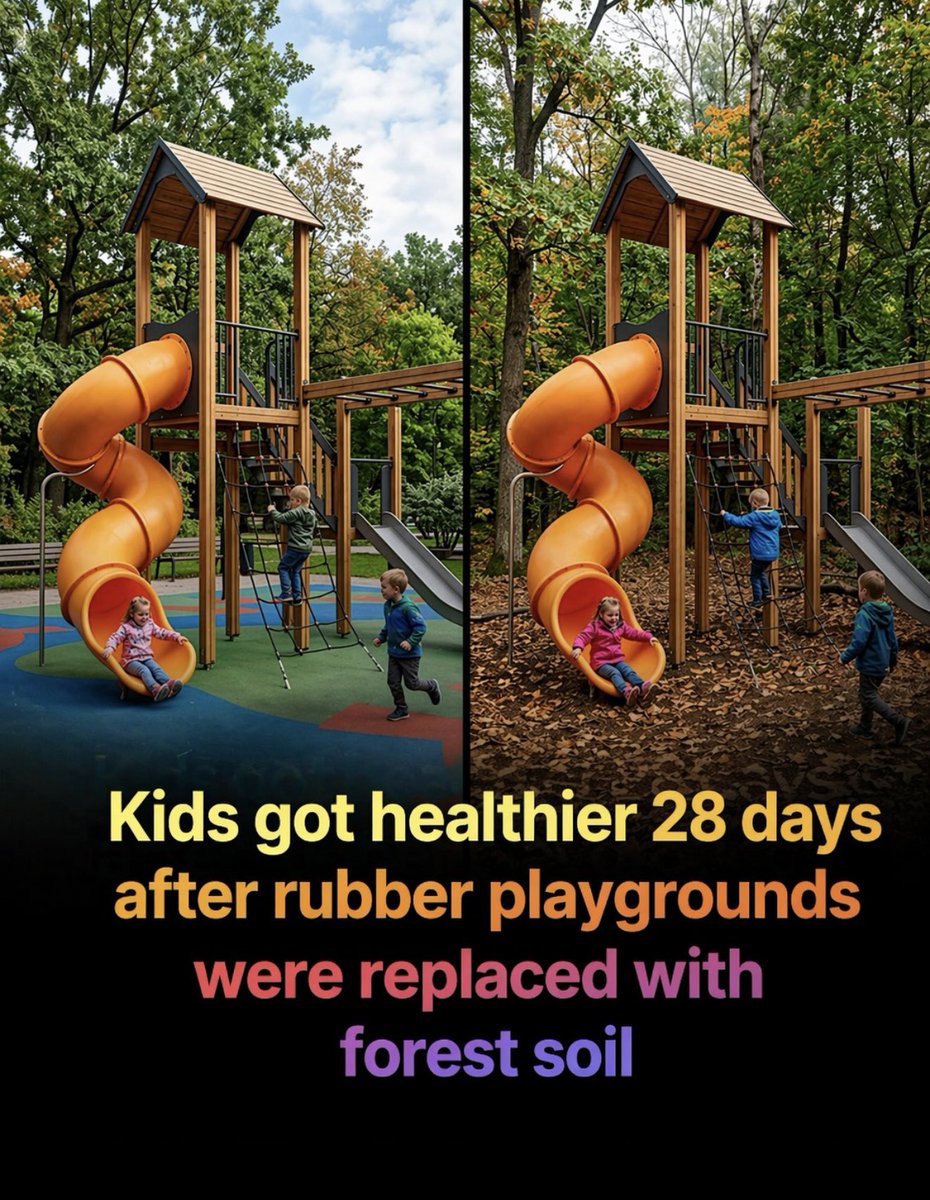
Research in Finland found that simply changing what children play on can quickly influence their immune system.
Scientists redesigned parts of nursery playgrounds by swapping gravel and asphalt for natural forest materials, soil, moss, leaf litter, and native plants, so kids would be exposed to the microbes found in nature. After just 28 days, clear biological differences emerged.
Children who played in these “rewilded” spaces developed a richer mix of microbes on their skin and in their gut. They also showed higher levels of regulatory T-cells, which help the body manage inflammation and reduce the risk of immune overreactions like allergies. These changes were not observed in children who stayed on conventional playground surfaces.
The findings support the biodiversity hypothesis, the idea that limited contact with natural environments, especially in urban life, may be linked to rising allergies and autoimmune conditions.
What stands out is how simple the intervention was. This wasn’t extreme outdoor exposure-just everyday play in a more natural setting. Even small, regular contact with soil and vegetation appears to shape the body’s internal ecosystem and how the immune system develops.
Learn more:
"Dirty Playgrounds: How Rewilding Finnish Schools Transformed
Children's Health." LettsSafari
I made this at nearly 3 AM about David Wilcock who, upon official confirmation of his death, will be added to my holistic doctor/scientist research death series that I’ve had since 2015. The link is below and you can follow updates on my Substack
Cash for Clunkers destroyed 690,000 functional vehicles in 2009, creating an artificial scarcity that rippled through used car markets for over a decade. The Obama administration sold this $3 billion program as environmental salvation and economic stimulus, but any free market economist could predict the real outcome: massive wealth destruction disguised as progress.
The program forced dealers to pour sodium silicate into engines, permanently destroying cars that poor families could have afforded. Politicians eliminated the bottom tier of the used car market overnight. Suddenly, a reliable $3,000 Honda Civic became a $7,000 Honda Civic (if you could find one). The supposed beneficiaries — working-class Americans who needed affordable transportation — got priced out entirely.
Government intervention always creates unseen victims, and Cash for Clunkers delivered them by the millions. Single mothers, college students, and minimum-wage workers watched their mobility options vanish as used car prices soared 30% between 2009 and 2014. The environmental gains proved negligible too: most clunkers averaged 15-17 MPG while replacements hit 24-25 MPG. Destroying half a million cars to improve average fuel economy by 8 MPG represents the kind of central planning that would give Soviet bureaucrats a hard-on.
The wealth destruction extended beyond sticker prices. Higher transportation costs forced people into longer payment terms, creating a debt cycle that persists today. Cash for Clunkers normalized 84-month auto loans, turning cars from depreciating assets into multi-year financial anchors.
Bureaucrats congratulated themselves for moving inventory off dealer lots while condemning an entire generation to transportation poverty.