#PauseForThought
Every year, sometimes twice a year, I look forward to going home to Zimbabwe.
Zimbabwe is home. It is where my umbilical cord was buried. It is where my roots are. It is where, God willing, I hope to spend my twilight years.
In a few years' time, when I finally decide to return for good, I will pack my belongings, my work tools, my Partial Discharge detectors, Hipot testers, Tan Delta test sets, transformer testing equipment and all the other instruments that have been part of my working life, load them into a container and head home to be among my people.
But every time I visit, there is one thought that I can never completely silence.
What would happen if something went terribly wrong? When I'm driving through places like Zai Rimwe, Mutekedza or Mupatsi on my way to rural Njanja, I sometimes catch myself thinking about the unthinkable.
What if there was an accident out here?
Would someone be able to call an ambulance?
Would an ambulance come?
If the situation was serious, would there be access to an air ambulance?
If people were trapped in a vehicle, would the fire brigade arrive in time?
Where would the injured be taken?
Would the nearest hospital have the equipment, medicines and resources needed to save a life?
These are not political questions.
These are human questions.
They affect the wealthy businessman in a luxury vehicle just as much as they affect the pensioner travelling on a rural bus.
A million dollars in the boot of a Rolls-Royce means nothing when a person is trapped under twisted metal and every minute counts.
In those moments, status disappears.
Politics disappears.
Connections disappear.
All that matters is whether help is coming.
Whether the ambulance arrives.
Whether the rescue team arrives.
Whether the hospital can do what it was built to do.
Living in the UK has taught me many things. Life here is far from perfect, but one thing that gives people peace of mind is knowing that if tragedy strikes, a system exists. Ambulances, fire services, air ambulances and hospitals may not be flawless, but they are there. People know that when they dial for help, help is on its way.
That sense of security is priceless.
Healthcare and emergency services are not luxuries.
They are not political projects.
They are among the most important investments any nation can make because every single one of us is mortal.
No title, no office, no amount of wealth, no security detail and no political influence can prevent an accident, a stroke, a heart attack or a medical emergency.
Life can change in a second.
That is why I believe we should all be talking more about hospitals, ambulances, rescue services and emergency preparedness.
Not because we expect disaster.
But because we all hope to survive it if it comes.
This is not criticism.
It is concern.
It is the concern of a son of the soil who loves his country and wants the same peace of mind for Zimbabweans that people in many other countries take for granted.
Some things are worth putting ahead of everything else.
Saving lives is one of them.
END.
@Siya_Nonkosi@lucyjaynewhite1@Mkhize_vela You should have a skill to offer 1st before you entertain such a dream my brother,that's why even South Africans with critical skills also move to other parts of the world as they are sort after.
@Siya_Nonkosi@lucyjaynewhite1@Mkhize_vela 😂😂😂 Tweeter is not a WhatsApp group,if you tweet nonsense you will be responded to and location doesn't matter coz tweeter is worldwide 😉
@Siya_Nonkosi@lucyjaynewhite1@Mkhize_vela Same with Cricket and Swimming team you will never complain because you have been conditioned to unconditionally accept them as more South African than a black person with an unfamiliar surname
@PieterVand37940 For someone who supposedly owned combine harvesters and tractors that cost millions and now celebrates having clothes is totally bonkers 😂😂😂😂
The same people who can’t tell the difference between a school and a naval base - using the most advanced tech in the world - are the same people who are telling us that Iran was on the verge of going nuclear. Just trust them.
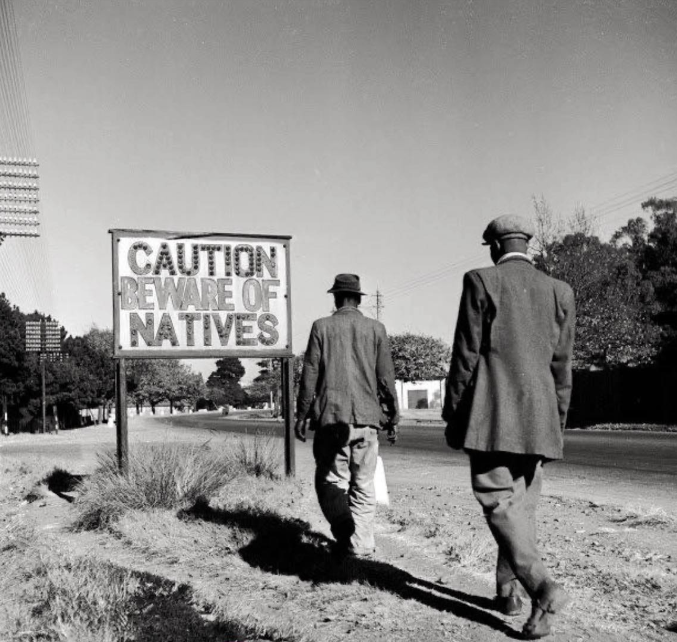
My biggest problem with modern history lessons as an African is we're taught it from a Euro/American centric view
As an African you can't convince me Hitler was the most evil man to ever live. Sure he was evil to the Europeans
But to an African from the Congo, King Leopold who butchered them is the most evil man
To a black South African, Jan Van Riebeeck who took their land is the most evil man
To a Zimbabwean, Zambian or Malawian, Cecil John Rhodes is the most evil man
If our forefathers had the power to k!ll any of these men, the least of their concerns would be a mad man in Europe
Why is our African history minimized but European history magnified?