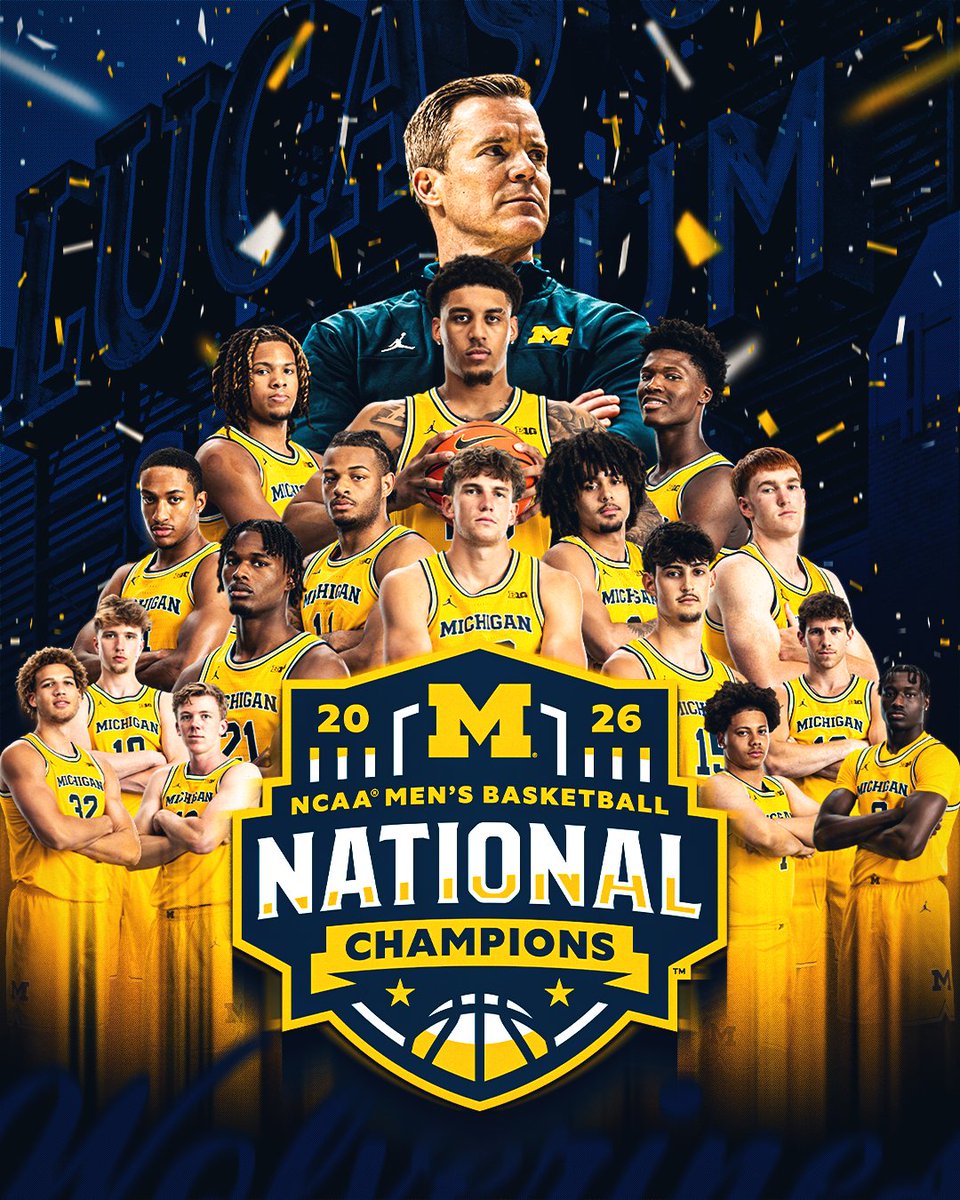
DUSTY MAY WINS IT ALL IN ONLY HIS SECOND YEAR AS MICHIGAN’S HEAD COACH 😤
He’s just the fifth coach in NCAA history to become a champion in his first two seasons at a school 👏
What is truly the difference on justification between Rome and the Reformed?
Roman Catholics and Reformed agree that there is an infusion of grace in justification. The new birth through the Holy Spirit affects the gift of supernatural faith. So in this sense one can speak of an intrinsic righteousness in justification. And lots of ink has been spilled as to which has logical priority, infusion or imputation. However, this does not get to the essential question of "how do we have a right standing before God?" The Reformed do not think that the presence of habitual, sanctifying grace is sufficient to put the believer in right standing with God, such that his works are acceptable to God.
For Rome, one can be in a state of justification before God - reckoned righteous - without the continual non-imputation of the sinfulness of concupiscence. This is because, for Rome, concupiscence - the corrupt habit of the soul that causes us to love the things of the flesh more than God - is not itself sin that would require non-imputation/remission.
The Reformed, on the other hand, would argue that in order for our works to be acceptable to God and to be in right standing with Him, the continual non-imputation of the sinfulness of concupiscence is necessary to fulfill the demands of the law of Christ. The basis of that non-imputation of sin is to trust, by faith, in the work of Christ on your behalf, as fully sufficient to meet the demands of perfection that you, by the corruptions of the flesh/concupiscence, cannot meet perfectly.
#ReformationDay
WHO IS CATHOLIC? Calvin must have infuriated Sadoleto and the whole Roman Church by his reply. He told Sadoleto that the Reformation is not only catholic but more catholic than Rome. The Reformers were not peddling novelties, leading the people astray into heretical innovations. If anyone had strayed from the catholic heritage, it was Rome. By contrast, Calvin pursued reform because the Reformation he perpetuated and advanced was committed to renewal. The Reformers believed that their teachings, in contrast to Rome’s, were not only faithful to the sacred Scriptures but allegiant to the catholic tradition that embodied those same biblical teachings. The doctrine the Reformation retrieved only needed retrieving because Rome failed to articulate such beliefs in a way that adhered to the catholic tradition without wavering. As Calvin said with fervidity, “With this [universal/catholic] Church we deny that we have any disagreement. Nay, rather, as we revere her as our mother, so we desire to remain in her bosom.” Calvin said to Sadoleto, We are more catholic than you. “Our agreement with antiquity is far closer than yours,” Calvin insisted. Therefore, Calvin clarified what the Reformation was about, namely, an attempt “to renew that ancient form of the Church, which, at first sullied and distorted by illiterate men of indifferent character, was afterward flagitiously mangled and almost destroyed by the Roman Pontiff and his faction.”6
- The Reformation As Renewal by Matthew Barrett
Chiliasm or Millennarianism, so called from the thousand years mentioned in Rev. 20:2–4, is the expectation of halcyon times, of a sabbath of peaceful and blissful security and prosperity for the Church on earth before the last advent of Christ. In the later Jewish Church expectations of a temporal Messianic kingdom of glory were based upon misinterpretations of prophecy, and even the disciples of Christ were hoodwinked by such dreams (Luke 24:21). In the early days of Christianity Chiliastic ideas were entertained not only by Cerinth and the Montanists, but also by such men as Justin, Irenæus, Lactantius; but Chiliasm was never a generally accepted tenet in the Church. It was combated by the Alexandrian theologians, Eusebius, Jerome, Augustine, etc. In the middle ages Chiliasm was cultivated by various fanatics and their sects, in the age of the Reformation by Anabaptists and other enthusiasts, later by the Weigelians, Labadists, Quakers and many Pietists, the Berlenburg Bible, etc. The modern era of Chiliasm was inaugurated by Bengel and his apocalyptic chronology, and modern theology is largely permeated by millennarian notions in many and varying forms and proportions. The different types of Chiliasm, properly so called, while the same in principle, vary as to the character of the assumed millennium.
August L. Graebner, “Chiliasm or Millennarianism,” in The Lutheran Cyclopedia, ed. Henry Eyster Jacobs and John A. W. Haas (New York: Charles Scribner’s Sons, 1899), 88.
"Despite some anticipations of this position in the early church, Unitarianism needs to be primarily thought of as a product of the Radical Reformation, reflecting the anti-Trinitarianism which emerged in the sixteenth century among some of the *Anabaptists and Renaissance humanists."
Arthur J. Long, “Unitarianism,” in The Dictionary of Historical Theology (Carlisle, Cumbria, U.K.: Paternoster Press, 2000), 557.
#reformation #protestantism #thetrinity
They spent only $20M on production. They are just churning out games with no soul at this point and people keep buying them for the name.
With costs so low, I wonder if they'll ever change. It's cheaper for them to make slop and sue anyone who cares to encroach Pokemon than it is to make actual good games.
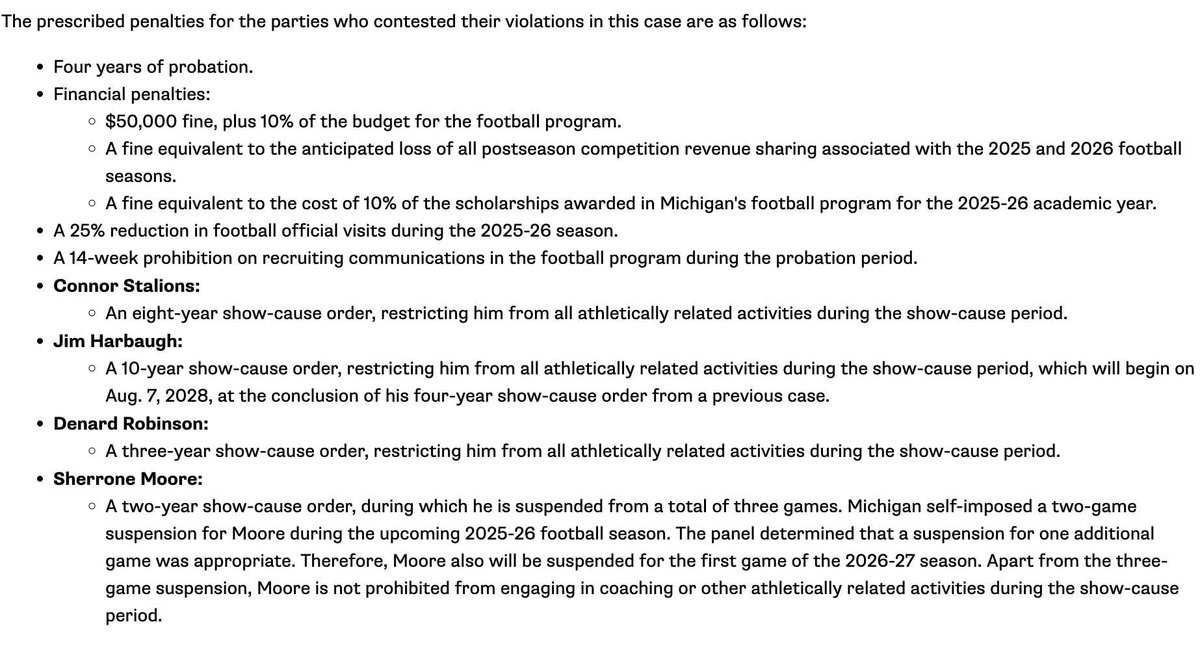
The NCAA says there were sufficient grounds for a multiyear postseason ban. "However, the panel determined that a postseason ban would unfairly penalize student-athletes for the actions of coaches and staff who are no longer associated with the Michigan football program."