Vmax is building an open-ended learning system that generates and optimizes itself on tasks that it creates, avoiding human bias that may corrupt optimal learning curricula.
In PopuLoRA, we instantiate this as co-evolving populations of LLMs performing asymmetric self-play.
> This means you'll be able to build on Claude without needing an API key!
you already could use the agent SDK with a max plan, the ToS was unclear and lots of folks like Conductor were doing this
I am 100% supportive of anthropic restricting usage of its product and inference however it wants to
But messaging this as "you can now do X" instead of "hey we're seriously restricting how you can do X" is gaslighting
Introducing HQ: the AI operating system for your company.
HQ lets your team share knowledge, skills, workflows and API access across the organization, so everyone works from the same foundation.
Team AI is still messy, and hard.
Individuals work in silos. There is no consistent knowledge base. Teams end up with 10 versions of the same skill, all performing at different levels. One person becomes 10x more effective, while everyone else is left trying to catch up.
HQ makes this simple.
Built on top of Codex and Claude Code, HQ sits directly inside your existing workflow. It helps manage your company's context layer, share skills, standardize workflows and control access, so people only see what they need to see.
We built HQ internally to solve a real problem. We use it every day. It has been incredible for enabling our power users, but just as importantly, it has helped the least technical members of our team become incredibly effective AI users.
HQ turns one person's breakthrough into everyone's baseline.
It is a powerful, elegant tool, and we are incredibly excited to share it with the public.
Book a demo below.
This is really well thought out.
Filesystems are the new default abstraction for agents to interact with documents (the new RAG stack in 2026). The issue is actually figuring out how to productize this; you can't "productize" Claude Code over a local file system.
Seems like this tool has all the semantics of filesystems with the versioning of git
Imagine you're building a legal-tech agent that drafts LOIs, redlines contracts, and coordinates signatures.
You grab a harness, spin up a sandbox, and within a day you hit a wall:
– How do documents persist when the sandbox dies?
– How do you control which files an agent can read vs. edit?
– How do humans review and roll back changes?
Swap real-estate docs for case files, claims, audit reports, or pull requests — same problem.
A new agent stack is forming.
> Models handle intelligence.
> Harnesses handle orchestration.
> Sandboxes handle isolation.
The missing layer is storage — and existing solutions weren't designed for agent workloads.
So we built Mesa: a durable, POSIX-compatible filesystem with built-in version control, designed from the ground up for agents.
It supports isolated branches so agents can work in parallel without locks.
Sparse materialization of files means massive document sets load instantly.
Fine-grained history so every change is reviewable and auditable.
Design partners are already running it in production across legal, healthcare, GTM, business ops, and coding agents.
Private beta is open. If you're building enterprise agents that touch long-lived documents, join us 👇
I'm so excited to officially share what we've been cooking up at Mesa: the most powerful filesystem ever built for AI agents.
The dirty secret of every "production" AI agent today: the filesystem is held together with duct tape.
Teams are stitching together S3, GitHub, sandbox-local disks, and homegrown diff logic to give their agents something resembling persistent, versioned storage. None of it works.
S3 isn't designed for parallel agents - concurrent agent writes silently overwrite each other.
GitHub has the semantics but rate-limits you into the ground at agent scale and doesn't give you filesystem ergonomics.
Sandbox disks vanish the moment the container dies.
And your agents don't want to git clone and git push anyway. 𝗧𝗵𝗲𝘆 𝘄𝗮𝗻𝘁 𝘁𝗼 𝗿𝗲𝗮𝗱 𝗮𝗻𝗱 𝘄𝗿𝗶𝘁𝗲 𝗳𝗶𝗹𝗲𝘀. 𝗟𝗶𝗸𝗲 𝗲𝘃𝗲𝗿𝘆 𝗽𝗿𝗼𝗴𝗿𝗮𝗺 𝗲𝘃𝗲𝗿 𝘄𝗿𝗶𝘁𝘁𝗲𝗻.
So we built the missing layer.
Mesa is a durable, POSIX-compatible filesystem with version control built in. Branches, diffs, history, rollback, access control — every primitive a codebase has, for any file type, at agent scale. You mount it. Your agent uses it like a normal filesystem. We handle the rest.
Private beta is live. Link in comments.
Introducing Mesa: the most powerful filesystem ever built, designed specifically for enterprise AI agents.
Every team building agents eventually hits the same wall: where do the files live?
Not the chat history, the actual artifacts the agent works on.
> The contracts your agent redlined
> The claim files it updated
> The 200-page audit report it edited overnight while you were asleep
Today those documents live in a sandbox that dies in 30 minutes, an S3 bucket where concurrent writes clobber each other, or a GitHub repo that was never built to absorb agent-scale traffic.
So we built Mesa.
The world's first POSIX-compatible filesystem with built-in version control, designed from the ground up for agents. You mount it into your sandbox like any other filesystem. Your agent reads and writes files normally. Behind the scenes every change is versioned, branchable, reviewable, and rollback-able — like a codebase, for any file type.
Mesa provides
– Branches so agents work in parallel without locking
– Durable storage that survives sandbox death
– Sparse materialization so massive document sets load instantly
– Fine-grained access control per agent
– Full history for human review and audit
Design partners are running Mesa in production across legal, healthcare, GTM, business ops, and coding agents.
Private beta is open: link in the comments
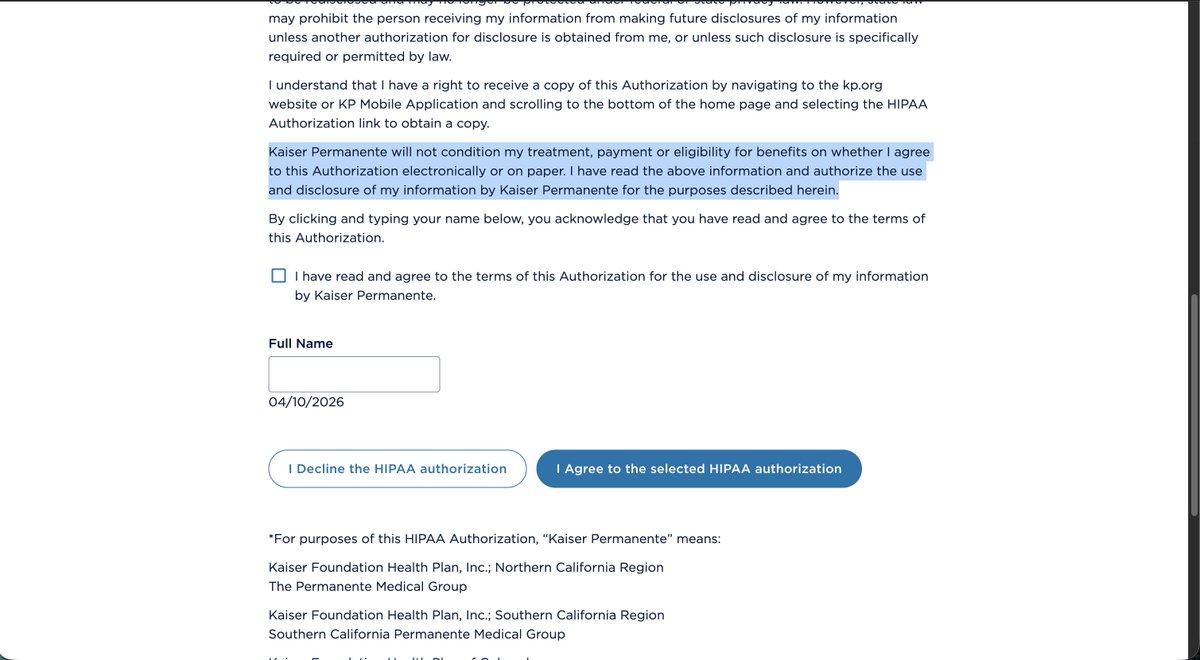
@aboutKP why does this form that asks me if you can sell my information to 3rd party vendors never dismiss? i have hit decline 5 times and it still blocks literally every page. Am I not able to use the web app unless I allow you to sell my info to marketers?