The AI bubble popped, but semiconductor stocks don’t know it yet. All it takes is a drop in the rate of growth, and we are there. GPU rental rates have dropped, hyperscalers have shifted from debt to equity financing, there are declining use cases after subsidies dropped and everyone has been sucked in.
It’s over. There’s an open gap at the 200 DMA, which is more than 40% lower.
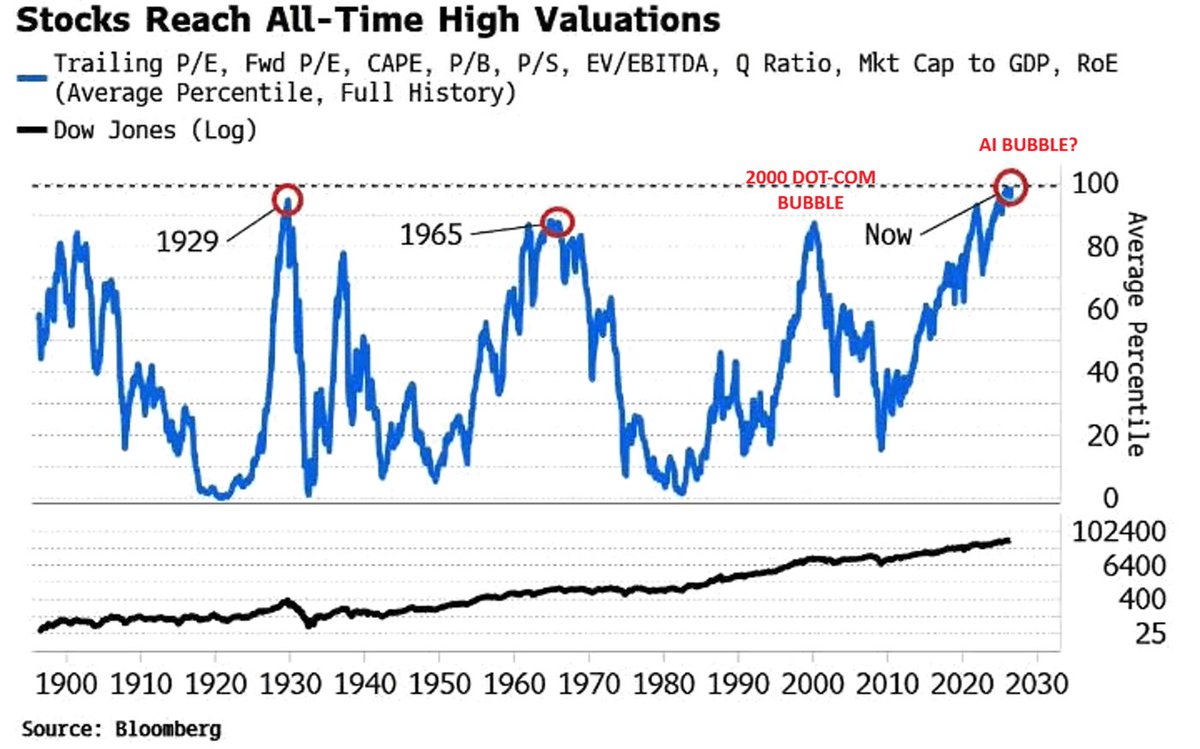
⚠️The US stock market has NEVER been this expensive:
The US equity market valuation has now reached the highest level on record.
This includes P/E, forward P/E, Shiller P/E, Price-to-Book, Price-to-Sales, EV/EBITDA, Q ratio, Warren Buffett indicator, and Return on Equity (RoE).
This combined metric is now higher than previous peaks seen before the Great Depression in 1929, or at the 2000 Dot-Com Bubble peak.
Historically, such periods have followed years of US stock market underperformance.
Is history set to repeat, or will the US equity market continue to thrive?
”The AI Bubble” in perspective.
What if the doomsayers are right but they have been, and they continue, miss the last +30% of the ”bubble” for their told-you-so moment?
This is indeed what already happened most of this year.
💥BREAKING:
🇺🇸 NEW YORK FED APPARENTLY HELD AN EMERGENCY MEETING WITH WALL STREET BANKS TO DISCUSS MONEY MARKET LIQUIDITY CONCERNS.
THE SYSTEM IS BREAKING.
The Cass Freight index is now back to levels last seen during the pandemic.
Unlike the labor data, this can’t be spun as an AI-displacement narrative.
It’s a clear sign that economic activity is deteriorating sharply.
Major rate cuts still ahead of us, in my view.
SF Fed study examines 150 years of U.S. tariffs and find that they lead to lower inflation and weaker aggregate demand (which raises unemployment) https://t.co/d7d9WmIHHJ
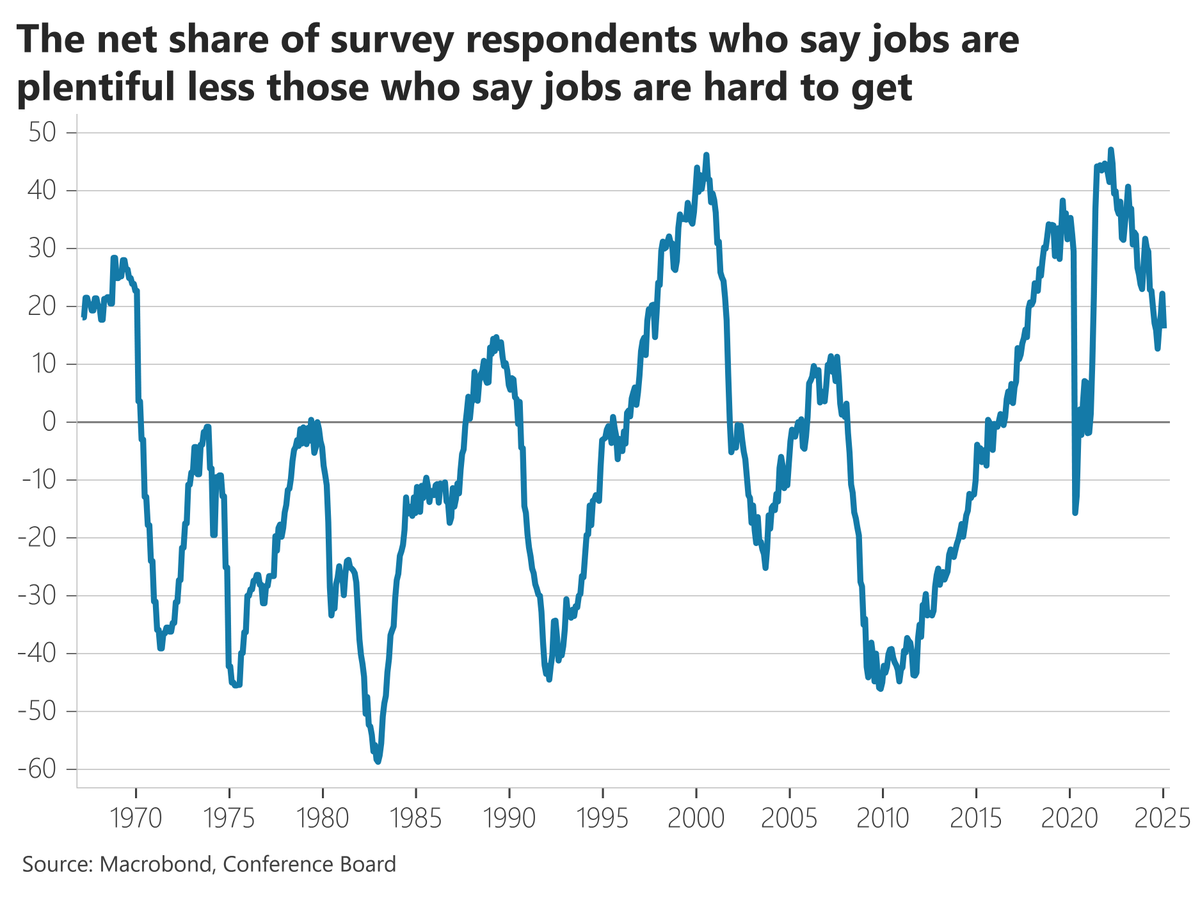
The Conference Board's labor market differential (jobs "plentiful" minus jobs "hard to get") narrowed in January.
It has been declining but in a sawtooth pattern that is historically anomalous.
Youth unemployment is rising:
The US unemployment rate for people aged 16-24 jumped to 9.7% in August, the highest level since June 2021.
By comparison, the national unemployment rate is at 4.2%, near a 3-year high.
Since April 2023, the youth unemployment rate has skyrocketed by 3.1 percentage points.
Such a material increase usually occurs during an economic downturn.
Currently, 16% of 18 to 24 year-olds are neither employed nor enrolled in high school/college according to Fed data.
When the labor market deteriorates, the youth are usually the first to feel it.
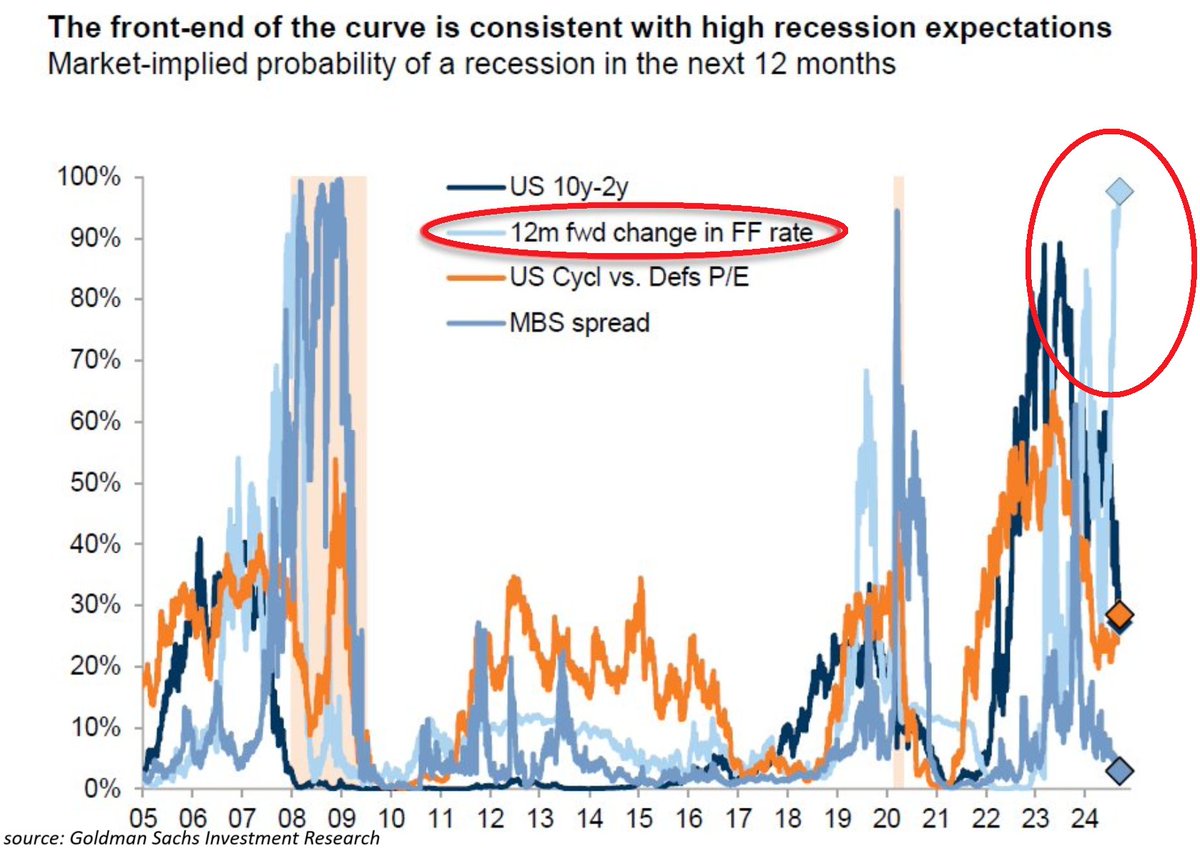
🚨MARKET PRICING SIGNALS A 100% PROBABILITY OF US RECESSION🚨
The market is currently pricing in over 2.00% Fed rate cuts within 12 months, the most since the Financial Crisis.
This implies a 100% probability of a recession in the next 12 months, according to Goldman Sachs.
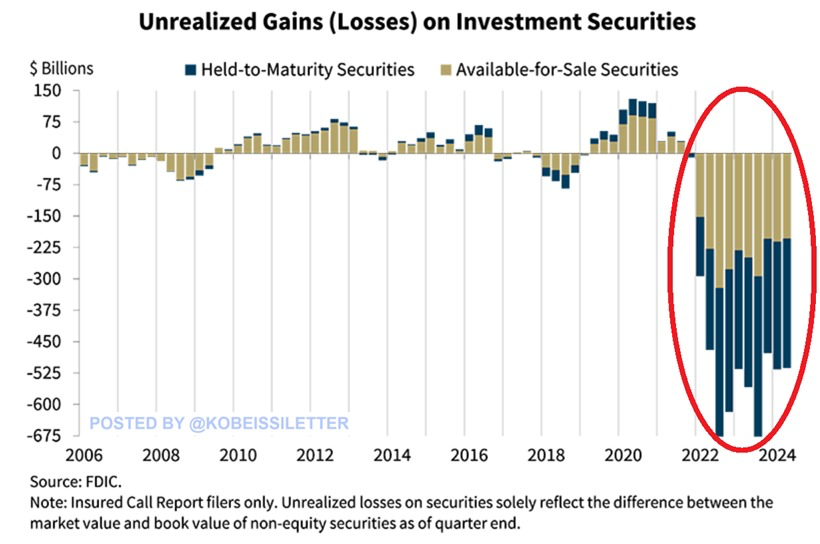
BREAKING: Unrealized losses on investment securities for US banks reached $512.9 billion in Q2 2024.
This is 7 TIMES higher than at the peak of the 2008 Financial Crisis.
Q2 2024 also marked the 11th consecutive quarter of unrealized losses as interest rates continued to pressure the economy.
Bank of America, the second-largest lender in the US, now accounts for $110.8 billion of held-to-maturity securities with unrealized losses, or 20% of the total.
Meanwhile, the number of banks on the FDIC Problem Bank List increased to 66 in Q1 2024, or 1.5% of the aggregate.
Unrealized losses held by banks remain a major issue.
Jan 3, 2001: .5%
Sept 18, 2007: .5%
March 3, 2020: .5%
Sept 18, 2024: .5%
These are the last 3 times the FED has initiated its cutting cycle with .5%.
$SPX #NASDAQ#FOMC#Recession#Economy $QQQ
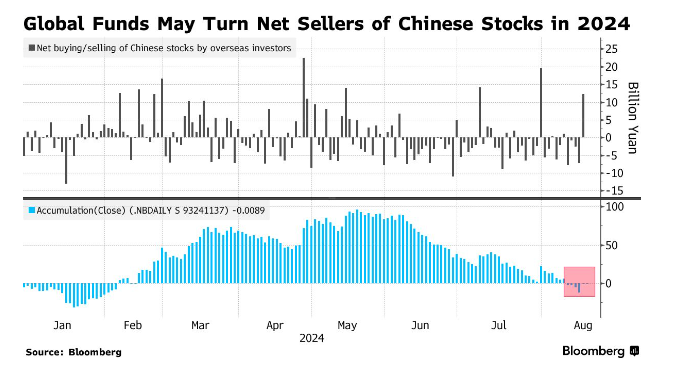
BREAKING 🚨: China
China on track for its first EVER annual outflow from equities by foreign investors. And China has decided they don't want us to know about it so they will stop publishing this data beginning on Monday! 😂
Citi and JPM now expect the Fed to cut rates by 50 bps in Sept, 50 bps in Nov, 25 in Dec.
(Will update this table later today as many of these are now likely getting redrafted.)