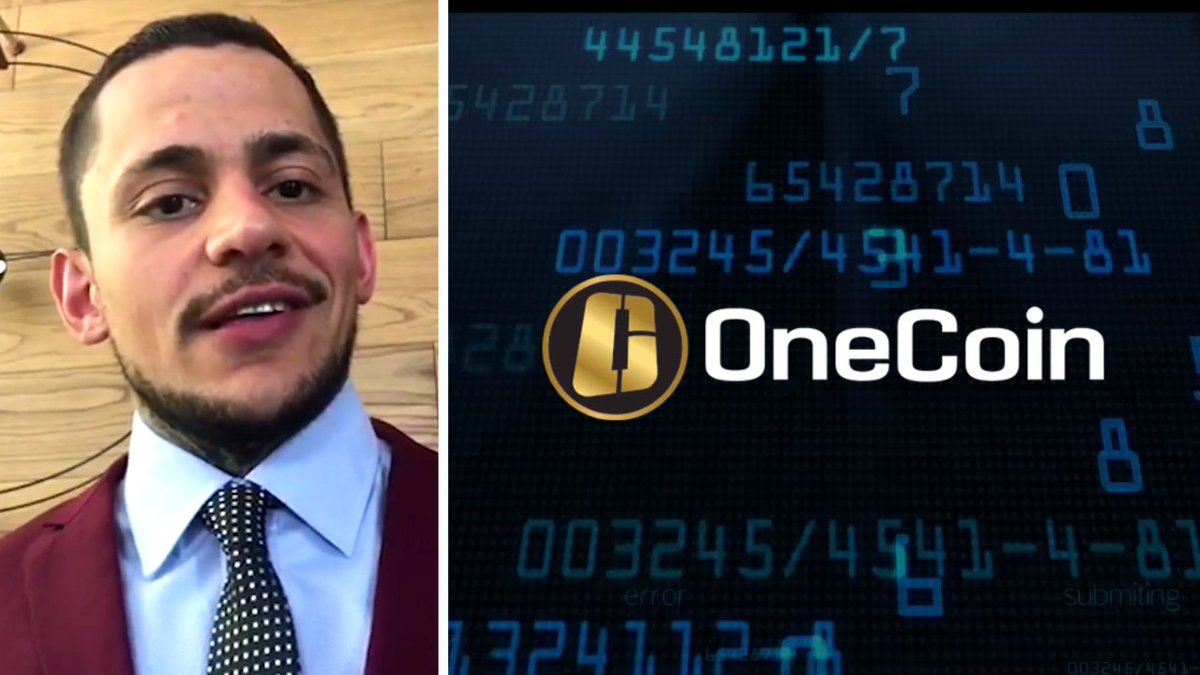
SHE RAISED BILLIONS ON A CRYPTOCURRENCY THAT DIDN'T EXIST. NINE YEARS LATER, THE FBI STILL CAN'T FIND HER
not a bad coin. not an overvalued one.
there was nothing underneath it at all.
ruja ignatova had a law doctorate and a mckinsey line on her cv. in 2014 she stood on a stage and said onecoin would kill bitcoin.
then she filled wembley arena. walked out in a ball gown. the crowd screamed her name.
nobody in that building could do the one thing that would have ended it.
check the chain.
bitcoin's ledger is public. anyone can verify any transaction, right now, for free. onecoin had no public blockchain at all.
so where did the price come from?
the company. and it only ever went up.
that's the entire trick. no exchange. no order book. no buyer on the other side. the value lived in a spreadsheet owned by the people selling it.
and the pitch never sounded like crypto. you bought "educational packages" and the tokens came free with them. you brought in friends. you earned on what they brought in.
which meant the victims weren't traders. they were people who had never owned crypto and trusted the woman on stage.
prosecutors later put the take in the billions, across more than a hundred countries.
october 2017. the investigation is closing in. she boards a flight from sofia to athens.
that is the last confirmed sighting of her. nine years ago.
everyone around her fell. her brother pleaded guilty. her co-founder got 20 years. the lawyer who moved the money got ten.
she's on the fbi's ten most wanted list. there's a reward. investigators have theories.
none of them end with her in custody.
and people are still paying for it. the coin can't be sold. the packages can't be refunded. many of the biggest losers put in savings they were promised would double.
four things that would have caught it:
→ if you can't verify a transaction on a public chain yourself, you don't own crypto. you own a database entry someone else can edit
→ a price that only goes up isn't a strong asset. it's an unpriced one. real markets have sellers
→ getting paid to recruit people is the definition of a pyramid, whatever sits on top of it
→ credentials aren't diligence. the doctorate was real. the mckinsey line was real. neither said anything about the coin
bitcoin's actual breakthrough was never the price.
it was that nobody has to trust anybody to check the ledger.
onecoin sold the word "crypto" with exactly that part removed. a hundred countries didn't notice.
tomorrow: the exchange founder who died with the only password — and what investigators found when they finally opened the wallets.
save this. the check in the first bullet takes 30 seconds and would have saved every person in this story.
An online pastor was charged in CO for a $1.3 million crypto scam. He's released a 9-minute-long video explaining that the Lord told him to sell a cryptocurrency with no clear exit", and spend some of the proceeds on "a home remodel the Lord told us to do".
Here's a supercut.
@Noahhcalls selling your house for bitcoin in 2014 was a dumb decision that happened to work. those are different things, and the internet keeps confusing them.
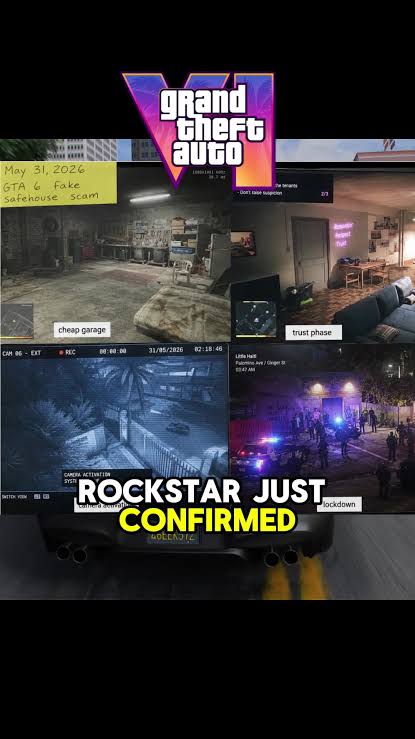
HE LEAKED GTA 6 FROM A TRAVELODGE. FOUR YEARS LATER, FROM A PRISON CELL, HE SAYS THE SOURCE CODE IS STILL OUT THERE
and he sounds surprised nobody has used it yet.
in september 2022 arion kurtaj was 17, under police protection in a hotel room, banned from the internet, laptop confiscated. he got into rockstar's internal slack with a hotel tv, an amazon fire stick, a phone, a keyboard and a mouse.
he didn't break the network. he got in through a person — an employee working from home whose browser data gave him the keys.
once inside, he didn't need an exploit either. he scrolled the channels and opened the pinned files. that's where the builds were.
then he wrote into rockstar's own chat: i'm not an employee, i'm an attacker. contact me in 24 hours or i start publishing the source code.
rockstar didn't. he posted 90 clips to a fan forum and the biggest game on earth was spoiled a year before its first trailer.
here's the part that got missed. he took the videos and the source code. only the videos ever went public.
this year, from a normal prison, he got hold of a phone and talked to the bbc. the code, he said, is definitely somewhere. he seemed surprised it hadn't surfaced.
police still have his iphone from the hotel room. four years on, they still can't open it. he's never given the pin.
the timing from here is almost too neat. his retrial is set for november 2026. GTA 6 ships november 19, 2026. the same month the world finally plays it, he's back in court for leaking it.
what to take from this:
→ the breach didn't start at rockstar. it started on one employee's home machine
→ your chat tool is a file server. anything pinned in slack is as exposed as the weakest account in the workspace
→ stolen data has no expiry. four years later it's still sitting somewhere, waiting on whoever holds it
→ rockstar rebuilt access around hardware security keys after this. that's the fix, and it's available to everyone reading
the leak cost millions and changed nothing about the release. the part still unresolved is the code nobody has seen move.
tomorrow: the $620 million hack that began with a fake job offer sent to one engineer.
save this for november — it's going to be a strange month for rockstar.
A 15-YEAR-OLD HIGH SCHOOL STUDENT FROM POLAND REPORTEDLY MADE $23,000 FROM AN AI GIRLFRIEND
He didn't hire a model.
He didn't rent a studio.
He didn't even need a real girl.
The entire character was generated with AI.
She has a name, personality, backstory, photos, voice and conversations — but there is no real person behind the account.
The interesting part is how simple the setup has become.
A few years ago, building a convincing virtual influencer could take months of work.
Now, one teenager can put together the same basic system in a matter of weeks.
The workflow is basically:
• one file for the girl's personality and backstory
• one for her appearance and visual style
• one for her voice
• one for remembering conversations and subscriber preferences
Every time someone messages her, the AI checks the character information and previous conversations before responding.
So she doesn't suddenly change personality.
She remembers what people told her.
And from the subscriber's perspective, it feels like they're talking to the same person every time.
The crazy part isn't even the $23,000.
It's how cheap and accessible the technology has become.
AI has turned creating a convincing virtual person from a specialized production project into something a teenager with a laptop can build.
And the same system doesn't have to stay on one platform.
The exact workflow can be adapted for Instagram, TikTok, X, Twitch or basically any platform where people follow personalities.
The technology isn't the bottleneck anymore.
Creating the character is.
Finding an audience is.
And making people care about a person who doesn't exist is.
@coocka_ mean vs p99 is the most expensive gap in production. curious which call type ended up being your worst tail offender — chaining or cold context?
HE ALLEGEDLY STOLE $46 MILLION FROM THE US GOVERNMENT. HE GOT CAUGHT BECAUSE HE WANTED TO WIN AN ARGUMENT ON TELEGRAM.
the person watching wasn't an fbi agent. it was a guy on the internet writing the addresses down.
he screen-shared a wallet holding about $2.3 million. then moved more in, live, in front of everyone. by the end, roughly $23 million sat in one address.
blockchain investigator zachxbt traced the wallets backwards. the trail hit a u.s. government seizure address.
some of that crypto had already been stolen once, in the 2016 bitfinex hack. then seized by the government. then, the fbi says, stolen again.
the keys sat with a small virginia contractor, cmdss, hired by the u.s. marshals service in october 2024 to help manage seized crypto. the firm's president is dean daghita. his son is john. online, john went by "lick."
the fbi says he took more than $46 million. he has not been convicted. everything here is an allegation until a court says otherwise.
once it went public, the money ran — through mixers, across chains. it didn't matter. investigators followed it to the cash-out points anyway.
on 4 march, french special forces and the fbi arrested him on saint martin. the photos: handcuffs by a pool. a suitcase of cash. hardware wallets on the table.
what cracked it wasn't a hack. not a leak. not a whistleblower.
ego.
months of silence, undone by a few minutes of wanting to look rich.
the blockchain isn't anonymous. it's patient.
what to take from it:
→ a public chain is a permanent record. "i'll move it later" is not privacy
→ mixers buy time, not invisibility. the trail survived every one of them here
→ whoever holds the keys is the risk. the government's crypto sat with one contractor's family
→ never show balances or addresses online. the same screen share that caught him is how thieves pick targets
save this for the next time someone tells you crypto is untraceable.
In 2009 a Norwegian student spent $27 on Bitcoin for a thesis on encryption.
He forgot about them.
In 2013 he remembered. The wallet was worth $886,000. He sold half and bought an apartment in Oslo.
His name is Kristoffer Koch. Guardian and BBC covered it.
The 5,000 BTC he still holds would be worth ~$340 million today.
He didn't predict Bitcoin. He forgot Bitcoin.
Most early-BTC billionaires share the same story arc: bought for a technical reason, ignored the price for years, remembered at exactly the right time.
The ones who timed the market perfectly are almost nobody. The ones who forgot they owned it are almost everyone at the top of the list.
Attention is expensive. Sometimes forgetting is the trade.
@shevaxgod "leverage that can't be called" is the whole thing. most people blow up not from being wrong, but from being forced to sell while they're wrong