What Morocco is doing with their football today is Impressive. But long before this current Moroccan project, Nigeria had already designed the African template and executed it at the highest level. Between 1984 and 2000, we produced two golden generations that took Nigerian football to unprecedented heights. Unfortunately, politics, inconsistency, and a loss of long-term vision prevented us from building on those achievements.
After winning our first AFCON on home soil in 1980 with a team built largely from players in our domestic league, we realized we had all that is needed to become a big footballing nation. A deliberate development strategy was set in motion. Grassroots football received renewed attention, talent identification expanded, and a clear pathway was created from academies to the League and from there, the national teams.
It took great planning and the process began with the U-20s. Between 1979 and 1989, Nigeria won the U-20 AFCON six times, including four consecutive titles between 1983 and 1989. That youth system became the foundation of our golden era.
Those U-20 players graduated to the Super Eagles (Green Eagles) in batches, which preserved continuity and their chemistry. The results began to show. Between 1984 and 1992, Nigeria reached three AFCON finals, losing to Cameroon in 1984 & 1988. In 1990, we lost the final to Algeria. In 1992, we reached the SF.
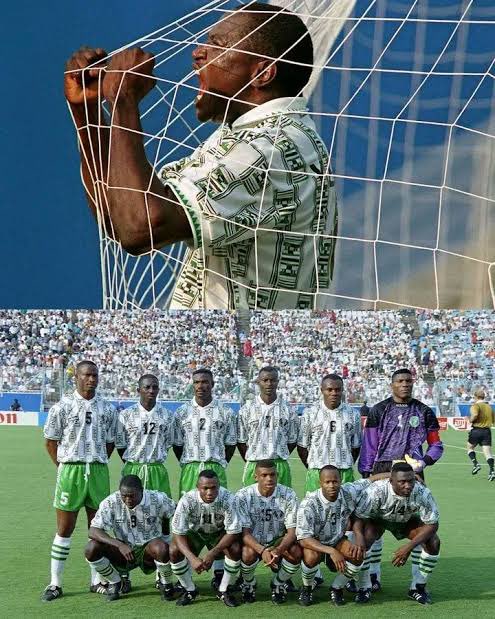
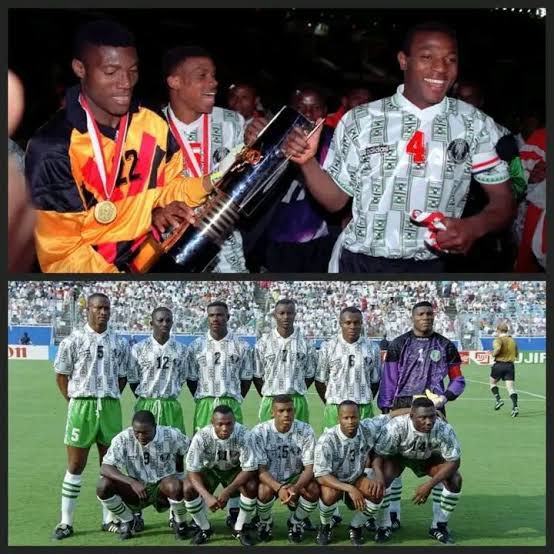
By 1994, that generation had fully matured. Nigeria won the AFCON playing some of the finest football ever seen from an African side. These were players who had developed together for years, and their understanding of one another was almost telepathic.
They carried that form to the 1994 FIFA World Cup in the USA, where Nigeria topped a group which had Bulgaria, Argentina, and Greece. We did this in our very first World Cup appearance. In the Round of 16, we suffered the most heartbreaking defeat in our history, losing narrowly to Italy after extra time. We lost that game due to a lack of KO stage experience and game management to a 10-man Italy who later finished as runners-up.
But, the Super Eagles had announced Nigeria to the world. Our fearless, attacking style of football captivated the footballing world and as a result, we climbed to 5th in the FIFA World Rankings between April and August 1994. The highest ranking ever achieved by an African nation till this day.
We didn’t participate in the 1996 AFCON because then Head of State, General Sani Abacha (the tyrant) withdrew Nigeria from the AFCON in South Africa after President Nelson Mandela condemned the execution of Ken Saro-Wiwa and the Ogoni Nine, along with the regime's human rights abuses. To this day, many believe Nigeria would have successfully defended our title if we had participated.
Later that same year, we shocked the world again and created one of the greatest moments in African football history. Nigeria's Dream Team, built largely from that same development pipeline, won Olympic gold in football at the 1996 Atlanta Olympics. We defeated a star-studded Brazil in one of the greatest matches ever played, and we beat Argentina in the final to be one of the first African countries to win the Men’s football Olympic gold. Remember the Papillo moments?
In 1998, our first golden generation had one final dance on the world stage. We topped our group yet again. To do that, we had to beat a star-studded Spain 3-2! In that game, we had the Oliseh piledriver and that Rasheed Yekini scissors kick.
We lost painfully in the Round of 16 to Denmark. I can’t forget Rasheed Yekini’s eyes so red when he was substituted on in the second half when the game was already out of reach.
By 2000, much of that generation was still together. Nigeria co-hosted the AFCON, and we reached yet another final. We were most consistent over that decade.