أهمية مطالعة كتب الشيخين - ابن تيمية وابن القيم!
شوف ما قاله ابن جراح الكويتي كما في «عالم الكويت» (١٩٩):
«وأعتقد أنّ مَنْ لم يقرأ في هذا الزمان شيئاً من مؤلفات الشيخين مهما بلغ من العلم لا يخلو من بدع وخرافات يعتقدها ديناً والدين بريء منها إلّا مَنْ شاء الله»
HIGHLY RECOMMENDED
Spread the word...
🌸Online Qur’an Classes for Sisters🌸
⚪️ Looking to improve your Qur’an recitation, Tajweed or Hifdh? Don’t miss out!🤍
⚪️ To book your lesson or find out more, please contact the number below on WhatsApp:
📱 +966 55 994 6760
Some claim that the international conference on the Kingdom’s efforts in confronting intellectual deviations, organised by the Islamic University of Madīnah, is no different from conferences attended by the likes of @AbuTaymiyyahMJ, @muftimenk, and others.
Those who make such a claim are either ignorant of the methodology of the Salaf or are people of desires and deviations whose hearts are diseased.
The distinction, in reality, is clearer than the sun.
The conference organised by the Islamic University of Madīnah is an official conference sponsored by an Islamic Salafi state and held by a Salafi institution. Even if some people of desires and innovations participated in it, this falls under the category of establishing the proof against them and their people through their own words.
This is fundamentally different from conferences attended by the likes of @AbuTaymiyyahMJ. Those conferences are organised by private organisations and, in many cases, are organised by people of desires and innovations. Each participant comes representing his own views, allegiance, and affiliation, and therefore becomes a caller to his own group—albeit under the broader banner of responding to atheism or other contemporary issues. In reality, each one is promoting himself and presenting his own group in a favourable light.
The context here is completely different.
This conference took place in the land of Tawḥīd, in defence of the Kingdom of Saudi Arabia and its efforts, and under the auspices of a Salafi institution. The banner being raised is therefore the banner of Tawḥīd and Salafiyyah.
It is well known that Ahl al-Bidʿah have historically criticised the Salafi daʿwah and the methodology of the Kingdom of Saudi Arabia, referring to it as "Wahhabism."
So when individuals who hold such views come to Saudi Arabia and defend the Kingdom, defend the Two Holy Mosques, and condemn those who oppose it, this itself becomes a powerful means of highlighting the Sunnah and the call to Tawḥīd. It also demonstrates to the Ashʿaris and Maturidis in their own lands that the call to Tawḥīd is a legitimate and sound call.
This is from the wisdom of calling to Allāh.
They did not come here to promote their innovations or to advocate for their own sect or organisation. Rather, they came to defend Saudi Arabia and its efforts.
Thus, it is a mistake to equate this conference with private conferences where everyone comes to promote his own methodology, allegiance, and group under the broader banner of addressing atheism and other issues.
Here, the banner is different: they came to highlight Tawḥīd, promote the call to Tawḥīd, and defend the Saudi state as a state founded upon Tawḥīd.
The distinction between the two types of conferences should therefore be obvious to anyone who understands the methodology of the Salaf and considers the context, sponsorship, purpose, and circumstances of each gathering.
اللهم أنعمت فزد …
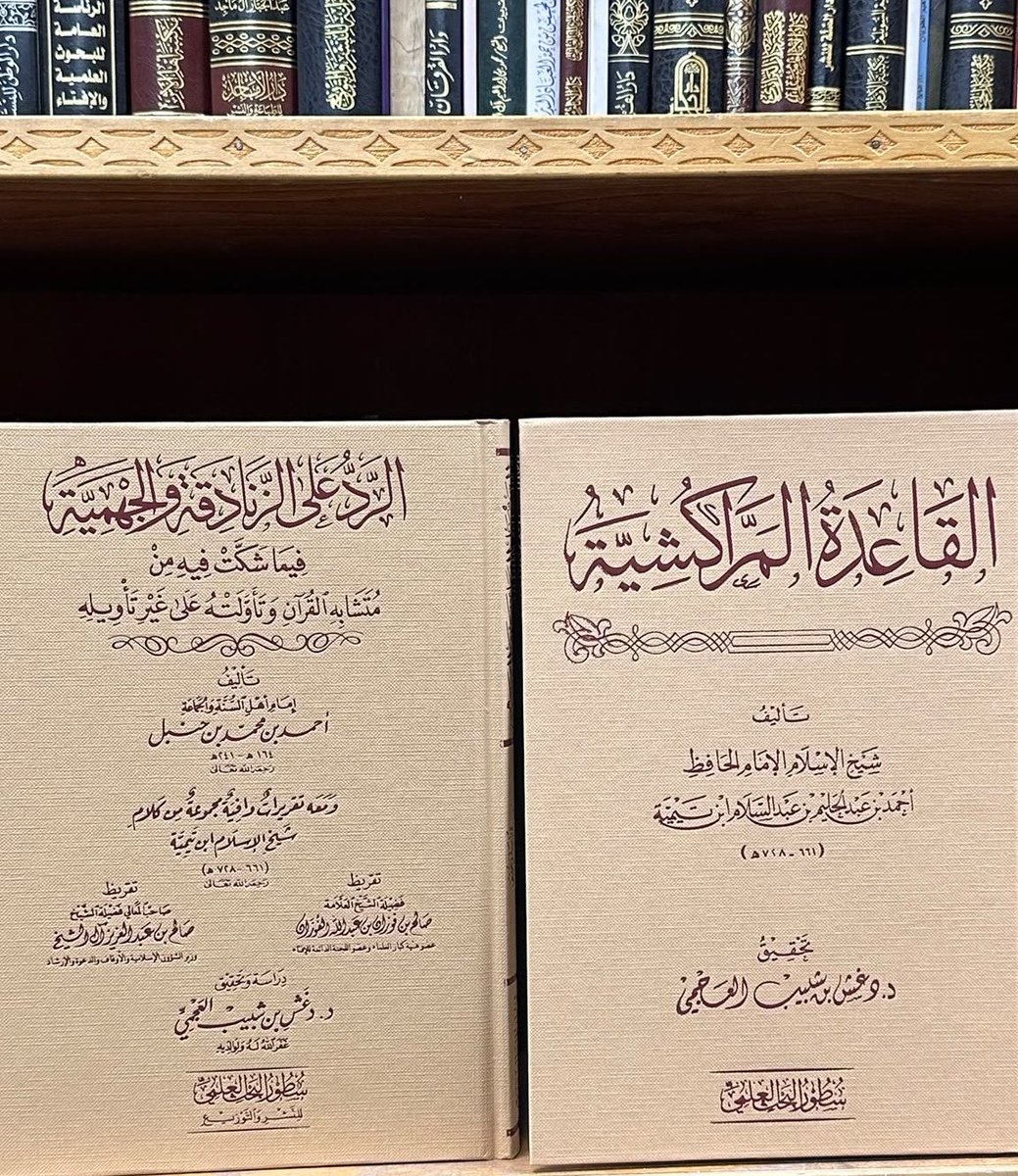
صدرت ووصلتني الطبعة التاسعة من تحقيقي لكتاب :
الرد على الزنادقة والجهمية لإمام أهل السنة أحمد بن حنبل
والطبعة الخامسة لتحقيقي للقاعدة المراكشية
لشيخ الإسلام ابن تيمية
من التناقض المنهجي أن يُقبل الأئمة الأربعة في فروع الفقه وأحكامه، ثم يُزهد في أقوالهم ومنهجهم في أصول الاعتقاد، مع أن لهم تراثًا معتبرًا في تقرير التوحيد والسنة والتحذير من البدع. وليس المقصود جعل أقوالهم في العقائد بمنزلة النصوص المعصومة، وإنما بيان أن التفريق بين الفروع والأصول بهذا الإطلاق يحتاج إلى دليل؛ فالواجب ردّ مسائل الاعتقاد والفقه جميعًا إلى الكتاب والسنة، وفهم سلف الأمة، والاستفادة من تقريرات أئمتها دون تعصب لمذهب أو إمام