@palkisu As a lawyer, I couldn’t help but admire the simplicity with which you explained the concept to your viewers today!
If only my law school IPR professor was so breviloquent in his classroom teachings! Sigh! 🤷🏻♂️
#Gravitas | Only two out of 3,000+ pharma companies in #India are producing #Covid vaccines. With compulsory licensing, India can legally override vaccine patents and authorise more companies to produce jabs. @palkisu tells you why this could be a gamechanger for India's rollout.
I am so happy to see that the Supreme Court is finally acknowledging that reformative theory will not work in India. Only deterrence theory can save us. First J. Pardiwala and now J. Datta.
@barandbench You omitted the killer line Justice Datta said after "And then death sentence is commuted to life sentence by the Supreme Court on the ground that he did not murder the younger child."
"And that is Supreme Court"
He literally slammed the SC in nicer words.
#WATCH | Delhi: Joint CP Nupur Prasad says, "We have received an application from Saurav Das, Co-Convener of Cockroach Janta Party. The application is regarding an intimation for a protest on 10th October at Jantar Mantar. The protest was regarding the accountability of the CEC. This intimation was considered, and it was found that the intimation was given in a very short span of time, whereas as per the prescribed guideline, the intimation has to be received 10 days prior to the protest that is planned. Further, it is also important to mention that on an earlier occasion, when the Cockroach Janta Party was given permission to hold a protest there, they did not follow the lawful directions and did not follow their own undertakings given at that point in time. Therefore, because of not following the legal directions, their own undertaking, and the prevalent law and order situation, and to maintain public safety, law and order, and traffic regulation, this time the permission is rejected; it is not approved. It is important to mention that in the New Delhi area, Section 163 of the BNSS (Bharatiya Nagarik Suraksha Sanhita) is in operation, under which, to maintain public order and safety, a reasonable preventive restriction is in place. It is further important to mention that if anybody violates the provisions of Section 163 of the BNSS, then proper legal action will be taken against them."
Supreme Court hears plea by TMC MP Mahua Moitra to appear virtually before the IO in an FIR against a Facebook post wherein she allegedly made provocative statements
Bench: Justices Dipankar Datta and Sheel Nagu
Don’t know about Rang De Basanti, but let me tell you what some of us millennials actually grew up watching.
I was in primary school during the 1993 Mumbai bombings -- too young to even understand what terrorism meant. But I distinctly remember my mom repeatedly warning me not to pick up anything lying around while playing outside because, you know, it could be a bomb.
That was childhood.
Then came the seemingly endless procession of attacks: the 1993 Mumbai blasts, Red Fort in 2000, Parliament in 2001, the Mumbai bus bombings and Akshardham in 2002, three separate blasts within eight months in Mumbai in 2003, the 2005 Delhi blasts, the 2007 Hyderabad bombings, and the 2008 Bangalore and Ahmedabad blasts.
In July 2006, I was supposed to be on one of the trains that was bombed near Mahim. I stayed back at the office because of a meeting. A completely mundane change of plans is probably the reason I’m alive to type this instead of being a name on a list of the dead.
I remember that evening far better than I remember any stupid movie. Our office went into lockdown. Phones were jammed. People were crying and frantically trying to reach their families. Nobody knew what was happening, whether there were more bombs, or whether someone they loved was lying dead inside a mangled train compartment.
Two years later came 26/11.
I had the misfortune of watching uncensored footage of the aftermath. One clip showed bodies being piled and stacked inside a makeshift room at CST while someone wheeled in another load on a bloodied wheelbarrow, with blood dripping onto the floor. The sanitised footage shown on television didn't come remotely close to what actually happened inside that station.
So yes, us millennials lived through an era where we went to work knowing that the crime of simply boarding the wrong train, getting on the wrong bus, eating at the wrong restaurant, or standing on the wrong street at the wrong fucking moment could get you blown to pieces or riddled with bullets.
Some of us literally went to work wondering, somewhere at the back of our minds, whether this would be the commute we wouldn't come home from.
So please, spare us millennials this sanctimonious horseshit about Rang De Basanti and what some Bollywood movie supposedly should have taught us about how to vote.
@sardesairajdeep Just keep your opinions to yourself. You can’t be a self proclaimed expert in every subject. Stick to politics and cricket. And gracefully retire, if you can. Or if are allowed to. You make ears and eyes bleed discussing football!
@theneilscape Argentina robbed per @Ibra_official the imbecile? 🤣🤣🤣🤣
When VAR don’t come to the rescue, they were thrashed like a mule is thrashed on a farm. No vision. No passion. Only aggression!
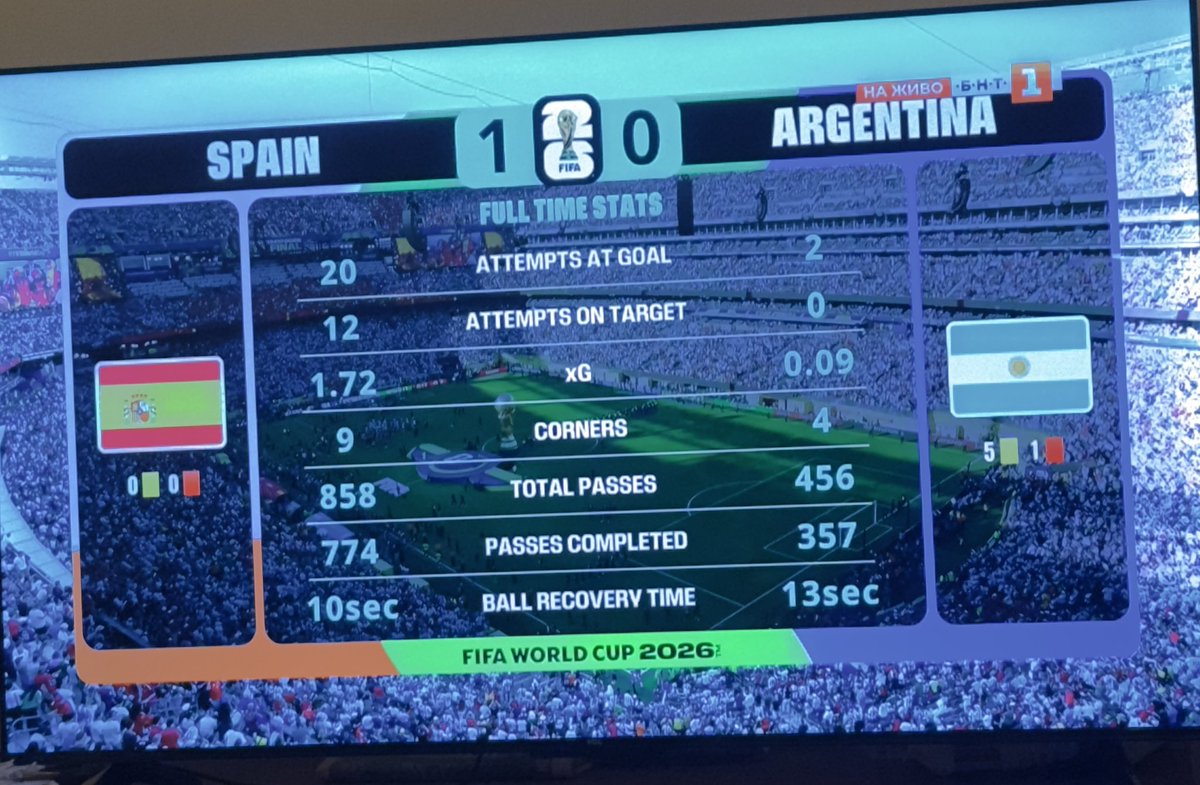
Zero shots on target in 90 mins in a final! Egypt would have been a better!
@tomisinfcb Robbed of what? The zero attempts on target? Hahah. We saw the real Argentina today without fifa support. An absolute shitshow. Farmers league and cheap street fighters
@theneilscape - any expert insights? The respect after losing the final 2014 until the semis of 2022 remained intact. I vouch. Whatever credibility he had had, has evaporated with his attitude on and off the field! Please reply to the doomed tweet 2.0! 🤣😈
🇦🇷👇🏻🧵El gran perdedor de la Copa del Mundo
Sí, me refiero a Lionel Messi. Y no precisamente por haber perdido la Copa del Mundo. En este torneo perdió algo mucho más importante: el respeto de millones de aficionados y la imagen pública, al menos parcialmente positiva, que todavía conservaba.
En 2014, Messi perdió la final del Mundial y prácticamente nada cambió. Seguía siendo un ídolo de masas, admirado y respetado por millones de personas. Sí, tenía detractores deportivos, pero esa discusión permanecía dentro del ámbito futbolístico.
Esta vez fue diferente.
Sus actitudes dentro y fuera de la cancha, sumadas a las ayudas arbitrales que, desde Qatar 2022, han rodeado a Argentina y al propio Messi, terminaron por sacar el debate del nicho futbolístico. La percepción de que ha sido beneficiado por el sistema dejó de ser una opinión de unos cuantos para convertirse, durante este Mundial, en una conversación instalada dentro de la cultura popular.
En estas semanas vimos un claro ejemplo de la psicología de masas. El nivel de rechazo que provocaron Messi y Argentina fue extraordinario; al menos yo nunca había presenciado algo similar. Y no, no fue producto de una campaña organizada ni de que la gente simplemente se dejara influenciar, había suficiente evidencia sobre la mesa.
El aficionado casual empezó a percibir que, partido tras partido, ocurrían situaciones extrañas: un trato distinto para Argentina y para Messi, mayor permisividad hacia ellos y un criterio mucho más riguroso para sus rivales. Al mismo tiempo, numerosos creadores de contenido comenzaron a recopilar jugadas polémicas y decisiones arbitrales que favorecieron a Argentina. Otros fueron todavía más atrás y difundieron recopilaciones de episodios ocurridos a lo largo de más de quince años, donde, a su juicio, Messi también había resultado beneficiado.
Temas como el conflicto de intereses entre el patrocinio de UNICEF al Barcelona, mientras Şenes Erzik ocupaba simultáneamente un cargo directivo en UNICEF y la presidencia de la UEFA; el caso Negreira; los penales de Qatar 2022 y otras polémicas que el aficionado común desconocía, comenzaron a circular masivamente. Millones de personas conocieron por primera vez esos antecedentes y terminaron formando una percepción mucho más negativa sobre todo lo que rodea a Messi.
Todo ello terminó por reforzar, para millones de personas, la idea de que se trata de un futbolista al que el sistema ha protegido y favorecido durante años.
Lo más irónico es que Messi nunca necesitó todo eso. Su talento fue suficiente para marcar una época. Precisamente por eso, su legado fue el que más salió perjudicado en este Mundial. Puede que haya perdido una copa, pero, en términos de imagen pública, credibilidad y percepción internacional, creo que fue el verdadero gran perdedor de este torneo.