✅ Day 1 at @money2020 complete! We witnessed incredible conversations, great energy, and a happy hour that brought the industry together.
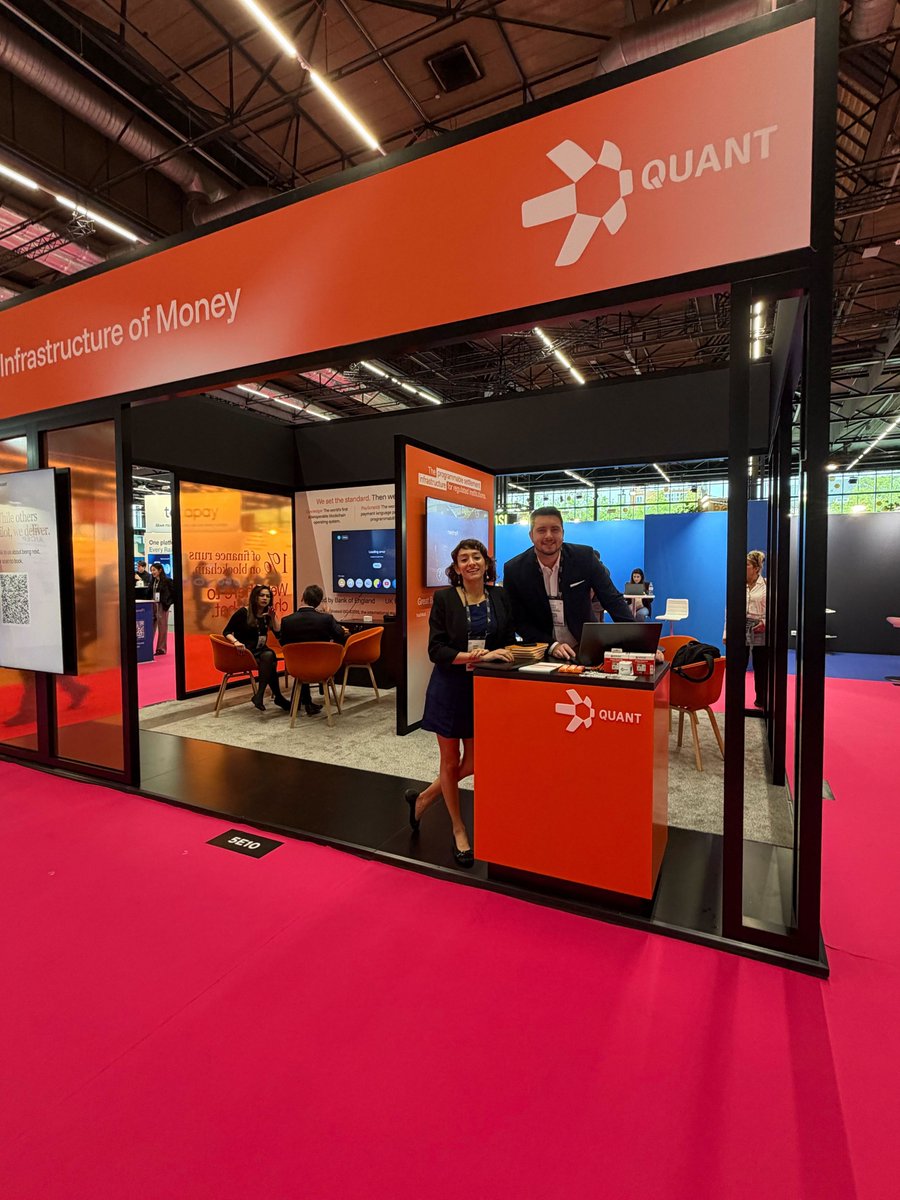
Day 2 is well underway. Find us at stand 5E10 - it's not too late to come and meet the team behind the international standards for blockchain and interoperability.
Here's what's waiting for you:
➡️ Live demo: watch a tokenised deposit settle in seconds on Quant rails
➡️ Walk-through: see how Quant connects to existing core banking systems and blockchain networks
➡️ Meet with our commercial team: map your pilot-to-production roadmap
We set the standard. Then we built the technology. Come and see what that looks like in practice.
#TokenisedDeposits #ProgrammableMoney #Money2020
🌐 Quant Fusion Rollup Goes Live: 74 Blockchains, One Institutional Layer
The world's first multi-ledger rollup is now on mainnet, exactly 10 years after @gverdian started @quant_network.
74 networks. One execution environment. No bridges. No wrapped tokens.
Connected at launch:
• Ethereum, Bitcoin, Solana, XRP Ledger
• Polygon, Avalanche, Arbitrum, Base, BNB
• Hyperledger, R3 Corda, enterprise EVMs
• CBDC testbeds and tokenized deposit rails
uUSDC and uBUIDL collapse fragmented liquidity into single canonical assets.
Layer 2.5. Built for institutions.
ethereum:0x4a220e6096b25eadb88358cb44068a3248254675 ripple:native xdce-crowd-sale:native solana:So11111111111111111111111111111111111111112 solana:46UZwpcj8B16t31Gce8WXczxarJUKUs5ijVMM9r4ELJM bitcoin:native ethereum:native
The Fusion Rollup is live on mainnet. The world's first multi-ledger rollup - connected to multiple blockchain networks in a single, unified execution environment.
One environment. Every network that matters. Built for institutions.
→ https://t.co/ta3rEg5j4h
→ https://t.co/bmUjr7Y2gQ
Learn more: https://t.co/GZrO5x1l9H
#FusionRollup #Blockchain
The #FusionRollup is live on mainnet.
The world's first multi-ledger rollup, purpose-built for institutions operating across multiple blockchains at once.
Learn more about the launch here: https://t.co/jAY6Y0KLF5
#QuantFusion#EnterpriseBlockchain#MultiLedger
Today we go live on mainnet with the Fusion Rollup, the world's first multi-ledger rollup, connecting 74 blockchain networks in one unified environment, built for institutions.
When I started @quantnetwork in 2015, the vision was simple: make blockchain work for institutions at scale across any network, without the complexity and fragmentation that's held the industry back.
For years, institutions had two bad options: bet everything on a single chain, or stitch together insecure bridges across many. Fusion refuses that trade-off. It connects to many networks at once, moving assets, settling transactions, and messaging across chains as built-in capabilities, not workarounds.
The breakthrough is unified assets. A example of a stablecoin like USDC or tokenised fund like BUIDL or any other digital assetspread across 7 chains collapses into one: uUSDC or uBUIDL. One asset, one liquidity pool, instead of 7 copies and 7 fragmented pools. Each stays anchored to its origin chain and is withdrawable anytime. No custody or compliance trade-offs.
This isn't another layer 2 or a blockchain. It's a new category of infrastructure and it's live.
Read more on: https://t.co/MGfs1FgA6T
→ https://t.co/OQBfu2CEZb
→ https://t.co/4o9nnaA7zc
#QuantFusion #EnterpriseBlockchain #MultiLedgerRolleUp #FusionRollup
#64 , an insult?
Yes, for a project already working with the world’s largest central banks, commercial banks, payment networks, Fortune 500 companies, and governments ✅
Compare that to 63 projects above it that mostly delivered nothing compared to Quant.
And that’s just the beginning:
• 0 token inflation
• Launching groundreaking tech that unifies every crypto asset for the first time - true interoperability for the first time for defi (no more bridging or wrapping)
• Staking powered by real utility
Expect many more green days like this in the coming years, going against the market📈
I’ve noticed more and more accounts talking about Quant.
Slowly but surely, $QNT will climb to the top 10 coming years. No speculation, no bullshit marketing, but through solid, real achievements and lasting revenue. Let success build the noise. Retail will follow
$QNT is the way 🔮
Let this sink in 🤯🔥
Murex touches ~25% of global FX volume.
Global FX = ~$9.5 TRILLION per day. Yes, DAILY.
Now connect the dots…
$QNT (not even top 60..) is integrating into this world, while also being embedded in:
• Tokenized deposits (GBTD 🇬🇧) with some of the world largst banks
• Digital euro infrastructure, 28 central banks (ECB🇪🇺🏦
• Bank of England synch labs (multiple parts) 💷
• Oracle blockchain stack (leading enterprise platform)🔮
• Central bank of Japan 🇯🇵 (confirmed by employee, usecase still unknown ⏳)
• And more behind the scenes under NDA, and not even mentioning likes of SIA, RLN etc
None of this is live. But it will be🤝
This is a once-in-a-cycle asymmetry play. 🚀
A decade in the making, we have published an ISO standard for blockchain interoperability.
This is a milestone I've been working towards since 2015, Remitt was founded with the conviction that blockchains could transform financial services but only if the industry solved interoperability and harmonised around global standards. Without that, blockchain would remain fragmented, siloed, and locked out of mainstream institutional adoption.
In April 2016, we published what was the world's first proposal for a blockchain standard (https://t.co/SL83Yl4Ejr) a bold move at a time when the industry was still largely focused on proofs of concept and competing protocol narratives, not standardisation.
The idea was simple but ambitious: if blockchains were going to serve global markets, they needed a common framework that transcended any single protocol or vendor.
Central to this thinking from the very beginning was the concept of a multi-gateway architecture, leveraging the know-how of 20 years of experience in cybersecurity to frame the principle that interoperability shouldn't depend on a single bridge or point-to-point connection, but on a layered gateway model that could abstract away the differences between underlying DLTs and connect them through a common interface. This was the architectural foundation of what would become Overledger, and it was also the design philosophy we brought to the standards process.
The belief was that a viable international standard for blockchain interoperability had to be protocol-agnostic and gateway-driven, enabling any DLT to communicate with any other DLT (any-to-any) and with existing networks, without requiring those ledgers to change how they operate. The standard and the technology were born from the same insight.
That same year, I worked closely with the team from @standardsaus (Standards Australia), who had the foresight in 2015 to champion the initiative at the international level. Together, we pushed for ISO to establish a dedicated Technical Committee for blockchain and not to be absorbed into an existing committee, but to stand on its own as a recognition that this technology warranted its own global standards programme. The industry demand was there, the use cases were multiplying, and the fragmentation was becoming a real barrier.
In September 2016, the New Work Item Proposal (NWIP) received global approval, and ISO formally gave the green light to establish a new Technical Committee (https://t.co/7biJjvHRk9). TC 307 — Blockchain and Electronic Distributed Ledger Technologies — was born (https://t.co/5SsFPIw0HH). The inaugural meeting was held in Sydney in April 2017, and from that moment the real work began.
As the standards work progressed internationally, the mission at Remitt was evolving too. What started as an effort to use blockchains for financial services and solve interoperability grew into something far larger, a full enterprise infrastructure platform for connecting any blockchain to any network. Remitt became Quant, and we built Overledger, the world's first blockchain operating system to deliver on that original vision. The multi-gateway architecture that informed the standards thinking became the core of Overledger's design: a technology layer that sits above all blockchains, providing institutions with a single integration point to access any DLT, any network, and any existing system. The interoperability challenge that drove the standards work was the same challenge we set out to solve commercially and the two efforts reinforced each other throughout.
For close to a decade since TC 307's formation, subject matter experts across the world have contributed their time and expertise to Working Group 7 — Interoperability is the committee I chair.
International standards are not built quickly they are built through consensus, technical debate, and relentless refinement. The same methodology and rigour that created the Internet, through publishing standards. The result is a published international standard for blockchain interoperability.
🔗 https://t.co/GRoR7fXNLQ
A huge thank you to @isostandards as the international standards developing organisation, to the team at @standardsaus who started the initiative in 2015 and worked tirelessly to get TC 307 approved and established globally, and to every subject matter expert who contributed to Working Group 7 over the years. This would not exist without that collective effort.
From a blog post proposing the world's first blockchain standard in 2016, to a published ISO standard in 2026 and from Remitt to Quant, from an architectural concept of multi-gateway interoperability to Overledger and a global standard, this has been a decade-long journey of building both the standards and the technology to make blockchain interoperability a reality for institutions worldwide.
There is still much more work ahead. More standards to develop, more to evolve, and more to build. But today, we mark a significant milestone.
#Blockchain #ISO #Interoperability #Standards #TC307 #DLT #Quant #Overledger
Financial institutions adopting #DLT interoperability need infrastructure that integrates with existing systems rather than replacing them.
Quant’s #Overledger platform addresses this challenge by providing a comprehensive #interoperability layer that connects any distributed ledger technology while maintaining the privacy, scalability, security, and operational resilience that #financialservices demand.
Find out how in this article: https://t.co/XtuoCxzWUY
A decade in the making, we have published an ISO standard for blockchain interoperability.
This is a milestone I've been working towards since 2015, Remitt was founded with the conviction that blockchains could transform financial services but only if the industry solved interoperability and harmonised around global standards. Without that, blockchain would remain fragmented, siloed, and locked out of mainstream institutional adoption.
In April 2016, we published what was the world's first proposal for a blockchain standard (https://t.co/SL83Yl4Ejr) a bold move at a time when the industry was still largely focused on proofs of concept and competing protocol narratives, not standardisation.
The idea was simple but ambitious: if blockchains were going to serve global markets, they needed a common framework that transcended any single protocol or vendor.
Central to this thinking from the very beginning was the concept of a multi-gateway architecture, leveraging the know-how of 20 years of experience in cybersecurity to frame the principle that interoperability shouldn't depend on a single bridge or point-to-point connection, but on a layered gateway model that could abstract away the differences between underlying DLTs and connect them through a common interface. This was the architectural foundation of what would become Overledger, and it was also the design philosophy we brought to the standards process.
The belief was that a viable international standard for blockchain interoperability had to be protocol-agnostic and gateway-driven, enabling any DLT to communicate with any other DLT (any-to-any) and with existing networks, without requiring those ledgers to change how they operate. The standard and the technology were born from the same insight.
That same year, I worked closely with the team from @standardsaus (Standards Australia), who had the foresight in 2015 to champion the initiative at the international level. Together, we pushed for ISO to establish a dedicated Technical Committee for blockchain and not to be absorbed into an existing committee, but to stand on its own as a recognition that this technology warranted its own global standards programme. The industry demand was there, the use cases were multiplying, and the fragmentation was becoming a real barrier.
In September 2016, the New Work Item Proposal (NWIP) received global approval, and ISO formally gave the green light to establish a new Technical Committee (https://t.co/7biJjvHRk9). TC 307 — Blockchain and Electronic Distributed Ledger Technologies — was born (https://t.co/5SsFPIw0HH). The inaugural meeting was held in Sydney in April 2017, and from that moment the real work began.
As the standards work progressed internationally, the mission at Remitt was evolving too. What started as an effort to use blockchains for financial services and solve interoperability grew into something far larger, a full enterprise infrastructure platform for connecting any blockchain to any network. Remitt became Quant, and we built Overledger, the world's first blockchain operating system to deliver on that original vision. The multi-gateway architecture that informed the standards thinking became the core of Overledger's design: a technology layer that sits above all blockchains, providing institutions with a single integration point to access any DLT, any network, and any existing system. The interoperability challenge that drove the standards work was the same challenge we set out to solve commercially and the two efforts reinforced each other throughout.
For close to a decade since TC 307's formation, subject matter experts across the world have contributed their time and expertise to Working Group 7 — Interoperability is the committee I chair.
International standards are not built quickly they are built through consensus, technical debate, and relentless refinement. The same methodology and rigour that created the Internet, through publishing standards. The result is a published international standard for blockchain interoperability.
🔗 https://t.co/GRoR7fXNLQ
A huge thank you to @isostandards as the international standards developing organisation, to the team at @standardsaus who started the initiative in 2015 and worked tirelessly to get TC 307 approved and established globally, and to every subject matter expert who contributed to Working Group 7 over the years. This would not exist without that collective effort.
From a blog post proposing the world's first blockchain standard in 2016, to a published ISO standard in 2026 and from Remitt to Quant, from an architectural concept of multi-gateway interoperability to Overledger and a global standard, this has been a decade-long journey of building both the standards and the technology to make blockchain interoperability a reality for institutions worldwide.
There is still much more work ahead. More standards to develop, more to evolve, and more to build. But today, we mark a significant milestone.
#Blockchain #ISO #Interoperability #Standards #TC307 #DLT #Quant #Overledger
Delighted to share that @quantnetwork has been selected for the @bankofengland’s Synchronisation Lab as part of the RTGS Future Roadmap.
Our use case: atomic, multi-bank treasury operations powered by Quant Flow and PayScript®. All payment legs settle together or not at all, eliminating partial settlement risk across multiple banks in a single action.
This is programmable finance that works within existing market structures, not around them.
https://t.co/I5rmbsDLAu
#RTGS #TreasuryManagement #PaymentsInnovation #FinancialInfrastructure #SynchronisationLab #ProgrammableMoney
BREAKING🚨
$QNT cooking on multiple front with the central Bank of England 🏴 🏦
(2026 verified✅)
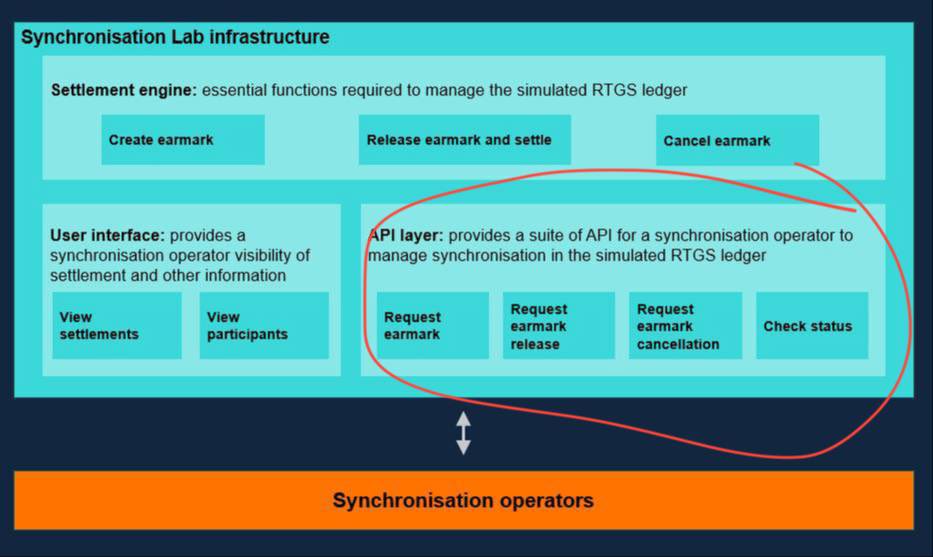
1) Core API Layer in th Synchroninized lab where all other operators tap into🔥
2) Quants brand new product ‘FLOW’ being tested��🏻
3) GBTD (tokenized deposits with 6 of the worlds largest banks build on $QNT Overledger) orchestation layer usecase
On another level💁♂️
🔮🔮🔮🔮
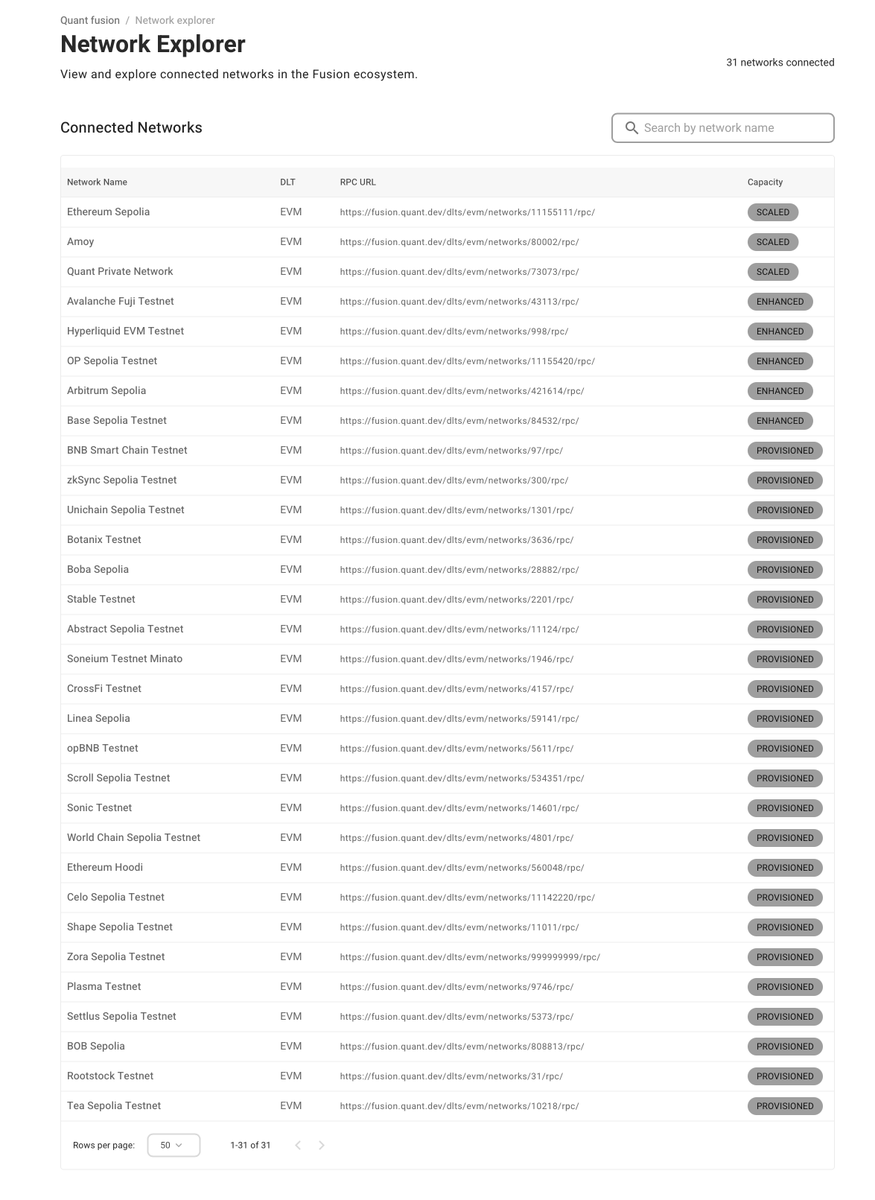
The Layer 2.5 Network of Networks @FusionLayer25 is coming together nicely!
31 Networks connected in the first hour! 🚀
Sign up and interoperate: https://t.co/N3rDK9bOYd
$QNT FUSION MAINNET → EARLY 2026 🔮
People are waking up📈. Here’s why this is the biggest paradigm shift in crypto:
1️⃣ Internet 3.0 interoperability
→ Quant Fusion doesn’t even need to support a particular technology or network, as anyone can, at any time, integrate them into Fusion very easy. New to crypto.
HBAR & SUI integrated in just days.
2️⃣ Unified assets (no more wrapping)
→ One native representation for every token/digital asset/crypto project across all chains.
What Circle is trying to achieve for $USDC with ‘gateway’, Fusion does it better and makes this available for any token/digital asset
3️⃣ Quant Firewall + native privacy
→ Decentralised access control
→ CBDCs, bonds & tokenized equity trade freely with public pools while staying KYC/whitelisted.
4️⃣ No bridges · No wrappers · No oracles needed
→ A single execution context for all networks and legacy systems, secured by underlying consensus algorithms. Its like using blockchains as if they’re one, with origin chain security, multichain atomic composability and institutional grade liquidity.
5️⃣ Permissioned + permissionless in the same rollup for the first time
→ Use Corda/Besu assets as collateral in Ethereum DeFi — natively.
6️⃣ True multi-chain atomicity
→ Precompute & execute smart contracts across different L1s simultaneously.
Other interop like ccip just relays messages.
Fusion executes everything or nothing.
7️⃣ Low-code / 1-click deployment
→ Even a CEO can launch multi-chain apps.
8️⃣ Fully abstracted.
→ All chains. Gas abstracted.
9️⃣Multi-party, multi-chain smart contract composability
→ Multiple participants can run interconnected smart contracts across different blockchains as ONE unified workflow.
🔟Battle-tested by central banks & regulated institutions
→ Years of trust earned in private networks → now unleashed on public chains.
This isn’t another layer or bridge.
This is the end of fragmented liquidity.
$QNT Fusion = the real Internet of Blockchains.
Early 2026. Don’t say you weren’t warned🔮🔮🔮🔮🔮🔮🔮🔮
Exciting progress on #QuantFusion as we kick off 2026!
1. Fusion Firewall Updates
We recently upgraded Fusion's Multi-Ledger Rollup to deploy critical updates to Fusion Firewall #smartcontracts.
Key enhancements based on institutional feedback:
- Self-managed token whitelists for institutions
- Liquidity isolation options for shared tokens
- Privacy-preserving on-chain whitelist synchronisation
2. Bring Your Own Node (BYON) - Now Live
A foundational upgrade for #QuantConnect users. BYON allows users to attach their own nodes to Fusion via our Quant Connect UI. It’s as simple as selecting the network and entering a URL. Starting with pre-selected node providers to ensure reliability and simplify setup, with plans to expand to user-hosted nodes.
The infrastructure is fully generic, any EVM-compatible node can connect, with minimal adjustments needed for non-EVM chains. Currently testing on Sepolia and Amoy testnets.
3. Staking Infrastructure in Development
We're evaluating staking algorithms that balance inclusivity with meaningful participation. The goal: encourage QNT staking at all levels without disadvantaging smaller holders. Staking will be tied to BYON, users stake QNT against their nodes to earn rewards.
Rather than slashing, we're following proven models (like Avalanche) where withholding rewards effectively incentivises node reliability.
#Blockchain #Interoperability