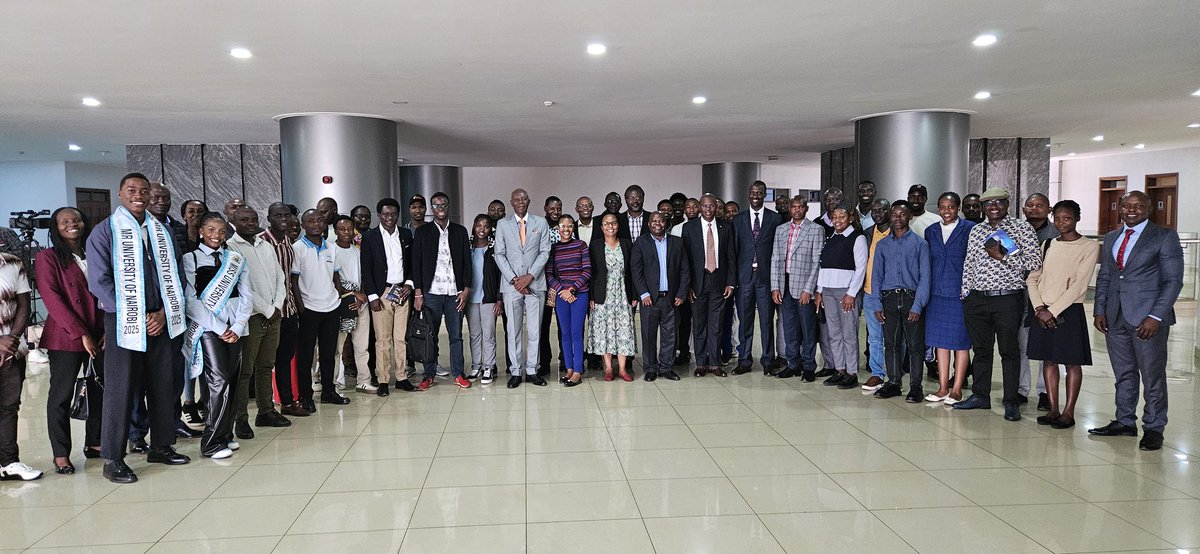
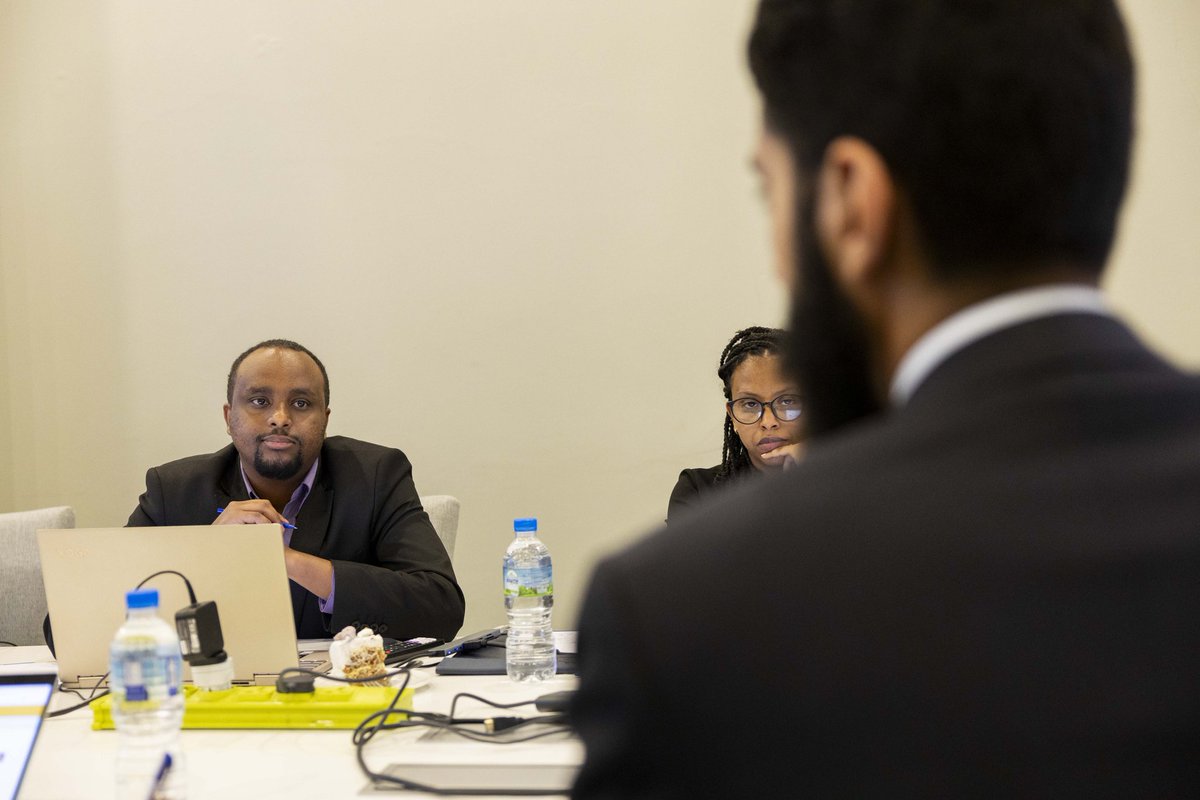
Yesterday, February 17th 2026, marked the official opening of the 2026 Seminar Series of the Department of Political Science and Public Administration @HumanitiesUoN, @uonbi. Here, we shared a joyous moment of scholarship where there was a promise that this year ideas will meet inquiry, and the university will reaffirm its vocation as a sanctuary of thought, debate, and intellectual renewal.
Our newly published paper looks at the development of Machine Learning through modelling of KNN and Three-Way Decisions for crop yield prediction. You can access the chapter here for more readings: https://t.co/8FdLlnvI3o
Check out this proceeding of the @RIAnetwork AI Conference. We outline "AI decision-making and accountability: Gender and equality representation in social protection policies in Africa." h ttps://researchictafrica.net/research/the-future-of-ai-in-africa-must-be-just/
Check out @RIAnetwork RESEARCH ICT AFRICA AI Conference Proceedings discussing Feminist perspectives on AI development and implementation and Algorithmic governance and its implications for democratic participation.
https://t.co/bjRnej2IJ9
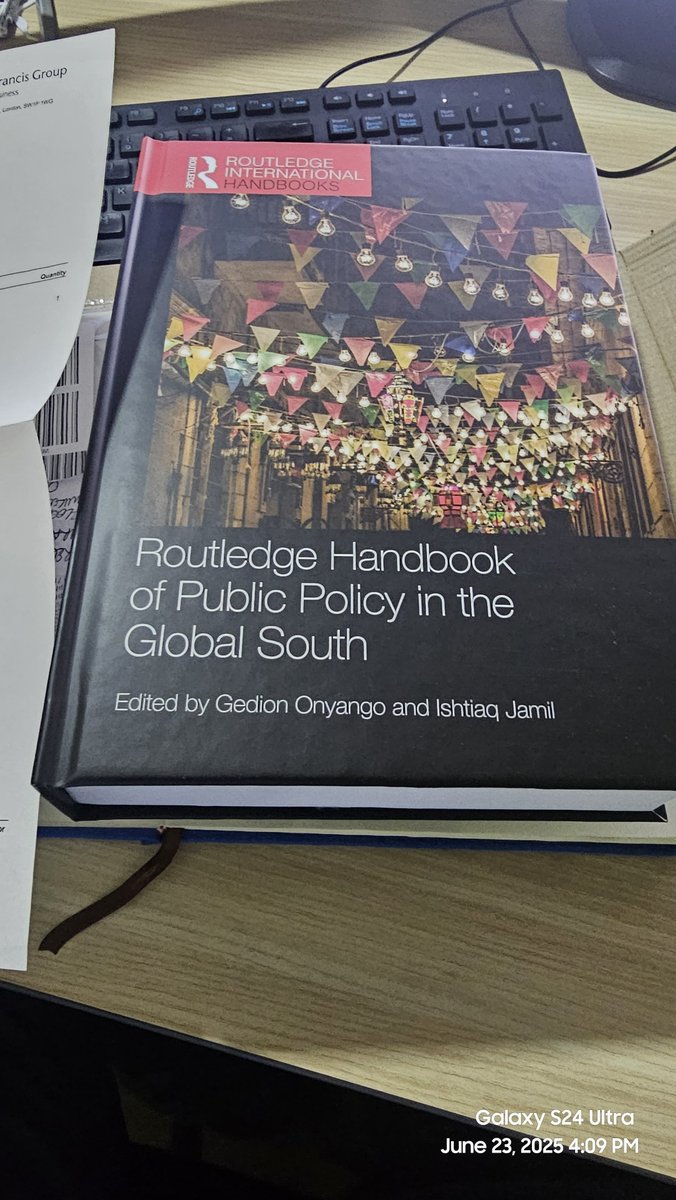
Good news! My article received enough downloads to be a #TopDownloadedArticle in its journal. Open innovation during the COVID-19 pandemic policy responses in South Africa and Kenya. https://t.co/JgvUd9uaWe
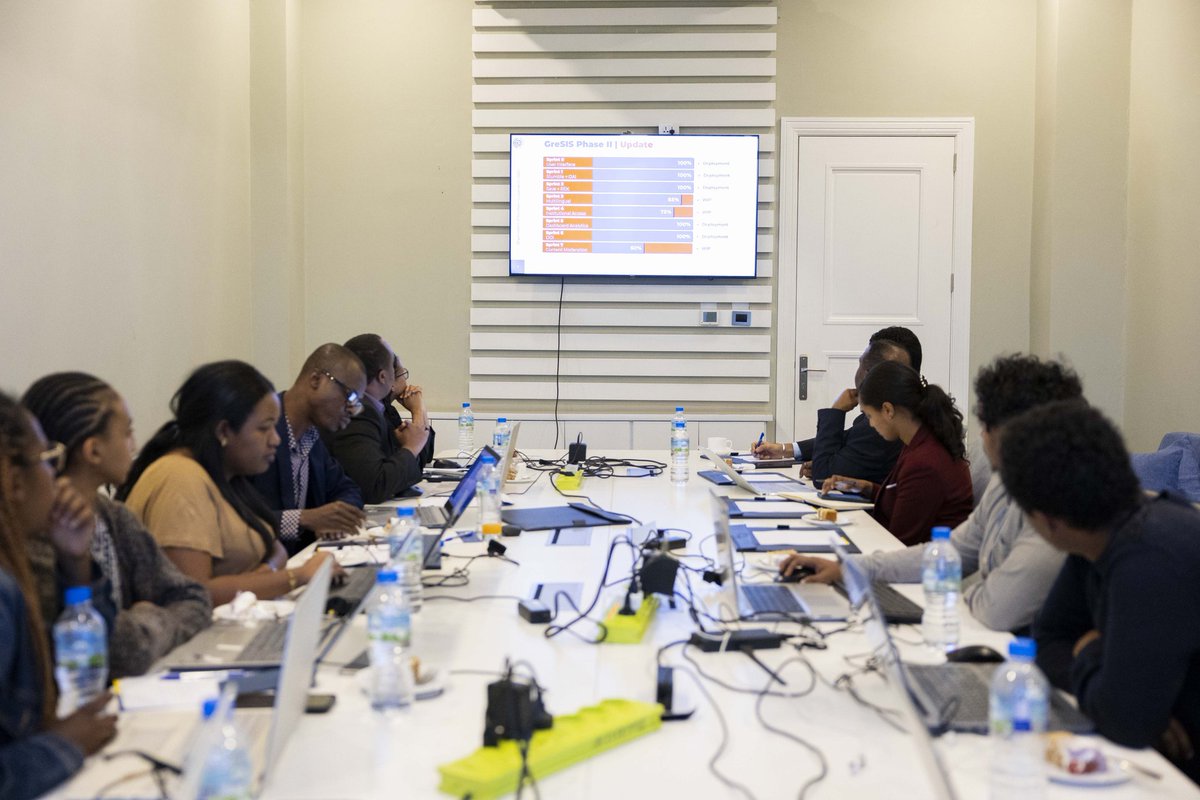
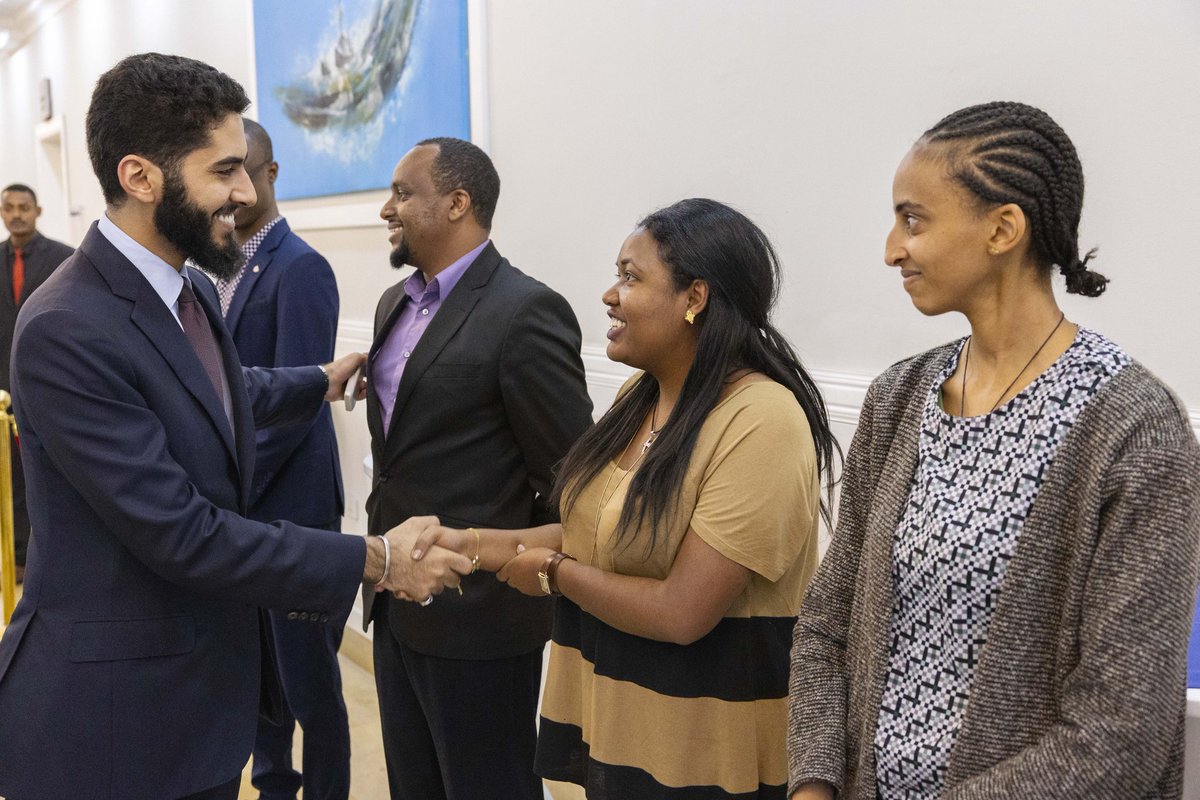
Following the historic establishment of the Common Leveraging Union of Borrowers (#CLUB) by the OSC Finance Ministers' Meeting, I was elated to visit our Department of Technological Innovation and Digitalisation Enhancement's (TIDE) Software Research and Development (SRD) team.
The CLUB's creation by @OSC_OCS
Member States as the world's first union of debtors and borrowers is as historic as pivotal for our countries and Peoples of the #GreaterSouth.
To live up fully to its founding aspirations, however, the CLUB must see its activities inscribed within a broader, comprehensive Southern endeavour for a Third Way of Development.
This is precisely the reason that our TIDE-SRD team is working indefatigably to meet tight, self-set deadlines in the midst of increasing software functionality requirements – without ever compromising on the excellence of their delivery – to launch, in the near future, the Greater South Information System (#GreSIS) and the Greater South Learning Enrichment Resources Nexus (#GreSLERN).
Whilst we must celebrate the unprecedented breakthrough of the CLUB's establishment, we must never lose sight that our collective, multi-pronged vision, set by our Member States and Associates and supported by the Secretariat, requires an acceleration of tangible, substantive delivery.
For a Third Way of Development, half-way measures will not do. And we, from the Organisation of Southern Cooperation, are determined to give palpable embodiment to our shared dreams – as soon as yesterday.
Open innovation during the COVID‐19 pandemic policy responses in South Africa and Kenya - Onyango - 2022 - Politics & Policy - Wiley Online Library https://t.co/O40mEktbFD
An excellent overview of Large Language Models, LLMs, & what are they used for from @nvidia@NVIDIAAI :
https://t.co/GsN3QiigF8
LLMs are making Artificial Intelligence more accessible to the end user & have placed AI on the radar of many CEOs. They have even been embedded into robotics enabling humans & machines to converse with each other.
LLMs are also known as foundational models based on Transformers with Self-Attention Mechanism introduced by Google researchers in 2017 and the next generation is set to be increasingly multimodal working with text, speech, images and video. They are also advancing on reasoning skills.
The State-of-the-art models have Reinforcement Learning as a reward based mechanism to help deliver the correct result and increasingly use human feedback.
There is also a growing base of open source models available alongside the proprietary models from Open AI & Google.
@pierrepinna| @sallyeaves | @SpirosMargaris | @TheRudinGroup | @HaroldSinnott | @Nicochan33 | @Ym78200 | @lyakovet | @gvalan | @Shi4Tech | @BetaMoroney |@ahier | @mikeflache| @ipfconline1
#AI #MachineLearning #LLMs #Fintech #DeepLearning #legaltech
India’s average mobile data cost for 1 GB in 2022 was among the cheapest in the world, ranking third only after Israel ($0.04) and Italy ($0.12). Nepal also features in the global top ten, with $0.27 per gigabyte.