Together AI said on Tuesday, October 6, that it is scaling enterprise open-model inference with IBM and NVIDIA, starting with a dedicated NVIDIA B300 GPU cluster on IBM Cloud that uses NVIDIA Spectrum-X Ethernet networking.
The San Francisco inference company calls it the first dedicated, large-scale inference cluster of its kind on IBM Cloud and says it is the first customer running on the build. Under the split, NVIDIA supplies B300 GPUs and Spectrum-X networking, IBM Cloud hosts the mission-critical fabric, and Together operates the inference software layer for open models. The post does not disclose GPU count, contract value or go-live revenue, but frames the move as capacity for "hundreds of trillions of tokens" of monthly demand from more than a million developers as enterprises keep sensitive workloads on open weights. CRO Kai Mak authored the announcement.
Why it matters: hyperscale-style B300 inference is landing inside IBM's enterprise cloud, not only on neocloud islands.
Sources: Together AI, 6 Oct 2026.
#TogetherAI #IBMCloud #NVIDIA #B300 #Inference #OpenSourceAI
@togethercompute@IBMCloud@nvidia
Japanese semiconductor-equipment maker Towa plans to build a new plant for chip-molding equipment near its Kyoto headquarters, Nikkei Asia reported on Wednesday, October 7, citing the company's CEO.
The project is valued at about ¥5 billion (roughly $31.6 million) and is meant to strengthen a domestic supply chain for tools used in advanced packaging molds, as Tokyo pushes economic-security resilience in semiconductors. Nikkei said rising costs and a weak yen factored into locating the capacity in Japan; operations are targeted for 2029 on the Kyoto East site. Molding equipment encapsulates finished dies — a bottleneck step as AI and high-performance packages grow larger and more complex — so a home-market plant is as much a policy play as a capacity play for a specialist tool vendor.
Why it matters: even mid-cap Japanese toolmakers are rewriting factory maps for economic security, not just labor or logistics.
Sources: Nikkei Asia, 7 Oct 2026.
#Towa #Semiconductors #ChipEquipment #Japan #EconomicSecurity #Packaging
MaxLinear said on Tuesday, October 6, that it has launched Topaz, a highly integrated PON home-gateway SoC aimed at 10G fiber today and multi-gigabit upgrades tomorrow, with on-chip AI acceleration and post-quantum cryptography readiness.
The Carlsbad chipmaker says Topaz folds fiber access, packet processing, AI/ML engines, hardware security and dynamic power management into one die for PON fiber gateways, Ethernet and fixed-wireless access boxes. The roadmap pitch includes Wi-Fi 8-class processing headroom, 25G and 50G connectivity options, DDR5 support, and low-latency features such as L4S with a hardware dual-queue AQM. Security claims cover NIST IR 8425A, the EU Radio Equipment Directive and Cyber Resilience Act, plus hardware-grade PQC readiness for long fiber asset lives. Software is shared with MaxLinear's Puma 9 DOCSIS platform under an AnyWAN common codebase. Askey and Gemtek are early-access partners; MaxLinear will show Topaz at Network X 2026 in Vienna (booth D21). SVP Puneet Sethi said operators "can't afford to wait years" for AI-era home gateways.
Why it matters: the broadband CPE silicon fight is now about AI offload and post-quantum readiness, not just raw 10G ports.
Sources: MaxLinear (Business Wire), 6 Oct 2026.
#MaxLinear #Topaz #PON #Broadband #WiFi8 #PostQuantum
@MaxLinear
Taiwan's New Taipei District Prosecutors' Office has indicted 10 people for allegedly forging end-user documents to buy U.S.-controlled chips from Texas Instruments and Analog Devices, then disguising their origin and shipping them toward Hong Kong and China, the Taipei Times and CNA reported on Tuesday, October 6.
Prosecutors say a network led by Lypid Taiwan head Chen Chien-hsiung falsely claimed since about 2017 that Taiwan's National Chung-shan Institute of Science and Technology was the end user, passed distributor screening, then repackaged more than 10 models of controlled chips — useful in radar, electronics, ultrasound, antenna arrays and UAVs — as "Made in Taiwan" non-controlled parts. The office put illicit profits at about NT$360 million (roughly US$11.3 million) and is seeking prison terms of one to 10 years, with the maximum for Chen. Separate alleged rings led by Lai Chin-lan and Yuan Tung-tai are tied to about NT$130 million and more than NT$100 million in proceeds. Charges include aggravated fraud, forgery and money-laundering violations. Prosecutors warned the scheme risked Taiwan's security reputation by appearing to help China obtain restricted technology.
Why it matters: export-control theater is moving from policy speeches to named indictments on the TI/ADI channel into greater China.
Sources: Taipei Times; CNA, 6 Oct 2026.
#Taiwan #ExportControls #Semiconductors #TexasInstruments #AnalogDevices #NationalSecurity
South Korea's Nuri rocket (KSLV-II) lifted off on time at 12:25 p.m. Korea Standard Time on Wednesday, October 7, reached about 575 kilometers altitude and separated all 15 payload satellites, the Korea AeroSpace Administration and Korea Aerospace Research Institute said.
It was Nuri's first launch at a pre-set time. From Pad 2 at Naro Space Center in Goheung, the three-stage vehicle flew its planned sequence — first-stage separation, fairing jettison, second-stage separation and third-stage burn — before deploying five primary Earth-observation microsatellites (NEONSAT-2 through 6) one by one, then ten CubeSats in pairs, finishing about 17 minutes after liftoff. KASA chief Oh Tae-seok said combined flight data and video confirmed the planned sequence; a formal success call still awaited detailed telemetry. Among the CubeSats is a unit carrying five LG affiliate components — an LG Innotek camera, an LG Energy Solution battery pack, and LG Electronics power, attitude-control and antenna hardware — for roughly 60 days of commercial-off-the-shelf tests at about 570 km, LG Science Park had said ahead of the flight.
Why it matters: Korea's national launcher just flew its most complex mass deployment yet, and chaebol hardware is now getting real orbital flight data.
Sources: ChosunBiz; Asia Business Daily; Herald Business, 7 Oct 2026.
#Nuri #KSLV #KARI #KASA #SpaceTech #LG
@kari2030@LG
Teradyne said on Tuesday, October 6, that its Titan HP platform now ships with enhanced burn-in for high-power AI, automotive and other high-reliability devices, and that the system is already deployed in production.
Traditional burn-in parks parts in oven banks at a controlled air temperature for hours before functional test. Titan HP instead holds each device at its target junction temperature while running a realistic workload, with per-site thermal control and high kilowatt-class power delivery so reliability stress matches what an accelerator sees in a rack. Asynchronous slots load and test independently, so a long stress run on one device does not idle the rest of the system. Programs run on Teradyne's Atlas software and can port across its system-level test line. The company pitches the move as a response to AI silicon needing automotive-grade reliability while oven banks strain capital and floor space at OSATs. Titan HP with burn-in is available now; Teradyne will show it at SEMICON West (October 13–15, San Francisco, booth #1143) and the IEEE International Test Conference (October 11–16, San Antonio, booth #204).
Why it matters: as a failed AI accelerator in a live rack gets expensive, test vendors are folding reliability stress into the same platform that ships the part.
Sources: Teradyne (Business Wire / IR), 6 Oct 2026.
#Teradyne #Semiconductors #AIChips #BurnIn #ATE #DataCenter
@Teradyne
Hadrian, an Amsterdam agentic-AI offensive security platform, said on Tuesday, October 6, that it has raised $40 million in a round co-led by Forgepoint Capital International and SmartFin, bringing total funding to $65 million.
Existing backers HV Capital, Motive Partners, Picus Capital and Oetker Ventures also participated. The company says the money will fund EMEA and U.S. expansion and deeper engineering and research. Hadrian's Atlas maps an organization's external attack surface and uses purpose-built AI agents to validate which exposures are actually exploitable; Nova offers on-demand agentic penetration testing. The firm cites customer results of 10× greater visibility into critical exposures, 80% faster time to resolution and 5× ROI versus manual pentesting, and lists enterprise users including McKesson, NBC Universal, Francisco Partners, TotalEnergies, Amadeus, Leroy Merlin and Damen Shipyard. CEO Rogier Fischer said most teams are "automating the wrong bits" while attackers move at machine speed.
Why it matters: Europe's offensive-security startups are raising growth capital as AI agents compress both attack and defense timelines.
Sources: Hadrian, 6 Oct 2026.
#Hadrian #Cybersecurity #OffensiveSecurity #AgenticAI #Startups #EuropeTech
@Hadrian_io
IBM and Red Hat said on Tuesday, October 6, that their Lightwell program has identified and remediated more than 400 previously unknown vulnerabilities in widely used Java libraries, and that Lightwell Clearinghouse is now generally available for enterprises to request priority fixes.
The companies frame the work as a response to autonomous AI agents that can chain lower-risk weaknesses into serious attacks: finding bugs is not enough if production still runs old dependency versions. Lightwell combines Red Hat and IBM open-source engineering, community ties, AI-assisted workflows and Red Hat's secure build infrastructure to develop version-specific backports that drop into existing scanners, repos and pipelines. Clearinghouse lets customers submit specific open-source dependencies for priority review and remediation on older versions still in production. Applicable fixes are contributed upstream under responsible disclosure. Gunnar Hellekson, VP and GM of Lightwell at Red Hat, said agents "shifted the threat landscape overnight" and do not care if a codebase is a decade old.
Why it matters: the open-source stack that AI agents sit on is becoming a remediation race, not just a CVE-scanning race.
Sources: IBM Newsroom / Red Hat, 6 Oct 2026.
#IBM #RedHat #Lightwell #OpenSource #Cybersecurity #Java
@IBM@RedHat
GPU cloud provider Lambda is raising up to $4 billion at a $14.5 billion pre-money valuation in what could be its last private round before a planned 2027 IPO, TechCrunch reported on Tuesday, October 6, citing the Wall Street Journal.
Coatue Management and Blackstone are leading the round. An investor letter reviewed by the Journal showed Lambda's backlog climbing from $15 billion in June to $50 billion in September, with roughly $35 billion of that jump tied to a late-August commitment from Anthropic. The company also raised an additional $1 billion of debt last week. Lambda had been expected to debut publicly this year but pushed the IPO into 2027 amid market uncertainty; a successful listing would put it alongside other Nvidia-linked neoclouds such as CoreWeave and Nebius that now fund buildouts partly through public equity. Lambda, Coatue and Blackstone did not immediately comment to TechCrunch.
Why it matters: neocloud valuations are being priced off mega offtakes from frontier labs — and investors are still writing nine-figure checks before the IPO window.
Sources: TechCrunch citing Wall Street Journal, 6 Oct 2026.
#Lambda #Neocloud #AIInfrastructure #IPO #Coatue #Blackstone
@LambdaAPI
Waymo, Alphabet's robotaxi unit, has upsized its first private debt financing to $5 billion, Bloomberg reported on Tuesday, October 6, as the company leans on credit markets to pay for fleet growth and rising AI costs.
The loan was raised from an initial target of more than $3 billion after strong lender demand. Pacific Investment Management Co. (PIMCO), Blackstone and Sixth Street Partners participated, with Goldman Sachs arranging the deal. The unrated facility priced at 5.25 percentage points above the benchmark rate. The debt follows a $16 billion equity round earlier this year at a $126 billion valuation that also funded custom silicon for Waymo's autonomous fleet. Proceeds are aimed at U.S. expansion and groundwork for Asia markets including Japan and Singapore, as Waymo works toward a goal of about 1 million paid rides a week this year. Formal close is expected soon.
Why it matters: a top robotaxi operator is shifting from equity-only funding to large private credit as AI and vehicle spend scales with geography.
Sources: Bloomberg, 6 Oct 2026.
#Waymo #Robotaxi #PrivateCredit #Alphabet #AutonomousVehicles #AI
@Waymo@Alphabet
Google DeepMind launched EmbeddingGemma 2 on Tuesday, October 6, an open multimodal embedding model built to run on phones and laptops rather than in the cloud.
The 740-million-parameter model, released under Apache 2.0 and based on Gemma 4, maps text, code, images, video and audio into one shared vector space so a single on-device model can, for example, find a video clip from a voice memo or search hours of audio with a text prompt. It is modular: about 270 million parameters for text-only work, with optional vision (170M) and audio (300M) encoders. Matryoshka Representation Learning lets developers truncate the 768-dimensional output to 512, 256 or 128 dimensions for up to about 6× less local storage. On a Pixel 11 Pro with quantization, Google cites roughly 191 MB of active RAM for text-only weights and about 567 MB for the full multimodal stack, plus an 8K-token context window — four times EmbeddingGemma 1 — enough for about 5.5 minutes of audio or dozens of images/frames. On MTEB Code it jumped from 68.76 to 78.68. Weights are on Hugging Face and Kaggle, with LiteRT, MediaPipe and Google AI Edge Gallery demos shipping the same day.
Why it matters: Google is pushing multimodal semantic search off the server and onto the device, where privacy and latency matter most.
Sources: Google DeepMind; Google AI Edge, 6 Oct 2026.
#EmbeddingGemma #Gemma #OnDeviceAI #GoogleDeepMind #Multimodal #EdgeAI
@GoogleDeepMind@GoogleAI
HubSpot said Tuesday, October 6, that it will cut about 7% of its workforce — nearly 660 employees — under a restructuring plan the board authorized on October 1, according to a Form 8-K and a CEO note filed with the SEC.
The Cambridge, Massachusetts software company estimates charges of about $65 million to $75 million, mostly cash for severance, notice periods, transition and benefits, with the majority recognized in the fourth quarter of 2026. Role eliminations are expected to be substantially complete by the end of the first quarter of 2027, subject to local law and consultation rules, and substantially all related cash payments by June 30, 2027. HubSpot reaffirmed its previously issued third-quarter and full-year 2026 revenue and non-GAAP profit guidance; Plan costs will hit GAAP results but are excluded from non-GAAP measures. CEO Yamini Rangan told staff the shift is about organizing around AI-era customer outcomes, not AI-driven headcount efficiencies, and about putting resources behind the biggest opportunities.
Why it matters: a major CRM/SaaS name is shrinking the org chart while keeping guidance intact and insisting the cuts are strategy alignment, not automation savings.
Sources: HubSpot Form 8-K and Exhibit 99.1 (SEC), 6 Oct 2026; Boston Globe; MarketWatch, 6 Oct 2026.
#HubSpot #Layoffs #SaaS #EnterpriseSoftware #AI #TechJobs
@HubSpot
Navitas Semiconductor closed its acquisition of Claros, Inc. on Tuesday, October 6, adding integrated voltage regulator technology aimed at the last hop of power delivery into AI processors, the company said in a press release furnished with a Form 8-K.
Claros' IVR stack — packaged and embedded regulators plus a modular PowerArray architecture — is meant to move conversion closer to the xPU for vertical and embedded power delivery, completing Navitas' grid-to-xPU pitch alongside its GaN and high-voltage / ultra-high-voltage SiC portfolio for 800 V DC racks. Navitas said the deal should more than double its identified 2030 serviceable available market to over $8 billion, adding at least $3.5 billion from VPD and IVR on top of about $3.5 billion already cited for GaN and HV/UHV SiC and roughly $1 billion from new JFET technology. CEO Chris Allexandre called the close "a defining step in the Navitas 2.0 transformation." A technical webinar is set for October 20, 2026 at 8:00 a.m. Pacific.
Why it matters: another listed power-semiconductor name is buying its way into the xPU-adjacent power wall as AI racks scale toward megawatts.
Sources: Navitas Semiconductor Form 8-K / Exhibit 99.1 (GlobeNewswire), 6 Oct 2026.
#Navitas #Claros #Semiconductors #AIInfrastructure #GaN #PowerElectronics
@NavitasSemi
Anthropic on Tuesday, October 6, expanded its Cyber Verification Program so vetted security teams can use its most capable Claude models with fewer cyber safeguards, the company said on its news site and Reuters reported.
The revamped program merges Project Glasswing and the original CVP into three tiers — Defense, Red Team and Specialized — each with access to Claude Opus 5.5, Claude Sonnet 5.5, Claude Mythos 5.1 and future models. Defense covers SOC, incident response and malware analysis; Red Team adds authorized penetration testing for organizations only; Specialized, reviewed with the U.S. government, has the fewest blocks for testing safety-critical systems such as power grids, flight systems and interbank transfers. Existing Glasswing members move into Specialized without reapproval. Glasswing partners found at least 129,000 verified software vulnerabilities between April and July 2026, Anthropic's own open-source scanning added 5,500 more through October, and more than 33,000 of the verified set are rated critical or high severity.
Why it matters: Anthropic is widening defender access to Mythos-class cyber capability just as those same models raise the offensive ceiling.
Sources: Anthropic, 6 Oct 2026; Reuters, 6 Oct 2026.
#Anthropic #Claude #Cybersecurity #Glasswing #AISafety #BigTech
@AnthropicAI
Netlist and Micron Technology settled their patent fight on Tuesday, October 6, with a five-year worldwide license that will pay Netlist $600 million and end all pending cases between them, Netlist said in a press release filed with the SEC.
Under agreements dated October 5 and announced October 6, Micron takes a non-exclusive, non-transferable, non-sublicensable license to Netlist's entire worldwide patent portfolio, including patents covering server DIMMs and high-bandwidth memory, and will pay $30 million each quarter from the fourth quarter of 2026 through the third quarter of 2031. The companies also settled and mutually released the litigation between them. Separately, Micron bought 10 million Netlist shares for $1 million under a securities purchase agreement, with a lock-up and release schedule. CEO C.K. Hong said the Micron deal "further validates the value of our AI memory technologies." Details are in Netlist's Form 8-K (accession 0001104659-26-113897).
Why it matters: another AI-memory patent campaign has been converted into a long, cash royalty stream just as HBM demand defines who controls the stack.
Sources: Netlist Form 8-K and Exhibit 99.1 (SEC), 6 Oct 2026; Bloomberg Law; Reuters, 6 Oct 2026.
#Micron #Netlist #Patents #HBM #AIMemory #Semiconductors
@MicronTech
Britain's media regulator Ofcom opened its first formal Online Safety Act investigation into Meta on Tuesday, October 6, examining whether the company properly assessed the risks of Instagram Instants before launching the feature in May.
Instants lets content shared on Instagram disappear once it has been viewed. Under the Act, platforms must update their risk assessments before making significant changes to a service, and Ofcom will establish whether Meta carried out a "suitable and sufficient" illegal content risk assessment and children's risk assessment before launch. If the evidence points to a breach, Ofcom will issue a provisional decision that Meta can answer in full before a final ruling; it can then order changes and impose fines of up to £18 million or 10% of qualifying worldwide revenue, whichever is greater. "Safety by design must be built in, not bolted on," said George Lusty, Ofcom's director of enforcement. Meta said it conducted a risk analysis and briefed Ofcom about the feature "on a number of occasions" before launch, adding that Instants blocks screenshots, reshares and forwarding, has no public feed and turns on Teen Account protections automatically. It said it would cooperate. Meta is already challenging Ofcom over how much information it must hand the regulator and the fees it is charged, Reuters reported.
Why it matters: it is the first test of whether Britain will punish a major platform for shipping a feature before proving it is safe.
Sources: Ofcom; Reuters, 6 Oct 2026.
#Ofcom #Meta #Instagram #OnlineSafetyAct #OnlineSafety #UKTech
Uber has agreed to buy ezCater, the Boston-based platform companies use to order food for meetings, events and office meals, in an all-cash deal valued at $2.3 billion, the two companies said on Tuesday, October 6.
Founded in 2007, ezCater connects businesses with more than 140,000 restaurants across the United States and gives them tools to manage ordering and food spending, backed by round-the-clock support. Uber says ezCater generated more than $2.5 billion in gross bookings over the past 12 months, growing in the high teens year over year, with average orders above $400, and is profitable on a non-GAAP operating income basis, so it should lift Uber's margins. The plan is to plug ezCater into Uber Eats' restaurant network and the corporate customers of Uber for Business, promising restaurants bigger orders and couriers new ways to earn. "Catering is a big business, and can be a huge revenue stream for restaurants," Uber chief executive Dara Khosrowshahi said, adding that Uber's reach can bring the service "to millions more customers." ezCater chief executive Nihad Rahman said his team would bring its "catering and B2B expertise to Uber's global ecosystem of customers, merchants, and couriers." The deal needs regulatory approval and is expected to close in the coming months.
Why it matters: office catering means large, recurring orders, and Reuters framed the purchase as Uber's bid to narrow the gap with DoorDash.
Sources: Uber (Business Wire); Reuters; Bloomberg, 6 Oct 2026.
#Uber #UberEats #ezCater #Acquisition #FoodTech
@Uber
Anduril Industries will put $3.7 billion of its own money into a shipyard in Baltimore County, Maryland, to make parts for the U.S. Navy's Virginia-class attack submarines, and has won a Navy contract worth up to $2.9 billion tied to what the yard produces, the company and state officials said on Tuesday, October 6.
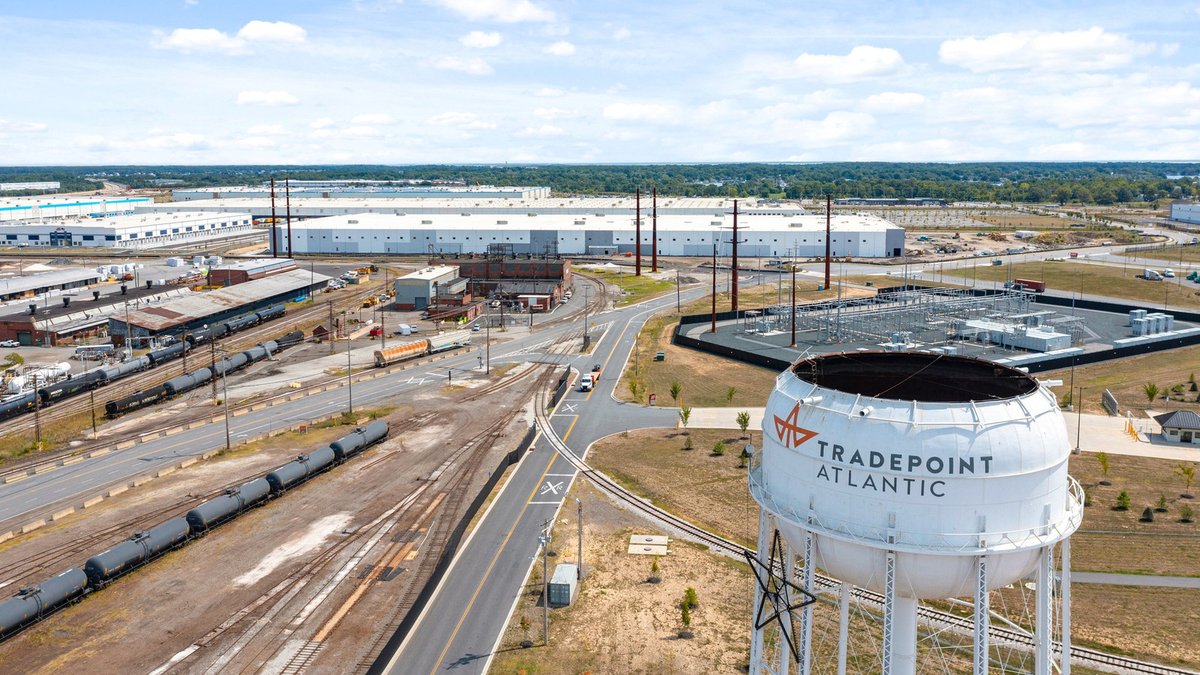
The site, called Arsenal-2, will cover more than 2 million square feet at Tradepoint Atlantic in the Sparrows Point complex, where ships were built during World War II. Billed as a software-defined shipyard, it will make critical components for the submarines, which are built by General Dynamics Electric Boat and HII, before moving into larger modules and hull sections; operations are slated to begin in 2030. Payments are linked to production outcomes, with Anduril carrying most of the execution risk. Maryland says the project will create more than 3,100 permanent jobs, support over 14,000 in total and generate about $2 billion a year in economic output, and the state and county have committed to match up to 13% of the investment, subject to legislative approval. Anduril is also building out a 160,000-square-foot plant in Orange County, California, for parts such as torpedo tubes. "Sparrows Point helped build the fleet that won World War II," co-founder and CEO Brian Schimpf said. The award comes days after the Pentagon tapped co-founder Palmer Luckey for Project Meridian.
Why it matters: a venture-backed defense tech company is now financing heavy naval industry itself.
Sources: Maryland Department of Commerce; CNBC; Reuters, 6 Oct 2026.
#Anduril #DefenseTech #Shipbuilding #USNavy #Manufacturing
@anduriltech
SAP SE said on Tuesday, October 6, that it has agreed to acquire TechWolf, the Ghent-based provider of an AI work-intelligence platform, to fold skills and task context into SAP SuccessFactors.
TechWolf maps the work people do, the skills they hold and the external labour market through what it calls a context graph for work, using data customers already connect from HR and business systems. SAP said the deal will bring that graph, TechWolf's AI models and its applied research team into the company as a strategic work-intelligence asset, and expects closing in the fourth quarter of 2026 subject to regulatory approval; terms were not disclosed. TechWolf is slated to remain an independent entity under CEO Andreas De Neve in Ghent, with its platform still available to SAP and non-SAP customers. SAP plans post-close co-innovation on AI workforce and skills products and deeper SuccessFactors integration, saying the graph will ground agent queries for Joule in HR scenarios. J.P. Morgan advised TechWolf.
Why it matters: the ERP giant is buying the evidence layer for skills and tasks before it turns workforce agents loose on payroll-scale decisions.
Sources: SAP News Center; Reuters, 6 Oct 2026.
#SAP #TechWolf #SuccessFactors #HRTech #AI #Skills
@SAP
Seattle has banned large grocery stores and delivery services from using customers' personal data and artificial intelligence to set individual food prices, in what supporters call a first-in-the-nation law, KPTV reported on Tuesday, October 6.
Mayor Katie Wilson signed the Fair and Transparent Pricing ordinance on Monday after the City Council passed it last month. It bars large chains from using information such as browsing history, location, employment status, race, gender, social media activity or chatbot conversations to decide what a shopper pays for food, and requires prices to be clearly posted and available to all shoppers equally. The rules take effect September 1, 2027. Wilson said people "don't want their data fed into algorithms that decide how much they pay at the grocery store." Councilmember Alexis Mercedes Rinck cast it as a guardrail against AI-assisted price gouging. Labor groups including UFCW 3000 and MLK Labor, plus Consumer Reports and TechEquity Action, backed the bill.
Why it matters: a major U.S. city is drawing a hard line between grocery staples and the surveillance pricing already common in other retail.
Sources: KPTV; KOMO, 6 Oct 2026.
#Seattle #AIPricing #Grocery #Privacy #ConsumerProtection #RetailTech