The Somerset Farmhouse of 1 North Street, Williton were approached by a "food influencer" that wanted to charge them £2,000 for a review.
They put out a video of Sally eating a sausage roll instead 😆.
Lets make Sally and the Somerset Farmhouse famous for free.
Tonight, as I do every year at this time, I’ll be raising a glass to a scared young man, who 82 years ago was preparing to go ashore on the beaches of Normandy as part of an event code-named Operation Overlord.
D-Day.
I can’t imagine what was going through his mind. I’d be scared to death and I’m sure he was too. But in that first wave was a 21-year-old Private First Class from Henry County, VA by the name of Allen Homer Sink.
Fortunately, he would survive that initial wave, participate in battle until it ended in August, then come home to marry and raise a family of four, including two daughters after the war ended.
He would also become my father-in-law until his death in 2006.
His nickname for some reason was “Hank” and when I asked him how he got it, he said some guy in the Army said he “looked like a Hank.” From the time I first met him, he was a salt-of-the-earth man who was never afraid of anything. He was a carpenter by trade, and he’d stand up on the tallest roofs, grab bumblebees with his bare hands when they tried to persuade him to move elsewhere, and never be bothered by anything.
His hands were tough and leathery, but he was a softie. He spoiled his children, complained when my mother-in-law would gripe about something involving one of his alleged misdeeds, and always thought he was fooling everybody when he snuck around the back of the house and lit a cigarette, a habit everyone opposed but he could never part himself from.
He could talk your ear off for hours at a time, and I always suggested he become a greeter at Wal-Mart when he retired because then he could talk all day to strangers and none of them would – like his wife and daughters often did – tell him to be quiet for a few moments. Yet for all his love of talking, there was one subject he just wouldn’t discuss.
June 6, 1944. Omaha Beach.
In 1998, when he was 76 years old, the subject came up again. The movie “Saving Private Ryan” came out and the beginning was gruesome. Reviews said it was incredibly realistic to what really happened that day. I asked Hank if he wanted to go see it.
“No,” he shook his head. “I don’t ever want to see any of that again.”
He did offer that he remembered the night before when troops were loaded into the boats for the amphibious assault. He said it was raining and that once everyone was in place, they gave everybody ice cream and told them to try to get some sleep. Then the next thing he knew, they were waking everybody up telling them to stay low and head for the beach.
No, that doesn’t sound like somebody drugged the ice cream. Not at all.
That’s all he would say about the subject, and he never said another word about it until the final months of his life. Alzheimer’s would gradually rob him of his mind, and as his condition deteriorated, memories of the past would briefly spill out. One evening he thought I was his commanding officer and he was back at Normandy. It is the only time I ever saw him where he appeared to be scared. Ever.
It reminds me every day of something I had unknowingly taken for granted. The greatest generation did fight in and win World War II, then did incredible things over the next 50 to 60 years after the war. But many carried unspeakable memories from the War, ones they would never talk about and carry inside them to their graves. Those veterans lost a piece of themselves in battle they would never, ever, get back.
I mean, how can you at the tender age of 21 storm a beach, see friends die only a few feet from you, wonder each night if you will wake up alive the next morning and then return home a year later and try to pick up on the same normal life you had before you left? I told him once that after seeing “Saving Private Ryan”, I understood why he was never afraid of anything; after you’ve made it through something like that, everything else pales in comparison.
So tonight, I raise a glass to Hank and the 150,000-plus men, who like my father-in-law, were very young, very scared, and still charged that beach, paying a price that even for the survivors would last the rest of their days.
Rest In Peace...
On the morning of June 4, 1942, Ensign George Gay climbed into his TBD Devastator torpedo bomber and flew toward the largest concentration of Japanese naval power ever assembled.
He knew exactly what he was flying into.
Torpedo Squadron 8 had 15 planes and 30 men. Their aircraft were slow, outdated, and completely unescorted. No fighter cover. Command had promised them protection. It never showed. The flight leader, Lieutenant Commander John Waldron, had written a farewell letter to his wife before takeoff. He knew.
Waldron found the Japanese fleet first. Before the attack, he got on the radio one last time: "My greatest hope is that we encounter a favorable tactical situation, but if we don't, and the worst comes to worst, I want each one of us to do his utmost to destroy our enemies. If there is only one plane left to make a final run in, I want that man to go in and get a hit."
Then they dove.
The Japanese Combat Air Patrol fell on them like wolves. Dozens of Zeros. The Devastators had no altitude, no speed, and no cover. They had to fly low and straight to line up torpedo shots, which meant they couldn't evade. They could only absorb fire and keep flying.
One by one, the planes went down.
Gay watched them fall around him. Friends. Bunkmates. Men he had trained with, eaten with, played cards with. Going into the water one after another. No parachutes. No survivors.
His gunner, Robert Huntington, was hit. Dying in the backseat as Gay flew forward.
Gay himself took a 20mm cannon round. His left hand was hit. The plane was on fire.
He kept flying.
He lined up on the Japanese carrier Soryu and dropped his torpedo at point-blank range, closer than doctrine called for, because he had no other choice. He watched it run toward the ship.
Soryu turned. The torpedo missed.
Then his plane was hit again and went in.
As the nose of the Devastator knifed into the Pacific, Gay forced the canopy open against the rushing water pressure and pulled himself free. He surfaced surrounded by burning fuel and wreckage, wounded, alone, in the middle of the Japanese fleet.
He had one Mae West life vest. One seat cushion. That was it.
The Japanese destroyers were close enough that he could see sailors moving on their decks. He knew if they spotted him, they would not rescue him. So he did the only thing he could do.
He held the seat cushion over his head and floated.
Every time a Japanese aircraft flew low over the water, he pushed himself under and pressed the cushion above him to break his silhouette. For hours he did this. Treading water. Hiding. Bleeding. Watching his friends' planes burn on the surface around him.
He was the last man. Every single other pilot and gunner in Torpedo Squadron 8 from the Hornet was dead. All 29 of them.
And then, from high altitude, the American dive bombers arrived.
SBD Dauntlesses. They had found the fleet almost by accident, following the wake of a Japanese destroyer. And when they arrived, the sky above the carriers was empty.
Here is the part that will haunt you.
VT-8's attack had looked like a catastrophic failure. But it wasn't. By flying low, slow, and straight into the teeth of the Japanese fleet, they had pulled every single Zero in the Combat Air Patrol down to sea level to kill them. For those few critical minutes, the carriers below had nothing above them. No protection. No altitude cover.
The dive bombers came straight down out of the sun.
Akagi: hit. Fires reached the torpedo magazine. Gone.
Kaga: hit. Fuel ignited. Gone.
Soryu, the same carrier Gay had attacked alone minutes before: hit. Gone.
Three of Japan's six fleet carriers, the core of the force that had attacked Pearl Harbor, were mortally wounded in under five minutes.
George Gay watched all of it.
From fifty yards away, treading water with a shot-up life vest and a seat cushion over his head, he watched three Japanese aircraft carriers burn to the waterline. He watched the explosions. He watched the smoke columns rise so high they could be seen for miles. He watched the fleet that had seemed invincible that morning begin to die.
He floated there for thirty hours total. When darkness finally fell, he inflated the life raft. It was full of bullet holes but held enough CO2 to keep him on the surface through the night.
A Navy PBY Catalina patrol plane found him the next morning and pulled him out.
He later met with Admiral Chester Nimitz personally and confirmed what he had seen: three carriers destroyed. His eyewitness account was among the first human confirmation that the battle had turned.
He was 26 years old.
He was awarded the Navy Cross. He recovered from his wounds. He went back to flying, eventually spending 30 years as a commercial pilot for Trans World Airlines, carrying passengers on routes across America. He never made a big show of what he had done. He gave interviews when asked. He wrote a book. He went to reunions.
He died in 1994 in Marietta, Georgia.
His name was Ensign George Henry Gay Jr. He is, to this day, the only known combatant in history to survive a major naval battle by floating in the middle of it while it happened around him.
He flew in with 29 men. He came home alone. And the battle those men died in changed the course of the entire war.
Today is the 84th anniversary of the Battle of Midway.
Remember his name.
James Sicily mocking Lewis for celebrating the Bontempelli goal looks even more ridiculous now. What a flog, can't believe he's their captain. #AFLHawksDogs
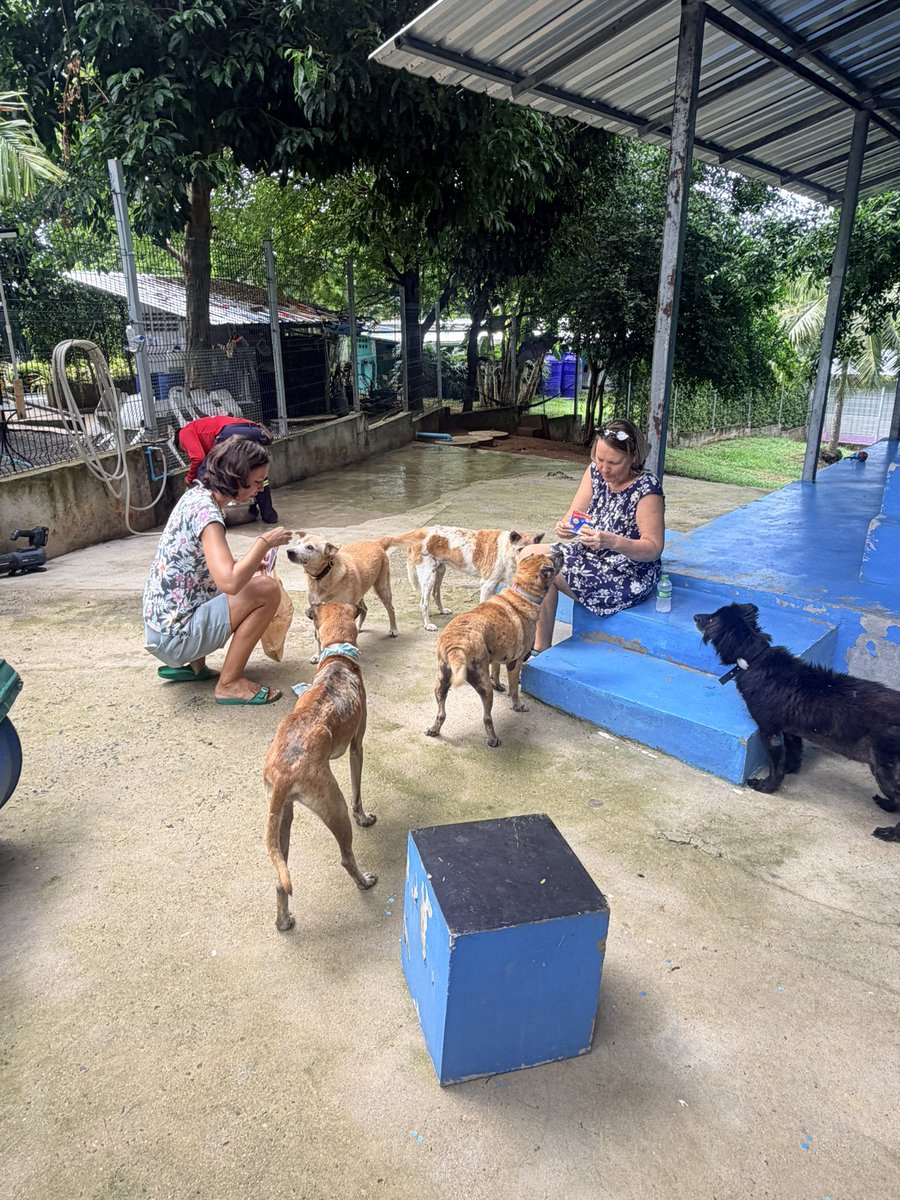
Walking in to see the dogs in the retirement village is literally the best feeling in the entire world.
They should all be dead by now but to see them here with dignity and comfortable in their surroundings is a thing of sheer beauty ❤️
Whateley simply isn't being intellectually honest here
The wrong decision in question was made by the goal umpire, not the ARC. Exactly what Gerard has been pushing for all along
Had it gone to the ARC, the right call almost certainly gets made
Can't have it both ways
#AFL
@UntoldWarFacts My wife's uncle Delbert Risley was a 19-year-old fireman on the Johnston and survived the battle to return to his career as a sawmill manager in Twisp, WA.
🧵 6/6
The charge of Taffy 3 saved the landing force in Leyte Gulf. Naval historian Samuel Eliot Morison later wrote of that morning:
"In no engagement in its entire history has the United States Navy shown more gallantry, guts and gumption than in the two morning hours off Samar."
Commander Ernest Evans was posthumously awarded the Medal of Honor. He was the first Native American in the United States Navy to receive it. The USS Johnston was awarded the Presidential Unit Citation.
The wreck of the Johnston was lost for over 75 years.
In 2019 explorers located a Fletcher class destroyer on the edge of an undersea cliff in the Philippine Sea. In 2021 a manned submersible descended more than 21,000 feet, over four miles down, to reach her. It was the deepest shipwreck dive in human history at the time.
They found her bow upright and intact. The hull number was still visible on the steel.
The team that found her left everything exactly where it lay. The director of the Naval History and Heritage Command called the wreck a hallowed site and said the story of the Johnston and her crew was a perfect example for modern sailors of the honor and courage of those who came before them.
A tiny destroyer that charged the largest battleship fleet in the world.
A captain who promised to go in harm's way and kept his word.
327 men who bought thousands of American lives with their own.
I post a story like this every single day. Most people never see them. Follow so you don't miss the next one.
We had a lovely long walk today in the jungle just myself and Rocky.
I’m so so proud of him. Just look at that smile.
He is an inspiration to us all to never give up ❤️ (8/8)
@GemmaTognini Let's accept her point.
Logic suggests then the government were fully aware of the housing crisis at the last 2 elections at least yet still chose not to prosecute their CGT reforms with voters.
Egregious breach of trust at best.
Massive fib at worst.
#auspol
This may be the most miraculous recovery I've ever seen. He was absolutely skeletal and his eyes were filled with blood and pain. Look at those eyes now! Bravo!!!!!
Promised her a better life when she invited herself into @happydoggothai after being abandoned in the jungle.
Look at Buttons now.
That smile is priceless ❤️