As an independent media outlet, the 301 team only recognizes and uses one map when reporting on Armenian news and that is the map of Armenia and Artsakh regardless of occupation status.
Armenian chess grandmaster Haik Martirosyan has defeated world No. 1 Magnus Carlsen at the Total Chess World Championship Tour Pilot 2026 tournament in Budapest, Hungary.
Martirosyan secured the victory playing with the white pieces in the first game of their third-round group-stage encounter.
The two grandmasters are scheduled to face each other again in the return game at 9:30 p.m. Yerevan time, with Martirosyan playing the black pieces.
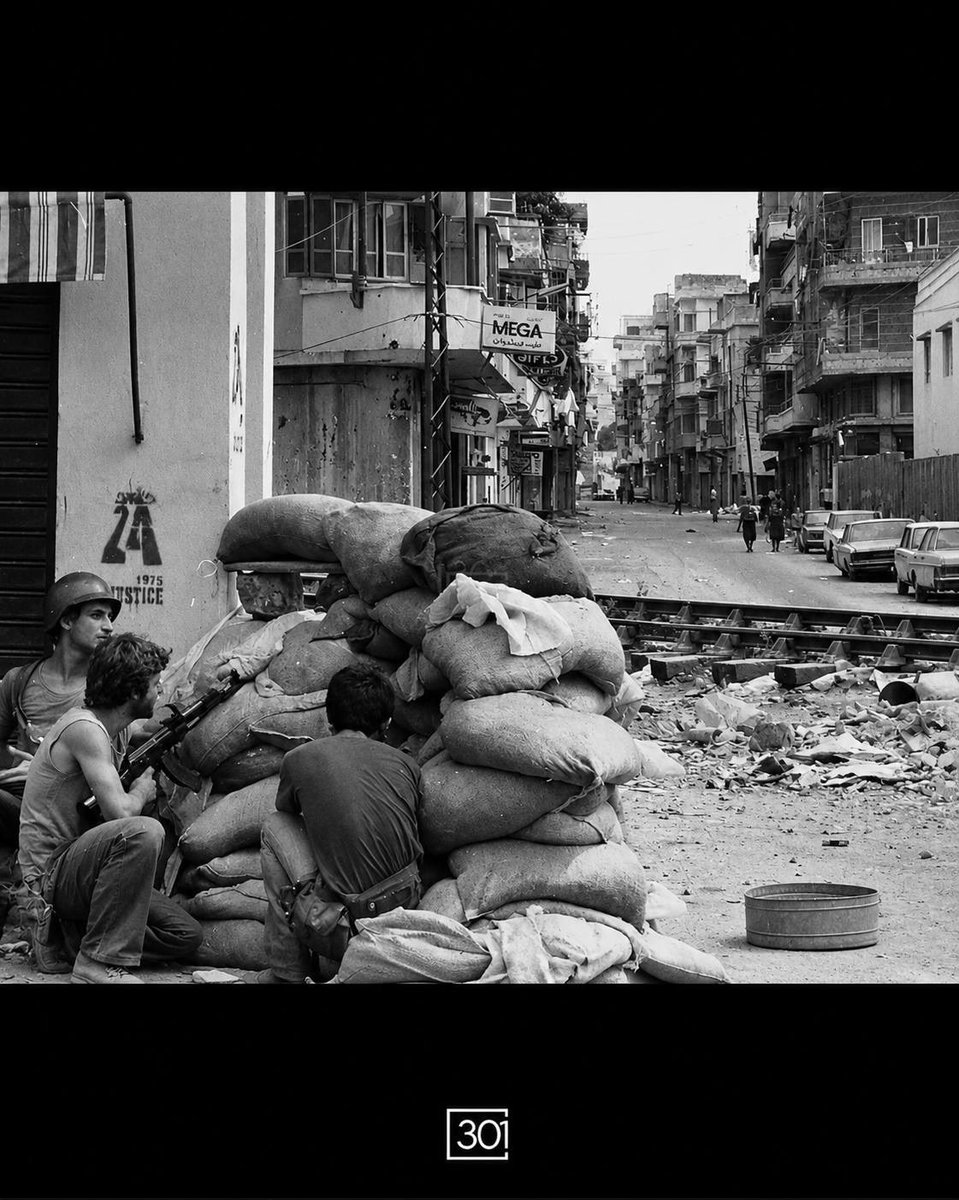
During the Lebanese Civil War (1975–1990), Armenian clergy and civilians alike took up arms to defend their neighborhoods, churches, and communities.
From priests to ordinary citizens, Armenians stood shoulder to shoulder, determined to protect their families, preserve their identity, and defend the communities they had built far from their ancestral homeland.
Following the example of Khrimian Hayrig before them, Armenian clergymen stood with their people in times of danger, just as others would later do in Artsakh and Armenia.
When their people were threatened, the Armenian clergy did not stand apart. They stood alongside them.
In Yerevan, normal life is becoming the exception and chaos the rule. Streets are dug up, repaired, and sometimes dug up again. Traffic jams, unreliable public transportation, and utility disruptions have become part of everyday life.
The problem is documented. A 2024 Infocom investigation found that 54 of approximately 280 streets repaired that year were covered by at least two separate contracts. Journalists also identified recurring defects despite millions of drams spent on repairs.
The Yerevan Municipality, led by Tigran Avinyan, is responsible for ensuring that infrastructure projects are properly planned and coordinated. Yet residents continue to bear the cost of recurring problems through wasted time, disrupted routines, and public spending.
But the consequences go beyond poor management.
In authoritarian systems, social control does not always require direct repression. Constant disruption can also weaken society by exhausting people's time, energy, and willingness to demand change.
When everyday life becomes a struggle, civic participation begins to feel like another burden. People gradually lower their expectations, while basic municipal responsibilities, such as reopening roads or restoring services, are presented as achievements.
Whether deliberate or the result of mismanagement, prolonged dysfunction can have serious political consequences.
A society does not have to be stripped of its freedoms to become less capable of exercising them. When people spend their days struggling with problems that should have been solved, they have less time and energy to challenge the system responsible for them.
Read the full analysis at https://t.co/hdr488LY1m.
During the Armenia-Cyprus match in Yerevan on November 12, Armenian supporters raised a banner carrying a message that transcended football:
“Artsakh Has Not Been Forgotten.”
Two nations, two homelands scarred by occupation. Northern Cyprus by Turkey, Artsakh by Azerbaijan. Two peoples united by the pain of displacement, the memory of what was taken from them, and the hope of return.
A homeland may be temporarily occupied, but the bond between a people and their land is eternal.
📸: Armat Media
An Armavir court sentenced Catholicos Karekin II’s brother and nephew to prison on November 12 over disputed allegations of obstructing election campaigning, as Nikol Pashinyan continues publicly demanding the removal of the Armenian Church’s leader.
Gevorg Nersisyan, the Catholicos’s brother, received a three-year suspended prison sentence with probation. His son, Hambardzum Nersisyan, was sentenced to three years and five months, with enforcement deferred until his child turns six.
Prosecutors had demanded significantly harsher penalties: three years and six months for Gevorg and a combined seven years and six months for Hambardzum.
The case originated from allegations made by Harutyun Mkrtchyan, a candidate from the "Republic" party, which has cooperated with Pashinyan’s ruling "Civil Contract" party.
Both men deny wrongdoing. Their defense has called the accusations baseless and fabricated, arguing that surveillance footage and witness testimony contradict the prosecution’s account. Nevertheless, the court found them guilty on October 8.
The case has raised concerns about political persecution amid Pashinyan’s increasingly public confrontation with the Armenian Apostolic Church. Pashinyan has demanded the Catholicos’s removal, while criminal proceedings against senior clergymen have drawn allegations of pressure on the Church.
The Catholicos’s brother and nephew were previously held in pretrial detention and subjected to house arrest. They now face criminal sentences despite continuing to dispute the allegations.
Read more at https://t.co/hdr488LY1m
BREAKING: NVIDIA co-founder and CEO Jensen Huang has resigned after 33 years leading the American technology giant, amid reports of extramarital affairs and allegations involving a suspected Chinese intelligence operative.
His November 12 departure follows investigations into possible Chinese intelligence links and access to restricted American AI technology. NVIDIA maintains that it has no reason to believe company secrets or U.S. national security were compromised. The allegations remain unproven.
The development also draws attention to NVIDIA's involvement in Armenia's Firebird AI project. Initially announced as a $500 million initiative, the project opened its first computing facility in Hrazdan in August 2026, with Huang personally attending the inauguration. Its second phase is now estimated at $7–8 billion. NVIDIA has supplied advanced processors, supported efforts to obtain U.S. export approvals and announced plans to invest directly in Firebird. No changes to the partnership have been announced following Huang's resignation.
On November 12, 2014, Azerbaijani forces shot down an Artsakh Defense Army Mi-24 helicopter during a training flight, killing all three Armenian servicemen on board.
The helicopter was participating in the “Unity-2014” joint military exercises conducted by the armed forces of Armenia and Artsakh when Azerbaijani forces struck it with a missile at approximately 1:45 p.m.
The fallen servicemen were:
Major Sergey Sahakyan
Senior Lieutenant Sarkis Nazaryan
Lieutenant Azat Sahakyan
Azerbaijan claimed the helicopter had attempted to attack its military positions. However, footage released by Azerbaijani media the following day showed two Armenian helicopters flying along the contact line without firing weapons or visibly engaging in an attack before one was shot down.
Following the attack, Azerbaijani forces continued firing toward the crash site, preventing Armenian forces from immediately recovering the bodies.
For ten days, the remains of the fallen servicemen could not be fully recovered. International efforts to secure access to the site failed, with the OSCE Minsk Group calling on Azerbaijan to permit their recovery.
On November 22, the Artsakh Defense Army announced that its special forces had successfully carried out an operation to recover the crew’s remains and helicopter wreckage, including its flight recorders.
According to the Defense Army, two Azerbaijani servicemen were killed during the operation, while Armenian forces suffered no casualties.
The three fallen Armenian servicemen were posthumously awarded the Medal for Courage.
Twelve years later, we remember Major Sergey Sahakyan, Senior Lieutenant Sarkis Nazaryan, and Lieutenant Azat Sahakyan, whose lives were taken in Azerbaijan’s November 12, 2014 attack.
Read more at https://t.co/hdr488LY1m
Ahead of the Armenia-Cyprus football match in Yerevan, a delegation from the Cyprus Football Federation, led by its president, Haris Loizides, visited the Armenian Genocide Memorial at Tsitsernakaberd.
The delegation laid a wreath and paid tribute to the victims of the Armenian Genocide.
An Israeli Jewish woman has been filmed spitting at the entrance to Saint James Monastery in Jerusalem’s Armenian Quarter, in another apparent act of religious hostility targeting one of the Armenian Church’s holiest sites.
According to the footage described, the woman looked inside the monastery, appeared to recognize it as a Christian religious site, and deliberately spat at its entrance.
The latest incident follows months of repeated harassment, desecration, and attacks targeting Armenian Christians and their religious institutions in Jerusalem.
On August 2, six Jewish Israelis were arrested after spitting at the monastery, banging on its gates, and throwing stones at the compound. In September, another man was filmed attempting to urinate against the monastery wall. On October 29, an Israeli man spat at the entrance and verbally abused an Armenian security guard who confronted him.
The Religious Freedom Data Center documented 106 acts of harassment across 96 incidents between July and September 2026. Of the 77 incidents recorded inside Jerusalem’s Old City, 45 occurred on Armenian Patriarchate Street, highlighting the disproportionate harassment faced by the Armenian community.
Saint James Monastery houses the Armenian Patriarchate of Jerusalem and stands at the center of an Armenian Christian presence dating back approximately 1,700 years.
Despite repeated incidents and arrests, concerns remain over the effectiveness of Israeli authorities’ response and the lack of consistent legal accountability for religious harassment.
301 correspondent @kbalian90
Nikol Pashinyan met with Turkish President Recep Tayyip Erdoğan in Antalya on November 11, on the sidelines of the COP31 UN climate summit, to discuss the so-called normalization of Armenia-Turkey relations, regional developments, and the TRIPP project.
According to Pashinyan’s office, the two leaders emphasized the importance of advancing the so-called normalization process and bringing it to what they described as a “logical conclusion.” They also discussed previous agreements and opportunities to expand trade and economic cooperation.
The meeting comes one day after Turkish Transport Minister Abdulkadir Uraloğlu reaffirmed that Ankara would not reopen its border with Armenia until a final agreement between Yerevan and Baku is reached, taking Azerbaijan’s concerns into account.
Turkey has kept its land border with Armenia closed since 1993 in support of Azerbaijan, and the two countries have yet to establish diplomatic relations.
Pashinyan and Erdoğan also discussed regional transportation links, including steps toward implementing the Trump Route for International Peace and Prosperity (TRIPP), which would connect Azerbaijan to Nakhijevan through southern Armenia.
According to the official statement, both leaders characterized the so-called peace between Armenia and Azerbaijan as an established fact and said it had created new opportunities for regional cooperation.
The meeting follows Pashinyan’s November 7 declaration that international recognition of the Armenian Genocide is no longer on his administration’s foreign policy agenda.
Turkey continues to deny the Armenian Genocide and provided extensive political and military support to Azerbaijan during the 2020 war against Artsakh.
No new agreements or concrete timeline for reopening the Armenia-Turkey border were announced following the meeting.
To understand just how little anti-Christian hate concerns the Israeli Police, just read this:
Yisca Harani, Israeli activist and Director of the Religious Freedom Data Center (RFDC), a watchdog organization that documents anti-Christian incidents, contacted the police regarding the spitting.
This was their conversation:
Police: “There is no visible offense in the video. Under these circumstances, they cannot investigate without a formal complaint.”
Yisca: “Can’t you see the woman in white spitting??”
Police: “No. At whom? At what?”
Yisca: “She’s spitting toward the entrance of the monastery!”
Police: “Sorry, it’s not clear enough to open an investigation without a formal complaint.”
There you have it. Another documented incident of anti-Christian harassment. Another dismissive response from the police.
For relevance, section 170 of Israel's Penal Law, 5737-1977, criminalizes the desecration of places of worship:
"If a person destroys, damages, or desecrates a place of worship or any object which is held sacred by a group of persons, with the intention of reviling their religion, or in the knowledge that they are liable to deem the act an insult to their religion, then he is liable to three years of imprisonment."
[conversation translated from Hebrew to English]
The Collective Security Treaty Organization (CSTO) has suspended Armenia’s voting rights and its ability to appoint representatives to designated positions within the Russian-led military alliance.
The decision was confirmed on November 11 by Kremlin spokesperson Dmitry Peskov, who said CSTO member states approved the restrictions during discussions in Moscow.
According to Peskov, the decision follows Armenia’s failure to pay membership contributions for more than two years.
The measures were adopted under Article 25 of the CSTO Charter, which allows the suspension of voting rights and nominations to quota-based positions until outstanding membership fees are paid.
Armenia froze its participation in the CSTO in February 2024 and has since stopped participating in the organization’s activities and paying membership contributions.
Despite the restrictions, Armenia formally remains a member of the six-nation military alliance and has not initiated withdrawal procedures.
Russian Foreign Minister Sergey Lavrov previously stated that the measures would not constitute Armenia’s expulsion from the CSTO and that the country would retain its rights under the collective security treaty.
Protesters gathered outside the European Union’s office in Yerevan on November 11, demanding accountability for the death of Arsen Gevorgyan, the “Strong Armenia” party’s Stepanavan mayoral candidate, who died while in detention.
Demonstrators condemned what they described as politically motivated prosecutions under Nikol Pashinyan’s administration, raising concerns over the treatment of political prisoners and the potentially fatal consequences of pretrial detention.
Gevorgyan was detained on October 21, just four days before Stepanavan’s municipal elections, as part of a series of arrests targeting opposition members and supporters. His detention was condemned by opposition forces as politically motivated.
His death has intensified demands for accountability and renewed scrutiny of the use of pretrial detention against political opponents.
For protesters, the central question is no longer limited to the circumstances of Gevorgyan’s detention, but extends to who must be held responsible for a death that occurred in state custody.
Yerevan has reached the maximum traffic congestion level of 10 out of 10 for the third consecutive day, despite years of promised transport reforms, higher public transportation fares, and millions allocated to a new traffic management institution.
An analysis of Yandex Maps data published by Aram Mkhitaryan, head of Yandex Armenia, shows that severe congestion has become significantly more frequent.
In October 2025, congestion reached 9 or higher on the 10-point scale on 14 of 23 working days (61%). In October 2026, that figure rose to 18 of 22 working days (82%), an increase of 21 percentage points in just one year.
Meanwhile, Yerevan residents are paying more for public transportation. On February 1, 2025, the municipality increased the standard single-ride fare from 100 AMD ($0.28) to 150 AMD ($0.42), a 50% increase, as part of its promised transport reforms.
In November 2025, the Yerevan Council of Elders approved the creation of the Yerevan Traffic Management Center, which received official registration in January 2026.
The institution was allocated 74 staff positions and an annual payroll budget of approximately 495.5 million AMD ($1.38 million). Its director, Eduard Ayvazyan, has a monthly salary set at 1.8 million AMD ($5,028), while the deputy director’s salary is 1.7 million AMD ($4,749).
The municipality has also announced plans for smart traffic lights, centralized traffic monitoring, and improved public transportation coordination. However, these initiatives have yet to produce visible improvements in the published congestion figures.
Although increasing vehicle numbers and seasonal traffic patterns contribute to the problem, the worsening statistics raise serious questions about the effectiveness of the municipality’s policies and its use of public funds.
Yerevan residents are paying higher fares while hundreds of millions of drams are allocated to traffic management, yet severe congestion continues to worsen.
Read more at https://t.co/hdr488LY1m
The Russian-led CSTO will consider suspending Armenia’s voting rights over unpaid membership fees since 2024, despite Yerevan retaining its right to collective security, according to Russian Foreign Minister Sergey Lavrov.
Read more: https://t.co/YVbQig8UAJ
BREAKING: Arsen Gevorgyan, the “Strong Armenia” party’s candidate for mayor of Stepanavan, has died in a correctional facility, reportedly of a heart attack, less than three weeks after his arrest ahead of the October 25 municipal elections.
On October 21, law enforcement agencies under Pashinyan’s administration carried out coordinated raids targeting members and supporters of the opposition party, resulting in 14 arrests. The Anti-Corruption Court ordered Gevorgyan detained for two months over allegations of electoral bribery.
The party rejected the accusations as politically motivated, accusing Pashinyan’s administration of using law enforcement and judicial proceedings to interfere with the elections and target political opponents. It subsequently challenged the election results, demanding that the vote be invalidated.
Gevorgyan’s death comes amid mounting allegations of political persecution under Pashinyan’s administration. On November 4, investigators searched 65 locations, including properties linked to “Strong Armenia” leader Samvel Karapetyan and his family.
This is not the first death involving an opposition figure held in custody under Pashinyan’s administration.
In January 2019, opposition official Mher Yeghiazaryan died of a heart attack in Nubarashen Prison following a 44-day hunger strike. In July 2022, outspoken Pashinyan critic Armen Grigoryan collapsed and died during a court hearing after nearly two months in pretrial detention. Both cases raised serious concerns about medical care in custody.
Gevorgyan’s death has renewed questions about the treatment of opposition figures detained under Pashinyan’s administration, including whether he received timely medical assistance. The circumstances surrounding his death remain unclear.
21-year-old Orlando City footballer Harvey Sarajian has decided to represent Armenia’s national football team, the Football Federation of Armenia (FFA) announced.
Former Armenia international Yura Movsisyan, who serves as the FFA’s ambassador in North America, played a key role in securing the Armenian-American player’s commitment.
Movsisyan said he had been following Sarajian’s development for some time and was impressed by his performances, goalscoring ability, and progress in MLS and Orlando City’s second team.
“He is a very promising footballer,” Movsisyan said, adding that he had discussed the player’s potential with national team head coach Yeghishe Melikyan before traveling to Orlando to meet Sarajian personally.
“He agreed to play for our national team and was very happy about the opportunity. Harvey’s father and grandfather are Armenian, so the entire family welcomed the news with great excitement,” Movsisyan said.
The former Armenia striker also praised Sarajian’s physical and technical abilities, describing him as tall, fast, and technically skilled.
“His physical attributes, playing qualities, and potential are exactly what our national team desperately needs,” he added.
Sarajian, who was born and raised in the United States, said representing Armenia holds deep personal significance.
“Although I was born and raised in America, my Armenian heritage has always been an inseparable part of my identity. When this opportunity came, I saw it as a chance to connect more closely with my roots, represent my family, and give the Armenian people something to be proud of,” he said.
Sarajian also described meeting Movsisyan as a special moment and expressed his determination to contribute to Armenian football.
“I know how much football means to the Armenian people. I want to contribute to the development of the national team, help make it more competitive, and hopefully achieve something great and memorable together,” he said.
This project was created to give young people from Artsakh a space to tell their stories in their own words and to preserve those stories for the next generation.
We sat down with six young people in Yerevan to talk about life in Artsakh, what they remember from the blockade, and how their lives changed after leaving. In Part 1, we hear from Tatev Ohanjanyan.
The full-length interviews will be available on YouTube soon, offering a deeper look into each participant’s personal experiences and memories of Artsakh.
Thank you to everyone who trusted us with their stories and to everyone who helped make this project possible.
Interviewer: Nelly Gregorian
Filming: Susanna Margaryan, Mery Sahakyan, and Natalie Margaryan.
A project by 301’s Manishak Baghdasaryan