The central figure in today’s story is Matvey Urin, a 34-year-old owner of several banks, with a fortune worth tens of billions of rubles. His father was a former high-ranking GRU military intelligence officer. To demonstrate his status, Urin traveled with six bodyguards in black suits and a convoy of three Maybachs. His arrogance was extraordinary. Anyone who got in his way could expect insults or a beating. If fists didn’t work, he used money. If money failed, he relied on connections. He believed nobody in Moscow could touch him.
Over time, Urin grew increasingly arrogant, believing the entire city should get out of his way.
On a freezing November night in 2010, with temperatures below minus 20 degrees Celsius, Urin’s convoy was rushing to a restaurant. A white BMW ahead failed to move aside quickly enough. Urin exploded with rage and ordered his security team to force the BMW off the road.
His bodyguards surrounded the vehicle and pushed it onto the shoulder.
Urin stepped out, wearing an expensive cashmere coat, approached the BMW, knocked on the window, and began berating the driver.
Behind the wheel was a Dutchman named Jorrit Faassen, a senior executive at a Gazprom subsidiary and the husband of Russian Führer Putin’s eldest daughter, Maria. The Kremlin has never officially confirmed their family relationship.
Faassen was speaking on his phone. In response to Urin’s furious demands, he calmly asked for another minute.
Those words sent Urin into a rage.
He ordered his bodyguards to drag the driver out. Several men attacked Faassen, punching and kicking him, breaking his ribs and smashing up his BMW.
Faassen was left bleeding and unconscious, suffering multiple injuries. Passersby were too frightened to intervene.
Urin and his entourage drove off to dinner, where he boasted to friends about teaching an arrogant driver a lesson.
After regaining consciousness, Faassen contacted his family and provided the attackers’ license plate number.
Soon afterward, Russian security officers stormed the restaurant and arrested Urin.
Even during his arrest, he continued acting arrogantly, invoking his father’s name to intimidate the officers. But his connections were useless. He was handcuffed and locked up in Moscow’s Lefortovo prison.
At first, Urin believed he could buy his way out. He had money, powerful connections, and an influential father.
But every attempt to secure his release failed. Even his father could not save him.
Then his lawyer revealed the devastating truth: the man he had beaten was the husband of the Russian Führer’s daughter.
Urin panicked.
Desperate to settle the matter, he offered Faassen an enormous sum of money to drop the case. Faassen refused, choosing instead to pursue justice through the courts.
In April 2011, a court sentenced Urin to three years in prison for hooliganism, intentional destruction of property, and deliberately causing bodily harm.
Urin appealed, but his legal troubles were only beginning.
Investigators turned to his banking empire, uncovering embezzlement, financial fraud, and other offenses. One after another, his banks lost their licenses.
His prison sentence grew longer.
Further investigations uncovered money laundering and additional financial crimes, ultimately bringing his total sentence to eight and a half years.
The investigators involved received promotions.
The once-powerful banker lost his assets and spent years behind bars.
Urin was released in 2018, his former fortune almost entirely wiped out. He faced travel restrictions and substantial outstanding debts.
In a media interview, Urin summed up his downfall with a bitter remark:
“I was simply in the wrong place at the wrong time.”
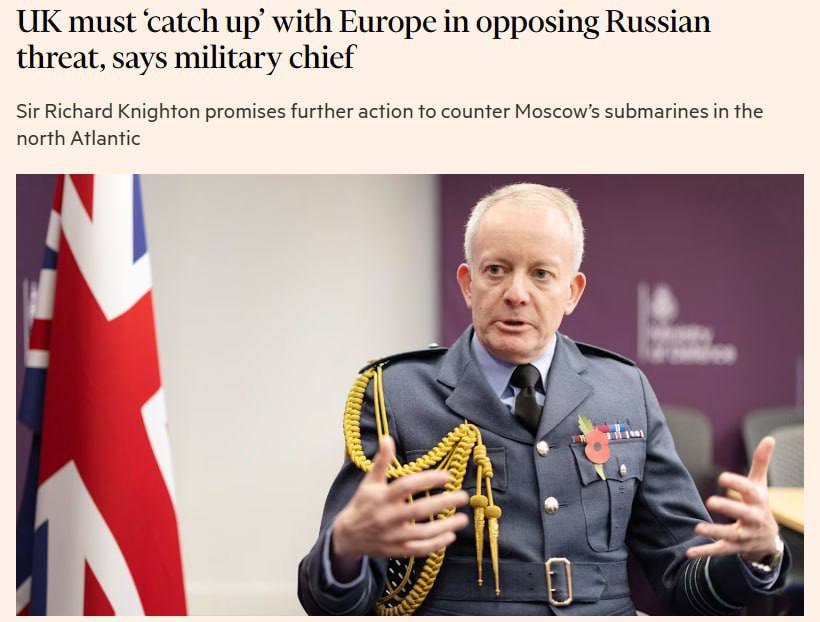
Ten Northern European countries to form naval alliance to deter Russia
The alliance aims to strengthen efforts to counter Russian submarines in the North Atlantic, the Arctic and the Baltic Sea.
The goal is to prevent Russia from threatening maritime shipping.
The agreement will include the United Kingdom, the Netherlands, Norway, Finland, Sweden, Iceland, Denmark, Latvia, Lithuania and Estonia.
The countries plan to move beyond intelligence sharing towards joint operations involving naval, air and ground forces.
The agreement will be signed aboard the British aircraft carrier HMS Prince of Wales.
Живодёр Артур Цыбиков планирует принести в жертву 60 верблюдов для победы фюрера в «специальной военной операции»
В 2019 году он уже сжёг заживо пять верблюдов в честь путина
Horrifying police bodycam footage from Russia’s terrorist attack on civilians in Komyshuvakha, Zaporizhzhia Oblast.
Police officers responding to the initial strike receive a warning of incoming Russian guided bombs and rush to gather civilians into a school bomb shelter.
Moments later, a Russian bomb strikes directly into the shelter filled with civilians, burying them beneath the rubble.
At least 31 people have been killed, including four police officers and two rescuers. Another 59 are listed as missing.
The death toll is expected to rise as rescue operations continue.
"Все - это смерть, ребята. Прощай! Слава Украине!"
Когда Украина после войны восстановит разрушенные дома и дороги, уверен, одной из задач будет сохранение памяти своих Героев.
Истинной, живой памяти тех, кто отдал всё, в том числе свои жизни.
Среди тысяч имен героев Украины, есть два парня из Бердянка, которые навсегда останутся шестнадцатилетними, это Тигран Оганьян и Микита Хаганов.
В условиях оккупации подростки не сдались и не прятались, они сопротивлялись до конца.
Их последние слова были: "Все - это смерть, ребята. Прощайте! Слава Украине!" разошлись по всему миру и стали символом стойкости нового поколения украинцев.
Нет сомнений, что памятник, на которых стоят Тигран и Микита, свободные, смелые, вопреки всему улыбающиеся - определённо появятся на улицах освобожденного Бердянка и по всей стране. Это не для скорби, это напоминание каждому подростку, который когда-либо будет проходить мимо: помнить какой ценой боролась страна за свободу. Это так-же священный долг перед родителями таких пацанов.
Украина победит и восстановит всё, а главное - память Героев Отечества.
Героям Слава!!! 🇺🇦
Finland just pushed electricity through open air. No cable. First ever nation to achieve this.
Researchers at the University of Helsinki and the University of Oulu fired high-intensity ultrasonic waves to carve an invisible channel through the air, then guided a spark down it.
Lasers handle the rest. Power-by-light beams energy to receivers where you really don't want a conductor: nuclear plants, high-voltage stations.
Radio-frequency harvesting pulls microwatts from ambient waves, enough to retire millions of disposable sensor batteries.