Elon Musk says a guy born in America ‘will be’ deported, yes Musk, a South African immigrant to America whose own brother once said came here illegally.
@CalltoActivism I'm getting really tired of media telling us "Dems in Disarray" again. NO. We are unified against maga and taking back Congress this year! 🌊🌊🌊🌊
@MeidasTouch Dennis Hastert became Republican Speaker of the House with decades of accusations of Pedophilia, until he was finally removed, and later convicted.
WATCH — @Kanew: “Bill Maher says he’s open to voting for Vance in 2028… Bill Maher is not your friend, Democrats. He’s John Fetterman with a talk show. Time to turn him off.”
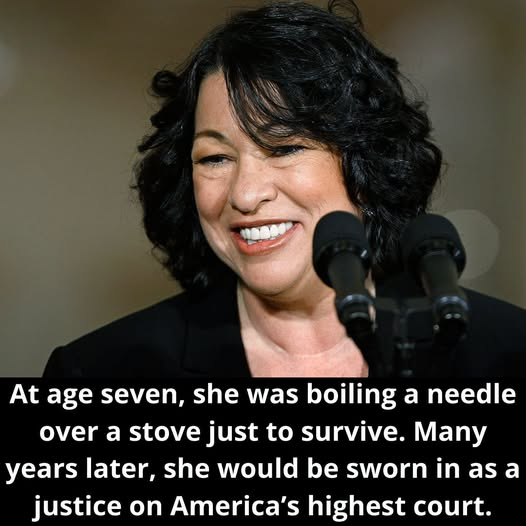
The Bronx, 1961. In the small kitchen of a cramped apartment, a seven year old girl stands alone at the stove, carefully holding a needle over a gas flame. Her hands are steady, focused in a way no child’s hands should have to be. Not at seven. Not without help.
Her name is Sonia.
She has just been diagnosed with Type 1 diabetes at a time when the disease is far more dangerous than it is today. Her father is struggling with alcoholism. Her mother, Celina, works long, exhausting shifts as a nurse just to keep the family afloat. There is little time, little money, and few options.
So Sonia learns to survive the only way she can. She teaches herself how to prepare and give the insulin injections her body depends on. Day after day, she does it herself. No excuses. No safety net.
Two years later, tragedy strikes again. Her father dies at just forty two, leaving Celina to raise Sonia and her brother alone in the Bronxdale Houses, a public housing project in the Bronx where opportunity is scarce and the future often feels uncertain.
But Celina Sotomayor makes a choice that quietly changes everything.
Instead of spending what little extra money she has on comforts or small luxuries, she saves every spare dollar and buys her children a set of the Encyclopedia Britannica. Not new clothes. Not better furniture. Books.
Celina believes something many people forget when life is difficult. Education can open doors that poverty tries to keep closed.
Sonia devours those volumes. She reads constantly, losing herself in stories and ideas. She watches Perry Mason on their small television, fascinated by the way the lawyer solves problems with intelligence and conviction. At ten years old, she makes a decision that many would consider impossible.
She will become a lawyer.
A Puerto Rican girl growing up in public housing. A child managing a serious illness. Still, she believes she can do it.
Step by step, she moves closer to that goal. She becomes valedictorian of her high school. She earns a scholarship to Princeton University, arriving there feeling as though she has entered an unfamiliar world. The cultural differences are overwhelming and the academic challenges are real. But she refuses to give up. She studies relentlessly and graduates with highest honors.
Next comes Yale Law School, where she becomes an editor of the Yale Law Journal. Then she works as a prosecutor. Later she becomes a federal judge. Her reputation grows as someone thoughtful, determined, and deeply committed to justice.
In August 2009, the girl who once stood alone in that Bronx kitchen holding a needle takes an oath that places her in history. Sonia Sotomayor becomes the first Hispanic Justice of the United States Supreme Court.
Years later, when the Bronxdale Houses are renamed in her honor, Justice Sotomayor returns to the place where she grew up. Standing before the building, she speaks emotionally about the years she spent there.
“I lived here during the most formative years of my life,” she says. “This place made me who I am.”
As a child, she once looked out from those apartment windows and wondered if there was a place in the world for someone like her.
Today, the nation looks to her as she helps interpret the laws that shape it.
A beginning does not decide the ending. Circumstances do not write a life story. The choices made along the way do. Every day brings another chance to decide what comes next.